





How to Choose a High Power Coaxial Switch for Radar and 5G Systems?
Choosing the right high-power coaxial switch for radar and 5G applications starts with understanding your system's core demands: power handling capacity, operating frequency range, switching speed, and environmental durability. A well-matched RF coaxial switch prevents signal breakdown, minimizes insertion loss, and sustains isolation between transmit and receive paths. Whether you're sourcing for an AESA radar platform or a 5G mmWave base station, the decision involves comparing electromechanical versus solid-state architectures, evaluating connector interfaces, and validating compliance with industry standards. This guide walks you through every critical selection criterion.
Understanding High Power Coaxial Switches: Fundamentals and Working Principles
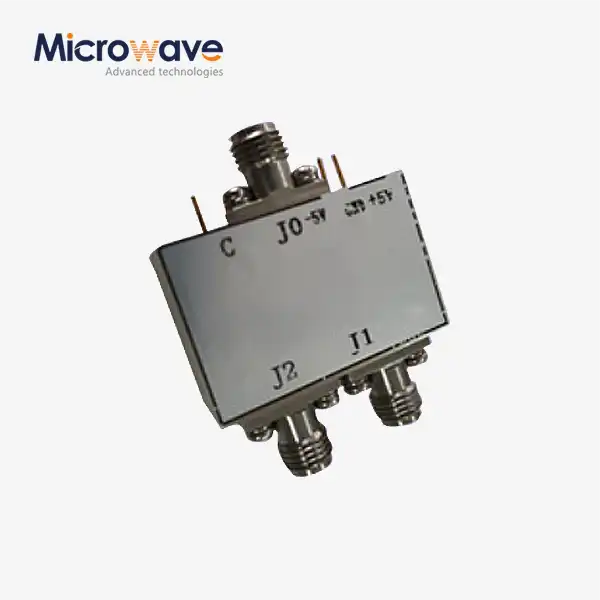
A High Power Coaxial Switch is a special kind of RF routing device that is made to change high-frequency signals when they are under a lot of power, like several kilowatts (CW) or even megawatts (peak pulse). These parts are different from regular RF switches because they use strong dielectric materials, improved internal cavity geometry, and better thermal management to stop arcing, corona discharge, and multipaction effects that normally destroy switches when they're loaded.
Electromechanical vs. Solid-State Technology
Electromechanical Coaxial Switches route signals by moving actual contacts. They have very low insertion loss (usually less than 0.05 dB) and high separation (> 70 dB). They work well in situations where the switching speed is measured in microseconds and their lifetime is between 1 and 5 million cycles. In contrast, Solid-State Switches use PIN diodes or GaAs semiconductors to achieve switching at the microsecond level with no moving parts. This makes them better when fast cycling is a must.
Key Performance Parameters to Evaluate on Datasheets
When looking over component datasheets, pay close attention to these factors:
- Insertion Loss: During long-term high-power use, the insertion loss should be less than 0.05 dB to avoid thermal runaway.
- Isolation: Ratings above 70–100 dB keep high-power emitter leakage away from sensitive receiving circuits.
- VSWR: A VSWR value less than 1.15:1 reduces the amount of reflected energy that causes heat to build up and signal distortion.
- Power Handling: Lower the power levels based on the frequency. For example, a high-power coaxial switch that can handle 10 kW at 100 MHz might only be able to handle 2 kW at 1 GHz because of higher skin-effect resistance.
- Switching Speed: Solid-state devices work in less than 1 µs, while electromechanical units work between 5 and 50 ms.
When procurement engineers understand these numbers, they can compare competing products based on their actual features, not just their marketing claims.
Applications and Importance in Radar and 5G Systems
High-power RF switching is an important part of both radar and 5G systems. Signal routing mistakes or broken parts in these systems don't just slow them down; they stop them completely, which is not acceptable in defense or communications settings.
Radar Signal Routing and Transmit/Receive Protection
When AESA radar systems switch between send and receive modes quickly, high-power coaxial switches handle the changes. In order to meet MIL-STD-810 standards, they often have to withstand peak power pulses as well as intense vibrational and thermal stress. Electronic warfare jammers use switches with similar layouts to move energy between different antenna ports without changing the quality of the waveforms.
Antenna Switching and RF Testing in 5G Networks
5G mmWave deployments happen at frequencies of 24–40 GHz and higher, where each channel needs less power but switching accuracy and phase repeatability are very important. In this case, Coaxial Switches let you choose the antenna port, make sure the beam steering works, and test the RF conformance. How long the high-power coaxial switch lasts has a direct effect on how well the network works and how accurate the over-the-air (OTA) test results are that are used to approve base station equipment.
These two types of applications show why choosing a component is not just a matter of choosing a commodity. If the power rating or frequency coverage doesn't match, it causes system-level risks that are much worse than the initial cost savings.
Comparing Types and Technologies of High Power Coaxial Switches
Different switching methods are used for different things. When you choose between electromechanical and solid-state systems or between coaxial and waveguide formats, you need to make sure that the strengths of the switch match your practical needs.
Electromechanical Switches have the best passive RF performance of any type. Their beryllium copper contacts are gold-plated and housed in cavities made of precision-machined aluminum or nitrogen-pressurized brass. Over millions of cycles, the contact resistance stays below 15 mΩ. Latching versions stay in the switching position even when the power is turned off. This means that the actuator doesn't generate as much heat, which is very important for use in space or vacuum environments. If the power goes out, failsafe variants go back to their original position. They are used as transmitter protection logic in radar and broadcast systems.
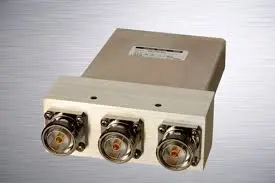
When it comes to speed and size, Solid-State Switches give up the ability to handle real power. When sub-microsecond reaction times are more important than kilowatt power ratings, these are the right tools for 5G test settings and signal tracking tasks.
When it comes to connection ports, normal N-type or SMA connectors stop working after a few hundred watts. For high-power uses, 7/16 DIN, SC connectors, or EIA flanges (from 7/8" to 6-1/8") are better. EIA flanges provide a rigid, air-dielectric interface with a much bigger contact surface area. This allows for better voltage handling and efficient heat removal, which are both important for systems that use a lot of power.
How to Select the Right High Power Coaxial Switch: Criteria and Best Practices
There should be a plan for the selection process. Here are the most important technical and purchasing factors that make a good choice:
- Operating Frequency Range: Make sure the switch works consistently across the whole frequency range, not just at the center frequency.
- CW vs. Peak Power Rating: Figure out whether your system uses high-energy bursts or continuous-wave loads. Each type of load puts different amounts of stress on the switch.
- Switching Duty Cycle: Radar uses a lot of repeat wear down contacts faster, so check cycle life numbers to be sure.
- Environmental Specifications: Temperature ranges from -55°C to +85°C, resistance to humidity, and compliance with MIL or IEC standards for shaking are needed for defense and outdoor telecom sites.
- Hot Switching Capability: Most electromechanical units need to be cold-switched, which means the power has to be off before the state changes. Check to see if your program needs solid-state or arc-suppressed options.
Before you hire a manufacturer or distributor, these criteria will help you narrow down the list. Lead times should also be taken into account by procurement teams. For defense programs, custom configurations can take up to 16 weeks, depending on the supplier's capacity and the availability of materials.
For more than 20 years, ADM (Advanced Microwave Technologies Co., Ltd) has worked with military OEMs, satellite ground station integrators, and 5G infrastructure builders. Our engineering team helps with custom RF coaxial switch specs, testing prototypes, and mass production using ISO 9001:2015-certified methods and keeping full records. Our in-house measurement lab can work up to 110 GHz, so we can do thorough VNA sweep validation, PIM testing, and heat performance checking on all shipments before they leave the building.
Conclusion
When picking a high-power coaxial switch for radar or 5G systems, you need to carefully consider how it handles power, what frequencies it covers, the switching technology it uses, whether it works with the connectors you already have, and how rugged it is. There isn't a single right answer; the best part is found by matching the switch design to the needs of the whole system. When insertion loss and isolation are very important, electromechanical designs win. When switching speed is more important, solid-state designs win. Working with a manufacturer that has both a lot of technical knowledge and well-documented quality processes takes the risk out of the buying decision and speeds up the program schedule.
FAQ
What frequency ranges do high power coaxial switches typically support?
Most high-power motorized High Power Coaxial Switches work from DC to 18 GHz, and some types can go up to 40 GHz or higher for mmWave uses. Always make sure that the specifications for isolation and insertion loss are the same across the whole operating band, not just at one frequency point.
How do I ensure reliability in harsh outdoor or military environments?
Give more weight to switches that have been tested for shock, pressure, and temperature changes according to MIL-STD-810. Designs with nitrogen-pressurized cavities improve dielectric strength in places with a lot of wetness or high elevation. Ask for test reports from a third party or ask the supplier to share Hi-Pot and thermal rise test data. Reliable manufacturers will do this without any questions asked.
What factors drive pricing and lead time for custom switch configurations?
The price changes depending on the type of connection, the power level, the actuation method (latching vs. failsafe), and the material of the cavity. Custom EIA flange configurations or needs for special plating take more time and cost more money. Most of the time, ordering in bulk cuts the cost per unit by 15% to 30%. Working directly with a maker instead of a marketing layer can often cut down on lead times and make it easier to change specifications.
Partner with ADM for Reliable High Power Coaxial Switch Solutions
Defense companies, satellite integrators, and 5G equipment makers all over the world trust ADM to provide precision-engineered RF switching components. We are a direct high-power coaxial switch manufacturer and have an ISO 9001:2015-certified test lab that can work at 110 GHz. We can make custom configurations, do rapid prototyping, and provide dedicated technical support. You can email our engineering team at craig@admicrowave.com to get datasheets, talk about specs, or start a sample review for your next project.
References
1. Pozar, D. M. — Microwave Engineering, 4th Edition, Wiley, 2011.
2. IEEE Transactions on Microwave Theory and Techniques — High-Power Switching in RF and Microwave Systems, IEEE, 2018.
3. Macom Technology Solutions — PIN Diode Fundamentals and Applications, Application Note, 2019.
4. National Instruments (NI) — RF and Microwave Test Fundamentals, Technical Publication, 2020.
5. IEC 62037 — Passive Intermodulation (PIM) Testing Standard for RF Components, International Electrotechnical Commission, 2021.
6. MIL-STD-810H — Environmental Engineering Considerations and Laboratory Tests, U.S. Department of Defense, 2019.
YOU MAY LIKE
 VIEW MOREWaveguide Horn Antennas
 VIEW MORERectangular Straight Waveguide
 VIEW MOREHigh Power Waveguide Circulator
 VIEW MOREWG High Pass Filter
 VIEW MORESingle Channel Coaxial Rotary Joint
 VIEW MOREHigh Power Coaxial Switch
 VIEW MORECoaxial Directional Coupler
 VIEW MORELadder Membrane Conical Dual circular Polarization Horn Antenna