





When Coaxial Detectors Need Replacement: Drift Signs to Watch
Coaxial detectors serve as the backbone of precision gamma-ray spectroscopy in nuclear power plants, environmental laboratories, and homeland security applications. When these high-purity germanium devices start to drift—showing slow performance loss showing up as sensitivity loss, resolution loss, and unstable calibration—the problems go beyond wrong readings and include shutting down operations and breaking safety rules. When procurement teams and technical experts spot drift indicators early, they can plan replacements in a way that minimizes downtime while still maintaining the measurement integrity needed by mission-critical applications. Knowing when a fix is enough and when a full replacement is necessary saves both budgets and the accuracy of the analysis.
Understanding Coaxial Detector Drift and Its Causes
Material Aging and Semiconductor Degradation
High-purity germanium crystals, which are at the heart of coaxial detectors, will always age. Over many years of use, crystalline flaws build up in the structure of the semiconductor, causing charge-trapping sites that make it harder for carriers to move around. This event has a direct effect on energy resolution, which is the detector's ability to tell the difference between photon energies that are close to each other. In nuclear power monitoring, finding specific fission products means telling the difference between peaks that are only a few kiloelectron volts apart. This means that even small amounts of resolution loss can lead to measurement uncertainty. The cylinder shape of these devices makes them very efficient, but it also makes them vulnerable to uneven degradation across the active volume. This is because radiation damage is most common near the entrance window, while the center bore area ages more slowly.
Environmental Stressors and Operating Conditions
Changes in temperature are very dangerous to the security of detectors. Liquid nitrogen cooling keeps the operating temperature around 77 Kelvin, but thermal cycling during maintenance breaks or cryostat failures puts stress on the crystals that are touching each other. When humidity gets in through broken seals, it speeds up the corrosion of electrical connections, which makes noise currents that hide weak signals stronger. Germanium atoms are moved out of their lattice positions by radiation dose accumulation, especially neutron exposure in reactors. This damage is permanent and sometimes cannot be fixed by annealing. Defense contractors who work with detectors in the field have to deal with extra problems like vibration and shock, which can break wire bonds or mess up the delicate field-effect transistor that connects the detector to the preamplifier circuits.
Electronic Component Wear and Mechanical Deterioration
Aside from the crystal itself, the electronics that support it also age. Capacitors in feedback circuits move out of range, which changes how pulse shaping works. Temperature history changes the value of resistors, which affects the security of the bias voltage. Connector pins rust, causing signal losses that look like problems with the detector but are actually caused by hardware in other parts of the system. The effectiveness of cooling depends on how well the cryostat's vacuum works. Slow leaks cause more nitrogen to be used, which raises working temperatures and speeds up thermal noise. Procurement engineers need to know that "detector drift" is more often than not a system-level failure mode and not just crystal degradation. This means that they need to do a full diagnostic before ordering replacements.
Key Signs That Indicate Your Coaxial Detector Needs Replacement
Performance Degradation Symptoms
Peak broadening in acquired spectra is a sign of lower energy resolution. When measuring cesium-137 sources, a healthy detector keeps full-width at half-maximum values below 2.0 keV at 1332 keV. Degradation, on the other hand, raises this value above 2.5 keV, which makes it harder to tell what isotope the source is. The low-energy detection threshold goes up when background noise goes up, making it harder to see X-rays and low-energy gamma bursts that are needed for actinide analysis. Peak position changes show that the ability to collect charges is changing. For example, gamma rays that should register at 662 keV show up at 660 or 665 keV, which makes it impossible to calibrate. System gain instability needs to be recalibrated all the time. If adjustments need to be made every day when they used to only need to be made once a week, the drift has gone beyond normal changes.
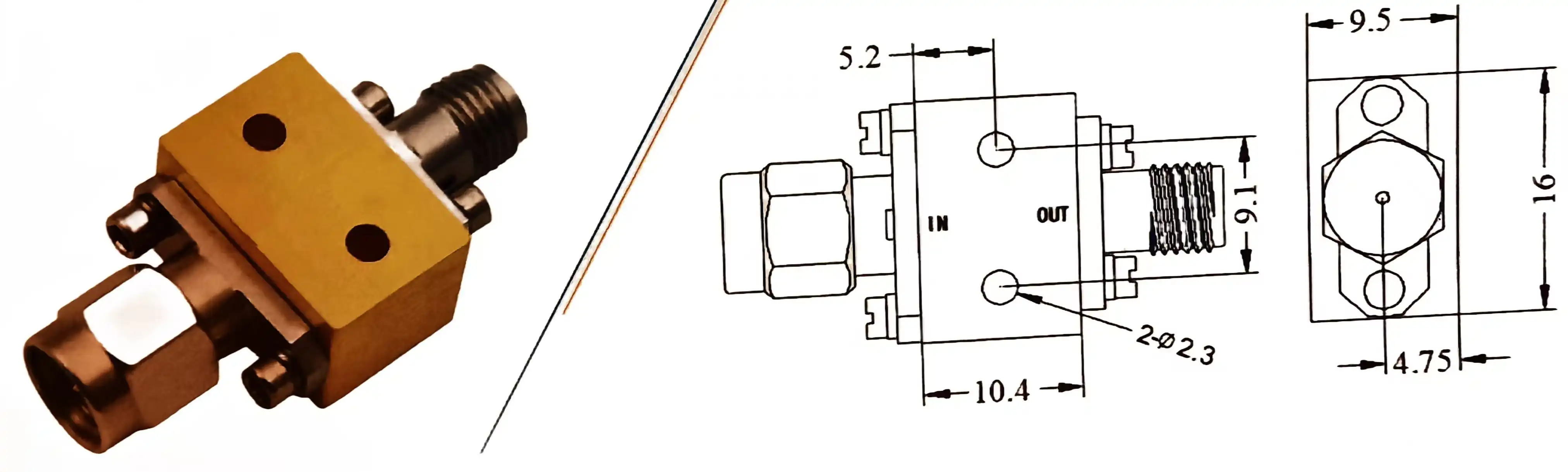
Calibration Instability and Measurement Inconsistencies
Detectors that are drifting have a hard time staying calibrated between regular source checks. Multi-point energy calibrations that used to stay steady for months need to be checked every week now. Linearity mistakes show up where there were not any before; high-energy peaks move a lot compared to low-energy standards. The shape of the efficiency curves changes, and sensitivity drops more at certain energy levels. These signs force lab managers to do reactive troubleshooting cycles that take time from technicians and slow down the flow of samples. Operators of satellite ground stations that use radiation tracking to figure out the weather in space cannot stand this kind of unpredictability, because measurement mistakes lead to wrong flux estimates that make it hard to plan for satellite operations.
Physical Damage and Visible Deterioration
Green oxidation shows up on high-voltage feedthroughs or signal outputs of coaxial detectors as a sign of connector corrosion. Cracks in the housing make the vacuum less reliable, as shown by the fact that liquid nitrogen is being used at unusually high rates. When the internal thermal shielding of a cryostat breaks down, the frosting patterns change. Mechanical shock damage is common in portable systems used for border security. It might not show up on the outside, but when tested for shaking, it can be heard as microphonic noise. Even if there is no obvious physical damage, detectors that have been used in high-radiation environments for 15 to 20 years statistically reach high failure risk periods. This means that they should be replaced before they fail, no matter what the current performance metrics are.
How do coaxial detectors compare with other detector types during aging?
Drift Sensitivity Across Detector Technologies
Coaxial germanium detectors are more stable over time than silicon-based alternatives if they are properly maintained. With smaller active areas, planar germanium detectors are more sensitive to damage to the surface and the growth of dead layers. However, they need to be replaced less often in low-flux uses. Silicon drift detectors are great at X-ray spectroscopy, but they get damaged by radiation in ways that cannot be fixed at doses that coaxial HPGe devices can handle for decades. Scintillator-based devices do not have any problems with semiconductor drift, but they do not have the energy precision that coaxial detectors need for complex isotopic mixes. When doing rare-event physics studies, research institutions often do not mind the limits of coaxial detectors because no other technology offers the same level of background rejection and energy precision.
Replacement Frequency and Lifecycle Economics
Nuclear power plants plan to replace coaxial detectors every 10 to 15 years, but the actual service life depends on how much radiation they are exposed to and how well they are maintained. Environmental labs that study low-activity samples can make detectors last up to 20 years by treating them carefully and making sure that doses do not build up too much. Because they have to work in difficult conditions, defense applications that use tactical radiation monitoring usually need to replace them every 5 to 8 years. Lifecycle cost analysis has to take into account the time and money needed to recalibrate, the cost of liquid nitrogen, and the missed opportunities caused by measurement uncertainty. Companies that put radiation monitors on cell towers are choosing solid-state options more and more, even though they have lower resolution. They are willing to give up some performance in exchange for not having to do cryogenic maintenance. Aerospace system designers keep a stock of coaxial detectors for testing important satellite payloads where the level of accuracy needed supports the complexity of the operation.
Practical Steps to Confirm Detector Drift Before Replacement
Diagnostic Testing Protocols
To prove drift, measurements must be taken carefully and compared to standards that can be tracked. Get spectra from cobalt-60 and cesium-137 sources that can be tracked by NIST at different count rates to tell the difference between resolution loss and dead-time effects. Write down the full-width at half-maximum values for all the energy levels and compare them to the manufacturer's specs and previous values. Find the positions of the peak centers at five-point energy intervals ranging from 100 keV to 2000 keV and plot the linearity deviations. Find the lowest level of activity that can be detected in americium-241's 59.5 keV release to test the low-energy barrier. Check the stability of the gain over 24 hours by writing down the temperature-adjusted peak positions every hour. These numeric tests tell the difference between electronic problems that can be fixed and crystal damage that cannot be fixed. This keeps people from having to pay for unnecessary replacements.
Cost-Benefit Analysis: Repair vs. Replacement
Detector annealing, a heat process that fixes neutron damage, costs 30 to 40 percent of the price of a new unit, but it only works for certain types of damage. Changing the preamplifier can fix electronic drift for 15 to 20 percent of the cost of the detection. Cryostat refurbishment fixes the vacuum integrity for about a quarter of the cost of replacement. Before approving repairs, procurement managers should ask manufacturers for a detailed failure analysis, since the cost of repeated service calls is often higher than the cost of buying a new detector. It makes financial sense to replace a detector when repair costs are more than half of the price of a new one, especially since newer models have better technology. If a supplier offers trade-in allowances or refurbishment programs, the cost calculations may lean toward replacement even if the damage isn't as bad.
Engaging Supplier Technical Support
Reputable device makers have software engineering teams that know how to figure out what went wrong. Giving specific performance information, like previous calibration records, spectral pictures that show resolution loss, and information about the working environment of coaxial detectors, lets someone else do a basic review from afar. Some suppliers offer evaluation services that come to your site with reference electronics and test sources to help you figure out whether the problem is with the system or the detector. During technical discussions, it should be looked at whether the observed drift affects the specific measurement application. For example, a drift that is acceptable for radionuclide identification that needs 2.5 keV resolution might not be acceptable for nuclear forensics that needs 1.8 keV performance. Suppliers can suggest detector setups that work best with certain types of aging. For example, N-type detectors work best in neutron environments, while extended-range designs are better for uses that can handle some loss of clarity in exchange for higher efficiency.
Selecting a Replacement Coaxial Detector: What Buyers Need to Know?
Critical Performance Parameters
The requirements for the purchase must include the relative efficiency (usually 20% to 150% compared to 3x3-inch sodium iodide standards), the energy resolution at 1332 keV (usually between 1.8 and 2.3 keV for premium models), and the peak-to-Compton ratio (which measures spectral quality; values above 60:1 are preferred). There are different types of detector geometry, such as closed-end coaxial for the best efficiency, well-type coaxial for sample geometry freedom, and extended-range models that give up some resolution for wider energy coverage. Choosing between liquid nitrogen and electric cryocoolers affects both the cost and mobility of operations. Electrically cooled models are better for applications that need to be portable, even though they cost more at first. On the other hand, liquid nitrogen models are better for fixed lab installations because they are cheaper. Different types of applications have different certification needs. For example, defense contractors need detectors that meet export control requirements, while nuclear power operators need specific quality assurance paperwork.
Evaluating Suppliers and Procurement Strategies
Some of the best makers, like ORTEC, Canberra (Mirion Technologies), Thermo Fisher Scientific, Amptek (AMETEK), and Hamamatsu, each have their own benefits. ORTEC makes high-resolution research-grade detectors that can be customized in a lot of ways. Mirion's Canberra division is the leader in nuclear power applications and has a track record of reliability that goes back decades. Thermo Fisher makes detector-analyzer units that work well together for environmental tracking tasks. Amptek works on small designs that can be used in places with limited room. For consistent crystal quality, Hamamatsu uses its knowledge of how to make semiconductors. Most warranties last between one and two years, but places that are tight on money can get safety through extended service contracts. The quality of after-sales support varies a lot; give priority to suppliers who have regional service centers that can respond quickly. Ask for examples from companies that use similar apps to check the app's real-world dependability and help with responsiveness.
The budget should include the cost of each coaxial detector unit ($15,000 for basic models and $100,000 for high-end, high-volume devices); the electronics that go with them (multichannel analyzers and high-voltage supplies); and the infrastructure that is needed (nitrogen dewars and safety interlocks). Unit costs can be cut by 15-20% by negotiating bulk discounts or multi-year supply deals. Ask about sample programs that let you check the software's performance before committing to buying it. Talk about the customization choices that can meet the needs of a specific application, such as shielding setups, remote tracking, or custom cooling solutions. To make sure the system integration goes smoothly, acceptance testing criteria, delivery dates, and commissioning support should all be written into the purchase contract. Seeing detector providers as strategic partners instead of just transactional vendors makes it easier to get technical help and priority support when you need to change a detector right away.
Conclusion
To find coaxial detector drift before measurement accuracy is lost, performance must be closely watched, and diagnostic methods must be followed. Resolution loss, unstable calibration, and physical wear and tear all indicate that the device needs to be replaced to keep up with operational standards. Cost-effective procurement choices are made by comparing the costs of repairs to the capabilities of current detectors. To choose replacement parts, you need to carefully define performance factors, evaluate suppliers, and plan your budget while taking into account the total cost of the system. Monitoring for drift and planning for strategic replacements help keep unplanned downtime to a minimum and ensure accurate measurements in tough environments.
FAQ
1. How often should coaxial detectors undergo performance verification?
Checking the energy resolution once a month using normal sources gives enough trend data for most uses. High-radiation areas should be checked once a week to find accelerated drift. Full-spectrum performance is checked against traceable standards once a year through thorough calibrations.
2. Can recalibration extend detector service life?
Recalibration fixes problems with electronic drift and environmental compensation, but it cannot stop the breakdown of semiconductor materials. Regular tuning keeps the accuracy within the limits of the detector's physical abilities, but it stops working when crystal damage gets too bad. Detector degradation is caused by persistent calibration instability signals.
3. What risks accompany operating drift detectors?
When detectors move around, they cause measurement errors that lead to wrong isotopic identifications. This can affect safety decisions in nuclear facilities and security checks at borders. Not detecting drift makes it harder to meet the accuracy requirements set by regulators for measurements. If the process keeps going, there is a chance of catastrophic failure modes that would require an emergency replacement under bad buying conditions.
Partner with ADM for Precision Coaxial Component Solutions
Advanced Microwave Technologies Co., Ltd. (ADM) has been making high-precision coaxial assemblies and RF components for mission-critical uses in defense, aerospace, and satellite communications for more than 20 years. Our ISO 9001-certified factories and large testing areas make sure that the coaxial cable kits, connectors, and microwave parts that your systems need meet strict performance standards. If you're looking for coaxial detectors manufacturer partnerships for custom RF integration projects or need rapid prototyping for next-generation detection systems, our technical team can help. We offer custom solutions that are backed by full testing up to 110 GHz. Get in touch with our engineering experts at craig@admicrowave.com to talk about your needs for precision coaxial components and find out how ADM's supply chain excellence and technical depth can help you meet your procurement goals with competitive pricing and on-time delivery.
References
1. Knoll, Glenn F. Radiation Detection and Measurement, Fourth Edition. John Wiley & Sons, 2010.
2. Gilmore, Gordon. Practical Gamma-ray Spectrometry, Second Edition. John Wiley & Sons, 2008.
3. Leo, William R. Techniques for Nuclear and Particle Physics Experiments: A How-to Approach. Springer-Verlag, 1994.
4. International Atomic Energy Agency. Semiconductor Detectors for Nuclear Radiation Measurement. Technical Reports Series No. 380, IAEA, Vienna, 1998.
5. Debertin, Klaus and Helmer, Richard G. Gamma- and X-ray Spectrometry with Semiconductor Detectors. North-Holland Publishing, 1988.
6. American National Standards Institute. Performance Specifications for Health Physics Instrumentation – Portable Instrumentation for Use in Extreme Environmental Conditions. ANSI N42.17A, IEEE, 2003.
YOU MAY LIKE
 VIEW MORESlotted Waveguide Array Antenna
 VIEW MOREEnd Launch Double Ridged WG To Coaxial Adapter
 VIEW MOREWaveguide Probe Coupler
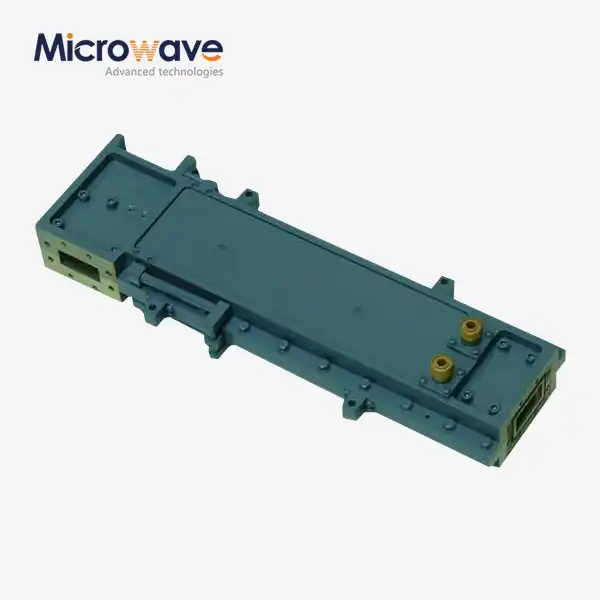 VIEW MOREHigh Power Waveguide Differential Phase Shift Circulator
 VIEW MOREWG High Pass Filter
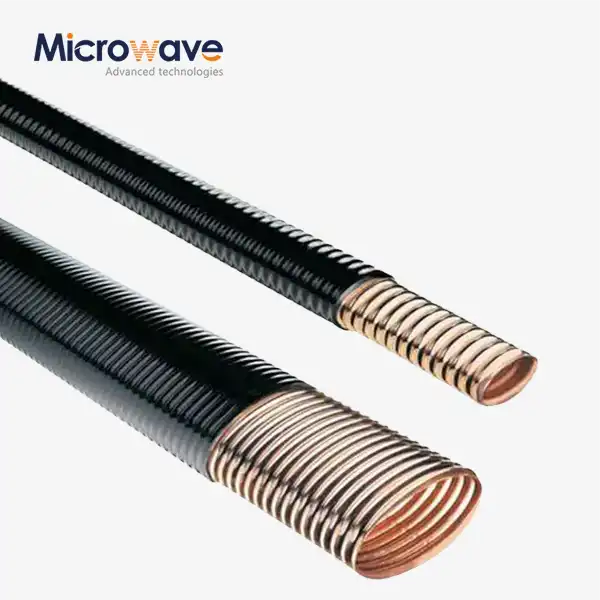 VIEW MOREElliptical WG
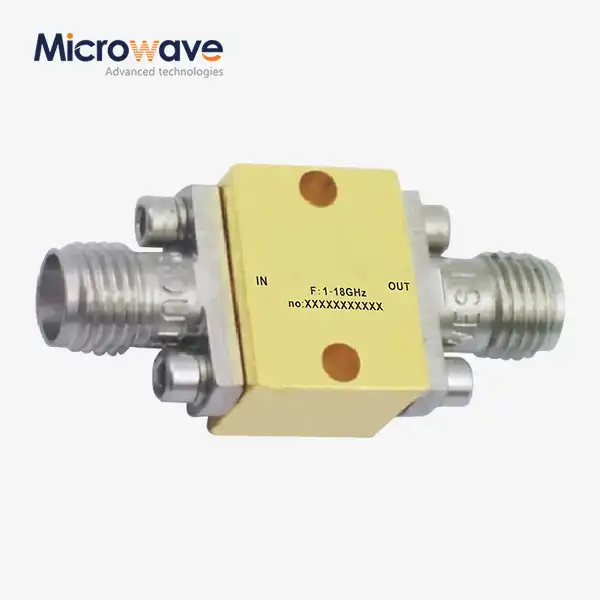 VIEW MOREActive Limiter
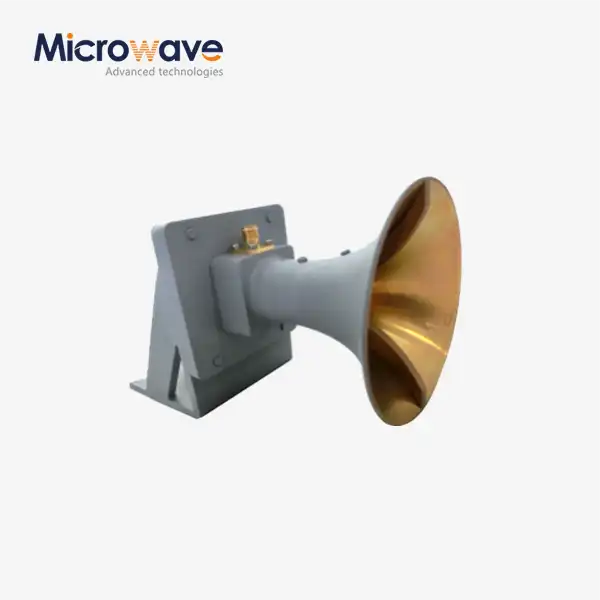 VIEW MOREUltra Double-ridged Horn Antenna