





What is the difference between E and H Waveguide Bends?
When designing high-frequency microwave systems for satellite communications or defense radar applications, engineers frequently encounter a critical challenge: how do you redirect electromagnetic signals through 90-degree turns without compromising signal integrity? A single misaligned waveguide bend can introduce unwanted reflections, degrade system performance, and cause costly mission failures in critical applications. Understanding the fundamental differences between Waveguide E Bend and H Bend configurations is essential for anyone working with microwave transmission systems, as these components directly impact signal quality, system efficiency, and overall operational reliability in demanding aerospace and telecommunications environments.
Understanding Waveguide Bend Fundamentals
In rectangular waveguide systems, electromagnetic waves propagate through hollow metal tubes with specific dimensional ratios designed to support particular frequency ranges. The internal electric and magnetic fields oscillate in precise patterns known as modes, with the dominant mode being TE10 for most applications. When a waveguide system requires directional changes to accommodate mechanical layouts or spatial constraints, engineers must implement bends that maintain field integrity while redirecting signal flow. The Waveguide E Bend represents one of two primary bending configurations used throughout the microwave industry. The terminology "E" and "H" directly corresponds to the electric field plane and magnetic field plane within the rectangular waveguide structure. In a standard rectangular waveguide, the broader dimension is associated with the H-plane where the magnetic field vectors align, while the narrower dimension corresponds to the E-plane where electric field vectors are oriented. These fundamental electromagnetic relationships govern how bends affect signal propagation and determine which bending configuration is appropriate for specific applications.
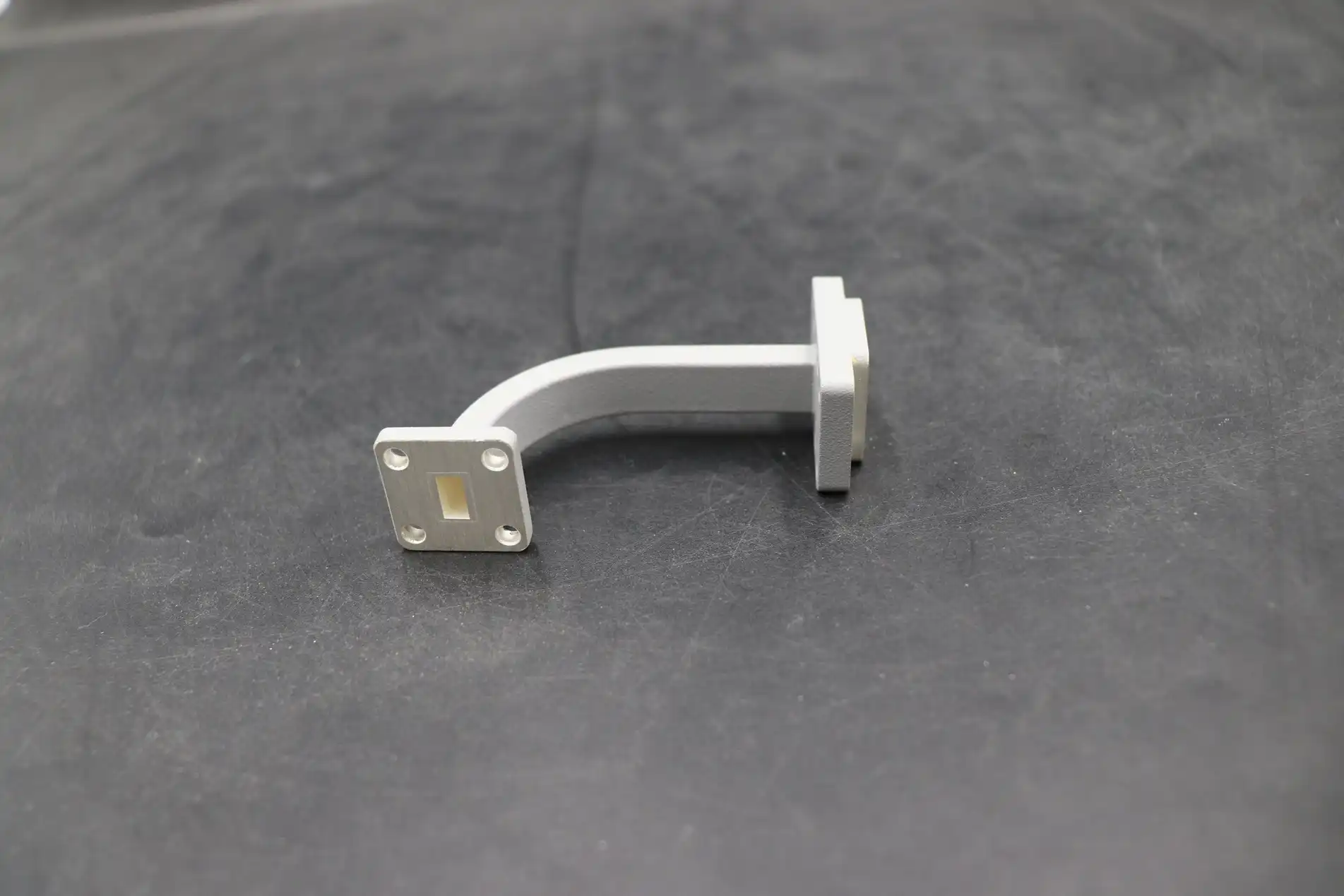
Physical Orientation and Field Distortion Characteristics
A Waveguide E Bend is constructed by bending the waveguide along its wider dimension, causing the bend to occur in the plane parallel to the electric field vectors. This configuration distorts the electric field pattern as the signal navigates through the curved section. Engineers often refer to E Bends as "easy bends" because the bending process along the wider dimension is mechanically simpler to manufacture and typically requires less specialized tooling during fabrication. Conversely, an H Bend involves bending the waveguide along its narrower dimension, creating a turn in the plane parallel to the magnetic field vectors. This configuration distorts the magnetic field pattern while leaving the electric field relatively less affected. H Bends are sometimes called "hard bends" due to the increased manufacturing difficulty associated with bending the narrower waveguide dimension and maintaining precise internal tolerances. The choice between these configurations depends on multiple factors including mechanical space constraints, polarization requirements, and acceptable signal distortion levels.
Critical Performance Differences Between E and H Bends
The electromagnetic behavior of Waveguide E Bend components differs significantly from H Bend counterparts in ways that directly impact system performance. When an electromagnetic wave encounters an E Bend, the electric field components experience primary distortion as they navigate the curved path. This interaction can introduce slightly higher phase shifts and amplitude variations compared to H Bends, particularly when the bend radius is not optimally designed. For applications where electric field polarization must be precisely maintained, such as certain antenna feeding systems or polarization-sensitive receivers, this characteristic requires careful consideration during system design. H Bend configurations typically introduce lower signal distortion because the magnetic field redirection affects the wave pattern differently than electric field manipulation. In high-precision communication systems where minimizing signal degradation is paramount, H Bends often provide superior performance. However, this advantage must be balanced against mechanical layout constraints and manufacturing considerations. The Waveguide E Bend offers greater flexibility in system design where space limitations or integration requirements dictate bending orientation.
Reflection and VSWR Considerations
Voltage Standing Wave Ratio (VSWR) serves as a critical performance metric for waveguide bends, indicating how much signal energy is reflected back toward the source rather than transmitted forward through the system. Both E and H bend configurations can achieve excellent VSWR performance when properly designed, but the manufacturing tolerances and bend radius requirements differ between the two types. Advanced Microwave Technologies Co., Ltd manufactures Waveguide E Bend components with VSWR specifications of 1.15 or better across their operating frequency ranges, ensuring minimal signal reflection and maximum power transfer efficiency. The bend radius represents a fundamental design parameter affecting both E and H bend performance. Industry standards typically specify that gradual bends must maintain a radius greater than two wavelengths at the operating frequency to prevent excessive reflections and signal distortion. For applications requiring sharper turns within limited space, engineers can employ 45-degree mitered bends where two angled surfaces are positioned precisely one-quarter wavelength apart, causing reflections to cancel through destructive interference. These sharp bends work effectively for both Waveguide E Bend and H Bend configurations when dimensional tolerances are maintained within specifications.
Application-Specific Selection Criteria
Selecting between E and H bend configurations requires comprehensive analysis of system requirements, mechanical constraints, and performance specifications. In satellite ground station applications where waveguide assemblies connect antennas to receiver equipment, the choice often depends on the antenna mounting configuration and equipment rack layout. A Waveguide E Bend provides optimal performance when the required turn direction aligns with the broader waveguide dimension, while spatial limitations may necessitate H Bend utilization even if slightly higher loss is anticipated. Military radar systems demanding maximum signal integrity and minimum phase distortion typically prefer H Bend configurations in critical signal paths. The reduced electric field interaction characteristic of H Bends helps maintain pulse shape and timing accuracy essential for target detection and tracking applications. Advanced Microwave offers both standard and custom Waveguide E Bend solutions covering waveguide sizes from WR10 through WR430, enabling system designers to select the optimal configuration for each specific application requirement.
Frequency Range and Material Considerations
Operating frequency significantly influences bend performance characteristics for both E and H configurations. At lower microwave frequencies where wavelengths are longer, the physical bend radius required to maintain two-wavelength minimum dimensions becomes more substantial, potentially creating mechanical integration challenges. The Waveguide E Bend components from Advanced Microwave Technologies support frequency ranges up to 110 GHz, accommodating both legacy communication systems and cutting-edge millimeter-wave applications including 5G infrastructure and future 6G technology development. Material selection impacts both electrical performance and environmental durability. Aluminum construction provides excellent conductivity with lightweight characteristics ideal for aerospace applications, while copper and brass alternatives offer superior corrosion resistance for maritime or harsh industrial environments. Advanced Microwave manufactures Waveguide E Bend assemblies from aluminum, brass, and copper with optional silver or gold plating to further enhance conductivity and environmental protection. These surface treatments reduce insertion loss and provide long-term reliability in demanding operational conditions where component replacement would be costly or impractical.
Manufacturing and Customization Capabilities
Producing high-quality waveguide bends requires specialized manufacturing capabilities and rigorous quality control processes. The fabrication process typically begins with precision machining or forming of the waveguide tube material, followed by careful bending operations that maintain internal dimensional accuracy. For Waveguide E Bend production, the bending process must preserve the rectangular cross-section without introducing surface irregularities or dimensional variations that could cause signal reflections or mode conversion. Advanced Microwave Technologies Co., Ltd employs state-of-the-art manufacturing equipment and techniques developed over more than 20 years of microwave component production experience. Their production facilities can create both standard catalog items and highly customized Waveguide E Bend configurations tailored to specific customer requirements. This flexibility enables system integrators to obtain bend components with non-standard angles, special flange configurations, or unique dimensional specifications that match their exact application needs.
Quality Assurance and Testing Protocols
Every Waveguide E Bend manufactured by Advanced Microwave undergoes comprehensive testing using advanced measurement equipment in their 24-meter microwave darkroom facility. This remarkable testing environment enables precise characterization of bend performance across the full operating frequency range from 0.5 to 110 GHz. The Antenna Plane Near and Far Field Measuring Recombination Chamber allows engineers to analyze radiation patterns, measure insertion loss, and verify VSWR specifications under controlled conditions that replicate actual field deployment scenarios. ISO 9001:2015 certification demonstrates Advanced Microwave's commitment to quality management throughout every stage of production, from initial design and material procurement through final testing and delivery. Their quality control procedures ensure that each Waveguide E Bend meets or exceeds specified performance parameters, providing customers with reliable components that perform consistently in critical applications. RoHS compliance further demonstrates environmental responsibility and enables use in markets requiring hazardous substance restrictions.
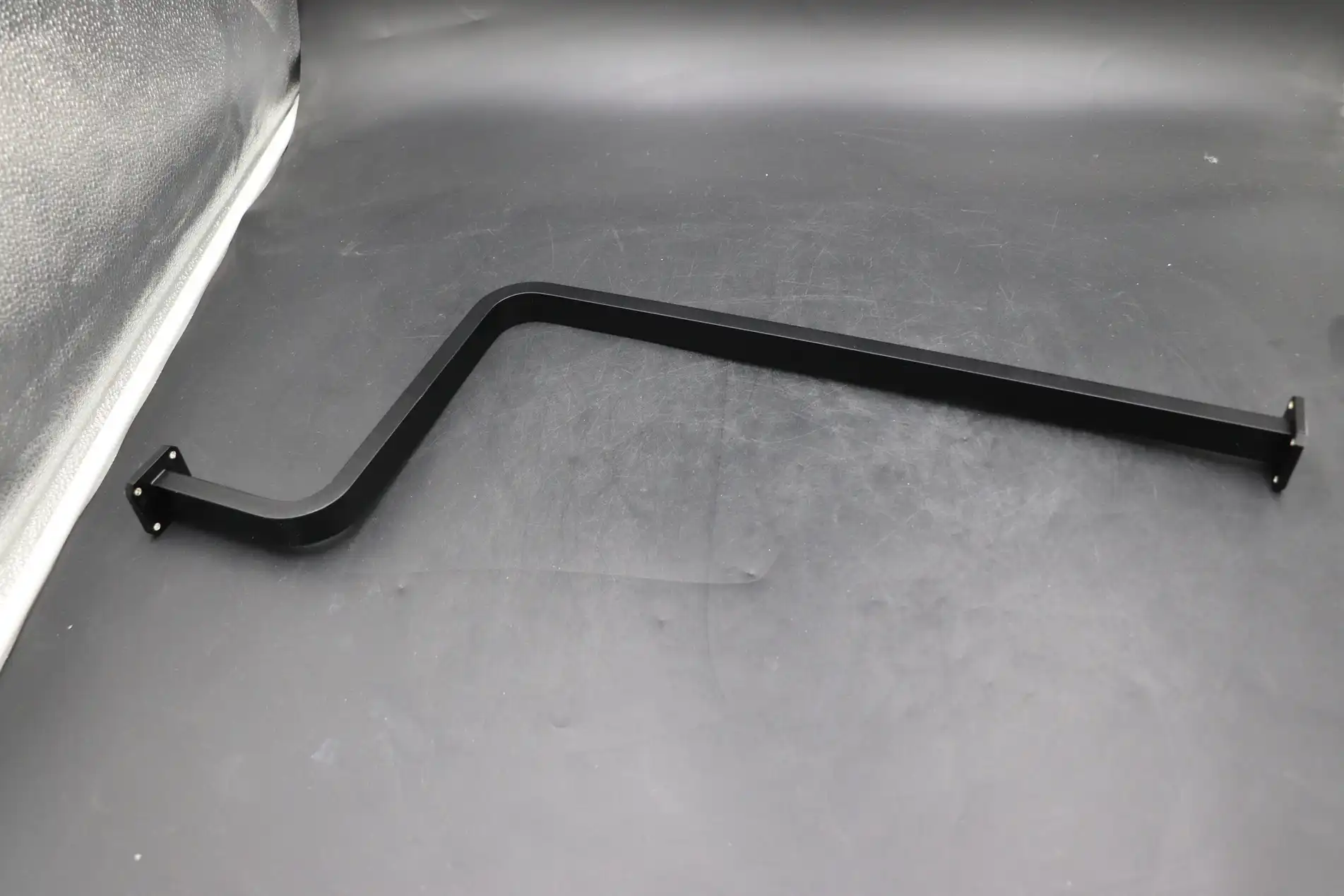
Integration with Complete Waveguide Systems
Waveguide bends rarely function in isolation; they typically integrate into larger waveguide assemblies incorporating straight sections, transitions, flanges, and other components. Understanding how Waveguide E Bend elements interact with adjacent components is essential for achieving optimal system performance. Impedance matching at interfaces between bends and straight waveguide sections prevents reflections that could compromise overall system efficiency, while proper flange alignment ensures mechanical integrity and electromagnetic continuity. Advanced Microwave Technologies provides comprehensive waveguide assembly solutions beyond individual bend components. Their product portfolio includes waveguide assemblies, coaxial and cable assemblies, microwave antennas with feeds and servos, and complete antenna measurement systems. This integrated approach enables customers to source all necessary components from a single reliable supplier with proven expertise in microwave technology. The company's engineering team can assist with system design, component selection, and integration planning to ensure that Waveguide E Bend elements work seamlessly within the complete signal chain.
Polarization Management and Field Rotation
In some applications, the electromagnetic field polarization must be rotated to match receiver input requirements or accommodate antenna configurations. While E and H bends change signal direction, waveguide twists rotate the polarization plane without changing propagation direction. A 90-degree twist requires at least two wavelengths of length to prevent excessive reflections, while a complete 180-degree field inversion should span approximately four wavelengths. Combining Waveguide E Bend components with appropriate twist sections enables complex three-dimensional routing while maintaining proper polarization alignment throughout the signal path. Understanding the relationship between bend type, polarization, and system geometry helps engineers develop efficient layouts that minimize component count while meeting all performance requirements. For example, a system requiring both a 90-degree direction change and a 90-degree polarization rotation might employ either an E Bend followed by a twist section or an H Bend with different twist orientation, depending on mechanical space constraints and preferred signal path geometry.
Advanced Design Techniques for Critical Applications
Modern microwave systems frequently operate in challenging environments where standard component designs may prove insufficient. Military applications exposed to extreme temperatures, shock, and vibration require enhanced mechanical robustness beyond typical commercial specifications. Satellite communication systems must function reliably for years without maintenance in the harsh space environment. These demanding applications often benefit from custom Waveguide E Bend designs incorporating reinforced mounting features, thermal expansion compensation, or special materials selected for specific environmental conditions. Advanced Microwave Technologies Co., Ltd offers OEM services providing end-to-end customization from initial concept through production delivery. Their experienced engineering team collaborates with customers to develop Waveguide E Bend solutions optimized for unique application requirements. Whether developing prototypes for new system designs or producing volume quantities for established programs, their manufacturing capabilities support both small-scale custom orders and large production runs with consistent quality and performance.
Multi-Degree Bends and Complex Configurations
Standard 90-degree bends represent the most common configuration, but many applications require alternative angles or compound bend geometries. Advanced Microwave supplies multi-degree bend options including 45-degree, 30-degree, and custom angles optimized for specific mechanical layouts. These non-standard configurations enable more flexible system routing while maintaining the electrical performance characteristics essential for reliable operation. The Waveguide E Bend product line accommodates both standard catalog angles and specialized custom configurations developed in collaboration with customers. Compound bends combining multiple direction changes in a single assembly can reduce component count, simplify installation, and potentially improve overall system performance by eliminating multiple interface connections. These complex geometries require advanced design analysis and specialized manufacturing capabilities to ensure proper electromagnetic performance throughout all sections of the assembly. Advanced Microwave's computational design tools and extensive measurement facilities enable verification of compound bend performance before committing to production quantities.
Conclusion
Waveguide E Bend and H Bend configurations each offer distinct advantages for microwave system applications, with selection depending on mechanical constraints, performance requirements, and polarization considerations for optimal signal transmission in critical communications infrastructure.
Cooperate with Advanced Microwave Technologies Co., Ltd.
Partner with a trusted China Waveguide E Bend manufacturer offering over 20 years of proven expertise in microwave solutions. As a leading China Waveguide E Bend supplier and China Waveguide E Bend factory, Advanced Microwave Technologies delivers High Quality Waveguide E Bend products with competitive Waveguide E Bend price points. Our China Waveguide E Bend wholesale capabilities support both prototyping and volume production with Waveguide E Bend for sale across global markets. Contact craig@admicrowave.com today to discuss your specific requirements and discover how our ISO-certified manufacturing, comprehensive testing facilities, and dedicated technical support can transform your next project into a success.
References
1. "Waveguide Theory and Applications" by Samuel Y. Liao, Department of Electrical Engineering, California State University
2. "Microwave Engineering" by David M. Pozar, Department of Electrical and Computer Engineering, University of Massachusetts
3. "Waveguide Handbook" edited by Nathan Marcuvitz, MIT Radiation Laboratory Series
4. "Principles of RF and Microwave Measurements" by Nuno Borges Carvalho and Dominique Schreurs, Institute of Telecommunications
YOU MAY LIKE
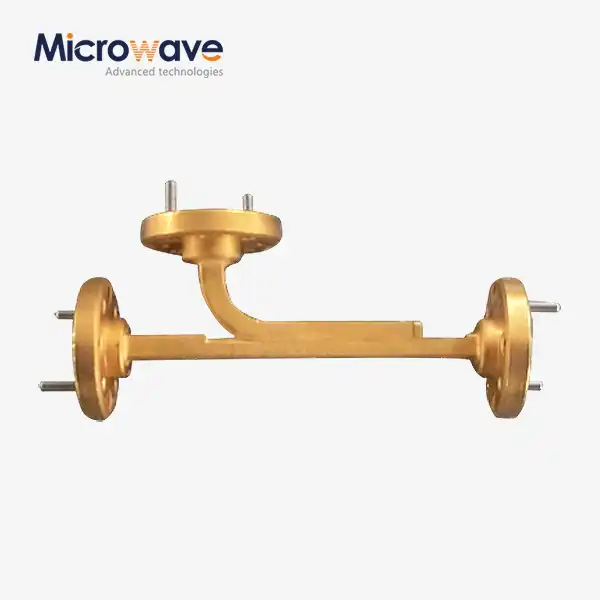 VIEW MOREBroadwall Directional Coupler
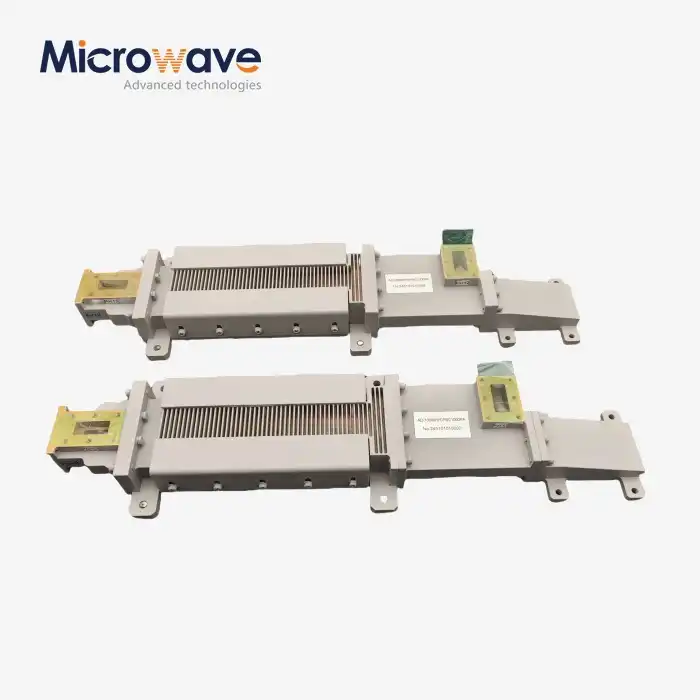 VIEW MOREWG Circulator
 VIEW MOREHigh Power Waveguide Differential Phase Shift Circulator
 VIEW MOREWaveguide Coupling Fixed Attenuator
 VIEW MOREWG Isolator
 VIEW MOREHigh Power Waveguide Differential Phase Shift Isolator
 VIEW MOREWG Band Stop Filter
 VIEW MOREWG Low Pass Filter