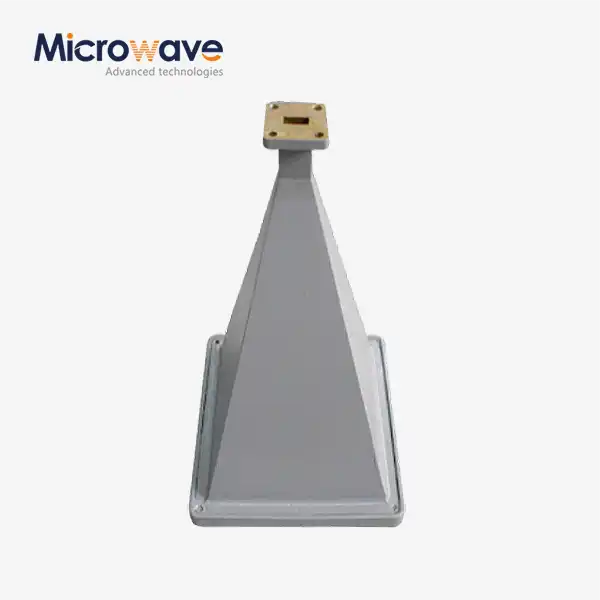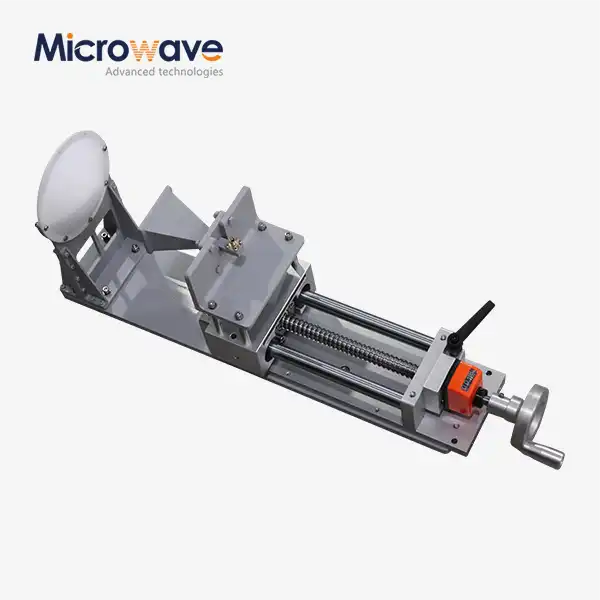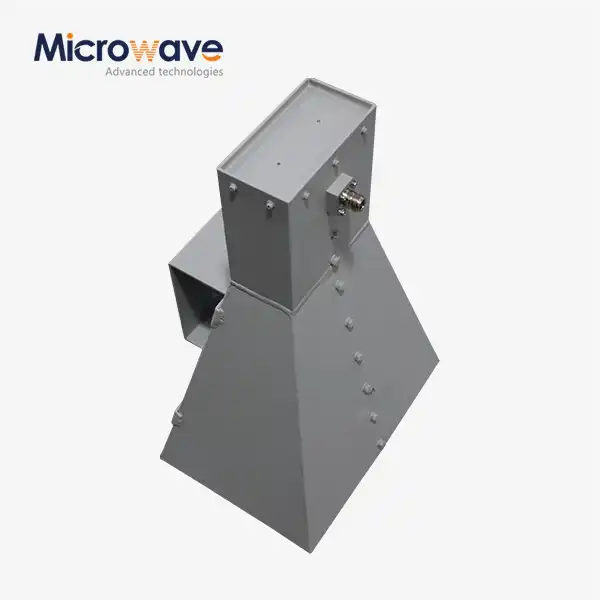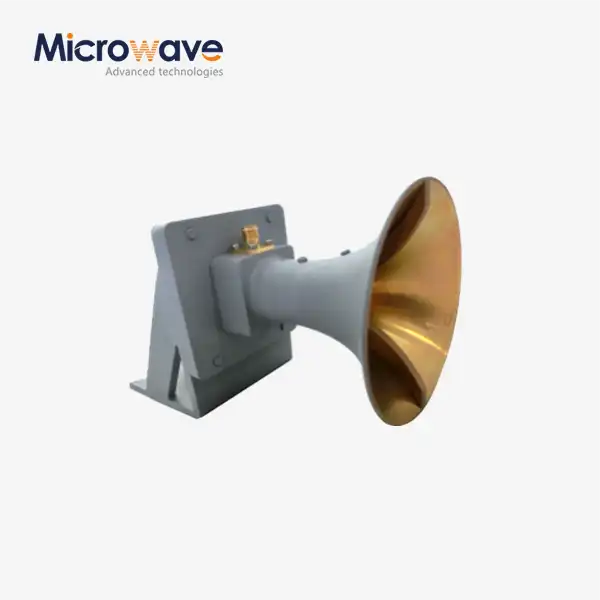





What Is a Waveguide Coupling Fixed Attenuator and How It Works?
A waveguide coupling fixed attenuator is a precision microwave component that reduces signal power in waveguide systems while maintaining signal integrity. This device uses coupling technology to achieve predetermined attenuation levels, making it essential for signal control in high-frequency applications. Unlike variable attenuators, fixed attenuators provide stable, repeatable attenuation values. They work by extracting a portion of the electromagnetic energy through directional coupling, then terminating it in a matched load. Engineers rely on these components for calibration standards, power level control, and protecting sensitive equipment in radar, satellite communications, and test systems where precise signal management is critical.
What is a Waveguide Coupling Fixed Attenuator?
Overview of Waveguide Coupling Fixed Attenuators
A waveguide coupling fixed attenuator speaks to a advanced microwave component planned to diminish flag quality by a foreordained sum inside waveguide transmission frameworks. This gadget combines the standards of directional coupling with exactness weakening to provide reliable flag control over wide recurrence ranges. The principal plan consolidates a high-directivity coupler coordinates with ending loads to accomplish particular constriction values. These components utilize the waveguide's electromagnetic field structure to extricate vitality through carefully situated coupling gaps. The extricated vitality streams into coordinated terminations, avoiding reflections that may compromise framework performance. Modern waveguide coupling fixed attenuators bolster recurrence ranges from L-band through millimeter-wave frequencies, expanding up to 110 GHz in progressed plans. They suit different waveguide guidelines counting WR10 through WR230, guaranteeing compatibility with differing framework models. The coupling instrument keeps up great confinement between input and yield ports whereas giving steady constriction characteristics over temperature variations.
Design, Materials, and Quality Assurance
Manufacturing exactness decides the attenuator's execution characteristics. High-quality units highlight moo inclusion misfortune variety, negligible phase twisting, and predominant return misfortune determinations. The mechanical development ordinarily utilizes aluminum or copper amalgam materials, giving solidness whereas keeping up electrical execution measures required for requesting applications. Quality confirmation conventions guarantee each unit meets exacting details for VSWR, addition misfortune levelness, and control dealing with capacity. These parameters straightforwardly affect framework execution, making dependable fabricating forms basic for mission-critical applications where flag judgment cannot be compromised.

The Problem It Solves and the Need It Fulfills
Key Applications of Waveguide Coupling Fixed Attenuators
Signal control administration presents progressing challenges in microwave framework plan, especially when managing with high-power transmitters and touchy collectors. Waveguide coupling fixed attenuators address the basic require for exact flag level control without presenting critical stage mutilation or impedance mismatches. Protection of delicate components speaks to a essential application driver. Collectors and estimation gear regularly require particular input control levels to work inside their direct run. Intemperate flag quality can cause immersion, twisting, or changeless harm to costly components. Fixed attenuators give a solid obstruction, guaranteeing downstream hardware gets suitable flag levels. Calibration measures constitute another fundamental application range. Test and estimation frameworks require known reference levels to keep up precision. Waveguide coupling settled attenuators offer traceable weakening values, empowering exact calibration of control meters, range analyzers, and arrange analyzers. Their steadiness over time and temperature makes them perfect reference components.
System Optimization and Performance Enhancement
System segregation needs drive selection in complex RF models. Numerous flag ways inside radar or communication frameworks can connected through undesirable coupling, making impedances or flimsiness. Key situation of settled attenuators breaks these coupling ways whereas keeping up craved flag flow. Power level optimization improves by and large framework execution. Distinctive subsystems frequently work ideally at particular control levels. Settled attenuators empower engineers to tailor flag qualities for each subsystem without overhauling whole flag chains. This adaptability decreases advancement time and progresses framework efficiency. Dynamic run expansion capabilities demonstrate profitable in test situations. Estimation frameworks with constrained energetic run can utilize settled attenuators to get to broader flag level ranges, extending their estimation capabilities without hardware modifications.
Core Features and Functionality Deep Dive
Coupling and Termination Design
The coupling component shapes the heart of these attenuators' operation. Directional couplers extricate foreordained parcels of the transmitted flag through absolutely dimensioned gaps or tests. These coupling structures keep up steady extraction proportions over the working recurrence band, guaranteeing steady constriction performance. Termination systems retain the coupled vitality to anticipate reflections. High-quality terminations utilize resistive materials optimized for particular recurrence ranges and control levels. The end plan straightforwardly impacts the attenuator's return misfortune and separation characteristics, making this component basic for by and large performance.
Impedance Matching and Frequency Response
Impedance coordinating structures guarantee consistent integration with standard waveguide frameworks. These highlights keep up the characteristic impedance all through the flag way, minimizing reflections and protecting flag judgment. Progressed plans consolidate coordinating components that compensate for coupling structure discontinuities. Frequency reaction characteristics decide operational transfer speed. Broadband plans keep up weakening determinations over octave or multi-octave recurrence ranges, whereas narrowband adaptations optimize execution for particular applications. The coupling structure geometry and end plan both impact recurrence reaction uniformity.
Power Handling, Mechanical Integrity, and Temperature Stability
Power taking care of capabilities change based on development and application prerequisites. Standard models regularly handle ceaseless control levels from 10 watts to a few kilowatts, whereas specialized high-power adaptations suit megawatt-class applications. Warm administration gets to be pivotal at higher control levels, requiring improved warm scattering mechanisms. Mechanical development highlights guarantee unwavering quality in requesting situations. Exactness machining keeps up dimensional resistances basic for electromagnetic execution. Strong rib associations give secure integration with framework waveguides whereas keeping up electrical progression and natural sealing. Temperature steadiness instruments keep up execution over operational temperature ranges. Fabric choice and warm recompense strategies minimize weakening float with temperature varieties. This soundness demonstrates fundamental for open air establishments and aviation applications encountering extraordinary temperature excursions.
Technology Behind Waveguide Coupling Fixed Attenuators
Electromagnetic and Transmission Principles
Electromagnetic field hypothesis administers the coupling mechanism's operation. The essential waveguide bolsters the prevailing mode proliferation, whereas coupling gaps permit controlled vitality exchange to auxiliary ways. The coupling coefficient depends on opening estimate, position, and introduction relative to the field patterns. Directional coupling standards empower particular vitality extraction based on flag proliferation heading. This directivity gives segregation between forward and invert signals, basic for precise constriction in complex frameworks. Progressed plans accomplish directivity values surpassing 30 dB over wide recurrence ranges. Transmission line hypothesis applies to the coupling and end structures. Appropriate impedance coordinating at all intersections anticipates undesirable reflections that seem debase execution. Quarter-wave transformers and decreased moves optimize impedance moves inside the device.
Material Science and Thermal Management
Material science contemplations impact component determination and preparing. Conductive materials must keep up moo misfortune whereas giving mechanical soundness. Surface medicines decrease oxidation and make strides long-term unwavering quality. Dielectric materials in terminations require moo misfortune digression and steady properties over temperature and frequency. Manufacturing resiliences straightforwardly affect electromagnetic execution. Coupling opening measurements must keep up micron-level exactness to accomplish indicated constriction values. Progressed machining methods and quality control forms guarantee reliable generation of high-performance units. Thermal examination guides control taking care of optimization. Warm era happens essentially in the end systems, requiring cautious warm plan to avoid execution corruption or harm. Limited component examination devices demonstrate warm conveyances and direct cooling framework plan for high-power applications.
Key Advantages and Selling Points
Performance Precision and Frequency Range
Precision and repeatability recognize quality waveguide coupling fixed attenuators from elective arrangements. Fabricating controls guarantee each unit meets indicated constriction values inside tight resiliences, ordinarily ±0.1 dB or superior. This accuracy empowers precise framework plan and dependable execution predictions. Broad recurrence scope obliges differing application necessities without requiring numerous specialized components. Single units frequently span whole waveguide groups, disentangling framework plan and lessening stock prerequisites. This scope keeps up execution details over the whole recurrence range. High control dealing with capacity empowers utilize in requesting applications where elective weakening strategies come up short. Strong development and successful warm administration permit operation at control levels that would harm semiconductor-based options. This capability demonstrates fundamental for radar and communication transmitter applications.
Isolation, Stability, and Reliability
Excellent segregation characteristics anticipate undesirable flag coupling between framework components. Tall directivity and return misfortune details guarantee clean flag ways with negligible interaction between input and yield ports. This confinement keeps up framework solidness and avoids oscillations. Temperature solidness keeps up execution over natural extremes. Military and aviation applications regularly require operation from -55°C to +125°C without execution debasement. Quality plans consolidate warm emolument methods to keep up details over these ranges. Low inclusion misfortune minimizes affect on framework commotion figure and proficiency. Whereas giving the craved constriction, these gadgets present negligible extra misfortune in the flag way. This characteristic jam framework affectability and decreases control utilization requirements. Long-term unwavering quality comes about from vigorous mechanical development and traditionalist electrical plan. Quality units give decades of steady operation without calibration or upkeep. This unwavering quality diminishes lifecycle costs and progresses framework availability.
Potential Limitations and Considerations
Fixed attenuation values limit flexibility compared to variable alternatives. Once installed, these devices provide constant attenuation without adjustment capability. System designers must carefully select attenuation values during the design phase, as changes require component replacement.Size and weight constraints may impact system integration in space-limited applications. Waveguide components inherently require more volume than coaxial alternatives, though they offer superior power handling and frequency performance. Careful system layout planning accommodates these physical requirements.Cost considerations become significant for high-performance units with tight specifications. Precision manufacturing and quality materials increase component costs compared to basic alternatives.
However, the superior performance and reliability often justify the investment for critical applications.Frequency limitations exist for each waveguide band. Unlike broadband coaxial components, waveguide devices operate within specific frequency ranges determined by the waveguide dimensions. Multi-band applications may require multiple components or frequency conversion.Installation complexity requires specialized knowledge and tools. Waveguide systems demand precise alignment and proper torque procedures to maintain electrical performance and environmental sealing. Training and proper tooling become essential for field installation and maintenance.Power limitations exist even for high-power designs. Extreme power applications may exceed the thermal capacity of available termination materials. Custom designs or alternative cooling methods may be required for the most demanding applications.

Waveguide Coupling Fixed Attenuator vs. The Competition
Resistive pad attenuators offer lower cost and smaller size but cannot handle high power levels or maintain performance at millimeter-wave frequencies. Their resistive elements generate significant heat and drift with temperature, limiting accuracy in precision applications. Waveguide coupling fixed attenuators excel where power handling and frequency performance are priorities.PIN diode variable attenuators provide adjustment capability but introduce noise and nonlinearity. Their semiconductor elements are sensitive to temperature and aging effects, requiring periodic calibration. They also suffer from limited power handling and potential damage from high-power transients.
Fixed coupling attenuators eliminate these concerns while providing superior linearity and power capacity.Mechanical variable attenuators combine adjustment capability with high power handling but introduce reliability concerns. Moving parts wear over time and may stick or bind in harsh environments. They also require control mechanisms and regular maintenance. Fixed attenuators eliminate mechanical complexity while providing superior long-term stability.The coupling approach offers unique advantages in isolation and stability compared to absorption-based alternatives. Direct absorption methods can create thermal gradients that affect nearby components, while coupling methods distribute heat more effectively. This thermal management advantage becomes crucial in high-power applications.
Target Audience and Ideal Use Cases
System architects designing radar installations benefit from the power handling and precision of waveguide coupling fixed attenuators. These applications often require reliable attenuation standards for calibration and protection of sensitive receivers. The temperature stability proves essential for outdoor installations subject to environmental extremes.Satellite communication ground stations utilize these components for signal level management and equipment protection. The broad frequency coverage accommodates multiple communication bands within single installations. Power handling capabilities enable use with high-power uplink transmitters while precision specifications support accurate link budget calculations.Defense contractors developing military communication and radar systems require components meeting stringent reliability standards.
The rugged construction and stable performance of quality fixed attenuators align with military specifications for environmental and operational requirements. Long-term stability reduces maintenance requirements in deployed systems.Test equipment manufacturers incorporate these attenuators as calibration standards and range extension devices. The precision and traceability enable accurate measurement system design while broad frequency coverage reduces the number of required components. Temperature stability maintains calibration accuracy across operating conditions.Research institutions operating millimeter-wave systems benefit from the frequency extension capabilities of advanced designs. The low noise characteristics preserve measurement sensitivity while high isolation prevents unwanted coupling in complex experimental setups.Aerospace applications leverage the temperature stability and reliability for aircraft and spacecraft systems. The lightweight construction and proven durability meet aviation industry requirements while maintaining performance in high-altitude and space environments.
Conclusion and Future Outlook
Waveguide coupling fixed attenuators remain fundamental components in high-frequency systems requiring precise signal control and high power handling. Their unique combination of stability, power capacity, and frequency performance makes them irreplaceable in demanding applications. As communication systems evolve toward higher frequencies and increased power levels, these components will continue advancing through improved materials and manufacturing techniques. The growing demand for millimeter-wave applications and satellite communications drives continued innovation in coupling designs and thermal management. Investment in quality waveguide coupling fixed attenuators ensures long-term system reliability and performance in an increasingly demanding electromagnetic environment.
Frequently Asked Questions
Q1: What Frequency Ranges Do Waveguide Coupling Fixed Attenuators Support?
A: Waveguide coupling fixed attenuators support frequencies from approximately 1 GHz to 110 GHz, depending on the specific waveguide band. Each waveguide size covers a specific frequency range, such as WR10 for 75-110 GHz or WR90 for 8.2-12.4 GHz. Advanced designs maintain specifications across the entire waveguide band.
Q2: How do coupling fixed attenuators differ from resistive attenuators?
A: Coupling attenuators extract energy through electromagnetic coupling rather than resistive absorption, enabling higher power handling and better thermal management. They provide superior isolation and stability compared to resistive designs while maintaining lower insertion loss and better frequency response uniformity.
Q3: What power levels can these attenuators handle safely?
A: Power handling varies by design and frequency band, ranging from 10 watts for millimeter-wave units to several kilowatts for lower frequency applications. High-power versions can accommodate megawatt-class systems with appropriate thermal management. Specific power ratings depend on duty cycle and environmental conditions.
Q4: Are custom attenuation values available for specialized applications?
A: Yes, custom attenuation values can be manufactured to meet specific application requirements. Manufacturing processes allow precise control of coupling coefficients to achieve desired attenuation levels within typical tolerances of ±0.1 dB. Custom designs may require extended lead times for development and testing.
Q5: How do temperature variations affect attenuation performance?
A: Quality waveguide coupling fixed attenuators incorporate thermal compensation techniques to minimize temperature effects. Typical specifications maintain attenuation values within ±0.05 dB across military temperature ranges (-55°C to +125°C). Material selection and mechanical design minimize thermal expansion effects on coupling coefficients.
Advanced Microwave Technologies Co., Ltd - Your Trusted Waveguide Coupling Fixed Attenuator Manufacturer
Advanced Microwave Technologies Co., Ltd stands ready to meet your waveguide coupling fixed attenuator requirements with over two decades of manufacturing excellence. Our ISO 9001:2015 certified facility produces high-performance components supporting frequencies up to 110 GHz with exceptional precision and reliability. Whether you need standard configurations or custom OEM solutions, our experienced engineering team provides comprehensive support from design through delivery. Contact us at sales@admicrowave.com" to discuss your specific requirements and discover how our advanced manufacturing capabilities can enhance your project success.
References
1. Pozar, David M. "Microwave Engineering, Fourth Edition." John Wiley & Sons, 2012.
2. Collin, Robert E. "Foundations for Microwave Engineering, Second Edition." IEEE Press, 2001.
3. Rizzi, Peter A. "Microwave Engineering: Passive Circuits." Prentice Hall, 1988.
4. Montgomery, Carol G., Robert H. Dicke, and Edward M. Purcell. "Principles of Microwave Circuits." Institution of Engineering and Technology, 1987.
5. Marcuvitz, Nathan. "Waveguide Handbook." Peter Peregrinus Ltd, 1986.
6. Saad, Tarek S. "Microwave Engineers' Handbook, Volume 1." Artech House, 1971.