





What Is a Coaxial Variable Attenuator and Why Is It Important?
In modern RF and microwave systems, engineers frequently encounter a critical challenge: signal levels that are too strong can overload receivers, distort measurements, and damage sensitive equipment, while insufficient control over signal strength compromises system performance and testing accuracy. A Coaxial Variable Attenuator is a precision electronic device that reduces RF signal power without distorting the waveform, providing adjustable attenuation control essential for telecommunications, aerospace, defense, and testing applications where precise signal management determines system success or failure.
Understanding Coaxial Variable Attenuator Technology
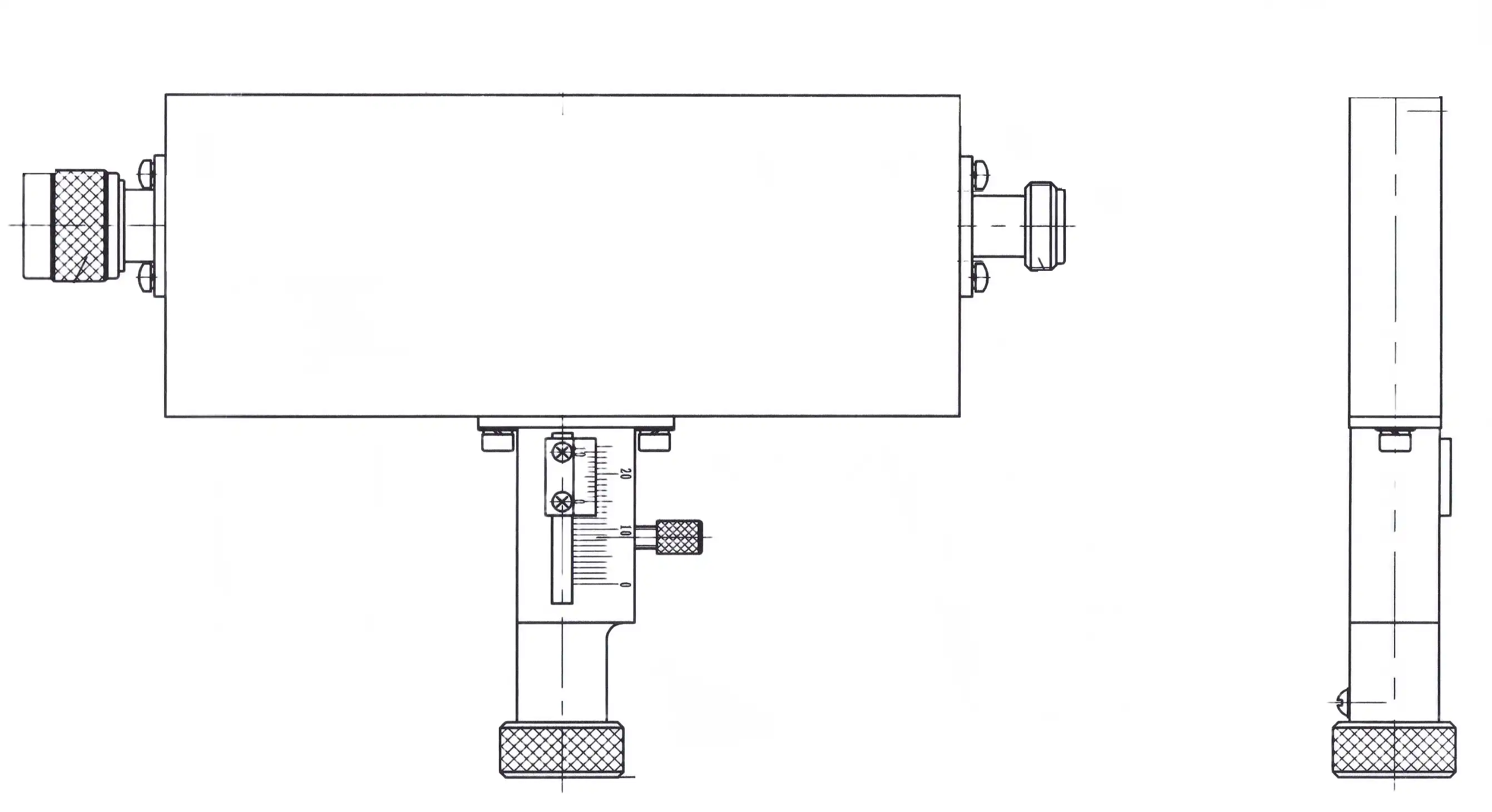
A Coaxial Variable Attenuator represents a sophisticated solution in RF signal management, fundamentally designed to provide controlled, adjustable reduction of signal power while maintaining signal integrity throughout the transmission path. Unlike amplifiers that increase signal strength, the Coaxial Variable Attenuator operates by introducing controlled loss into the signal path, allowing engineers and technicians to fine-tune signal levels precisely according to specific application requirements. This capability becomes particularly critical in environments where signal levels vary dynamically or where different testing scenarios require different power levels without physically reconfiguring the entire system setup.The operational principle of a Coaxial Variable Attenuator centers on resistive elements that can be mechanically adjusted to alter the degree of signal attenuation. Advanced Microwave Technologies Co., Ltd provides two types of coaxial variable attenuators and fixed attenuators, with operating frequencies between 18-40GHz, incorporating resistive card mechanisms that move perpendicular to the transmission line. The resistive material, typically consisting of carbon-based composites or thin-film metal alloys, is precisely manufactured to maintain consistent impedance matching across the entire operating frequency range. This design ensures that the Coaxial Variable Attenuator can handle frequencies from DC to 18 GHz and beyond, making it versatile enough for applications ranging from legacy communication systems to cutting-edge 5G and future 6G technologies. The adjustable nature allows users to dial in exact attenuation values between 0-30 dB, providing granular control over signal strength that is impossible to achieve with fixed attenuators.
Working Mechanisms of Coaxial Variable Attenuators
The resistive card mechanism employed in modern Coaxial Variable Attenuator designs represents one of the most reliable methods for achieving precise signal attenuation across broad frequency ranges. This mechanism functions through a specially designed resistive element positioned within the coaxial structure that can be moved or rotated to vary the degree of interaction with the RF signal passing through the transmission line. As the resistive card moves into the signal path, it absorbs a portion of the RF energy, converting it into heat while allowing the remaining signal to pass through with reduced amplitude. The precision engineering behind this movement ensures that the attenuation change is smooth, predictable, and repeatable, critical factors for applications requiring consistent performance over thousands of adjustment cycles. Material selection plays an absolutely crucial role in Coaxial Variable Attenuator performance, directly impacting frequency response, power handling capability, thermal stability, and long-term reliability. Advanced Microwave Technologies Co., Ltd demonstrates exceptional commitment to quality through rigorous material selection and testing processes, with each component material undergoing extensive verification to confirm its electrical and mechanical properties meet stringent specifications. The resistive materials must exhibit stable electrical characteristics across temperature variations, maintain consistent impedance properties throughout the frequency range, and demonstrate minimal drift over extended operational periods. Housing materials, typically aluminum or stainless steel, are selected not only for their mechanical strength and durability but also for their thermal conductivity properties, which help dissipate heat generated during high-power operation. The company's Coaxial Variable Attenuator products feature exquisitely designed construction with quality and precision comparable to high-quality international products, ensuring customers receive components that perform reliably in the most demanding applications.
Key Technical Specifications and Performance Parameters
Understanding the technical specifications of a Coaxial Variable Attenuator is essential for proper system integration and optimal performance. The frequency range defines the operational bandwidth within which the attenuator maintains specified performance characteristics, with Advanced Microwave's products covering DC to 18 GHz as standard, with customization available for specialized frequency requirements. This broad frequency coverage makes the Coaxial Variable Attenuator suitable for diverse applications, from low-frequency communications and broadcasting to high-frequency radar systems and satellite communications. The attenuation range, typically 0-30 dB for variable models, provides sufficient dynamic range for most practical applications, allowing engineers to reduce signal power by a factor of 1000 or more when maximum attenuation is applied. Insertion loss represents a critical specification that quantifies the signal loss introduced by the Coaxial Variable Attenuator when set to zero attenuation, effectively measuring the device's baseline impact on signal transmission. Advanced Microwave's products maintain insertion loss below 1 dB, ensuring minimal signal degradation even when the attenuator is set to its minimum attenuation position. This low insertion loss is achieved through careful impedance matching, high-quality connector selection, and precision manufacturing processes that minimize discontinuities and reflections within the signal path. Power handling capability, rated up to 100W for standard models, determines the maximum RF power that can safely pass through the Coaxial Variable Attenuator without causing damage or performance degradation. This specification becomes particularly important in transmitter applications, test systems handling high-power signals, and scenarios where accidental overpower conditions might occur.
Impedance Matching and VSWR Characteristics
Impedance matching stands as one of the most critical aspects of Coaxial Variable Attenuator design, directly affecting signal reflection, power transfer efficiency, and overall system performance. A properly designed Coaxial Variable Attenuator maintains a consistent 50-ohm impedance throughout its adjustment range, ensuring seamless integration with standard RF and microwave systems without creating impedance discontinuities that could generate standing waves, signal reflections, or measurement errors. The Voltage Standing Wave Ratio (VSWR) quantifies how well the attenuator matches the system impedance, with lower values indicating better matching performance. Advanced Microwave's Coaxial Variable Attenuator products typically achieve VSWR values of 1.20:1 or better across their operational frequency range, demonstrating excellent impedance matching that minimizes signal reflections and preserves signal integrity. The importance of maintaining excellent VSWR characteristics cannot be overstated, particularly in precision measurement applications, sensitive receiver systems, and transmitter configurations where reflected power can damage output stages or compromise measurement accuracy. When a Coaxial Variable Attenuator exhibits poor VSWR, a portion of the incident signal reflects back toward the source, reducing the actual power delivered to the load and potentially causing interference with other system components. In test and measurement scenarios, these reflections introduce measurement uncertainties that compound with other system errors, making it impossible to achieve the precision required for component characterization, system calibration, or compliance testing. The consistent 50-ohm impedance maintained by high-quality Coaxial Variable Attenuator designs from Advanced Microwave Technologies Co., Ltd ensures that system engineers can confidently integrate these components without concerns about impedance-related performance degradation.
Critical Applications and Industry Use Cases
Coaxial Variable Attenuators serve indispensable roles across multiple industries where precise signal level control determines system performance, measurement accuracy, and operational reliability. In telecommunications infrastructure, base station systems rely on Coaxial Variable Attenuator technology to balance signal levels across multiple channels, compensate for cable losses, and protect sensitive receiver front-ends from overload conditions during high-power transmission events. Satellite ground stations employ these devices to optimize signal transfer efficiency, maintaining ideal signal-to-noise ratios while accommodating the wide dynamic range of signals received from orbiting satellites operating under varying atmospheric conditions and orbital positions. The ability to adjust attenuation levels without system shutdown or reconfiguration provides operational flexibility that reduces maintenance time and improves system availability.Defense and aerospace applications demand the highest levels of performance, reliability, and precision from Coaxial Variable Attenuator components, as these systems often operate in mission-critical scenarios where failure is not an option. Military surveillance radars utilize variable attenuators to manage dynamic range, enabling detection of both weak distant targets and strong nearby returns without saturating receiver stages or losing sensitivity. Air traffic control systems benefit from the ultra-sharp beamforming capabilities enabled by precisely controlled signal distribution networks incorporating Coaxial Variable Attenuator technology, ensuring accurate aircraft tracking even in challenging weather conditions where signal attenuation from precipitation could otherwise compromise detection performance. Navigation equipment, UAV communication links, and shipboard systems all depend on reliable signal level management that Coaxial Variable Attenuators provide.
Test and Measurement Applications
The test and measurement industry represents one of the largest markets for Coaxial Variable Attenuator technology, driven by the fundamental requirement to protect expensive test equipment from damage due to excessive signal levels while maintaining measurement accuracy across widely varying input conditions. Network analyzers, spectrum analyzers, signal generators, and power meters all incorporate or work alongside variable attenuators to extend their dynamic range, prevent input damage, and enable accurate characterization of devices under test. When calibrating RF systems or conducting production testing of wireless devices, engineers routinely encounter situations where the signal level exceeds the safe input range of measurement instruments. A properly selected Coaxial Variable Attenuator placed between the signal source and measurement equipment reduces the signal to safe levels while maintaining measurement integrity, allowing accurate characterization without equipment damage risk. Research and development laboratories conducting antenna testing, component characterization, and system performance validation rely heavily on Coaxial Variable Attenuator technology to create controlled test conditions. Advanced Microwave Technologies Co., Ltd operates a state-of-the-art 24m Microwave Darkroom equipped with advanced antenna measurement systems that utilize precision variable attenuators throughout the signal chain to achieve accurate far-field measurements across the 0.5-110GHz frequency range. The ability to precisely control signal levels during antenna pattern measurements, gain calibration, and impedance characterization enables engineers to extract granular details about antenna performance that would be impossible with fixed attenuation values. The Coaxial Variable Attenuator serves as an essential tool that bridges the gap between high-power transmitters and sensitive measurement receivers, protecting equipment while enabling measurements that drive innovation across the microwave industry.
Advantages of Advanced Microwave's Coaxial Variable Attenuator Solutions
Advanced Microwave Technologies Co., Ltd delivers Coaxial Variable Attenuator products that embody over 20 years of experience in microwave component design and manufacturing, offering customers performance characteristics and quality standards comparable to the finest international products. The company's commitment to excellence manifests in every aspect of product development, from initial material selection through final testing and quality verification. Each Coaxial Variable Attenuator undergoes comprehensive testing in laboratories equipped with advanced microwave measurement equipment up to 110 GHz, ensuring that every unit meets or exceeds published specifications across its entire frequency range. This rigorous quality control process, combined with ISO 9001:2015 certification and RoHS compliance, provides customers with confidence that Advanced Microwave's products will perform reliably in the most demanding applications. The technical features of Advanced Microwave's Coaxial Variable Attenuator products distinguish them in a competitive marketplace where performance, reliability, and value determine supplier selection. High-performance designs handle substantial RF power levels without degradation, maintaining consistent attenuation characteristics and low insertion loss even during extended high-power operation. The compact construction integrates seamlessly into existing systems, occupying minimal space while providing maximum functionality, a critical consideration in space-constrained installations such as satellite ground stations, mobile test systems, and densely packed equipment racks. Low power consumption for any active control elements reduces thermal loading on system cooling infrastructure and contributes to overall energy efficiency, an increasingly important consideration as environmental regulations tighten and operational costs rise.
Customization and OEM Services
Recognizing that different applications demand different specifications, Advanced Microwave Technologies Co., Ltd offers comprehensive OEM services that enable customers to obtain Coaxial Variable Attenuator solutions precisely tailored to their unique requirements. Whether developing telecommunications infrastructure requiring specific frequency bands and power handling capabilities, aerospace systems demanding ruggedized construction for extreme environmental conditions, or test equipment needing specialized connector configurations, Advanced Microwave's engineering team works collaboratively with customers to develop optimal solutions. The customization process begins with detailed technical discussions to understand application requirements, performance objectives, and integration constraints, followed by design development that leverages decades of microwave engineering expertise to create products that exceed customer expectations. The OEM services extend beyond simple parameter customization to encompass complete product development support, including rapid prototyping for testing and evaluation before committing to full-scale production. This approach minimizes development risk and ensures that the final Coaxial Variable Attenuator design meets all functional, performance, and reliability requirements before volume manufacturing begins. Advanced Microwave's expert engineers provide in-depth technical assistance throughout the product lifecycle, from initial specification development and design review through installation guidance, troubleshooting support, and long-term maintenance recommendations. Quick turnaround times and flexible order quantities accommodate both small research projects requiring limited quantities and large production programs demanding thousands of units with rigorous supply chain management.
Selection Criteria for Optimal Performance
Selecting the appropriate Coaxial Variable Attenuator for a specific application requires careful evaluation of multiple technical parameters, operational requirements, and integration considerations to ensure optimal system performance. The frequency range must encompass all signals that will pass through the attenuator, with sufficient margin to accommodate frequency drift, modulation sidebands, and harmonic content. Applications involving wideband signals, frequency-agile transmitters, or multi-band receivers may require Coaxial Variable Attenuator designs that maintain flat frequency response across octave or multi-octave bandwidths. The attenuation range determines the device's ability to accommodate varying signal levels, with typical applications requiring enough range to reduce maximum expected signal levels to safe values while providing sufficient minimum attenuation to avoid unnecessary insertion loss during low-power operation. Power handling capability must exceed the maximum expected signal power with adequate safety margin to prevent damage during accidental overpower conditions or system malfunctions. Coaxial Variable Attenuator products from Advanced Microwave Technologies Co., Ltd handle up to 100W as standard, with higher power versions available for specialized applications involving high-power transmitters, industrial RF heating systems, or particle accelerator installations. The operating temperature range must encompass all environmental conditions encountered during system operation, from the extreme cold of high-altitude aerospace applications to the elevated temperatures found in desert installations or equipment rooms with limited cooling capacity. Advanced Microwave's standard operating temperature range of -40°C to +85°C covers most terrestrial applications, with extended temperature options available for extreme environment requirements.
Integration and Installation Considerations
Successful integration of a Coaxial Variable Attenuator into an RF system requires attention to mechanical interface compatibility, electrical performance preservation, and operational accessibility. Connector selection must match existing system interfaces to avoid the need for adapters that introduce additional insertion loss, VSWR degradation, and potential reliability concerns. Advanced Microwave offers industry-standard connector types including SMA, N-Type, and BNC configurations, ensuring compatibility with virtually any RF system configuration. The physical mounting arrangement should provide secure attachment while allowing convenient access to adjustment mechanisms, whether manual knobs for laboratory applications or motorized actuators for automated test systems requiring remote control capabilities. Signal path considerations extend beyond the attenuator itself to encompass the entire RF chain, including potential interactions with adjacent components that could compromise performance. Proper shielding prevents unwanted coupling between the Coaxial Variable Attenuator and nearby components, maintaining signal purity and preventing interference that could degrade system performance. When incorporating attenuators into sensitive measurement systems, engineers should consider placement early in the signal chain to establish appropriate signal levels before processing occurs, minimizing the impact of noise and nonlinearity in subsequent stages. Advanced Microwave's engineering team provides application support to help customers optimize attenuator placement, selection, and integration for maximum system performance.
Conclusion
Coaxial Variable Attenuators serve as essential components across telecommunications, aerospace, defense, and measurement applications, providing precise signal level control that ensures optimal system performance, protects sensitive equipment, and enables accurate testing.
Cooperate with Advanced Microwave Technologies Co., Ltd.
As a leading China Coaxial Variable Attenuator manufacturer and China Coaxial Variable Attenuator supplier, Advanced Microwave Technologies Co., Ltd offers High Quality Coaxial Variable Attenuator products with competitive Coaxial Variable Attenuator price points. Our China Coaxial Variable Attenuator factory maintains ISO 9001:2015, ISO 14001:2015, and ISO 45001:2018 certifications, ensuring every Coaxial Variable Attenuator for sale meets international quality standards. Whether you need China Coaxial Variable Attenuator wholesale quantities or custom solutions, our experienced team delivers fast turnaround times and expert design support. Contact craig@admicrowave.com today to discuss your Coaxial Variable Attenuator requirements and discover how our 20+ years of microwave expertise can enhance your system performance.
References
1. Pozar, David M. "Microwave Engineering, 4th Edition." John Wiley & Sons, 2012.
2. Collin, Robert E. "Foundations for Microwave Engineering, 2nd Edition." IEEE Press, 2001.
3. Rizzi, Peter A. "Microwave Engineering: Passive Circuits." Prentice Hall, 1988.
4. IEEE Standard for Definitions of Terms for Radio Wave Propagation (IEEE Std 211-1997). Institute of Electrical and Electronics Engineers, 1997.
YOU MAY LIKE
 VIEW MOREBroadwall Directional Coupler
 VIEW MOREWG Circulator
 VIEW MOREHigh Power Waveguide Differential Phase Shift Circulator
 VIEW MOREWaveguide Coupling Fixed Attenuator
 VIEW MOREWG Isolator
 VIEW MOREHigh Power Waveguide Differential Phase Shift Isolator
 VIEW MOREWG Band Stop Filter
 VIEW MOREWG Low Pass Filter
