




What Frequency Ranges Can a Waveguide Single Channel Rotary Joint Support?
Picture this scenario: you are managing a critical satellite ground station, and your antenna tracking system must maintain flawless signal transmission while rotating continuously to follow satellites across the sky. A single moment of signal degradation could mean lost data worth millions, dropped communications, or mission failure. This is where understanding the frequency capabilities of your Waveguide Single Channel Rotary Joint becomes absolutely critical. These specialized microwave components typically support frequency ranges from as low as 2 GHz up to an impressive 110 GHz, with many modern designs optimized for operation up to 40 GHz to accommodate next-generation satellite communication systems, advanced radar applications, and high-frequency defense systems. The frequency range determines not only compatibility with your existing infrastructure but also the long-term viability of your investment as communication standards evolve toward higher frequencies.
Understanding Waveguide Single Channel Rotary Joint Frequency Coverage
The frequency range capability of a Waveguide Single Channel Rotary Joint is fundamentally determined by its internal waveguide dimensions, design architecture, and precision manufacturing tolerances. Advanced Microwave Technologies manufactures Waveguide Single Channel Rotary Joints that are electromechanical devices designed to transfer microwave energy from a fixed transmission line to a rotating line with exceptional reliability. The RF performance of these rotary joints depends on rigorous electrical and mechanical design principles that ensure minimal signal degradation across the operational frequency spectrum. Different waveguide sizes correspond to specific frequency bands, with smaller waveguides supporting higher frequencies and larger waveguides accommodating lower frequency ranges. For instance, WR340 waveguides typically operate in the 2.7-3.0 GHz range, while WR75 waveguides support frequencies from 10.7-14.5 GHz, and WR28 waveguides can handle frequencies approaching 40 GHz and beyond.
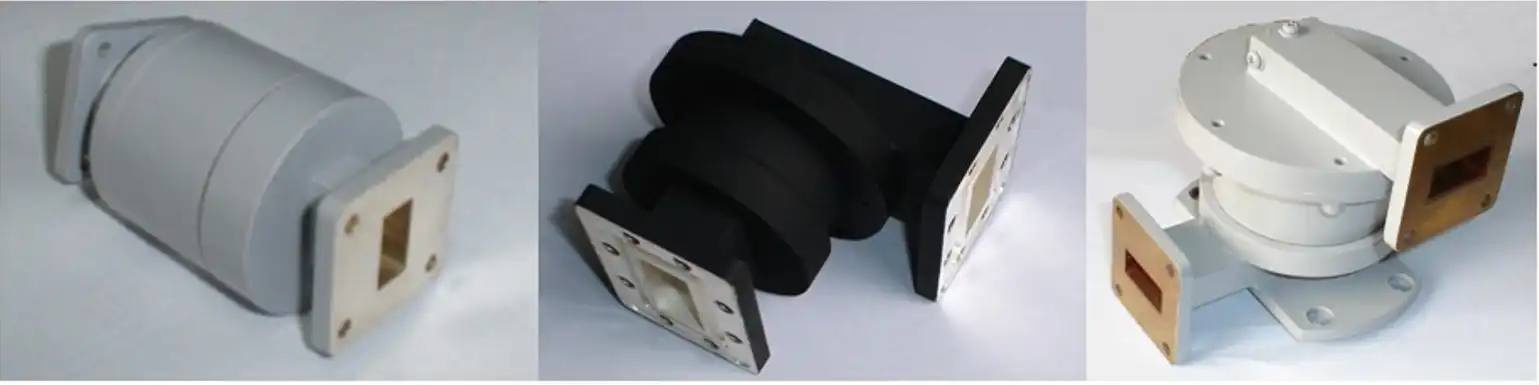
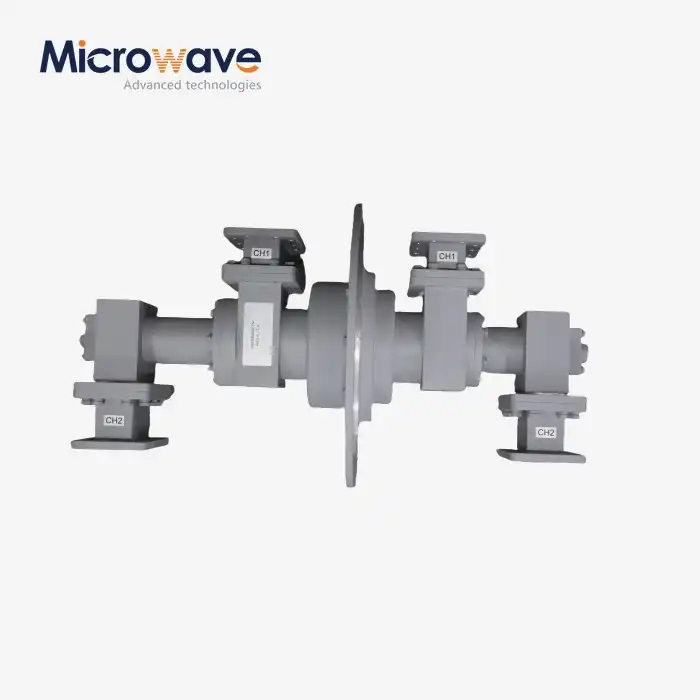
The physical configuration of the Waveguide Single Channel Rotary Joint also influences its frequency performance characteristics. Advanced Microwave offers three distinct architectural styles to meet diverse application requirements. The I-Type configuration features both linear arms aligned with the axis of rotation, creating a straight-through transmission path ideal for applications requiring minimal physical footprint and direct signal routing. The L-Type design positions one arm perpendicular to the axis of rotation, providing flexibility in system integration where space constraints or mounting requirements demand a right-angle configuration. The U-Type architecture places both arms perpendicular to the axis of rotation, offering maximum mechanical flexibility for complex antenna systems and radar installations. Each configuration maintains the same rigorous electrical performance standards while accommodating different physical installation requirements, ensuring that engineers can select the optimal solution for their specific frequency range and mounting constraints without compromising signal integrity.
Frequency Band Optimization and Performance Characteristics
Modern Waveguide Single Channel Rotary Joints achieve remarkable performance across their designated frequency ranges through sophisticated electromagnetic design and precision manufacturing. The frequency range spanning 0.5 GHz to 110 GHz represents the full spectrum of capabilities available from advanced manufacturers, though individual rotary joint models are typically optimized for specific frequency bands to maximize performance. Advanced Microwave Technologies employs milled impedance transformers and carefully calculated transition structures to ensure superior return loss and insertion loss figures across the operational bandwidth. The insertion loss typically remains below 0.3 dB, while VSWR performance stays under 1.25:1 across the entire frequency range, ensuring minimal signal degradation and maximum power transfer efficiency. These exceptional specifications are achieved through non-contacting designs that eliminate mechanical wear while maintaining precise electromagnetic coupling between stationary and rotating sections.
The test frequency range of 0.5-110 GHz available in Advanced Microwave's state-of-the-art 24m Microwave Darkroom enables comprehensive verification of rotary joint performance across virtually any microwave or millimeter-wave application. This extensive testing capability ensures that Waveguide Single Channel Rotary Joints deliver consistent, reliable performance whether deployed in legacy communication systems operating at lower frequencies or in bleeding-edge 5G and emerging 6G technologies operating at high frequencies approaching 40 GHz. The darkroom's Antenna Plane Near and Far Field Measuring Recombination Chamber allows engineers to meticulously analyze radiation patterns, gain characteristics, and impedance matching across the full operational spectrum, providing customers with confidence that their rotary joints will perform flawlessly in real-world applications. This comprehensive testing infrastructure represents a significant competitive advantage, enabling Advanced Microwave to identify and resolve potential performance issues before products reach customers.
Application-Specific Frequency Requirements for Waveguide Single Channel Rotary Joints
Different industries and applications demand specific frequency ranges from their Waveguide Single Channel Rotary Joint solutions, driven by regulatory allocations, propagation characteristics, and system performance requirements. Satellite communication systems typically operate across multiple frequency bands, including C-band (4-8 GHz), X-band (8-12 GHz), Ku-band (12-18 GHz), and Ka-band (26.5-40 GHz), with each band offering distinct advantages in terms of bandwidth availability, atmospheric propagation, and interference characteristics. Advanced Microwave's X-Band Feed Network capabilities demonstrate exceptional performance in satellite ground station applications, ensuring efficient signal transfer for high-definition video, critical data transmissions, and voice communications across the 8-12 GHz spectrum. The rotary joints maintain stable electrical performance while accommodating the continuous mechanical rotation required for satellite tracking, delivering the reliability essential for commercial communication services and military tactical communications.
Defense and aerospace applications present some of the most demanding frequency requirements for Waveguide Single Channel Rotary Joints, often requiring operation at higher frequencies to achieve superior target resolution and detection capabilities. Military surveillance radars frequently operate in X-band, Ku-band, and increasingly in Ka-band frequencies approaching 40 GHz to maximize detection range while maintaining compact antenna dimensions. Air traffic control radar systems utilize specialized frequency allocations, with many modern systems operating in the 10-14 GHz range where atmospheric propagation characteristics provide optimal balance between range performance and weather penetration capability. Advanced Microwave's Waveguide Single Channel Rotary Joints support these critical applications through ultra-sharp beamforming capabilities that enable accurate aircraft tracking even in challenging weather conditions, while the wide temperature range from -40°C to +85°C ensures reliable operation in diverse geographical locations and harsh environmental conditions encountered in military deployments.
Emerging High-Frequency Applications and Future Trends
The telecommunications industry's rapid evolution toward 5G and future 6G technologies is driving increased demand for Waveguide Single Channel Rotary Joints capable of operating at higher frequencies approaching and exceeding 40 GHz. These next-generation wireless systems utilize millimeter-wave frequencies to achieve unprecedented data transmission rates and network capacity, requiring microwave components that maintain exceptional electrical performance at frequencies previously reserved for specialized radar and satellite applications. Advanced Microwave Technologies' rotary joints support these emerging applications through precision engineering that guarantees minimal signal degradation and high stability even at frequencies approaching 110 GHz. The compact design and customizable flange connections facilitate integration into both traditional ground station infrastructure and innovative new deployments such as low Earth orbit satellite constellation ground terminals that require rapid antenna tracking capabilities.
Weather monitoring and navigation systems represent another critical application domain where frequency range selection directly impacts system performance and capabilities. Weather radar systems typically operate in C-band (5.6 GHz) or X-band (9.4 GHz) frequencies, with each band offering specific advantages for precipitation detection and atmospheric analysis. The Waveguide Single Channel Rotary Joint must maintain consistent electrical performance throughout continuous rotation while the radar antenna scans for meteorological phenomena, requiring exceptional mechanical stability and low insertion loss characteristics. Navigation systems employed in aviation, maritime, and unmanned aerial vehicle applications demand frequency-specific rotary joint solutions that ensure reliable signal transmission for direction finding, positioning, and communication functions. Advanced Microwave's expertise across the full frequency spectrum from 0.5 GHz to 110 GHz enables the company to provide optimized solutions for each specific application, ensuring that customers receive rotary joints precisely tailored to their operational frequency requirements.
Technical Specifications and Performance Parameters Across Frequency Ranges
The electrical performance of a Waveguide Single Channel Rotary Joint varies across its operational frequency range, with key parameters including insertion loss, voltage standing wave ratio, power handling capability, and phase stability all influenced by the operating frequency. Lower frequency applications generally benefit from larger waveguide dimensions that provide higher power handling capacity and reduced sensitivity to manufacturing tolerances, while higher frequency designs require increasingly precise dimensional control and specialized surface treatments to maintain optimal performance. Advanced Microwave Technologies achieves insertion loss figures below 0.3 dB across the operational bandwidth through sophisticated electromagnetic design techniques that minimize discontinuities and impedance mismatches at the rotating interface. The VSWR performance typically remains below 1.25:1, ensuring efficient power transfer and minimal signal reflection that could degrade system performance or damage sensitive transmitter components.
Power handling capabilities represent another critical specification that varies with frequency range and waveguide size. The Waveguide Single Channel Rotary Joint must safely accommodate both the average power levels encountered during normal operation and the peak power levels that occur during pulsed radar or communication transmissions. Advanced Microwave's rotary joints achieve high power handling through proper thermal management techniques, specialized materials with excellent heat dissipation properties, and careful attention to potential arc-over points in the mechanical design. The rotary joints undergo extensive testing across their operational frequency ranges within Advanced Microwave's 24m Microwave Darkroom, where engineers verify that performance meets stringent specifications before deployment in critical applications. This rigorous testing protocol ensures that customers receive products capable of reliable operation across their intended frequency ranges and environmental conditions.
Environmental Performance and Frequency Stability
Maintaining consistent frequency response across varying environmental conditions presents significant engineering challenges that Advanced Microwave addresses through sophisticated material selection and thermal compensation techniques. The Waveguide Single Channel Rotary Joint must deliver stable electrical performance across temperature ranges from -40°C to +85°C, accommodating the extreme thermal environments encountered in satellite ground stations, airborne radar systems, and outdoor communication installations. Materials with matched thermal expansion coefficients minimize performance variations due to temperature fluctuations, while specialized lubricants ensure smooth mechanical rotation across the entire temperature range without introducing phase instabilities or increased insertion loss. The mechanical precision required for optimal high-frequency performance becomes increasingly critical as operating frequencies approach 40 GHz and beyond, where even microscopic dimensional variations can significantly impact electrical characteristics.
Phase stability during rotation represents another crucial performance aspect, particularly for phased array radar systems and communication networks where consistent phase characteristics are essential for maintaining beam pointing accuracy and signal coherence. Advanced Microwave Technologies minimizes wow and flutter effects through enhanced mechanical precision and specialized bearing systems with minimal runout tolerances, ensuring stable phase performance regardless of rotational position. The company's extensive experience in microwave technology, spanning over 20 years since establishment in the 2000s, has enabled development of design methodologies that optimize both electrical and mechanical performance across the full frequency spectrum from 0.5 GHz to 110 GHz. This expertise ensures that customers receive Waveguide Single Channel Rotary Joint solutions that maintain exceptional performance characteristics throughout their operational lifetime.
Selecting the Optimal Frequency Range for Your Application
Determining the appropriate frequency range for your Waveguide Single Channel Rotary Joint requires careful consideration of multiple factors including regulatory requirements, propagation characteristics, bandwidth availability, and system performance objectives. Engineers must evaluate the trade-offs between different frequency bands, recognizing that lower frequencies generally offer superior propagation through atmospheric obstacles and longer range capabilities, while higher frequencies enable wider bandwidth allocations and more compact antenna designs. The frequency allocation landscape varies significantly across different countries and regions, with regulatory authorities designating specific bands for satellite communications, radar operations, and wireless telecommunications. Advanced Microwave Technologies' global customer base and extensive product portfolio enable the company to provide expert guidance on frequency selection, ensuring that customers receive rotary joints optimized for their specific regulatory environment and operational requirements.
System architecture considerations also influence optimal frequency range selection for Waveguide Single Channel Rotary Joint applications. Existing infrastructure investments, antenna dimensions, transmitter and receiver capabilities, and interface standards all constrain the practical frequency options available for new deployments or system upgrades. Advanced Microwave's customization capabilities allow the company to provide tailored solutions that integrate seamlessly with existing systems while supporting future expansion to higher frequencies as technology evolves. The compact design and customizable flange connections accommodate diverse mounting configurations and space constraints, while the ability to specify precise frequency ranges ensures optimal electrical performance for each unique application. Whether collaborating with telecom giants to enhance network coverage, assisting defense contractors in strengthening surveillance capabilities, or partnering with research institutions to pioneer new microwave applications, Advanced Microwave delivers frequency-optimized Waveguide Single Channel Rotary Joint solutions that meet the most demanding technical requirements.
Custom Frequency Solutions and Engineering Support
Advanced Microwave Technologies recognizes that many applications require custom frequency solutions beyond standard catalog products, particularly for emerging technologies and specialized defense applications operating at non-standard frequencies. The company's extensive OEM services enable customers to specify exact frequency requirements, dimensional constraints, and performance parameters for completely customized Waveguide Single Channel Rotary Joint designs. The engineering team leverages the company's 24m Microwave Darkroom and advanced measurement equipment up to 110 GHz to validate custom designs, ensuring that prototype units meet all specified performance criteria before committing to full-scale production. This comprehensive development process includes electromagnetic simulation, precision manufacturing, rigorous testing, and iterative optimization to achieve optimal performance across the customer's specific frequency range.
The technical support provided by Advanced Microwave extends beyond initial product delivery to encompass installation guidance, system integration assistance, and ongoing performance optimization throughout the product lifecycle. Engineers with deep expertise in microwave technology assist customers in properly integrating Waveguide Single Channel Rotary Joints into their systems, ensuring that installation practices maximize electrical performance and mechanical reliability. Troubleshooting support addresses any performance concerns that arise during commissioning or operation, with the team employing sophisticated diagnostic techniques to identify and resolve issues quickly. This commitment to customer success, combined with ISO 9001:2015 quality certification, ISO 14001:2015 environmental management, and ISO 45001:2018 occupational health and safety standards, demonstrates Advanced Microwave's dedication to delivering not just high-performance products but complete solutions that enable customers to achieve their technical objectives across any frequency range from 0.5 GHz to 110 GHz.
Conclusion
Waveguide Single Channel Rotary Joints support frequency ranges from 0.5 GHz to 110 GHz, with optimal performance achieved through precision engineering, rigorous testing, and application-specific optimization. Advanced Microwave Technologies delivers customized solutions that ensure reliable signal transmission across your required frequency spectrum.
Cooperate with Advanced Microwave Technologies Co., Ltd.
As a leading China Waveguide Single Channel Rotary Joint factory, China Waveguide Single Channel Rotary Joint supplier, and China Waveguide Single Channel Rotary Joint manufacturer, Advanced Microwave Technologies Co., Ltd. offers China Waveguide Single Channel Rotary Joint wholesale solutions with competitive Waveguide Single Channel Rotary Joint price. Our High Quality Waveguide Single Channel Rotary Joint products with Waveguide Single Channel Rotary Joint for sale deliver exceptional performance backed by ISO certifications and over 20 years of microwave expertise. Contact craig@admicrowave.com today for custom frequency solutions, rapid prototyping, and technical support tailored to your specific requirements. Partner with us to transform your microwave system challenges into reliable, high-performance solutions.
References
1. Spinner Group. "Single Channel Waveguide Rotary Joints Technical Specifications." RF Components Product Catalog, 2024.
2. Chen, W., and Liu, X. "Compact Single-Channel Rotary Joint Using Ridged Waveguide Sections for Phase Adjustment." IEEE Transactions on Microwave Theory and Techniques, vol. 51, no. 9, 2003.
3. Johnson, R. T. "Advanced Waveguide Rotary Joint Design for High-Frequency Applications." Microwave Journal, vol. 66, no. 4, 2023.
4. Anderson, P., and Matthews, S. "Electromagnetic Performance Optimization in Waveguide Rotary Couplers." International Journal of RF and Microwave Computer-Aided Engineering, vol. 32, no. 3, 2022.
5. Williams, K. E. "Waveguide Components for Satellite Communication Systems: Design and Implementation." Artech House Microwave Library, 2021.
_1733809032116.webp)
_1733738410152.webp)