




What Are Standard Horn Antennas & Accessories Used For?
When precision signal transmission fails in critical applications—from satellite ground stations losing connection during crucial data transfers to radar systems unable to detect targets in adverse weather—the culprit often lies in inadequate antenna performance. Standard Horn Antenna technology addresses these pain points by delivering reliable, high-gain microwave solutions for testing, measurement, sensing, radar, and communication systems where accuracy cannot be compromised.
Understanding Standard Horn Antenna Technology and Core Applications
Standard Horn Antenna represents a fundamental breakthrough in microwave engineering, serving as a waveguide-based solution that transforms electromagnetic signal transmission across critical industries. These antennas feature a distinctive flared waveguide structure that efficiently radiates and receives electromagnetic waves across extensive frequency ranges. The design principle centers on creating a gradual impedance transition between the confined waveguide environment and free space, dramatically reducing signal reflection and maximizing power transfer efficiency. The engineering behind Standard Horn Antenna technology involves precise geometric calculations where the flare angle, aperture dimensions, and axial length work synergistically to achieve optimal gain characteristics. Advanced Microwave manufactures a high-quality line of standard gain horn antennas that are linearly polarized, lightweight, and corrosion-resistant, with common gain values of 10, 15, 20, and 25dB available to meet diverse application requirements. The antennas operate across an impressive frequency range from 1 GHz to 110 GHz, accommodating everything from legacy communication systems to cutting-edge 5G and emerging 6G technologies. These devices function as calibration standards in antenna testing environments, where their predictable radiation patterns provide reliable reference points for measuring other antenna systems. In satellite communications, Standard Horn Antenna units ensure precise signal transmission between ground stations and orbiting satellites, maintaining connection integrity even when signals must traverse vast distances through atmospheric interference. Defense contractors rely on these antennas for surveillance radar systems where target detection accuracy directly impacts mission success. The ability to handle high-frequency signals with minimal distortion makes Standard Horn Antenna technology indispensable for modern radar installations that must distinguish between multiple targets in cluttered electromagnetic environments.
Technical Specifications Driving Performance Excellence
The performance capabilities of Standard Horn Antenna systems stem from meticulously engineered specifications that address real-world operational challenges. These antennas feature multiple input configurations to accommodate different system architectures: waveguide input styles covering WR770 to WR3 specifications with VSWR ratings of 1.25 or better, built-in coaxial input styles spanning R2300 to R28 with VSWR of 1.5 or better, and coaxial connector styles from R975 to WR22 maintaining similar performance standards. This versatility ensures seamless integration regardless of existing infrastructure constraints. Material selection plays a crucial role in long-term reliability, with aluminum alloy and brass construction providing the necessary durability for harsh environmental conditions while maintaining electromagnetic performance integrity. The corrosion-resistant coating applied to Standard Horn Antenna surfaces extends operational lifespan in coastal, industrial, and outdoor deployment scenarios where exposure to moisture, salt spray, and chemical pollutants would otherwise degrade performance. Connector options including SMA, N-Type, and custom configurations enable direct compatibility with existing test equipment and communication systems. Polarization flexibility represents another critical specification, with both linear and circular polarization options available depending on application requirements. Linear polarization suits applications where signal orientation remains consistent, while circular polarization proves essential for satellite communication scenarios where relative orientation between transmitter and receiver constantly changes. The VSWR specification of 1.5:1 or better ensures that reflected power remains minimal, maximizing signal transfer efficiency and preventing damage to sensitive transmitter components from excessive reflected energy.

Accessories Enhancing Standard Horn Antenna Deployment
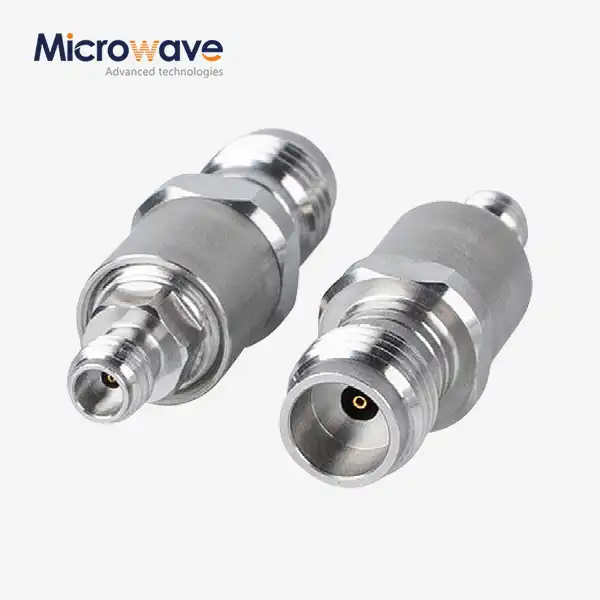
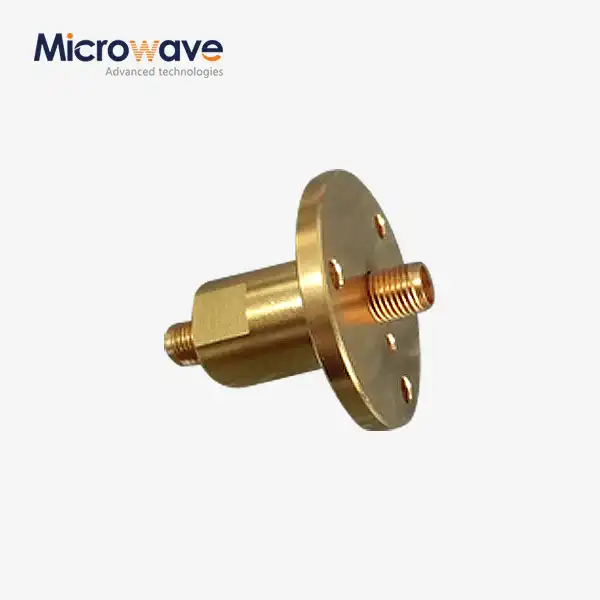
Successful Standard Horn Antenna implementation extends beyond the antenna itself, requiring carefully selected accessories that protect investment while optimizing performance. Precision mounting systems form the foundation of effective deployment, with G-type round mounts and L-style antenna mounts providing the structural stability necessary for accurate beam alignment. These mounting solutions feature precision-machined hole patterns matching waveguide flange specifications, ensuring that antenna positioning remains stable even under wind loading or mechanical vibration conditions common in outdoor installations. Radome covers represent essential protective accessories for Standard Horn Antenna units deployed in challenging environments. Manufactured from low-dielectric-constant materials that minimize signal attenuation, these covers shield waveguide openings from debris, corrosive fog, and moisture intrusion that would otherwise compromise system performance. The radome design balances mechanical protection with electromagnetic transparency, ensuring that environmental protection does not come at the cost of signal degradation. In harsh deployment scenarios—from offshore platforms to desert installations—quality radome covers can extend antenna service life by years while maintaining original performance specifications. Polarization converters expand Standard Horn Antenna versatility by enabling field-adjustable signal polarization without requiring antenna replacement. These accessories prove particularly valuable in research environments where experimental configurations demand rapid switching between linear and circular polarization modes. Integration accessories including waveguide adapters, rotary joints, and precision alignment tools further enhance deployment flexibility, allowing Standard Horn Antenna systems to interface with diverse test equipment and communication infrastructure regardless of manufacturer or legacy system constraints.
Standard Horn Antenna Applications Across Critical Industries
Satellite Communication Ground Station Operations
Satellite communication represents one of the most demanding applications for Standard Horn Antenna technology, where signal integrity directly impacts data throughput, voice quality, and video transmission reliability. Ground stations require antennas capable of precisely tracking satellites moving across the sky while maintaining stable signal lock despite atmospheric interference, rain fade, and ionospheric disturbances. Standard Horn Antenna units excel in these scenarios through their high directivity and stable gain characteristics that ensure consistent performance across operational bandwidth. Advanced Microwave Technologies Co., Ltd. leverages over 20 years of microwave expertise to manufacture Standard Horn Antenna systems specifically optimized for satellite ground station applications. These antennas feature broadband compatibility supporting frequencies up to 110 GHz, positioning them ideally for both current satellite communication bands and future high-throughput satellite systems operating at millimeter-wave frequencies. The rigorous testing conducted in Advanced Microwave's 24-meter Microwave Darkroom ensures that each Standard Horn Antenna delivers predictable far-field radiation patterns essential for accurate satellite tracking and maximum link budget efficiency. Satellite operators particularly value the precision engineering inherent in Standard Horn Antenna design, where tight manufacturing tolerances translate directly to predictable antenna performance. This predictability enables accurate link budget calculations during system design phases and ensures that deployed systems meet performance specifications without requiring extensive field adjustment. The corrosion-resistant construction proves essential for ground stations located in coastal regions where salt spray exposure would rapidly degrade lesser antenna systems, while the durable materials withstand temperature cycling from intense solar heating to nighttime cooling without mechanical deformation affecting electrical performance.
Aerospace and Defense Radar System Integration
Defense and aerospace applications impose the most stringent requirements on Standard Horn Antenna performance, where system reliability can mean the difference between mission success and failure. Military surveillance radar installations utilize Standard Horn Antenna arrays to detect airborne threats at maximum range, discriminate between multiple targets in complex electromagnetic environments, and maintain tracking lock on maneuvering targets attempting to evade detection. The directional characteristics of Standard Horn Antenna technology provide the focused beam patterns necessary for accurate target localization while minimizing susceptibility to jamming signals arriving from off-axis angles. Air traffic control represents another critical aerospace application where Standard Horn Antenna reliability directly impacts public safety. These systems must maintain continuous operation regardless of weather conditions, providing air traffic controllers with accurate aircraft position information even during severe thunderstorms that would blind lesser radar systems. The ultra-sharp beamforming capability of Standard Horn Antenna installations enables precise aircraft tracking at extended ranges, giving controllers the situational awareness necessary to maintain safe separation between aircraft in congested airspace. Advanced Microwave's Standard Horn Antenna products meet the demanding environmental and electromagnetic performance specifications required for aviation safety applications, backed by ISO 9001:2015 quality certification and rigorous pre-deployment testing.
Navigation equipment for both military and civilian aircraft incorporates Standard Horn Antenna technology in ground-based guidance systems that must provide reliable performance across all weather conditions. Electronic warfare applications leverage the wide bandwidth and high power handling capability of Standard Horn Antenna systems to detect, classify, and potentially counter hostile radar and communication signals. The customizable design options available from Advanced Microwave Technologies Co., Ltd. enable defense contractors to specify exact frequency ranges, gain characteristics, and mechanical configurations tailored to classified mission requirements while maintaining the production efficiency necessary for timely program delivery.
Telecommunications Infrastructure Development
Modern telecommunications networks increasingly rely on Standard Horn Antenna technology as 5G deployment accelerates and planning begins for 6G systems operating at even higher frequencies. These next-generation networks demand antenna systems capable of supporting millimeter-wave frequency bands where traditional antenna technologies struggle to maintain efficiency. Standard Horn Antenna units operating at frequencies approaching 110 GHz provide the high-gain, low-loss performance essential for point-to-point backhaul links connecting cell sites to core network infrastructure across urban and rural deployment scenarios. Rural connectivity initiatives particularly benefit from Standard Horn Antenna characteristics that enable long-distance signal propagation with minimal intermediate infrastructure. By leveraging the high directivity and power handling capability of Standard Horn Antenna installations, telecommunications providers can establish reliable connectivity to underserved communities without requiring dense tower deployments economically unviable in low-population-density areas. The wide frequency coverage spanning 1 GHz to 110 GHz positions Standard Horn Antenna technology to support multiple services simultaneously, from traditional cellular frequencies to emerging millimeter-wave bands enabling gigabit wireless broadband.
Industrial Internet of Things deployments represent another expanding telecommunications application where Standard Horn Antenna reliability proves essential. Manufacturing facilities, logistics operations, and infrastructure monitoring systems require wireless connectivity that maintains availability despite challenging RF environments filled with metal structures, electromagnetic interference from industrial equipment, and physical obstructions blocking line-of-sight paths. Standard Horn Antenna installations provide the robust performance and directional selectivity necessary to establish reliable communication links in these demanding scenarios, enabling the real-time data collection and control essential for Industry 4.0 applications. Advanced Microwave's customizable OEM services ensure that Standard Horn Antenna solutions can be tailored to specific industrial deployment requirements, from specialized frequency bands to enhanced environmental protection meeting particular industry safety standards.
Advanced Capabilities Through Precision Manufacturing
Testing and Measurement Laboratory Applications
Research laboratories conducting electromagnetic compatibility testing, antenna characterization, and microwave circuit development depend on Standard Horn Antenna systems as calibrated reference devices enabling accurate measurements. The predictable radiation patterns and stable gain characteristics inherent in quality Standard Horn Antenna design provide the measurement certainty necessary for valid experimental results. When researchers must characterize a newly developed antenna or verify that a production unit meets specifications, they compare its performance against a known Standard Horn Antenna reference, leveraging its stable characteristics to eliminate measurement uncertainty that would otherwise compromise experimental validity. Advanced Microwave Technologies Co., Ltd. maintains state-of-the-art testing facilities equipped with a 24-meter Microwave Darkroom and Antenna Plane Near and Far Field Measuring Recombination Chamber, enabling comprehensive characterization of Standard Horn Antenna performance across the entire operational frequency range from 0.5 to 110 GHz. This extensive testing infrastructure ensures that every Standard Horn Antenna unit leaving the facility meets stringent performance specifications, providing researchers and test engineers with the measurement confidence necessary for critical development projects. The facility's capability to precisely measure antenna radiation patterns, gain characteristics, and impedance parameters positions Advanced Microwave as a trusted supplier to research institutions, university laboratories, and corporate R&D departments worldwide.
Academic research in electromagnetics relies heavily on Standard Horn Antenna availability for experimental verification of theoretical predictions and exploration of novel antenna concepts. Graduate students investigating advanced beamforming techniques, metamaterial antenna designs, or millimeter-wave propagation characteristics require access to well-characterized Standard Horn Antenna units as both measurement references and system components. The wide frequency coverage and customizable specifications available from Advanced Microwave enable researchers to obtain Standard Horn Antenna configurations precisely matching experimental requirements, accelerating research progress by eliminating the time and expense of custom antenna development for every project. The combination of technical excellence and responsive customer support makes Advanced Microwave a preferred supplier for academic institutions worldwide.
Weather Monitoring and Environmental Sensing
Meteorological radar systems employ Standard Horn Antenna technology for accurate precipitation detection, wind speed measurement, and severe weather tracking that enables timely warnings protecting public safety. These systems must maintain reliable operation across all weather conditions, ironically including the very severe weather they exist to monitor. The robust construction and environmental protection available with properly accessorized Standard Horn Antenna installations ensure continuous operation despite exposure to high winds, heavy precipitation, temperature extremes, and lightning-induced electromagnetic fields that would incapacitate lesser systems. Doppler weather radar represents a particularly demanding application where Standard Horn Antenna characteristics directly impact measurement accuracy. These systems transmit precisely timed pulses and analyze the frequency shift of returned signals to determine target velocity—whether precipitation particles moved by wind currents or airborne debris indicating tornado formation. The low VSWR specification of quality Standard Horn Antenna systems ensures that transmitted pulse shapes remain undistorted, enabling accurate velocity measurements essential for detecting dangerous wind patterns. The high gain concentrates transmitted power into narrow beams that can resolve precipitation structure at extended ranges, providing meteorologists with the detailed information necessary for severe weather warnings that save lives.
Environmental monitoring applications extend beyond traditional meteorology to include atmospheric research, climate change studies, and air quality assessment programs. Standard Horn Antenna installations support ground-based remote sensing systems measuring atmospheric composition, temperature profiles, and moisture content at various altitudes. These measurements contribute to climate models, validate satellite observations, and provide the long-term datasets necessary for understanding atmospheric changes over decades. Advanced Microwave's commitment to quality manufacturing backed by ISO 14001:2015 environmental certification ensures that Standard Horn Antenna products supporting environmental research meet the highest standards for both performance and ecological responsibility.
Conclusion
Standard Horn Antenna technology delivers the precision, reliability, and performance essential for critical microwave applications spanning satellite communications, defense radar, telecommunications infrastructure, research laboratories, and weather monitoring systems where signal integrity cannot be compromised.
Cooperate with Advanced Microwave Technologies Co., Ltd.
Advanced Microwave Technologies Co., Ltd. stands as your trusted China Standard Horn Antenna manufacturer, supplier, and factory partner, bringing over 20 years of microwave expertise backed by ISO certifications and state-of-the-art testing facilities. As a leading China Standard Horn Antenna wholesale provider, we offer High Quality Standard Horn Antenna products at competitive Standard Horn Antenna prices with customizable OEM services including specialized frequency ranges, materials, and dimensions tailored to your requirements. Our comprehensive product portfolio spans waveguide assemblies, coaxial components, and complete antenna systems for sale, all rigorously tested in our 24-meter Microwave Darkroom ensuring unmatched reliability. Whether you're developing next-generation telecommunications infrastructure, aerospace defense systems, or research applications, our expert engineering team provides technical consultation supporting seamless integration and optimal performance. Contact us today at craig@admicrowave.com to discuss your Standard Horn Antenna requirements and discover how our perfect supply chain, rapid delivery, and strong after-sales support can accelerate your project success while solving your most demanding microwave challenges.
References
1. Balanis, Constantine A. "Antenna Theory: Analysis and Design." Fourth Edition. John Wiley & Sons, 2016.
2. Milligan, Thomas A. "Modern Antenna Design." Second Edition. IEEE Press, 2005.
3. Stutzman, Warren L. and Gary A. Thiele. "Antenna Theory and Design." Third Edition. John Wiley & Sons, 2012.
4. Silver, Samuel. "Microwave Antenna Theory and Design." MIT Radiation Laboratory Series, Volume 12. IET Publications, 1984.
_1733738410152.webp)