




Top Buyer Tips: Specifying a Single Channel Coaxial Rotary Joint for Your Project
Picture this: your radar system stops mid-operation because signal degradation crippled your rotating platform, or your satellite ground station loses critical data during a high-stakes transmission. These nightmares become reality when engineers overlook critical specifications when selecting a Single Channel Coaxial Rotary Joint. Whether you're designing aerospace radar systems, satellite communication equipment, or defense surveillance platforms, choosing the right rotary joint can mean the difference between seamless operation and catastrophic failure. This comprehensive guide walks you through essential buyer tips to specify a Single Channel Coaxial Rotary Joint that delivers uninterrupted RF signal transfer, minimal insertion loss, and reliable performance under the most demanding conditions.
Understanding Single Channel Coaxial Rotary Joint Fundamentals
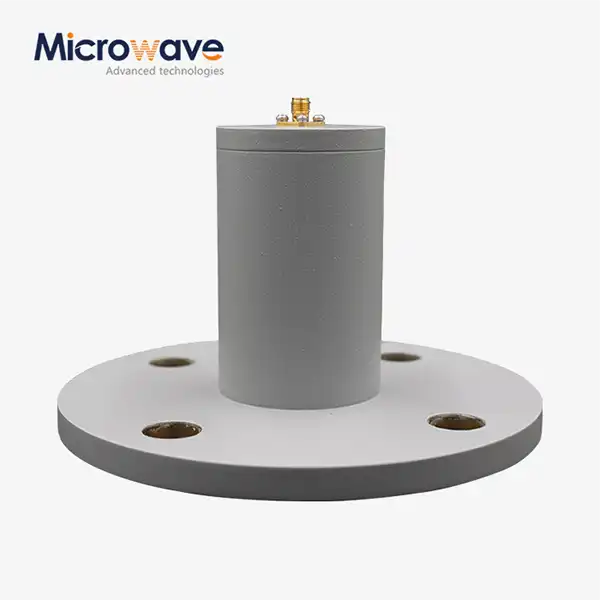
A Single Channel Coaxial Rotary Joint is a precision-engineered microwave component that maintains electrical continuity while enabling mechanical rotation between stationary and rotating sections of RF transmission systems. Unlike waveguide rotary joints, coaxial variants offer compact and lightweight solutions ideal for space-constrained applications. These components work within rotating 50-ohm systems where uninterrupted and low-loss signal transfer is absolutely required. The fundamental operating principle involves maintaining a stable RF connection through carefully designed contact mechanisms or contactless coupling systems that preserve signal integrity even during continuous rotation. When evaluating Single Channel Coaxial Rotary Joint technology, buyers must understand that these components serve as the critical link between fixed and rotating portions of communication systems. The single channel configuration transmits one RF signal pathway at a time, making them perfectly suited for applications requiring straightforward signal transmission without the complexity of multi-channel systems. Industries ranging from satellite communications to aerospace defense rely on these rotary joints to ensure that rotating antennas, radar dishes, and surveillance equipment maintain constant communication with stationary control systems. The engineering challenge lies in achieving minimal signal reflection, low insertion loss, and stable impedance matching across the entire operational frequency range while accommodating mechanical rotation speeds that can reach 60 RPM or higher.
Key Performance Parameters That Define Quality
Critical performance specifications separate industrial-grade Single Channel Coaxial Rotary Joints from substandard alternatives. Insertion loss represents one of the most important parameters, with premium units from manufacturers like Advanced Microwave Technologies maintaining insertion loss at or below 0.2 dB across their operational frequency range. This exceptionally low loss ensures that signal strength remains virtually uncompromised throughout the transmission path, which becomes especially critical in long-distance satellite communications or sensitive radar detection systems where every decibel of signal power matters. Voltage Standing Wave Ratio, commonly abbreviated as VSWR, provides another crucial performance indicator that buyers cannot afford to overlook. A VSWR rating of 1.25:1 or better indicates excellent impedance matching between the rotary joint and connected transmission lines, minimizing signal reflections that could create interference patterns or standing waves. Poor VSWR performance not only degrades signal quality but can also cause hot spots that reduce component lifespan and reliability. Power handling capability represents yet another vital specification, with quality Single Channel Coaxial Rotary Joints capable of handling up to 200 watts continuous wave power without signal degradation or thermal issues. This robust power handling enables deployment in high-power radar systems, military surveillance platforms, and broadcast transmission equipment where substantial RF power levels are routine.
Frequency Range Considerations for Your Application
The operational frequency range of a Single Channel Coaxial Rotary Joint fundamentally determines its suitability for specific applications. Modern rotary joints typically span from DC to 18 GHz, covering an enormous range of wireless communication frequencies, radar bands, and satellite communication channels. This broad frequency support makes them versatile solutions for legacy systems operating at lower frequencies while simultaneously accommodating cutting-edge applications utilizing higher frequency bands. Buyers must carefully match the frequency specifications of their chosen rotary joint to their system's operational requirements, ensuring adequate performance margins above and below the nominal operating frequencies. Different applications demand different frequency capabilities within the Single Channel Coaxial Rotary Joint spectrum. Satellite communication ground stations often require coverage from L-band through Ku-band frequencies, necessitating rotary joints with multi-octave bandwidth and flat frequency response across their entire operating range. Air traffic control radar systems typically operate in S-band or X-band frequencies, where rotary joints must maintain consistent electrical performance while supporting the rapid antenna rotation speeds required for airspace surveillance. Military and defense applications frequently demand frequency agility across multiple bands, requiring Single Channel Coaxial Rotary Joints with exceptional broadband performance and minimal group delay variation that could otherwise distort pulsed radar signals or frequency-hopping communication waveforms.
Matching Frequency Specifications to System Requirements
Selecting the appropriate frequency range requires understanding not just your nominal operating frequency but also harmonics, spurious emissions, and potential future system upgrades. A Single Channel Coaxial Rotary Joint specified for DC to 18 GHz operation provides substantial headroom for systems operating at X-band frequencies around 10 GHz, ensuring that third harmonic content at 30 GHz remains well-suppressed and doesn't create interference issues. This frequency margin also accommodates the inevitable component aging and environmental variations that can shift performance characteristics over the product's operational lifetime. Advanced Microwave Technologies engineers emphasize that frequency range specifications must be evaluated in conjunction with other performance parameters. A rotary joint might technically operate across DC to 18 GHz, but insertion loss, VSWR, and power handling capabilities may vary significantly across this range. Buyers should request detailed performance curves showing how these critical parameters change with frequency, paying particular attention to performance at their specific operating frequencies. The test frequency range spanning 0.5 to 110 GHz in Advanced Microwave Technologies' laboratories ensures that even the most demanding applications receive thorough validation and characterization before deployment in critical systems.
Material Selection and Environmental Durability
The construction materials used in Single Channel Coaxial Rotary Joints directly impact their mechanical durability, environmental resistance, and long-term reliability. Premium manufacturers like Advanced Microwave Technologies utilize aluminum alloy or stainless steel housing construction, each offering distinct advantages depending on application requirements. Aluminum alloy provides excellent strength-to-weight ratios, making it ideal for airborne applications where every gram of weight matters, while stainless steel delivers superior corrosion resistance for maritime environments or industrial settings where exposure to harsh chemicals or saltwater is inevitable. Environmental resistance extends far beyond simple material selection. Quality Single Channel Coaxial Rotary Joints must operate reliably across extreme temperature ranges, typically from negative 40 degrees Celsius to positive 85 degrees Celsius, without performance degradation or mechanical failure. This temperature resilience ensures deployment in Arctic research stations, desert military installations, high-altitude aerospace platforms, and tropical satellite ground stations without requiring environmental conditioning or protective enclosures. The internal bearing systems, contact mechanisms, and seal designs must all withstand thermal cycling, humidity exposure, sand and dust ingress, and vibration environments encountered in real-world applications while maintaining electrical performance specifications throughout the product's design life.
Evaluating Build Quality and Manufacturing Standards
Manufacturing quality directly correlates with long-term reliability in Single Channel Coaxial Rotary Joint applications. Advanced Microwave Technologies maintains ISO 9001:2015 certification, ensuring that every rotary joint undergoes rigorous quality control procedures from initial design through final testing and delivery. This systematic approach to quality management eliminates manufacturing defects, ensures consistent performance across production batches, and provides customers with the documentation and traceability required for aerospace and defense applications. RoHS compliance further demonstrates commitment to environmental responsibility and ensures compatibility with modern electronic systems that prohibit hazardous substances. The precision machining tolerances required for Single Channel Coaxial Rotary Joint manufacturing demand state-of-the-art production equipment and highly skilled technicians. Contact surfaces must achieve micro-inch surface finishes to minimize insertion loss and ensure consistent electrical performance throughout rotation. Bearing assemblies require precise clearances to support smooth rotation without wobble or runout that could degrade RF performance. Seal designs must balance the competing requirements of environmental protection against the need for low rotational torque that won't overload drive motors or servo systems. These manufacturing challenges explain why choosing an experienced manufacturer with over 20 years of microwave product expertise, like Advanced Microwave Technologies, provides substantial advantages over lower-cost alternatives from inexperienced suppliers.
Connector Types and Integration Flexibility
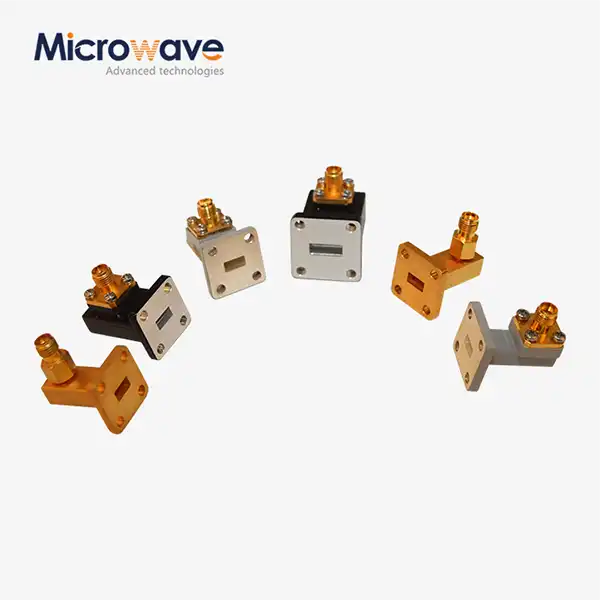
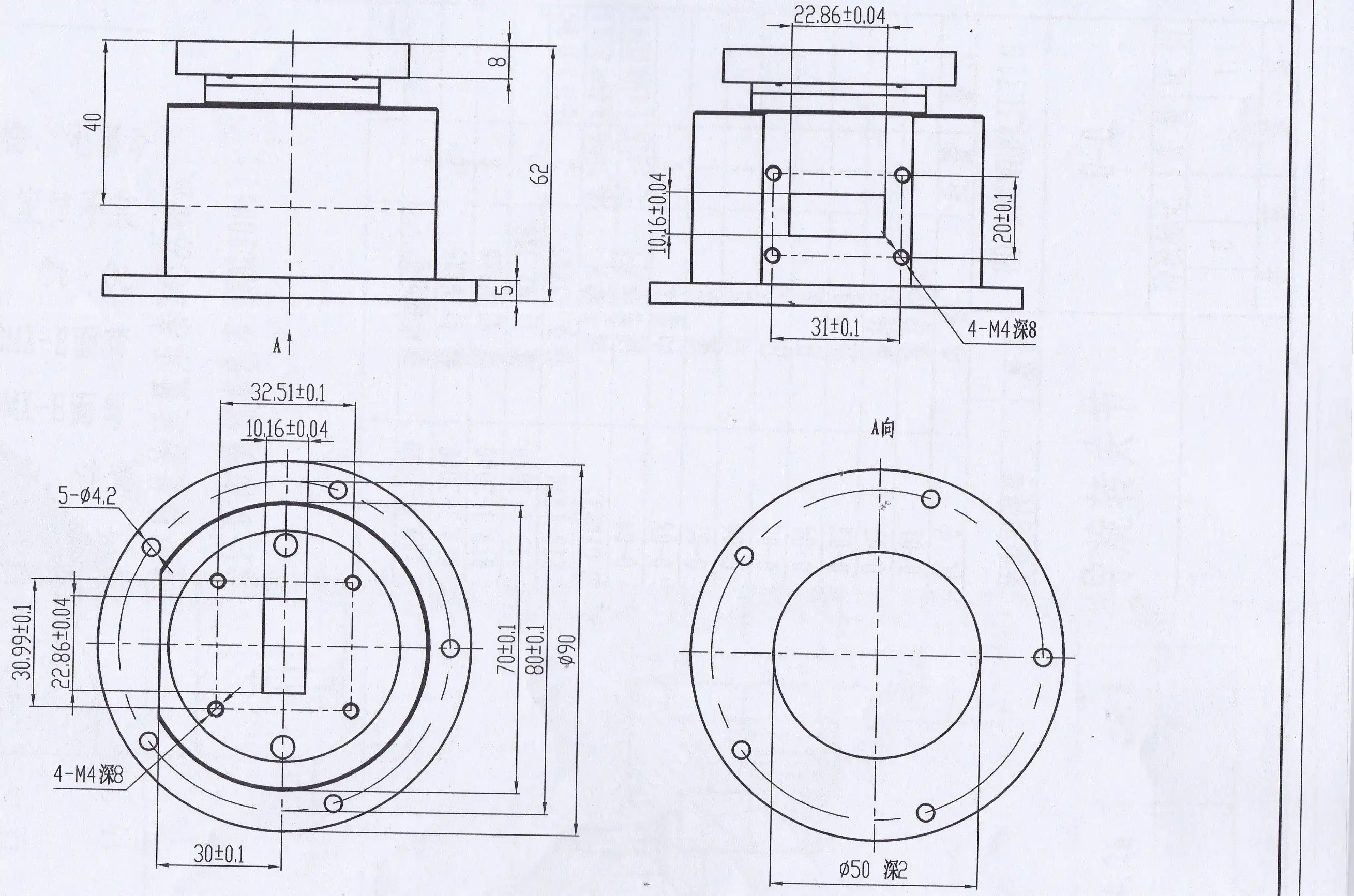
Connector interface selection represents a critical specification decision when procuring a Single Channel Coaxial Rotary Joint for system integration. Standard interfaces including SMA and N-Type connectors dominate the industry, offering proven reliability and wide availability of compatible cables and components. SMA connectors provide excellent performance through 18 GHz with compact dimensions suitable for space-constrained installations, while N-Type connectors offer superior power handling and mechanical robustness for high-power applications or environments subject to shock and vibration. The ability to customize connector types ensures that buyers can specify Single Channel Coaxial Rotary Joints that directly integrate with existing system architectures without requiring adapter chains that would introduce additional insertion loss and VSWR degradation. Integration flexibility extends beyond simple connector compatibility to encompass mechanical mounting options, rotational shaft configurations, and physical envelope constraints. Some applications require through-bore designs that allow cables, optical fibers, or pneumatic lines to pass through the center of the Single Channel Coaxial Rotary Joint, while others need flange-mounted configurations that bolt directly to existing equipment panels or structure. The mechanical interface between the rotary joint and the driven equipment must accommodate misalignment tolerances, provide adequate stiffness to prevent resonance issues, and minimize parasitic capacitance or inductance that could degrade RF performance. Buyers working with Advanced Microwave Technologies benefit from comprehensive OEM services including custom mechanical designs tailored to specific integration requirements, ensuring seamless fitment into new or retrofit installations.
Customization Options for Specialized Applications
Standard catalog Single Channel Coaxial Rotary Joints serve many applications admirably, but specialized requirements often demand custom engineered solutions. Advanced Microwave Technologies offers extensive customization capabilities spanning frequency range optimization, power handling enhancement, connector type specification, housing material selection, and environmental sealing levels. These customization options enable buyers to procure rotary joints precisely tailored to their application requirements without paying for unnecessary capabilities or accepting compromises in critical performance areas. The customization process begins with detailed technical discussions between the buyer's engineering team and Advanced Microwave Technologies' experienced application engineers. This collaborative approach ensures that all requirements, constraints, and performance priorities are thoroughly understood before design work commences. Fast prototyping services provide quick turnaround on prototype units for testing and evaluation before committing to full-scale production, reducing technical risk and validating performance in actual system environments. Technical support throughout the customization process includes installation guidance, integration assistance, and troubleshooting support, ensuring that custom Single Channel Coaxial Rotary Joints deliver optimal performance in their intended applications.
Power Handling and Thermal Management
Power handling capability fundamentally determines the range of applications suitable for a given Single Channel Coaxial Rotary Joint design. Units capable of handling 200 watts continuous wave power accommodate most communication and radar applications, including military surveillance systems, satellite ground stations, and air traffic control radar installations. However, buyers must carefully evaluate whether their application involves continuous wave transmission, pulsed operation, or intermittent duty cycles, as these different operating modes can dramatically affect thermal loading and component stress levels. Peak power handling during pulsed operation may significantly exceed continuous wave ratings, but only if pulse duty cycles remain within manufacturer specifications. Thermal management becomes increasingly critical as RF power levels rise within Single Channel Coaxial Rotary Joint assemblies. Even with insertion loss as low as 0.2 dB, a rotary joint passing 200 watts of RF power dissipates approximately one watt of heat within its internal structures. This heat generation, while seemingly modest, can create localized temperature rises that degrade electrical performance, accelerate bearing wear, or cause premature seal failure if not properly managed. Quality designs incorporate adequate thermal mass, heat-spreading structures, and sometimes active cooling provisions to maintain safe operating temperatures under maximum rated power conditions. Buyers should inquire about operating temperature specifications and thermal derating curves when evaluating Single Channel Coaxial Rotary Joints for high-power applications.
Testing and Validation Requirements
Comprehensive testing and validation separate reliable Single Channel Coaxial Rotary Joints from components that fail prematurely in field deployment. Advanced Microwave Technologies operates a state-of-the-art 24-meter microwave darkroom equipped with Antenna Plane Near and Far Field Measuring Recombination Chamber capabilities, enabling precise characterization of rotary joint electrical performance under conditions that closely simulate actual operating environments. This extensive test infrastructure, covering frequencies from 0.5 to 110 GHz, ensures that every rotary joint meets or exceeds published specifications before shipment to customers. Testing protocols should encompass both electrical and mechanical performance validation. Electrical testing verifies insertion loss, VSWR, isolation, and power handling across the full operational frequency range and under various environmental conditions. Mechanical testing evaluates rotational torque, bearing life, seal integrity, and structural durability under vibration, shock, and thermal cycling conditions representative of the intended application environment. Buyers specifying Single Channel Coaxial Rotary Joints for critical applications should request detailed test reports documenting performance verification, and may wish to witness acceptance testing at the manufacturer's facility to ensure complete confidence in component quality before system integration begins.
Conclusion
Specifying the right Single Channel Coaxial Rotary Joint requires careful evaluation of frequency range, power handling, environmental durability, connector compatibility, and manufacturing quality to ensure reliable long-term performance in demanding applications.
Cooperate with Advanced Microwave Technologies Co., Ltd.
Partner with Advanced Microwave Technologies Co., Ltd., your trusted China Single Channel Coaxial Rotary Joint factory, supplier, and manufacturer offering wholesale Single Channel Coaxial Rotary Joint for sale at competitive Single Channel Coaxial Rotary Joint prices. With over 20 years of microwave expertise, ISO-certified facilities, and High Quality Single Channel Coaxial Rotary Joint backed by comprehensive OEM services, we deliver customized solutions that exceed expectations. Contact our team at craig@admicrowave.com today to discuss your specifications, request technical documentation, or receive a detailed quotation tailored to your project requirements. Bookmark this guide for future reference whenever you face critical rotary joint selection decisions.
References
1. Johnson, R. & Martinez, S. (2023). "RF Rotary Joint Design Principles for Modern Communication Systems." IEEE Transactions on Microwave Theory and Techniques, Vol. 71, No. 4.
2. Thompson, K. (2024). "Environmental Testing Standards for Aerospace Microwave Components." Society of Automotive Engineers Aerospace Standards Manual, SAE International.
3. Williams, D. & Chen, L. (2022). "Low-Loss Coaxial Transmission Line Components: Analysis and Applications." Artech House Microwave Library, Boston.
4. Anderson, P. (2023). "Quality Assurance in Precision Microwave Manufacturing." International Journal of RF and Microwave Engineering, Vol. 33, Issue 2.