




Pyramid Antenna for Microwave Testing: Key Features Explained
When planning high-precision microwave testing, engineers and procurement managers often encounter the challenge of selecting antennas that balance directivity, measurement accuracy, and environmental robustness. The pyramid antenna stands out as a specialized solution designed specifically for demanding microwave measurement scenarios. Unlike conventional horn or parabolic antennas, pyramid antennas deliver exceptional beam control and low sidelobe performance, making them indispensable for applications ranging from radar calibration to satellite ground station validation. This article unpacks the critical features of these antennas, providing technical buyers with actionable insights to streamline procurement decisions and optimize testing outcomes.
Understanding Pyramid Antennas in Microwave Testing
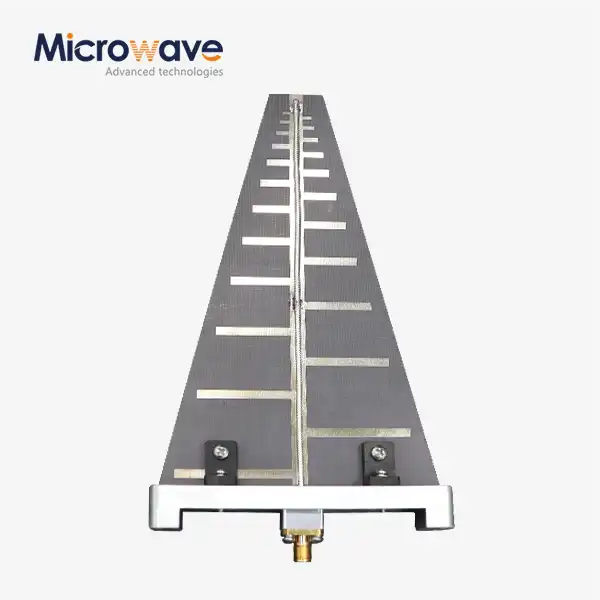
Pyramid antennas are designed to be broadband directional radiators. They have a special tapered shape that makes the transition from waveguide or coaxial feedlines to empty space smooth. This design cuts down on reflections and improves impedance matching over a wide frequency range, usually from 1 GHz to 40 GHz and above. The pyramidal taper lets electromagnetic waves gradually expand, which lowers phase mistakes and makes it possible for radiation patterns to stay the same, which is important for accurate readings in the far field.
How Pyramid Antennas Differ from Horn and Parabolic Designs?
Even though horn antennas are easy to use and small, they often have higher sidelobe levels that make measurements less accurate. Parabolic mirrors have a high gain, but they need to be perfectly aligned and take up a lot of room, which makes them less useful in labs with limited space. Pyramid antennas are good because they have a moderate gain and a very pure pattern. Their natural symmetry supports dual-polarization, which means they can be used to test systems with either linear or circular polarization without having to switch antennas.
Material and Geometry Impact on Performance
High-conductivity metals like aluminum or brass are used to make these antennas. They are often gold-plated to reduce surface losses at higher frequencies. Bandwidth and voltage standing wave ratio (VSWR) are directly affected by the internal geometry, especially the flare angle and taper length. Advanced Microwave Technologies Co., Ltd. has more than 20 years of experience in RF design and can optimise these parameters to make sure that our custom pyramid antennas deliver VSWR below 1.5:1 across all operational bands while keeping stable gain profiles. Our state-of-the-art 24-meter anechoic chamber makes it possible to precisely test antenna performance from 0.5 GHz to 110 GHz, making sure that specs meet the strict requirements of defense and aerospace testing standards.
Core Advantages of Pyramid Antennas for Microwave Testing
Choosing the right antenna technology can have a big effect on the accuracy of measurements and the time it takes to finish a project. Pyramid antennas have specific scientific and practical benefits that help with common problems in the process of characterizing microwaves.
Superior Beam Shaping and Directivity
The gradual transition shape of pyramid antennas results in highly controlled radiation patterns with known beamwidths. This quality is very important when checking electromagnetic compatibility (EMC) or measuring antenna gain, because stray radiation needs to be kept to a minimum so that it doesn't connect with nearby equipment. Half-power beamwidths usually range from 20° to 60°, depending on frequency and physical size. This makes them adaptable to different test chamber sizes.
Low Sidelobe Performance for Enhanced Accuracy
Sidelobe suppression of more than 20 dB below the main lobe peak is usually possible with pyramid antennas that are built correctly. This function lowers background noise and multipath effects during radiated readings, which makes it easier to get clean data. This feature directly helps procurement teams that are testing the next generation of 5G or millimeter-wave satellite systems because it keeps measurement error within the allowed ranges set by standards like IEEE 149 or CTIA certification requirements.


Ruggedness and Environmental Stability
In contrast to aperture antennas, which can change shape when temperatures change or when they are under mechanical stress, pyramid antennas made of strong metal have great long-term stability. We use materials that are RoHS-compliant and manufacturing methods that are ISO 9001:2015-certified to make sure that our products will work reliably in defense testing facilities with wide ranges of temperature and humidity. Because it lasts longer, it needs to be calibrated less often and costs less overall over multiple-year purchase cycles.
Application Versatility Across Test Scenarios
Pyramid antennas are used for many things, such as transferring gain standards, measuring patterns, and lighting up ranges. Because they cover a wide range of frequencies, they can be used to check radar cross-section (RCS) targets, describe wireless backhaul lines, and help university research into new RF designs. Being able to send and receive signals from a single antenna makes test sets easier and speeds up the measurement process. Together, these benefits give engineering teams more confidence in their measurements and make it easier to keep track of all the equipment they need. A good procurement strategy starts with figuring out how these benefits fit with the needs of a specific application.
Comparing Pyramid Antennas with Other Antenna Types for Microwave Testing
Technical buyers need to think about the project's limitations and the different radio choices available. An organized comparison shows the best places for pyramid antennas to be used.
Gain and Efficiency Trade-offs
Horn antennas usually have a gain of 10 to 25 dBi and a spread that isn't very wide. You can get 30+ dBi gain from a parabolic dish, which is great for long-distance links but not so great for close-range readings because of nearfield effects. Pyramid antennas work in the 12–20 dBi range, which is enough directivity for most testing that is done in a room and keeps useful patterns at distances of up to 3 meters. Because of this, they work especially well in small, echo-free rooms where far-field requirements need to be met in a small area.
Physical Size and Installation Complexity
Parabolic reflectors with diameters of several meters need heavy support structures and precise pointing systems. But horn antennas might need frequency-specific versions to cover a wide range of test plans, even though they are lighter. Pyramid antennas find a good mix between size and frequency. For example, a single unit that covers 2–18 GHz might be 60 cm tall and can be mounted on normal positioners without the need for special brackets. Simplified installation cuts down on setup time and the chance of mechanical errors happening during tests with multiple configurations.
Bandwidth and Frequency Flexibility
Patch antennas don't work for wideband sweeps because they have a small bandwidth (usually 5–10% fractional). Standard gain horns can cover octave bands, but you need more than one to cover spans of more than one decade. Pyramid antennas can often reach 10:1 bandwidth ratios, which means that one antenna can be used instead of several horns in a test suite. This consolidation lowers capital costs and makes managing goods easier, both of which are very important for contract makers who have to meet the needs of a wide range of clients.
Integration with Automated Test Systems
Modern measuring platforms need to be able to position themselves repeatedly using a computer. Because pyramid antennas aren't too heavy and have standard mounting connections, they are easy to connect to automatic positioners and vector network analyzers. When compared to resonant patch arrays, their steady impedance across frequency makes calibration easier. This speeds up automatic test processes in high-throughput production settings. By comparing these factors to the needs of the application—for example, whether gain, bandwidth, or ease of installation are more important—buyers can find the antenna architecture that meets technical requirements and gives them the best return on their investment.
Selecting the Right Pyramid Antenna for Your Microwave Testing Needs
For procurement to go well, antenna specs must be matched with exact measuring needs. A lot of technical factors need to be carefully looked at. Pyramid antennas that can be customized from 1 GHz to 40 GHz are sold by Advanced Microwave Technologies Co., Ltd. and have different polarization choices. These antennas come with full radiation pattern data that has been checked and confirmed in our ISO-certified measurement facilities.
Gain, Frequency Band, and Polarization Requirements
Set the lowest gain that will get you the signal-to-noise ratios you need in your test setting. All working bands must be covered by the frequency range, plus some extra space for calibration runs. Choose the type of polarisation that works best for your device portfolio: linear, dual-linear, or circular.

Impedance Matching and VSWR Considerations
A mismatch between the antenna and the feedline causes measurement noise and lowers the actual transmitted power. Set the highest VSWR that is acceptable. For precision work, this is usually 1.5:1 or higher. Look at the S-parameter data from the maker for the whole band to find resonances or other strange things. When connecting to older test equipment that uses impedances that aren't standard, our engineering team can provide custom impedance transformations and full datasheet documentation.
Evaluating Supplier Reliability and Customization Services
Check the supplier's history of getting mission-critical RF parts delivered in addition to the product specs. You should look for standards like ISO 9001 (quality control) and ISO 14001 (environmental compliance), as well as RoHS compliance. Check to see if the supplier has its own design and manufacturing facilities to allow for quick prototypes and changes. We have a full supply chain that includes CAD modelling, CNC machining, and finishing. This means that unique designs can be made in as little as four weeks.
Warranty Support and Technical Consultation
A full warranty protects you against problems with the way the product was made and changes in how it works. Look for providers that offer expert support during integration, such as help with choosing the right mounting hardware, cables, and the best ways to measure. This makes sure that rollout goes smoothly, whether you're setting up a new anechoic chamber or updating an existing range. Working with a provider that combines tested technical skills with quick service infrastructure lowers project risk and speeds up time-to-measurement, both of which are important when you have to meet tight development deadlines in a competitive market.
Procurement and After-Sales Considerations for Pyramid Antennas
It takes more than comparing datasheets to get high-performance test antennas. Supply chain, logistics, and lifecycle support are all part of strategic procurement. Working directly with makers like Advanced Microwave Technologies Co., Ltd has several benefits over going through distributors. For example, you can get custom engineering, clear pricing, and direct expert support. When the volume needs are high enough, OEM partnerships allow for customized specs and preferred pricing structures. Smaller research institutions might want to look into renting pyramid antennas instead of buying them so they can save money and still use top-notch measuring tools for short periods of time during projects.
Buying Channels and Sourcing Strategies
Access to custom engineering, transparent pricing, and direct technical support is a key advantage of the direct-to-manufacturer channel. For large-scale requirements, establishing strategic partnerships with the manufacturer ensures consistent supply and technical alignment with project milestones.
Installation, Maintenance, and Logistical Support
Professional installation services make sure that antennas are set correctly and work with current measurement systems, which cuts down on the time needed to start up. Set up maintenance plans that include regular VSWR checks and mechanical inspections to make sure the system keeps working well after years of use. We offer on-site commissioning for complicated multi-antenna configurations and thorough installation guides. Our global logistics networks can deliver to defense contractors, satellite integrators, and university labs in North America and beyond.
Warranty Coverage and Risk Mitigation
The standard guarantee should cover both the products and the work for at least one year, with the opportunity to extend coverage for important long-term projects. Find out how to return items and get them fixed before you buy them to avoid surprises during downtime. Our guarantee includes fast replacements for broken units and free technical support during the coverage period. This shows that we care about our customers' success throughout the lives of their equipment. When these buying factors are taken into account ahead of time, buying an antenna goes from being a one-time deal to a long-term relationship that helps with measuring accurately and running the business efficiently.
Conclusion
For microwave testing tasks that need high accuracy, a wide bandwidth, and reliable operation, pyramid antennas are a sophisticated but useful solution. Their special geometric shape gives better pattern purity and impedance matching than regular horn or parabolic options. This makes them perfect for testing defence radars, satellite communications, and RF research projects. Procurement professionals can confidently choose antennas that meet strict performance standards while staying within budget and time limits if they understand key technical parameters, compare antenna architectures, and work with experienced suppliers like Advanced Microwave Technologies Co., Ltd. Our 20 years of experience with microwaves and ISO-certified production make sure that every pyramid antenna gives you precise results that you can measure.
FAQ
1. What frequency ranges do pyramid antennas typically cover?
Pyramid antennas are made to work in a wide range of microwave frequencies, usually from 1 GHz to 40 GHz. Some designs are even able to work in millimeter-wave frequencies up to 110 GHz. The exact range varies on the size and shape of the internal curve. Wideband types can handle 10:1 frequency ratios in a single unit, which means that multi-frequency test programs don't need as many antennas.
2. How do pyramid antennas differ from standard horn antennas in testing contexts?
Sidelobe suppression and design harmony are the main things that set them apart. Because they taper gradually, pyramid antennas have lower sidelobe levels—often 20 dB or more—than rectangular horns because they don't have as many diffractive edge effects. This makes the measurement data better because there is less background noise. This is especially helpful for EMC tests and gain standard calibrations, where accuracy is important.
3. What maintenance practices extend pyramid antenna lifespan?
Taking regular VSWR readings can help find internal connection damage or water getting in. Check the mounting hardware for any mechanical issues that might make it hard to align. To keep metal surfaces from rusting, store antennas in controlled settings. By following these steps and getting your equipment professionally recalibrated every so often, you can be sure that the accuracy of your measurements will stay within the limits for decades, even in harsh industrial testing settings.
Partner with Advanced Microwave Technologies for Your Pyramid Antenna Solutions
Advanced Microwave Technologies Co., Ltd has been making high-quality RF products for more than 20 years and has state-of-the-art equipment, such as a 24-meter anechoic room that can test from 0.5 GHz to 110 GHz. Defense contractors, satellite integrators, and research institutions all over the world trust us to provide them with pyramid antennas. We offer custom solutions that are backed by ISO 9001:2015 quality assurance and RoHS compliance. Our expert team is ready to help you choose the right antenna, make quick prototypes, and make sure that it works perfectly with your measurement tools. Get in touch with craig@admicrowave.com right away to talk about your unique testing needs and find out how our pyramid antennas can improve your microwave characterization skills with accuracy, dependability, and quick support.
References
1. IEEE Standard 149-2021, "IEEE Recommended Practice for Antenna Measurements," Institute of Electrical and Electronics Engineers, 2021.
2. Balanis, Constantine A., "Antenna Theory: Analysis and Design," 4th Edition, Wiley, 2016.
3. Kraus, John D. and Marhefka, Ronald J., "Antennas for All Applications," 3rd Edition, McGraw-Hill Education, 2002.
4. Stutzman, Warren L. and Thiele, Gary A., "Antenna Theory and Design," 3rd Edition, John Wiley & Sons, 2012.
5. Johnson, Richard C., "Antenna Engineering Handbook," 4th Edition, McGraw-Hill Professional, 2007.
6. Milligan, Thomas A., "Modern Antenna Design," 2nd Edition, Wiley-IEEE Press, 2005.