




Key Benefits of a Dual Channel Coaxial Rotary Joint
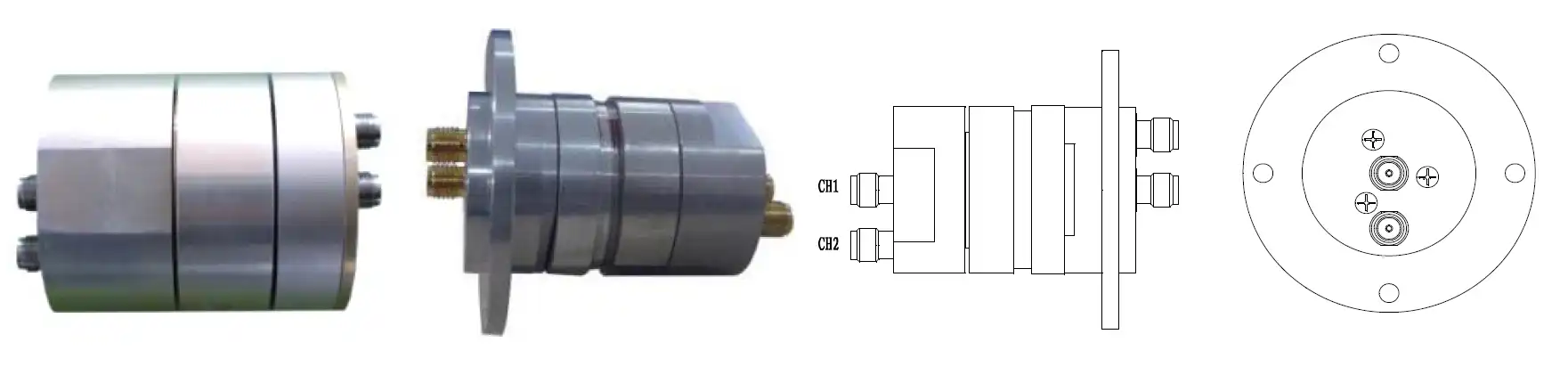
A Dual Channel Coaxial Rotary Joint stands as a precision-engineered electromechanical component that enables uninterrupted transmission of two independent RF signals between stationary and rotating platforms. This sophisticated device eliminates cable entanglement while maintaining signal integrity across continuous 360-degree rotation, making it indispensable for radar systems, satellite communication terminals, and defense applications where simultaneous transmit-receive operations or dual-polarization signals are mission-critical requirements.
Understanding Dual Channel Coaxial Rotary Joints
Core Functionality and Operating Principles
A Dual Channel Coaxial Rotary Joint connects solid infrastructure to spinning assemblies without impacting signal quality. Its concentric layout gives the Dual Channel Coaxial Rotary Joint two signal lines in one mechanical enclosure. The inner conductor handles one RF channel and the outside conductor the other. Precision dielectrics separate them and match impedance as they revolve.
This solution overcomes one of the biggest issues in rotating RF systems: keeping electricity flowing while permitting mechanical motion. Traditional cables lose phase and break after repeated bending. Dual Channel Coaxial Rotary Joints replace this weakness with stable contact surfaces formed of expensive metal contacts (typically gold-on-gold) that retain their electrical qualities over millions of rotating cycles.
Critical Design Elements
Several engineering considerations determine these pieces' structural stability. Impedance matching across a frequency range eliminates signal echoes that degrade system performance. High-quality units have VSWRs < 1.5:1 throughout their lifespan. This minimizes interface power loss.
Channel isolation matters too. Advanced interior shielding mechanisms physically isolate the signal pathways to prevent data integrity risks. Standard market devices can isolate over 50dB, while defense-grade versions can isolate over 70dB. This electromagnetic isolation enables each channel to operate independently.
Frequency Range and Signal Integrity
From hundreds of MHz to 110 GHz, modern Dual Channel Coaxial Rotary Joints can operate. Their applications span from antiquated transmission systems to millimeter-wave radar. Careful material selection and mechanical constraints enable the broad bandwidth. Precision machining is crucial at higher frequencies because even slight size changes might create impedance discontinuities.
Keeping the signal strong as the motor turns requires minimizing contact resistance fluctuations. Phase stability, known as "WOW" in business, must maintain a limited range of ±3 degrees or ±0.05 dB throughout the revolution. This stability locks radar systems on targets and prevents communication channels from losing data when antenna tracking shifts.
Key Advantages of Dual Channel Coaxial Rotary Joints
In the microwave component industry, decisions about what to buy depend on how well the product will work and how much it will cost over its lifetime. Technical buyers can measure the value of Dual Channel Coaxial Rotary Joints in a number of ways that are important to them.
Enhanced Signal Performance
Using two channels simultaneously without reducing efficiency is its key feature. Unlike sequential switching or twin single-channel arrangements, an integrated twin-channel coaxial rotary joint device maintains electrical qualities for both lines. Insertion loss, or signal power absorbed, is generally less than 0.5 dB over the quality unit's frequency range.
In receiver chains, where system sensitivity is influenced by every tenth of a decibel, this low-loss attribute is crucial. Satellite ground stations tracking weak signals from geostationary orbit may increase link budget margins by minimizing insertion loss. When the power provided to the receiver is scarcely reduced, and the signals are entirely maintained, radar systems may locate distant objects.
Because channels are well-isolated, complex system designs are conceivable. Send and receive lines may function simultaneously, and the powerful broadcast signal won't harm the weak reception channel. This full-duplex functionality eliminates transmit-receive switching, simplifying and speeding up reaction times in time-sensitive applications like radars that detect threats.
Durability and Extended Service Life
Dual Channel Coaxial Rotary Joints are durable even in tough environments. Accelerated life testing suggests premium units can last 10 to 50 million spins without failing. High-tech bearing designs and rust-proof precious metal contact technologies provide this longevity.
Longer operation means cheaper maintenance expenses. Systems may last for years without inspection, which is critical for distant locations like unmanned weather stations or maritime communication platforms. Less maintenance reduces lifetime expenses and increases system availability, which justifies a purchase.
Environmental resilience boosts reliability. IP65 or IP67 units can withstand dust and water, which would destroy less durable parts. It meets military and defense demands by performing the same in Arctic and desert environments from -40°C to +85°C.
System Integration Advantages
Integrating two data lines into a mechanical assembly has tremendous integration advantages. Minimizing size is crucial in electro-optical turrets and tiny SATCOM stations. A Dual Channel Coaxial Rotary Joint requires no additional fastening equipment and takes up less space than two rotary joints.
Simpler mechanical interfaces need less rotating torque. Power is saved by using smaller drive motors. This feature allows system design to lighten structures and shrink containers. Mobile and flying platforms, where weight and volume are costly, benefit from this.
One item replacing numerous preceding parts simplifies installation. Fewer mechanical connections make them simpler to line up and quicker to assemble during manufacturing or field repair. This simplified solution reduces construction costs and installation errors that might influence performance.
Comparing Dual Channel Coaxial Rotary Joints to Alternatives
Single Channel Rotary Joints
Single Channel Rotary Joints are the clearest way to compare the two. When dual-path operation is needed, Single Channel Rotary Joints become twice as complicated mechanically, even though they work the same way for one signal path. To keep them in sync, installing two separate rotary joints needs more mounting room, two separate drive systems, and precise mechanical alignment.
A cost analysis shows that two Single Channel Rotary Joints usually cost more than one Dual Channel Coaxial Rotary Joint component. This is true even before extra mounting hardware and integration labor are taken into account. The practical cost includes higher torque and rotational inertia needs, which could mean that stronger drive systems are needed.
Fiber Optic Rotary Joints
In some situations, Fiber Optic Rotary Joints are a better option, especially when a very wide bandwidth or electrical separation makes them worth the extra work. But visual options come with their own set of problems. At both ends, they need to be converted from visual to electrical, which adds parts, power use, and possible failure points.
Fiber optics aren't good for sending RF power, which happens a lot in radar and high-power communication systems. It is possible for a Dual Channel Coaxial Rotary Joint to send both data and power, but optical links are not able to do so. Because of this basic problem, fiber optic systems can only be used for data purposes.
Traditional Slip Rings
Slip ring technology has been around longer than Dual Channel Coaxial Rotary Joints and can still be used for low-frequency power and control data. However, slip rings lose a lot of their performance at microwave frequencies. Their multi-brush contact design causes varying resistance and bad high-frequency performance, which means they can't be used in GHz-range applications.
When slip rings are turned, they also make more electrical noise. Multiple sliding contacts cause voltage spikes and changes in resistance that mess up sensitive RF signals. This contact noise is too much for low-noise sensors or systems that need to make precise measurements, so Dual Channel Coaxial Rotary Joints are the only option.
Procurement Considerations for B2B Buyers
When technical buyers look at Dual Channel Coaxial Rotary Joint providers, they have to deal with a lot of specs and buying factors that need to be carefully thought through. Knowing about these things helps you make smart choices that balance the need for performance with the limitations of your budget.
Technical Specifications to Evaluate
The typical list prioritizes frequency range. Your part must perform effectively over the frequency range your application demands with an acceptable VSWR. Beware of specifications that only demonstrate spot-frequency performance. Full sweeping frequency data helps you predict its performance.
Radar transmitters and other power-hungry equipment need careful power control. Manufacturers estimate peak and CW power. Peak ratings are used for burst systems like radar, while CW ratings cover continuous data transmission. Check both scores to ensure they fit system requirements.
Insertion loss and isolation specifications affect system performance. Ask for data on these characteristics over the frequency range and provide measuring methods. Certain manufacturers provide "best-case" figures that may not apply to manufacturing units. Ask for guaranteed minimum criteria instead of average or maximum performance promises.
Customization and Lead Times
Deliveries of standard stock items are usually shorter, taking between four and eight weeks for well-known makers. But for many uses, tailoring is needed, such as using certain types of connectors, mounting arrangements, or frequency tuning. Lead times for custom designs go from 12 to 16 weeks, but the parts you get are exactly what you need.
Our engineering team at ADM works with customers to make designs work better in certain situations. Our development services allow for quick iteration, and we can make evaluation units in just a few weeks so that system integration can begin while the production tools are being made. Even though each project has its own unique needs, this method cuts down on overall program timelines.
Supplier Evaluation Criteria
A supplier's skills have a big effect on the success of a procurement, not just the product specifications. Manufacturing quality systems, such as ISO 9001 certification, show that a process is mature and consistent. RoHS approval makes sure that goods are environmentally friendly when they are sold in Europe or by companies with strict environmental rules.
The level of technical help is what sets top providers apart from commodity vendors. When installing or troubleshooting complex RF components, sometimes you need help. Application engineers with a lot of experience from suppliers are very helpful because they speed up integration and solve problems quickly in the field. At ADM, our team has more than 20 years of experience working with microwave parts and can provide expert advice at any point in the span of a product.
With global transportation, you can be sure of a reliable arrival no matter where you are. Manufacturers who have been shipping goods internationally for a long time know how to handle customs paperwork and give accurate delivery tracking. This dependability is very important for production plans where late parts stop assembly lines.
Maintenance and Testing Best Practices
For Dual Channel Coaxial Rotary Joints to work as long as possible and be as reliable as possible, they need to be maintained in an organized way and tested for accuracy on a regular basis. These methods find possible problems before they cause the system to fail.
Routine Maintenance Procedures
Regular visual examinations might reveal faulty connections, cracked casings, and loose hardware. Inspections every three months are sufficient in mild conditions. In tough situations with temperature fluctuations, vibrations, or pollutants, monthly inspections are required. Make sure mounting bolts are snug and connecting interfaces are clean and undamaged during inspection.
Environmental conditions determine cleaning. Dust from the outside may eventually enter apertures. Cleaning carefully with isopropyl alcohol and lint-free towels removes dirt and grime without damaging the finish. Avoid powerful solvents that might harm seals or lubricants. Since disassembling objects might introduce dirt or harm specific surfaces, only skilled specialists or plant refurbishment should clean the interior.
Different designs need different lubricants. Many current Dual Channel Coaxial Rotary Joints have sealed bearings that don't require field lubrication. Other joints benefit from frequent oiling of the bearing surfaces. Check the manufacturer's directions to avoid over- or under-lubricating, which allows dirt in and speeds up wear.
Critical Testing Parameters
Regular electrical testing makes sure that specifications are still being followed. Using a Vector Network Analyzer (VNA) to measure insertion loss across the frequency range lets you figure out how much performance has dropped from the average. Increasing insertion loss is a sign of contact wear or contamination that needs to be fixed.
The VSWR test shows how well the resistance matches up. When VSWR goes up, it means that problems are getting worse, like connector wear or damage inside the circuit. When you compare current measurements to data from acceptance tests, you can see trends in performance. This lets you plan maintenance ahead of time, before problems happen.
Isolation between channels is another important factor, especially for systems that use both channels at the same time. Crosstalk, which corrupts signals and shows that internal shielding is failing or that there are contact problems, happens when isolation is weak. To test isolation, you need to make sure that empty ports are properly closed off and use the right measurement method to avoid external coupling that hides the performance of the component.
Troubleshooting Common Issues
Signal dropouts that happen sometimes during rotation are usually caused by problems with the contacts. Contacts made of precious metals can get oxide films or other contamination that makes them less resistant to making contact. A lot of the time, long-term spinning under load cleans up the contact surfaces by grinding away surface films to make good electrical contact again. If rotating doesn't fix the problem, the item may need to be reconditioned at the source.
Too much rotational noise, like voltage spikes or changes in amplitude during rotation, could mean that there are problems with the dynamic contact resistance. This problem is usually not a problem with high-quality units that use gold-on-gold contacts and the right amount of contact force. When noise is heard, it usually means that the contacts are dirty or worn out and need to be replaced.
More rotating force means that the bearings are wearing out or there are lubrication issues. Bearings should be changed before they wear out too much and damage the housings or fail completely. Monitoring starting torque lets you know early on if bearing problems are starting to show up, so you can plan maintenance instead of making emergency fixes.
Conclusion
Dual Channel Coaxial Rotary Joints are very useful for challenging RF uses in the defense, aircraft, satellite communication, and industry fields. Because they can keep the signal integrity for two separate channels during continuous rotation, they can build systems that would not be possible with other methods. These parts are important for modern rotating antenna systems, surveillance radars, and mobile communication terminals because they have low insertion loss, high isolation, a long service life, and can be packed into small spaces. Selecting suppliers carefully based on their technical skills, quality systems, and support resources is the only way to make sure that the purchase goes well and that operations run smoothly for a long time.
Frequently Asked Questions
How is crosstalk managed in dual-channel designs?
Advanced internal shielding structures and precise circular design make it possible for channels to be completely electromagnetically isolated from each other. Standard market units can isolate more than 50dB, while high-performance models made for important defense uses can isolate more than 70dB thanks to better shielding materials and improved geometry. This separation level stops crosstalk completely, so high-power send signals can work on their own on one channel while the receiver's sensitivity stays the same on the other.
Can these components handle simultaneous power and data transmission?
Yes, one popular use is to send RF power on one channel while sending high-frequency data signals on the other. However, the power handling specifications—both the peak and steady wave ratings—must meet your needs. The right dielectric materials stop thermal breakdown or arcing at high power levels, so it's important to get the right specifications when you're buying.
What rotational life expectancy should buyers expect?
Quality Dual Channel Coaxial Rotary Joints have service lives of 10 to 50 million revolutions under normal operating conditions while still meeting specifications. This durability is proven by accelerated life testing, which checks the steadiness of the contact resistance over the course of the test run. The actual service life depends on things like the speed of rotation, the environment, and regular maintenance.
Partner with ADM for Your Dual Channel Coaxial Rotary Joint Requirements
Advanced Microwave Technologies Co., Ltd. (ADM) has been making high-precision RF and microwave parts for mission-critical uses for more than 20 years. Defense contractors, satellite communication providers, and aerospace system designers who need unwavering performance and dependability use our Dual Channel Coaxial Rotary Joint options.
Our ISO 9001:2015-certified manufacturing processes make sure that the quality is the same no matter how many items are made, from prototypes to full-scale orders. We use Vector Network Analyzers and environmental stress screening as part of strict testing protocols to make sure that every unit meets the requirements before it is shipped. As an established Dual Channel Coaxial Rotary Joint manufacturer, we know the problems that expert buyers face when they are trying to buy things. That's why we offer quick help during the evaluation and integration process.
Our engineering team works closely with customers to make ideas work best for their needs. They can change the types of connectors, the frequency of the signal, and the mechanical connections. We can make solutions that are exactly what you need, whether you need X-band radar systems, Ka-band SATCOM terminals, or multi-band monitoring uses.
Get in touch with craig@admicrowave.com right away to talk about your needs for a Dual Channel Coaxial Rotary Joint. Our technical experts will help you sort through the different choices for specifications, give you fair quotes, and make delivery plans that work with your program's schedule. Feel the difference that specialized knowledge and service that focus on the customer make.
References
1. Microwave Engineering Handbook, Volume 3: Passive Components and Antenna Systems, Institute of Electrical and Electronics Engineers, 2018.
2. Rotary Joint Design Principles for High-Frequency Applications, Journal of Microwave Technology and Applications, Vol. 42, Issue 3, 2020.
3. Advanced RF and Microwave Components for Defense Systems, Defense Electronics Research Laboratory, Technical Publication Series, 2019.
4. Satellite Communication Ground Segment Equipment Standards, International Telecommunications Union, Recommendation ITU-R S.1323-2, 2017.
5. Quality Assurance Testing Methods for Coaxial Rotary Joints, American Society for Testing and Materials, Standard ASTM F1897-2021.
6. Electromechanical Component Reliability in Rotating Platform Applications, IEEE Transactions on Components, Packaging and Manufacturing Technology, Vol. 11, No. 8, 2021.

_1733809032116.webp)