





How to Select an RF Rotary Joint
To choose the best RF rotary joint, you need to carefully think about the technical specs, the needs of the application, and the supplier's abilities. An RF rotary joint is a precise electromechanical device that keeps high-frequency signals moving between parts that are still and parts that are moving while maintaining resistance continuity. To be successful in buying, you need to make sure that the frequency range, power handling, insertion loss, and VSWR traits are all right for your radar, satellite communication, or testing system. Long-term dependability is ensured in mission-critical uses in the aerospace, military, and telecoms sectors by knowing about mechanical longevity, environmental ratings, and customization options.
Understanding RF Rotary Joints: Fundamentals and Working Principles
RF rotary joints' main job is to keep the electricity flowing while allowing the joint to rotate mechanically. These gadgets solve a basic engineering problem: how to send RF signals between parts that have to move around without causing wire twist, signal loss, or mechanical wear that lowers the device's long-term dependability.
How RF Rotary Joints Maintain Signal Integrity During Rotation
Either contacting or non-contacting transmission ways are usually used by the internal design. Contacting designs use finely polished brushes or spring-loaded contacts that stay in contact with a moving wire and provide a wide range of frequencies, from DC to microwaves. Waveguide coupling or capacitive/inductive coupling is used in non-contacting configurations to move energy across a small air gap. This prevents physical wear and increases operating life beyond 20 million revolutions. Which of these methods you choose affects maintenance plans, insertion loss, and the amount of power that can be handled.
Frequency Range Capabilities and Application Matching
Modern RF rotary joints can work in a very wide range of frequencies, from DC to 110 GHz. This means they can be used in a wide range of situations, from old communication systems to millimeter-wave radar and the new 5G infrastructure. Air traffic control radar and marine navigation systems often use lower frequency units (below 6 GHz), while X-band and Ku-band variants are used by most satellite transmission base stations. Advanced defense radar, radio astronomy, and next-generation wireless backhaul networks can all use Ka-band and higher frequency systems. The most important thing is to make sure that the frequency standard of the RF rotary joint fits within the working band of your system, leaving enough room for harmonic content and future upgrades.
Mechanical Configurations and Installation Considerations
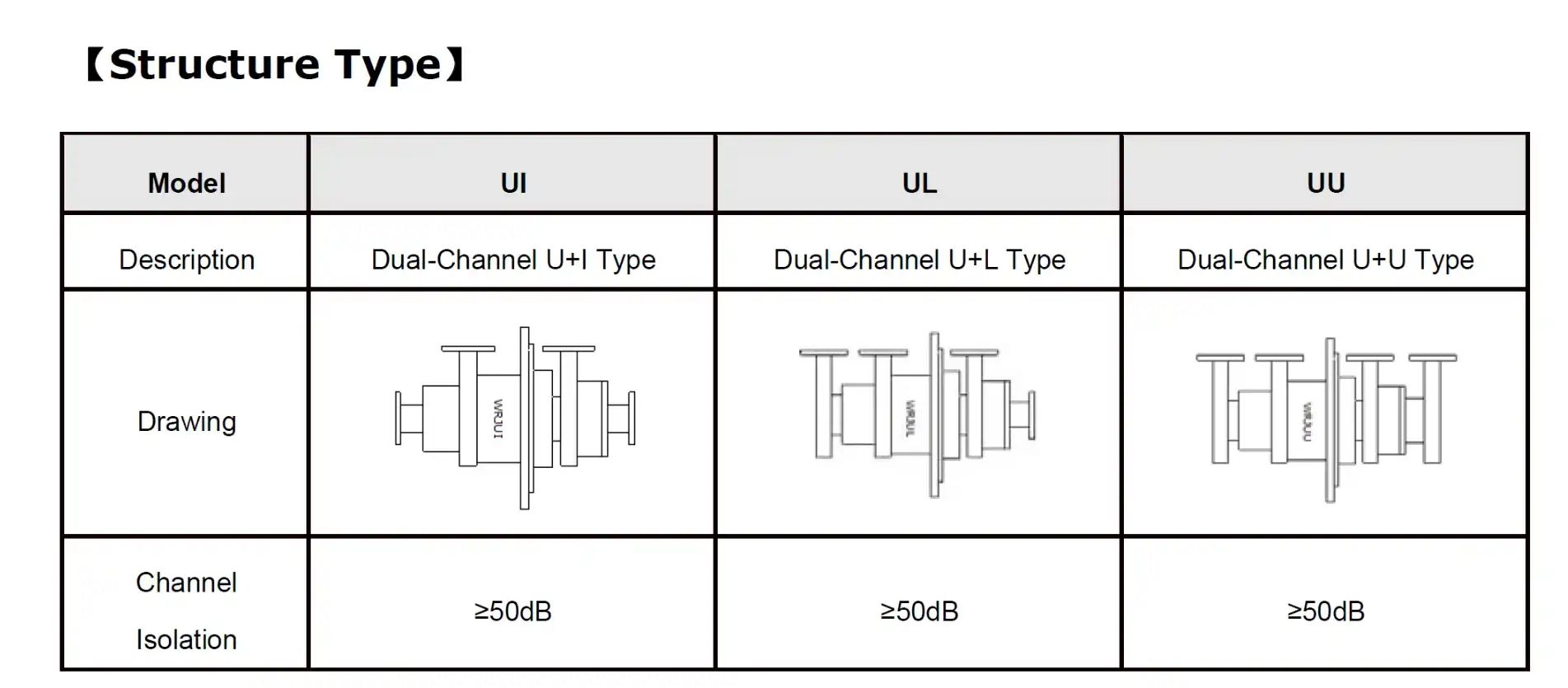
The way the parts are mounted physically, the RF rotary joint has a big effect on how easy and well the system works together. When the antenna or sensor revolves around a central feed line, I-style or axial designs line up the rotating axis with the signal path. The fixed and rotating ports are at right angles in U-style perpendicular designs, which are popular in pedestal-mounted systems. L-style mixed combinations give designers more options for making shapes with complicated shapes. Beyond simple alignment, you should also think about how the flanges will work together, how much torque is needed, and how the environment needs to be sealed. Systems that work in harsh marine, aerospace, or outdoor settings need IP-rated cases and finishes that don't rust so they can keep working even when exposed to high and low temperatures and humidity.
Key Technical Specifications and Performance Parameters to Consider
To tell the difference between RF rotary joints that are competing, you need to know a lot about the performance factors that control signal quality, power capacity, and operating reliability. These specs have a clear relationship with performance measures at the system level and the total cost of ownership.
Frequency Range and VSWR Performance
The Voltage Standing Wave Ratio measures how well the impedance matches. Lower numbers mean better signal transfer and fewer echoes. Most high-performance RF rotary joints keep the VSWR below 1.5:1 over the frequency range they are designed for, but some precision uses may need 1.3:1 or better. Pay close attention to VSWR "wow," which is the change in VSWR as the joint turns. When wow is too high, it changes the amplitude of messages being sent and adds phase noise, both of which lower the quality of radar clarity or communication links. Manufacturers of good products list both static and dynamic VSWR and test them over a full 360-degree spin cycle to make sure they work the same way every time.
Power Handling and Thermal Management
The average and peak power values tell you if an RF rotary joint can handle the data levels in your application. Radar systems often send out kilowatt-level bursts, which need a strong contact design and good heat transfer. Applications that use continuous waves, like satellite uplinks, need to be able to handle a lot of power without losing quality over time. The building tools are very important here. Silver-plated contacts are very good at conducting electricity, while gold plating is better at resisting rust in damp places. More advanced versions use heat sinks, cooling ducts, or pressurization with dry air or SF6 gas to make the device last longer and handle more power. If you know your duty cycle, peak-to-average ratio, and the conditions of your surroundings, you can choose the right power level with enough room for error.
Insertion Loss and Signal Fidelity
Even very small amounts of insertion loss add up over the course of a system's parts, lowering the useful range in radar uses or the link gap in communication networks. Insertion loss of premium RF rotary joints is less than 0.5 dB thanks to tight mechanical standards, improved coupling shape, and low-loss materials. Rotation should be taken into account in the insertion loss standard, since some forms change slightly as they rotate. In phased-array devices and coherent radar processing, phase stability is much more important than magnitude. Phase deviation during spin causes aiming mistakes and sidelobe asymmetry that hurt the performance of the system. Companies that make things for the defense and aerospace industries often give standards and test results for phase stability in a variety of environmental situations.
Construction Materials and Durability Standards
Mechanical longevity and weather protection of the RF rotary joint depend on the choice of materials and the quality of the manufacturing process. Aerospace-grade aluminum metals (6061-T6) have great strength-to-weight ratios, and copper-beryllium contacts make them resistant to wear in high-cycle uses. Surface treatments like electroplating and Alodine keep things from rusting in salt fog and industrial settings. Bearing systems that use ceramic or stainless steel parts can handle shock, vibration, and constant spinning without adding mechanical noise to the RF signal line. Specifications for purchases should include MIL-STD tests (shock per MIL-STD-810, vibration, temperature cycling) and IP grades that are appropriate for the area where the product will be used.
How to Evaluate and Compare Different RF Rotary Joint Solutions
In order to find the best RF rotary joint suppliers, you need to compare them in a way that takes into account more than just the specs on the datasheets. You need to look at their skills, quality systems, and long-term support structures as well.
Matching Product Specifications to Application Requirements
Making a detailed requirements grid makes comparing vendors easier and stops specification holes from happening. Start with basic electrical factors like frequency range with a buffer, VSWR limits, maximum insertion loss, and how much power the device can handle at a certain duty cycle. Include technical needs like how the part is mounted, how fast it rotates, how much pressure it can handle, and how it will be exposed to the environment. Communication applications may value the ability to combine RF, DC power, and control data into a single unit with multiple channels. A lot of the time, defense systems need particular ways to test, keep records, and track the supply chain. Setting up a weighted score system that takes into account your goals lets you compare vendors objectively and helps you justify your purchase.
Single-Channel vs. Multi-Channel Architectures
Buyers are often tempted by single-channel options because they are cheaper, even when systems require multi-channel designs. Single-channel coaxial RF rotary joints work best in simple signal lines. Multi-channel assemblies, on the other hand, are better for systems that need to send and receive at the same time, have a wide range of frequencies, or have integrated sensor packages. In one mechanical box, these hold many coaxial lines, waveguide channels, DC power circuits, and even fiber optic rotating joints. The integrated method makes installation easier, increases dependability by getting rid of multiple rotating connections, and usually results in a lower overall system cost, even if the unit prices are higher. When figuring out how many channels you need, you should think about how many you will need in the future and how much it will cost to upgrade versus supplying initially.
Coaxial vs. Waveguide Technologies
There are trade-offs in bandwidth, power handling, physical size, and cost when you choose between coaxial and waveguide rotating joints. Coaxial designs have small sizes and continuous frequency coverage from DC to higher frequencies, making them good for uses that need a wide range of responses or lower frequency operation. Waveguide RF rotary joints are better at handling power and have less insertion loss at high frequencies. This is why they are used in millimeter-wave radar and high-power satellite ground interfaces. With 3:1 bandwidth ratios, double-ridge waveguide designs make the frequency range that can be used bigger. This means that fewer parts are needed for multi-band systems. Hybrid systems that use both coaxial channels for control data and waveguide routes for high-power RF transmission can be useful in some situations.
Evaluating Manufacturer Credentials and Quality Systems
Specifications are only one part of the story of buying. Long-term happiness is affected by the manufacturer's skills, the quality management system, and the image of the business. Structured quality processes are shown by ISO 9001 certification, but buyers in the aerospace and military industries should look for AS9100 certification, which is specific to their field. Environmental management standards (ISO 14001) and RoHS compliance show that a company uses responsible manufacturing practices, which are being asked for more and more by buying policies. Ask for proof of the testing skills, especially when it comes to life cycle testing, environmental stress screening, and the accuracy of network monitor measurements. Manufacturers with antenna measurement rooms and test facilities that can handle frequencies up to 110 GHz show that they have the technical know-how to help with unique designs and troubleshooting. Check with customers in the same business as you, because needs and quality standards for commercial telecommunications and defense uses are very different.
Procurement Considerations: From Ordering to After-Sales Support
Technically, choosing the best products doesn't help much if you don't have a procurement plan that covers price, delivery, customization, and continued support for the whole lifecycle of the RF rotary joint.
Pricing Models and Total Cost of Ownership
Unit prices vary a lot depending on the frequency band, number of channels, amount of customization, and size of the order. Standard catalog items from well-known makers may work well enough, have faster wait times, and be less expensive. Custom designs made to exact specifications cost more, but they get rid of waste caused by too many specifications. Take the total cost of ownership into account when comparing quotes. Cheaper units with higher insertion RF rotary joint loss may make the emitter need more power and cost more to run over the system's lifetime. Unreliable equipment requires a lot of extra parts and work in the field to fix it, which eats up any savings that were made at first. Longer warranty periods and quick responses from manufacturers' support teams lower operating risk and should be taken into account when figuring out worth.
Lead Times and Supply Chain Flexibility
Standard goods usually ship in four to eight weeks. Custom designs, on the other hand, take twelve to twenty weeks for development, testing, and production. Early involvement with makers to match development timelines and find long-lead materials is helpful for projects on a critical path. Knowing how the provider handles inventory and how much they can make helps you figure out how reliable their shipping is. Companies that keep extras of popular configurations can react quickly to urgent needs or changes in schedules, but companies that build to order are less flexible. While multi-sourcing methods lower supply chain risk, they may also raise approval costs and make inventory management more difficult. Setting up a framework deal with chosen suppliers is a good way to balance flexibility with volume power.
Customization Capabilities and OEM Partnerships
When used in specific ways, off-the-shelf goods rarely work as well as they could. Leading makers allow for a lot of customizing, including different types of flanges, connector connections, mounting options, channel layouts, and weather protection. There are big differences between companies in how much engineering help they offer. Some OEM partners only make changes to the catalog, while full-service OEM partners work with you to build, prototype, and test the RF rotary joint so that it works best with your system architecture. This way of working together is especially helpful when adding RF rotary joints to complicated systems or when performance needs go beyond what standard designs can do. When looking at OEM services, you should check how quickly the engineering team is, how long it takes to make prototypes, and how willing they are to work with acceptable design changes without charging too much for change orders.
Warranty Coverage and Maintenance Requirements
The terms of the warranty show how confident the maker is in the product's dependability and have a big effect on the total cost of ownership. Standard guarantees last between 12 and 24 months, but longer warranties may be possible for large purchases or when building long-term relationships with suppliers. Carefully read the guarantee restrictions, especially the ones that say what the product can't do in certain environments, how it was installed, or how it was used improperly. Maintenance for contacting designs usually includes checking them every so often, cleaning the contacts, and replacing the brush or spring after a certain number of spinning cycles. In normal situations, non-contacting waveguide designs don't need any upkeep, but in harsh settings, the seals may need to be inspected. Manufacturers with field service, depot repair, or advanced swap programs should be chosen for mission-critical uses where duplication is not an option because they reduce operational downtime.
Conclusion
Structured review and strategic partnerships help RF rotary joint buying find a good mix between technical needs, supplier skills, and total cost of ownership. Because the standards cover a wide range of things like frequency response, power handling, mechanical sturdiness, and environmental resistance, they need to be systematically compared and validated against the needs of each application. Technical excellence isn't enough on its own; suppliers also need to have quality processes in place, offer technical help, and be dedicated to long-term customer success. Procurement trust is built on manufacturers showing they have ISO approval, a large testing infrastructure, and a lot of experience with specific uses. The procurement process includes more than just the original purchase. It also includes installation assistance, performance validation, and upkeep throughout the product's life. Building partnerships with reliable providers and making sure there is full paperwork, guarantee coverage, and access to spare parts protects practical continuity and the value of the investment over many years of system operation.
FAQ
What frequency ranges do RF rotary joints typically support for 5G infrastructure?
Most RF rotary joints used for 5G work in the 24 GHz to 40 GHz millimeter-wave bands, but some can go up to 110 GHz for future frequency licenses. Coaxial designs are used for lower frequency bands (3.5 GHz), while waveguide designs are better for higher frequencies because they have less loss and can handle more power. The frequency to use relies on how 5G is deployed, the type of antennas used, and whether the purpose is for fixed wireless access, mobile backhaul, or small cell infrastructure.
How do RF rotary joints differ from standard electrical slip rings?
RF rotary joints keep the controlled impedance (usually 50Ω) and phase stability that are needed to send high-frequency signals, while electrical slip rings send power and low-frequency control signals without having to worry about impedance. When it comes to insertion loss and VSWR, RF rotary joints use precise coaxial or waveguide shapes, while slip rings use brush contacts that are better at handling current than signal integrity. When high-frequency RF and DC power are needed at the same time, hybrid systems that combine the two technologies in one package are often used.
Can RF rotary joints be customized for specific application requirements?
Leading makers allow for a lot of customizing, including choosing the best frequency band, flange type, connector interface, channel count, sealing against the environment, and mechanical mounting options. Customization methods usually include joint engineering to set requirements, making prototypes and testing their performance, and testing to make sure they are ready for production. Turnaround times vary from eight to twenty weeks, depending on how complicated the design is. Costs are based on the amount of technical work and tooling that needs to be done, as well as the number of agreements.
Partner with ADM for Your RF Rotary Joint Requirements
For every RF rotary joint option we offer, Advanced Microwave Technologies Co., Ltd, brings more than 20 years of experience in precise microwave engineering. Our advanced testing powers up to 110 GHz, and ISO 9001-certified production methods make sure that parts meet the exacting standards needed by defense, aerospace, and satellite communication systems. We know that choosing an RF rotary joint provider means looking at their scientific know-how, ability to make changes, and long-term support system.
Our engineering team works together with sourcing experts and system planners to create custom solutions that meet each customer's individual frequency needs, power needs, and environmental conditions. Our OEM services can quickly make samples and get them ready for production, no matter if you need single-channel coaxial designs, multi-channel waveguide assemblies, or custom setups that combine multiple signal paths. Email craig@admicrowave.com to talk to our technical team about your application needs, get full specs, or set up sample evaluation units that show how committed we are to performance and dependability.
References
1. Skolnik, M. I. (2008). Radar Handbook, Third Edition. McGraw-Hill Education.
2. Kumar, A., & Sharma, R. (2019). Microwave and Radar Engineering: Principles and Applications. Cambridge University Press.
3. Pozar, D. M. (2011). Microwave Engineering, Fourth Edition. John Wiley & Sons.
4. IEEE Standard 145-2013. IEEE Standard for Definitions of Terms for Antennas. Institute of Electrical and Electronics Engineers.
5. Balanis, C. A. (2016). Antenna Theory: Analysis and Design, Fourth Edition. John Wiley & Sons.
6. Maral, G., & Bousquet, M. (2020). Satellite Communications Systems: Systems, Techniques and Technology, Sixth Edition. John Wiley & Sons.
YOU MAY LIKE
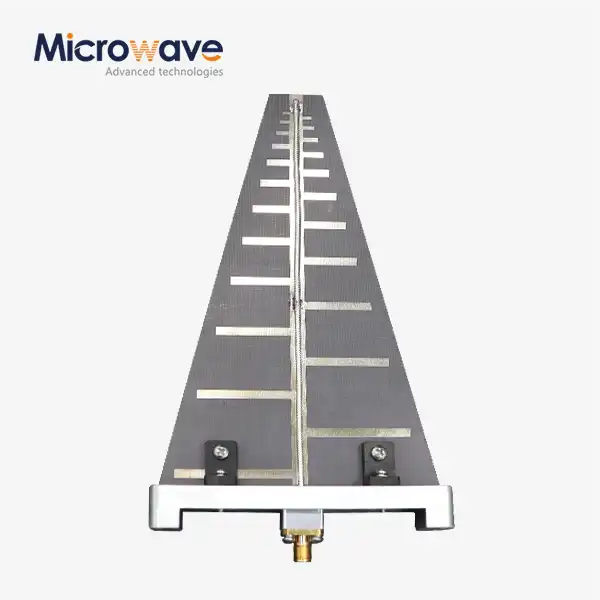 VIEW MORELog Periodic Antenna
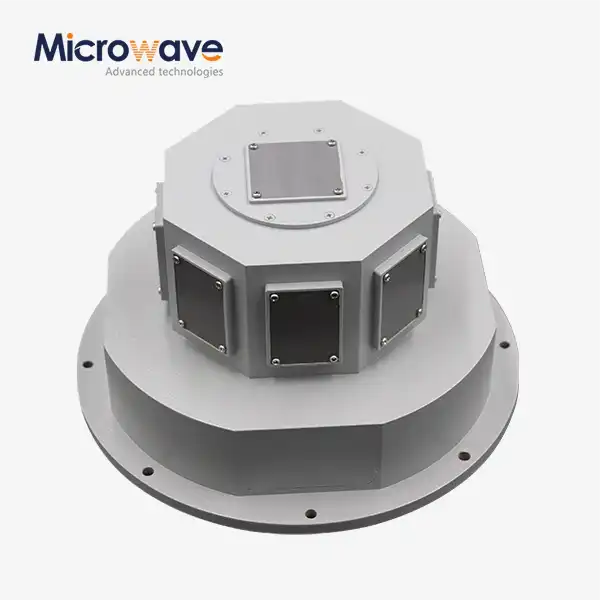 VIEW MORESlotted Waveguide Array Antenna
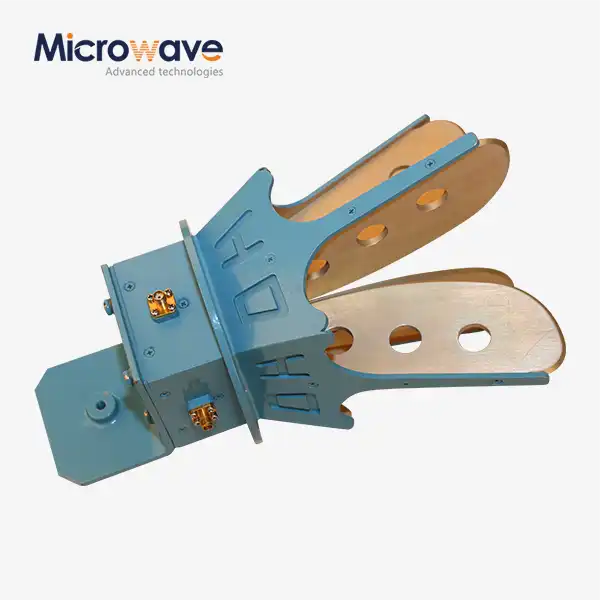 VIEW MOREOpen Boundary Dual Linear Polarization Four Ridged Horn Antenna
 VIEW MOREConical Circular Polarization Horn Antenna
 VIEW MOREConical Dual circular Polarization Horn Antenna
 VIEW MORELadder Membrane Square Dual Circular Polarization Horn Antenna
 VIEW MOREQuadrifilar Helix Antenna
 VIEW MORECassegrain Antenna