




How Does a Coaxial Rotary Joint Enable Continuous RF Transmission?
A coaxial rotating joint uses a carefully designed circular wire design that keeps electrical contact even when the joint rotates 360 degrees. This allows continuous RF transfer. The low-resistance gold-plated contacts and accurate bearings in the device keep the characteristic impedance, which is usually 50Ω, the same across the spinning interface. This gets rid of wire packing and signal interruption, so radio signals can flow freely between components that are still and those that are moving. The rotor joint keeps insertion loss and VSWR under control, which means that radar systems, satellite ground stations, and spinning antennas can keep working without any signal or cable damage.
What is a coaxial rotary joint, and how does it work?
One of the most advanced methods in current RF engineering is the rotary joint. Normal wire systems twist and break after being rotated many times, but these devices can be rotated an endless number of times without losing signal quality.
Core Components and Structural Design
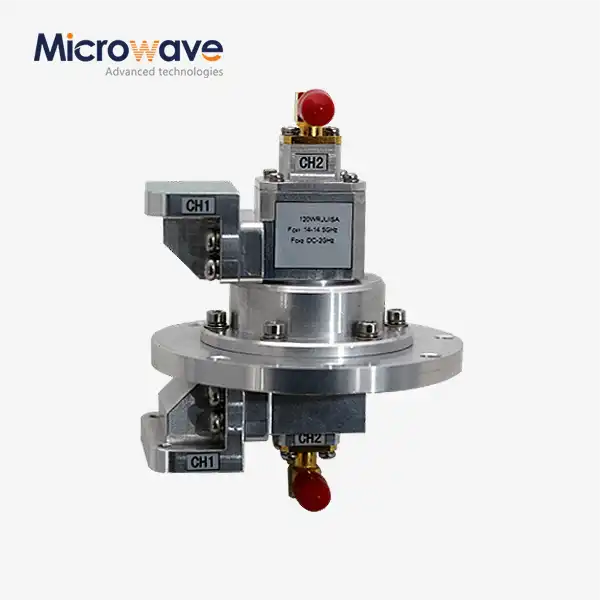
A single-channel coaxial rotary joint has an outer shell that doesn't move (stator) and an inner unit that does (rotor). The RF signal is sent through a spring-loaded contact link on the center wire, which is usually made from a beryllium copper combination. A dielectric gap surrounds this inner wire and keeps it perfectly separate, which ensures that the resistance stays the same. The outer wire finishes off the coaxial structure. Precise ball bearings make it easy to rotate while keeping the structure mechanically aligned. Depending on the type of connection (SMA, 2.92 mm, or 2.4 mm), this design can handle frequencies from DC to 110 GHz.
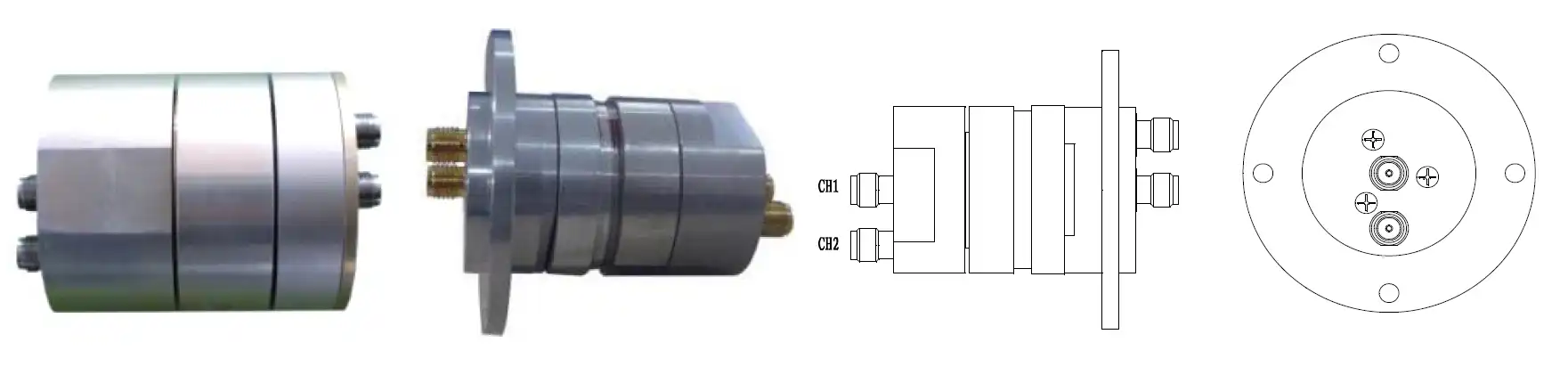
Dual-channel versions add to this idea by adding stacked or circular shapes. In normal designs, channel separation is higher than 50dB, and in special high-performance models, it's higher than 70dB. This separation stops crosstalk, which lets separate signals—like send and receive frequencies—be sent at the same time within a small mechanical area.
Operational Principles Ensuring Signal Integrity
Transverse electromagnetic (TEM) mode transmission rules govern how the rotor joint works. As the rotor turns, spring-loaded contacts keep the electricity flowing without causing phase breaks. Gold-on-gold contact surfaces keep rust and contact resistance to a minimum, which is important for keeping VSWR below 1.30:1 and insertion loss below 0.2dB.
A very important success measure is phase WOW, which stands for "phase variation during rotation." Good joints keep this value within ±1° to ±5°, which is necessary for sending coherent signals for radar pulse compression and synthetic aperture imaging. Advanced models have sealed environments that meet IP65 or IP67 standards. This keeps dust and water from getting into the internal contacts, which could slow them down in tough operating settings.
The gadget can send both low-power data signals and high-power RF signals. Power levels are needed to choose the right insulating materials and keep them from breaking down at high temperatures. Because they can do two things at once, rotary joints are essential in systems that need to send data and power over radio waves at the same time.
Applications of Coaxial Rotary Joints in B2B Industries
In many fields, rotary joints are mission-critical, and their dependability has a direct effect on how well operations go. Because they get rid of technical weak spots, they can't be replaced in high-stakes situations.
Aerospace and Defense Radar Systems
Military tracking platforms depend on phased-array antennas that rotate and constantly scan the sky for threats in the air. Installing coaxial rotary joints at the antenna base lets the signal flow freely between the fixed receiver electronics and the moving radar head. This setup makes it possible for airplane tracking systems to keep their target lock during fast horizontal passes, which is a very important skill for air traffic control and missile defense networks.
Defense companies look for systems that are tough enough to handle shaking, shock, and temperature changes from -40°C to +85°C. Environmental Stress Screening (ESS) standards make sure that joints keep working electrically under these conditions. This makes sure that military-specified supply chains can be tracked.
Satellite Ground Station Infrastructure
Ground-based sensors used for watching satellites have to be constantly turned so they can keep a line of sight with spacecraft in orbit. The fixed RF feed network is linked to the antenna's elevation and azimuth axes by the rotating joint. During a normal low-earth orbit (LEO) satellite pass, the antenna may turn more than once full circle. Cables would twist until they broke if there wasn't a rotary joint. This would stop important monitoring and order lines.
Telecom system designers use ultra-wideband performance in the L-Band to X-Band (1–12 GHz) to work with a variety of satellite frequency assignments. Dual-channel setups let uplink and downlink work at the same time on different polarizations, which increases data flow for uses like remote sensors and fast internet.
Medical Imaging and Industrial Metrology
Computerized tomography (CT) machines use spinning joints to send diagnostic picture data from detection arrays that rotate to processing units that stay in one place. The joint's ability to withstand millions of rotations without signal loss has a direct effect on how much time equipment stays up and how many patients get care. When research institutions measure antenna patterns, they use rotating joints in anechoic rooms to keep test antennas connected to vector network analyzers and allow them to spin through 360-degree runs.
These uses show that rotary joints have real-world benefits, like making tools last longer, requiring less upkeep, and improving the accuracy of measurements.
Coaxial Rotary Joint vs. Alternative Solutions: Making the Right Choice
Procurement professionals evaluating rotary RF transmission solutions face multiple technologies, each with distinct performance envelopes.
Functional Comparison with Slip Rings
Traditional slip rings transfer electrical signals through sliding metal brushes contacting rotating rings. While effective for power and low-frequency data, slip rings introduce excessive noise and contact resistance variation at microwave frequencies. Coaxial rotary joints eliminate dynamic contact resistance through precision-machined bearing interfaces and precious metal contacts, maintaining stable electrical paths that produce negligible rotational noise—a critical advantage for sensitive receiver front-ends.
Waveguide and Fiber Optic Alternatives
Waveguide rotary joints handle higher power levels—often exceeding kilowatts—making them preferable for high-power radar transmitters. However, waveguide assemblies are frequency-specific and mechanically larger. Coaxial variants offer broadband performance in compact packages, ideal for multi-function systems requiring wideband signal coverage.
Fiber optic rotary joints transmit signals as modulated light, offering immunity to electromagnetic interference. Yet they require optical-to-electrical conversion, introducing latency and complexity. Coaxial solutions provide direct RF coupling with lower system overhead, preferred when preserving native analog signal characteristics.
Selection Guidelines for High-Frequency Applications
Material selection directly impacts durability and RF performance. Stainless steel housings (303/304 grades) provide corrosion resistance for outdoor installations, while aluminum alloys reduce weight in aerospace applications. Dielectric materials must balance thermal stability with low-loss characteristics—PTFE and PEEK polymers dominate high-frequency designs.
Buyers should specify rotational life expectancy based on duty cycles. Standard commercial coaxial rotary joints deliver 10-50 million revolutions under normal loads. Continuous rotation applications—such as airborne early warning platforms—demand accelerated life testing that monitors contact resistance variation across temperature extremes, validating long-term reliability before integration.
Maintenance, Troubleshooting, and Maximizing Lifespan
Proactive maintenance strategies extend operational life and prevent costly downtime in production environments.
Routine Care Protocols
Scheduled inspections every 6-12 months should verify that mechanical torque remains within specification, typically 0.1-0.5 N·m starting torque. Excessive resistance indicates bearing wear or contamination. Cleaning procedures involve flushing the bearing cavity with isopropyl alcohol and applying MIL-SPEC lubricants formulated for high-frequency applications. Over-lubrication attracts particulate contamination that accelerates wear, so precise application is essential.
Visual inspection of connector interfaces detects physical damage or corrosion. Gold-plated contacts should exhibit a uniform surface finish; discoloration suggests oxidation requiring refurbishment or replacement.
Diagnostic Strategies for Performance Issues
Signal degradation during rotation often stems from one of three root causes. Dynamic contact resistance manifests as intermittent signal spikes or amplitude modulation. Vector Network Analyzer (VNA) measurements conducted while rotating the joint reveal phase and amplitude instability exceeding ±3 degrees or ±0.05 dB—indicators requiring contact refurbishment. Cross-channel crosstalk in dual-channel units suggests shielding degradation. Isolation measurements below specified thresholds (typically <50dB) point to internal seal failures, allowing conductive paths between channels.
Environmental factors accelerate wear. Installations exposed to salt spray or industrial contaminants benefit from sealed enclosures and desiccant packs that control internal humidity. Temperature cycling causes differential thermal expansion; joints should be torqued to specification after thermal stabilization to prevent loosening.
Installation Best Practices
Proper mounting prevents mechanical stress that compromises alignment. Flexible coaxial cables on both stationary and rotating sides absorb residual vibration and misalignment. Torque specifications must be observed during connector mating—over-torquing damages center conductors, while under-torquing creates intermittent contact. Thread-locking compounds rated for RF applications prevent loosening under vibration without contaminating the signal path.
These practices help engineering teams maximize return on investment by extending service intervals and maintaining consistent RF performance throughout the product lifecycle.
Procurement Guide: How to Buy the Right Coaxial Rotary Joint?
Sourcing decisions extend beyond datasheets to encompass supply chain reliability and supplier capabilities.
Technical Specification Priorities
Procurement begins with defining operating parameters. The frequency range must cover all intended applications—a single joint spanning DC-18 GHz may consolidate multiple subsystems. Power handling capacity requires headroom above peak operational levels to prevent dielectric breakdown. VSWR and insertion loss specifications directly impact system link budgets; tighter tolerances justify premium pricing in performance-critical applications.
Dual-channel requirements demand clear channel isolation specifications. Systems transmitting high power on one channel while receiving weak signals on another need isolation exceeding 70dB to prevent desensitization.
Order Quantities and Lead Times
Standard catalog items typically ship within 2-4 weeks, while custom configurations require 8-12 weeks for engineering validation and production. Minimum order quantities vary by complexity—single-channel commercial designs may have MOQs of 10-50 units, whereas military-grade dual-channel variants with specialized testing protocols require commitments justifying tooling investments. Prototyping services allow design validation before full production, mitigating integration risks.
Supplier Evaluation Criteria
Reputable manufacturers maintain ISO 9001:2015 certification, demonstrating systematic quality management for coaxial rotary joints. Environmental compliance through RoHS and REACH directives ensures regulatory acceptance in global markets. Suppliers offering in-house VNA testing up to 110 GHz provide measurement traceability, verifying performance before shipment.
Advanced Microwave Technologies Co., Ltd. exemplifies these standards. With over two decades of microwave component manufacturing experience, ADM operates ISO-certified facilities equipped with a 24-meter anechoic darkroom for antenna and rotary joint characterization. Our laboratories conduct far-field measurements across 0.5-110 GHz, validating phase stability and isolation parameters critical to defense and aerospace applications.
Cost Optimization Strategies
Volume pricing offers significant savings—bulk orders reduce per-unit costs by 15-30% compared to small-lot purchases. Negotiating payment terms and delivery schedules aligned with project milestones improves cash flow management. Engaging suppliers early in the design phase enables value engineering that balances performance with cost targets.
Lifecycle cost analysis should consider maintenance intervals and expected service life. A premium joint delivering 50 million revolutions may prove more economical than a lower-cost alternative requiring replacement at 10 million revolutions, particularly when accounting for system downtime during maintenance.
Conclusion
Coaxial rotary joints solve the fundamental challenge of continuous RF transmission across rotating interfaces without cable entanglement or signal degradation. Through precision mechanical design and careful material selection, these devices maintain electrical integrity across millions of revolutions, supporting critical infrastructure in defense radar, satellite communications, and industrial measurement systems. Successful procurement requires balancing technical specifications with supplier capabilities—quality certifications, testing facilities, and customization responsiveness distinguish reliable partners from commodity vendors. As system complexity increases and frequency allocations expand into millimeter-wave bands, rotary joints incorporating advanced materials and refined manufacturing processes will remain indispensable for next-generation RF architectures.
FAQ
1. How do rotary joints maintain signal quality during continuous rotation?
Rotary joints employ spring-loaded gold-on-gold contact interfaces that preserve electrical continuity as the rotor spins. Precision bearings maintain coaxial alignment, preventing impedance discontinuities that would otherwise cause reflections and insertion loss. The mechanical design controls phase variation (WOW) within ±1° to ±5°, ensuring coherent signal propagation essential for radar and communication systems.
2. What distinguishes coaxial rotary joints from slip rings?
Slip rings use sliding brushes that introduce dynamic contact resistance and electrical noise unsuitable for high-frequency RF signals. Rotary joints maintain characteristic impedance through precision-machined concentric conductors, eliminating noise and supporting frequencies up to 110 GHz. This makes them appropriate for microwave applications where signal fidelity is critical.
3. How do I select a rotary joint for high-power applications?
Specify peak and continuous wave (CW) power ratings to ensure appropriate dielectric materials that withstand thermal stress without breakdown. Larger diameter conductors and enhanced cooling provisions accommodate high power levels. Dual-channel designs allow simultaneous high-power transmission and sensitive signal reception when isolation exceeds 70dB, preventing receiver saturation.
4. What is the expected service life of these components?
High-quality rotary joints deliver 10-50 million revolutions under standard conditions. Accelerated life testing monitoring contact resistance verifies durability. Service life depends on rotational speed, environmental exposure, and maintenance adherence. Sealed designs meeting IP65/IP67 standards protect against contaminants that accelerate wear.
Partner with ADM for Custom Coaxial Rotary Joint Solutions
Advanced Microwave Technologies Co., Ltd. stands ready to support your rotary RF transmission requirements with precision-engineered solutions tailored to demanding aerospace, defense, and telecommunications applications. Our team combines over 20 years of microwave component manufacturing expertise with state-of-the-art testing capabilities, including full VNA characterization up to 110 GHz within our ISO 9001:2015-certified facilities. Whether you need single-channel catalog items or custom dual-channel assemblies with enhanced isolation and environmental sealing, we deliver performance-validated products backed by rigorous quality control.
Connect with our engineering team at craig@admicrowave.com to discuss your project specifications. We offer rapid prototyping for design validation, competitive bulk pricing for OEM and contract manufacturers, and comprehensive technical documentation supporting integration into mission-critical systems. As a trusted coaxial rotary joint manufacturer serving global defense contractors, satellite operators, and research institutions, ADM ensures reliable supply chains, responsive support, and on-time delivery for your next-generation RF platform.
References
1. Balanis, Constantine A. Antenna Theory: Analysis and Design, 4th Edition. Wiley, 2016.
2. Pozar, David M. Microwave Engineering, 4th Edition. Wiley, 2011.
3. IEEE Standard 145-2013. IEEE Standard for Definitions of Terms for Antennas. Institute of Electrical and Electronics Engineers, 2013.
4. Collin, Robert E. Foundations for Microwave Engineering, 2nd Edition. IEEE Press, 2001.
5. Silver, Samuel. Microwave Antenna Theory and Design. Dover Publications, 1984.
6. Stutzman, Warren L., and Gary A. Thiele. Antenna Theory and Design, 3rd Edition. Wiley, 2012.