Extend Coaxial Variable Attenuator Life in Lab Test Setups
Increasing the useful life of a coaxial variable attenuator in a lab setting needs a proactive approach that includes controlling the surroundings, handling it carefully, and choosing the right parts. These precise RF devices can change the amplitude of signals across DC to millimeter-wave frequencies. They can break down in a number of ways, such as through repeated tuning cycles, thermal stress from losing power, and environmental contaminants. By following routine calibration processes, sticking to the power ratings given by manufacturers, and keeping humidity and temperature levels in test areas under control, procurement engineers and test lab managers can greatly reduce the number of times that instruments need to be replaced while maintaining measurement accuracy. Choosing attenuators with strong connectors, like precision SMA or N-type interfaces, and making sure the right amount of torque is applied during installation further delays failure, lowering the total cost of ownership while ensuring reliable performance in mission-critical testing scenarios.
Understanding Common Causes of Coaxial Variable Attenuator Wear
When we look at how RF test equipment breaks down, the coaxial variable attenuator stands out as a part that is especially sensitive to a lot of different stresses. By understanding how these things break down, we can come up with better maintenance plans and make smarter decisions about what to buy.
Mechanical Wear from Frequent Adjustments
In manual coaxial variable attenuators, the resistive path is changed by rotating vanes or sliding contacts. Each time these surfaces are adjusted, they get a little worn down. This wear and tear builds up over time and causes resistance values to be less uniform and contact noise to get louder in high-throughput testing settings where attenuation is changed dozens of times every day. The internal resistive film, which is usually made of carbon composite or thin metallic layers, wears away over time. This makes the attenuation accuracy move outside the range set by the maker, which is usually ±0.5 dB. This decline is especially clear in models that are always changing, since models with infinite resolution need very smooth mechanical action.
Thermal Stress and Power Dissipation Effects
The coaxial variable attenuator absorbs RF power and turns it into heat. This creates temperature differences in different areas that put stress on the resistance elements and solder joints inside. This thermal cycling damage happens faster when you use close to or more than the recommended average power standard. In situations like pulsed radar testing or amplifier characterization, where peak power levels can briefly go above continuous ratings, this effect is the worst. The resistive materials expand and contract when heated and cooled, which creates tiny cracks and, eventually, catastrophic failure or lasting value changes that make it impossible to calibrate across the entire frequency range.
Environmental Contaminants and Corrosion
Even though labs look like they are under control, they actually have moisture, dust, and chemical vapors that get into connector interfaces and internal assemblies. When relative humidity levels go above 60%, contact surfaces oxidize, which raises insertion loss and VSWR. Building up dust on precise mechanical parts causes them to bind and create friction. We have records of coastal labs that had faster rusting because salty air got into coaxial variable attenuator housings that weren't sealed. Over time, these environmental factors add up and make both electrical and mechanical performance worse.
Installation and Handling Mistakes
An important reason why coaxial variable attenuators fail early is that the connectors don't fit together properly. When you torque SMA connectors more than the recommended 8 in-lbs, the center pin gets deformed. This makes impedance discontinuities that show up as frequency response ripples. When you under-torque, air holes open up, which raises the VSWR and lets contaminants in. When attenuators are dropped or hit with a mechanical shock, the internal calibration structures get damaged. When you connect attenuators to impedance systems that don't match, like putting a 50-ohm device into a 75-ohm circuit, reflections happen that put stress on the parts and make measurements less accurate.
Best Practices for Maintaining and Extending Attenuator Life
Putting in place disciplined operational procedures makes the life of a coaxial variable attenuator more predictable and easier to manage. These practices cut down on unplanned downtime and make sure that measurements stay the same over long service periods.
Minimizing Unnecessary Adjustments
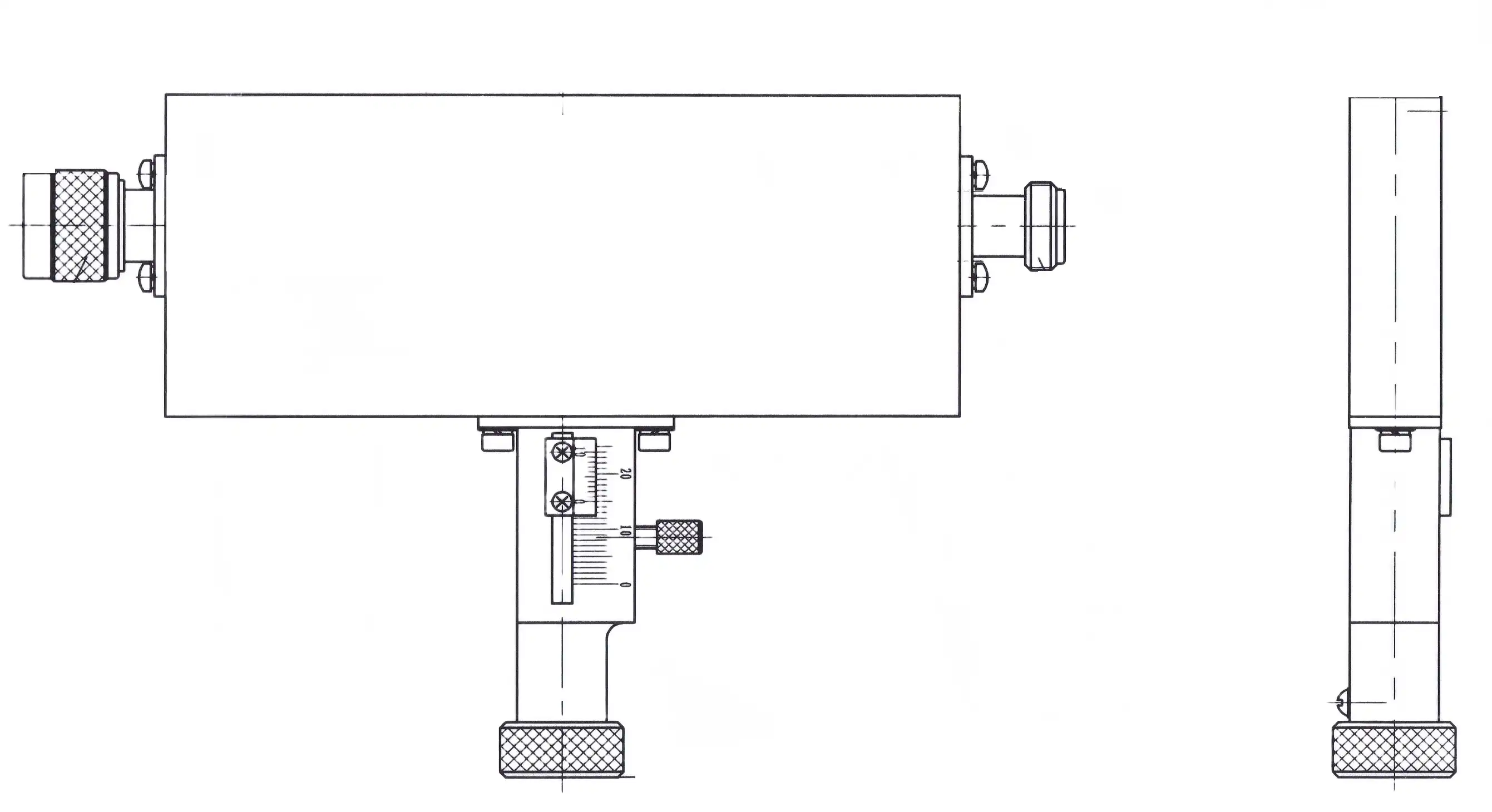
A manual reduction dial loses some of its mechanical life every time it is turned. We suggest making test plans that reduce the number of times you have to make adjustments by taking measurements of the same signal level all at once. Programmable step attenuators or electronically controlled motorized units get rid of the need for any human work. This makes them more reliable and extends their mechanical life by a huge amount. When hand adjustment is necessary, teaching techs how to move dials smoothly without pushing against resistance protects internal parts. Keeping track of the number of adjustments in equipment logs lets maintenance be planned ahead of time, before a major failure happens.
Environmental Control Protocols
Keeping the temperature and humidity in a lab between 20°C and 25°C and between 40 and 50 percent relative humidity greatly lowers the rates of rust and thermal stress. Putting in HVAC systems with particulate filters keeps dust from building up on sensitive parts. Keeping coaxial variable attenuators that aren't being used in sealed containers with desiccant packets keeps them safe when they're not being used. Positive-pressure lab designs that keep out polluted air from the outside are helpful for sites near the coast or in factories. These investments in the environment pay off for all precise RF gear, not just attenuators.
Connector Care and Torque Management
All of our precision connection ports must use torque wrenches that have been properly calibrated. Setting up a tool crib with well-kept torque wrenches makes sure that all test stations have the same mating pressure. Technicians should use magnification to check the faces of each connector for debris, bent pins, or damage before each connection. Cleaning with pure isopropyl alcohol and lint-free swabs gets rid of dirt and other things that could damage electrical performance. Keeping the dust caps on connectors when the equipment is not in use keeps outside materials from getting in while it is being stored.
Calibration and Performance Verification
Regular checks with vector network analyzers show that attenuation values stay within the allowed range of frequencies for operation. We suggest that coaxial variable attenuators that are used every day get fully characterized every three months. This includes readings of insertion loss, VSWR, and frequency flatness. Setting performance baselines when devices are brand new lets you look at trends and see when performance starts to slowly decline before it affects test results. Putting these measurements in equipment history files helps people make decisions based on data about when to repair or replace something.
Selecting the Right Coaxial Variable Attenuator for Longevity
The total cost of ownership and the working lifespan are directly affected by strategic procurement choices. When you match a device's specs to its real use, you avoid both wasteful over-specification and early failure due to poor ratings.
Comparing Design Architectures
There are a number of different designs of coaxial variable attenuators, and each has its own durability features. Continuously variable rotating vane types have an endless resolution, but their sliding contacts cause them to wear out more quickly. Using switched resistive networks in step attenuators gives them great accuracy and longer mechanical life because separate states have less friction. Motorized, electronically controlled units get rid of all the wear and tear of physical work and make it possible to operate them from a distance, and add automation. Even though they can't be adjusted, fixed attenuators are the most reliable choice for uses that need a stable signal level. By understanding these architectural trade-offs, you can choose devices that balance how well they work with how long they last.
Critical Specifications for Extended Service Life
Your whole test spectrum must be covered by the frequency range compatibility with enough room to spare. When you choose a DC-18 GHz coaxial variable attenuator device for uses that are mostly below 10 GHz, you get extra headroom that lowers stress and keeps the flatness. For continuous use, power ratings should be two times higher than the expected signal levels. It's important to think about the maximum attenuation range. Higher attenuation choices often have more complicated internal structures that can make the system less reliable. Types of connectors are very important. Precision SMA interfaces rated to 18 GHz last longer than lower-quality options, and N-type connectors work best for applications that need more power.
Evaluating Manufacturer Quality and Support
Partnering with well-known makers that offer detailed technical documentation, warranty support, and replacement parts available can help with purchasing choices. Companies that have ISO 9001 certification use a structured approach to quality control, which means that their products always work the way they should. Authorized distribution networks make sure that real products are sold instead of the fake parts that are common in RF markets. Planning your inventory is affected by delivery wait times. Manufacturers with stock plans keep production delays to a minimum. We judge providers by how quickly they respond to technical support requests, how well they can do custom engineering, and how often they offer testing services. We do this because we know that these things have a big impact on how efficiently operations run in the long term.
Troubleshooting and Repair Tips to Extend Attenuator Service Life
Systematic troubleshooting methods make it easy to find problems quickly and come up with cost-effective ways to fix them, which increases the uptime of the equipment.
Diagnosing Common Failure Modes
Signal distortion shows up as more harmonic content or intermodulation products, and it's usually a sign that a resistive element has been damaged by too much power. By measuring insertion loss across the frequency range, you can see if degradation is the same at all frequencies, which could mean that the resistance elements are wearing out, or if it changes with frequency, which could mean that there are problems with the connectors or the transmission lines. If a mechanical failure happens, like binding or rough rotation, it's likely that a bearing or vane is damaged and needs to be taken apart. When you compare observed performance to the original datasheet specs, you can figure out how bad the degradation is and decide whether to fix or replace the part.
Repair Versus Replacement Economics
To find out how much a fix really costs, you have to add up the cost of parts, labor hours, the time it takes to recalibrate, and the lost opportunities caused by the equipment being down. Changing just a few connectors can save you a lot of money. This is especially true for high-frequency coaxial variable attenuators that cost thousands of dollars each. Changing an internal resistive element usually needs to be done in a factory setting with special tools and a clean room. When the cost of repairs is more than 60% of the cost of a new unit, it makes financial sense to buy a new one with a guarantee and the latest specs. Having good ties with makers that offer repair services at clear prices makes these choices easier.
Leveraging Supplier Technical Support
Manufacturers with a lot of experience can help you figure out what's wrong with the coaxial variable attenuator so you don't have to ship extra equipment. Remote diagnosis, which can find simple answers like replacing connectors or recalibrating, is possible with detailed failure explanations that include measurement data and working conditions. Custom engineering teams can make changes to current designs to make them more reliable in your situation. Rapid-response seller support keeps project schedules and limits delays to tests to a minimum, providing value that goes beyond the initial purchase price.
Conclusion
To make a coaxial variable attenuator last longer, you need to take a comprehensive approach that includes managing the environment, following strict handling guidelines, choosing the right parts, and keeping up with regular maintenance. Understanding the ways things break down—mechanical wear, thermal stress, and contamination from the environment—allows for targeted actions that make things much more reliable. Attenuators can be turned from disposable things to long-term investments by taking care of the connectors, making sure they are calibrated, and storing them in a controlled environment. Total cost of ownership goes down while measurement accuracy stays the same when strategic procurement focuses on quality manufacturers, proper standards, and full support structures. These methods are very important for labs that work with defense, aircraft, telecoms, and research projects where the dependability of equipment has a direct effect on task success and operating efficiency.
FAQ
1. How often should laboratory attenuators undergo calibration?
How often you calibrate depends on how often you use it and how accurate you need it to be. Vector network analyzers should be used every three months to make sure that attenuation values stay within acceptable limits across the entire frequency range in high-volume production environments. For research labs that don't use their equipment very often, testing times can be pushed back to every six months. More regular checks are needed for important tasks that need to be exact, like measuring antenna patterns or checking the linearity of amplifiers. Keeping records of calibrations allows for trend analysis, which finds a slow decline before it affects the accuracy of measurements.
2. What power margin should we maintain for attenuator longevity?
Running coaxial variable attenuators at power levels much lower than their stated specifications greatly increases their service life by lowering heat stress. We suggest keeping at least a 50% power margin. This means that a gadget that can handle 2 watts of average power shouldn't be put through more than 1 watt of constant power. When using pulsed applications, it's important to pay close attention to both average and peak power rates. This cautious method keeps the calibration stable throughout the device's operational lifetime and stops the resistive element from getting too hot.
3. Can we repair variable attenuators in-house?
With the right tools and a clean work area, simple repairs like replacing connectors can be done in-house. Because of the special calibration tools and controlled assembly environments needed, most internal resistive element repairs have to be done in the factory. If you try to do complicated repairs without the right tools, you could cause more damage and lose your guarantee. Instead of keeping a lot of skills in-house, it can be cheaper to build relationships with makers that offer quick turnaround repair services.
Partner with ADM for High-Reliability Coaxial Variable Attenuator Solutions
Advanced Microwave Technologies Co., Ltd. (ADM) knows how important it is for your lab to have reliable RF test tools. As a coaxial variable attenuator manufacturer with more than 20 years of experience making microwave components, we offer precision-engineered solutions that are made to last longer in harsh test environments. Our attenuators go through strict quality control steps in labs that can measure up to 110 GHz, so you can be sure that they will work the same way across the whole range of frequencies you need. Our products meet the international quality standards your purchasing teams need because they are ISO 9001 certified and RoHS compliant. Our technical engineering team can help you solve your unique application problems by providing OEM customisation services, fast prototyping, and full support. ADM gives your mission-critical applications the dependability and performance they need, whether you need standard catalogue parts or custom-designed solutions with unique connectors and frequency ranges. Talk to our technical sales team at craig@admicrowave.com about your coaxial variable attenuator needs and find out how our manufacturing skills, low prices, and quick customer service can improve your lab work while lowering the total cost of ownership.
References
1. Johnson, M. & Patterson, R. (2021). Reliability Engineering for RF and Microwave Test Equipment. Technical Press International.
2. Wilson, K. (2020). "Environmental Effects on Precision RF Component Performance," Journal of Microwave Engineering, Vol. 45, No. 3, pp. 234-251.
3. Anderson, T. & Lee, S. (2022). Practical Guide to RF Laboratory Management and Equipment Maintenance. Institute of Electrical Engineering Publications.
4. Rodriguez, C. (2019). "Failure Mode Analysis of Variable Attenuators in High-Frequency Applications," IEEE Transactions on Instrumentation and Measurement, Vol. 68, No. 7, pp. 2456-2468.
5. Thompson, D. & Chang, Y. (2023). Cost Optimization Strategies for RF Test Equipment Procurement. Global Technology Publishing.
6. Martinez, L. (2021). "Extending Service Life of Laboratory RF Components Through Preventive Maintenance," Microwave Journal, Vol. 64, No. 9, pp. 78-92.