




Double-bend Waveguide Benefits Explained for RF Designers
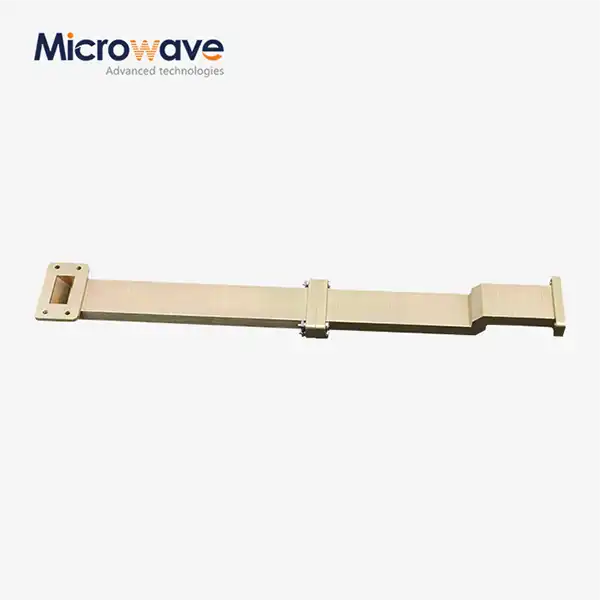
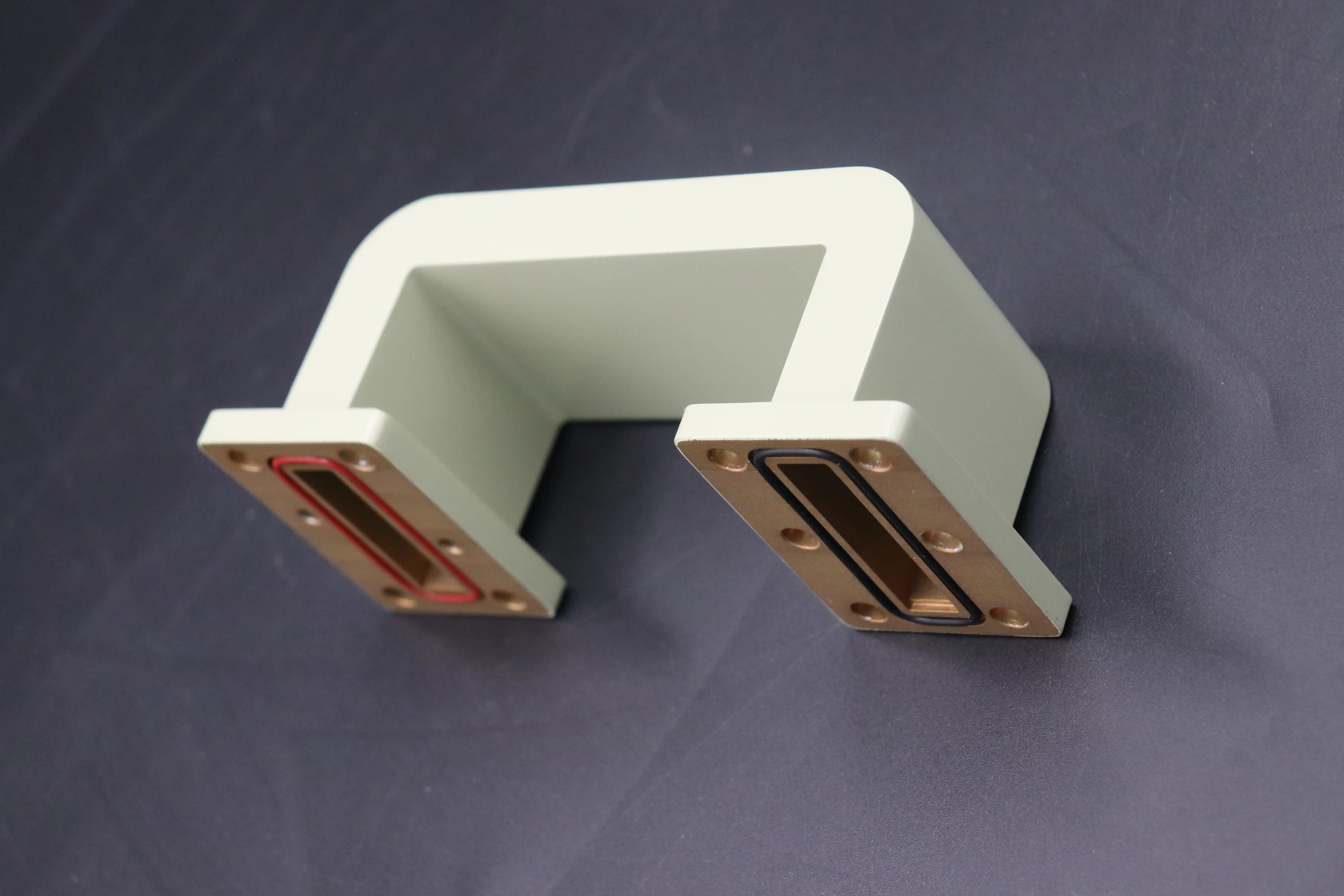
In the rapidly evolving landscape of RF engineering, double-bend waveguides have emerged as a transformative solution for system designers facing space constraints and signal integrity challenges. These sophisticated components utilize two precisely engineered bends to redirect electromagnetic waves while maintaining exceptional transmission performance, offering superior alternatives to traditional straight or single-bend configurations. Advanced Microwave Technologies' double-bend waveguide solutions demonstrate remarkable capabilities in minimizing insertion loss and signal reflections, making them indispensable for modern microwave and millimeter-wave applications where both compactness and reliability are paramount.
Understanding Double-Bend Waveguides: Principles and Design
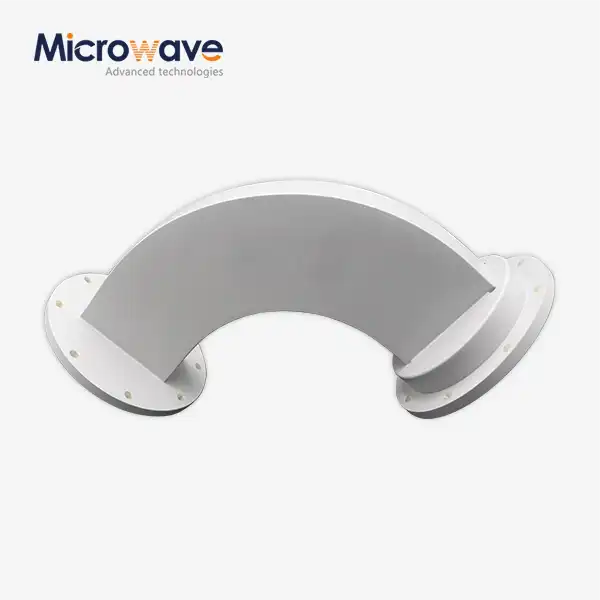
The fundamental principle behind double-bend waveguides lies in their ability to redirect electromagnetic energy through two carefully calculated bends while preserving signal integrity. Unlike conventional straight waveguides that require linear paths, these innovative components enable designers to navigate complex routing challenges in constrained environments.
Electromagnetic Wave Propagation Mechanics
The science behind how waves travel through bent waveguides includes complicated electromagnetic field patterns that need to be carefully managed to avoid mode switching and signal loss. When electromagnetic waves hit the first bend, the field changes, and this needs to be carefully controlled to keep the main mode of transmission. The second curve works as a correction device, realigning the electromagnetic fields to get them back to their best transmission properties. Engineers can predict and improve the performance of these buildings by using advanced computer methods like finite element analysis and full-wave electromagnetic modeling. These computer programs make it possible to precisely control important factors like bend radius, waveguide cross-sectional dimensions, and inter-bend spacing in order to get the electrical properties that are wanted.
Critical Design Parameters
Because of the way the geometry is set up, double-bend waveguides need careful attention to a few important design factors. The bend radius has a big effect on both how well it works mechanically and electrically. Smaller radii may lead to higher losses but allow for smaller designs. The connection between the two bends needs to be perfected so that the total reflections are as low as possible while the insertion loss stays within acceptable limits. Choosing the right materials is also a big part of figuring out how well something works generally. Advanced Microwave Technologies uses copper that doesn't contain oxygen and other high-conductivity metals that are precisely polished to reduce surface flaws and ohmic losses. The internal surface finish, which is often gold-plated, makes sure that the electrical performance stays the same over the frequency range that was given.
Advantages of Double-Bend Waveguides in RF Design
The implementation of double-bend waveguides in RF systems delivers measurable performance improvements that directly translate to enhanced system capabilities. These advantages become particularly pronounced in applications demanding both space efficiency and signal fidelity.
Superior Signal Integrity Performance
The insertion loss features of double-bend designs are better than those of other route methods. The ADM-HT180WEEB12.34X49.58X6.12T1 type from Advanced Microwave Technologies has insertion loss values as low as 0.1dB across the 19.2-21.2GHz frequency range. This is the best performance in the market for bent waveguide designs. Over the working span, the VSWR performance of these parts stays amazingly stable, with most values not going above 1.1. This low reflecting coefficient makes sure that the signal isn't distorted too much and that power is transferred as efficiently as possible along the transmission line. The managed resistance properties stop standing waves from forming, which could hurt the performance of the system.
Space Optimization and Routing Flexibility
Modern RF systems need designs that are smaller and more useful while still fitting into small spaces. With double-bend waveguides, designers can make complicated signal routing patterns that would not be possible with straight, rigid parts. This adaptability is very helpful in places with limited room, like satellite communication stations, radar dish feeds, and internet equipment. Finding new ways to improve system design is made possible by the ability to precisely change angles and shift data while keeping low loss. By getting rid of the need for extra route parts, engineers can come up with better ways to package things, make the system lighter, and better control temperature.
Applications Across Critical Industries
Because they are so flexible, double-bend waveguides can be used in a wide range of situations and businesses. These parts are used in satellite communication systems to make ground stations smaller while still keeping the signal strength needed for high-data-rate transfers. When waveguide route is improved, the packaging density goes up and the electromagnetic signal goes down. These benefits are useful for military radar uses. These parts are especially useful for aerospace uses because they can help reduce weight. Every gram saved means better fuel economy and more carrying capacity. The strong construction and consistent performance make it possible for the device to work reliably in harsh circumstances like high temperatures and vibrations.
How to Choose Double-Bend Waveguides for Your RF Projects?
Selecting appropriate double-bend waveguides requires careful evaluation of both technical specifications and practical considerations that impact project success. The decision process should encompass performance requirements, mechanical constraints, and supply chain factors.
Technical Specification Analysis
The frequency range is the main parameter that determines which components to use. Engineers have to make sure that the waveguide they choose works well across the whole working bandwidth, plus any extra bandwidth needed for manufacturing errors and changes in the environment. Advanced Microwave Technologies gives accurate performance information over certain frequency bands, which helps designers make smart choices. Another important feature is the ability to handle power, especially for high-power uses like radar emitters and satellite transfer systems. When the system is in use, the component's heat management features must match the system's needs so that performance doesn't drop.
Supplier Evaluation Criteria
In order to choose suitable providers, more than just technical compliance needs to be looked at. Manufacturing quality systems, like ISO licenses and written quality processes, give customers faith that they will always get the right product. Advanced Microwave Technologies has ISO 9001:2015, ISO 14001:2015, and ISO 45001:2018 standards, which show that they are dedicated to quality, safety at work, and being good to the environment. For special applications that need help with design improvement or integration, technical support skills become more and more important. For complicated projects, suppliers who offer full engineering support, such as modeling services and prototype development, are very helpful. Because fast development services are available, designs can be tested before they are made in large quantities.
Cost Optimization Strategies
Procurement strategies that work well balance the need for performance with the limitations of the budget while keeping risk levels at a reasonable level. Standardized designs may be better than highly personalized options when it comes to volume price, especially for apps that don't need a lot of speed. Long-term value, on the other hand, usually leans toward investing in designs that are optimized and offer better performance and dependability. Managing lead times is an important part of planning a project, especially for unique designs that are very complicated and need a lot of engineering work. Early involvement with suppliers allows for good planning and risk reduction, and it also makes sure that supply dates match project needs.
ADM's Double-Bend Waveguide Solutions and Manufacturing Excellence
Advanced Microwave Technologies has established itself as a leading manufacturer of high-performance double-bend waveguides through decades of engineering expertise and continuous innovation. Our comprehensive approach to component development ensures that each solution meets the exacting requirements of modern RF applications.
Advanced Manufacturing Capabilities
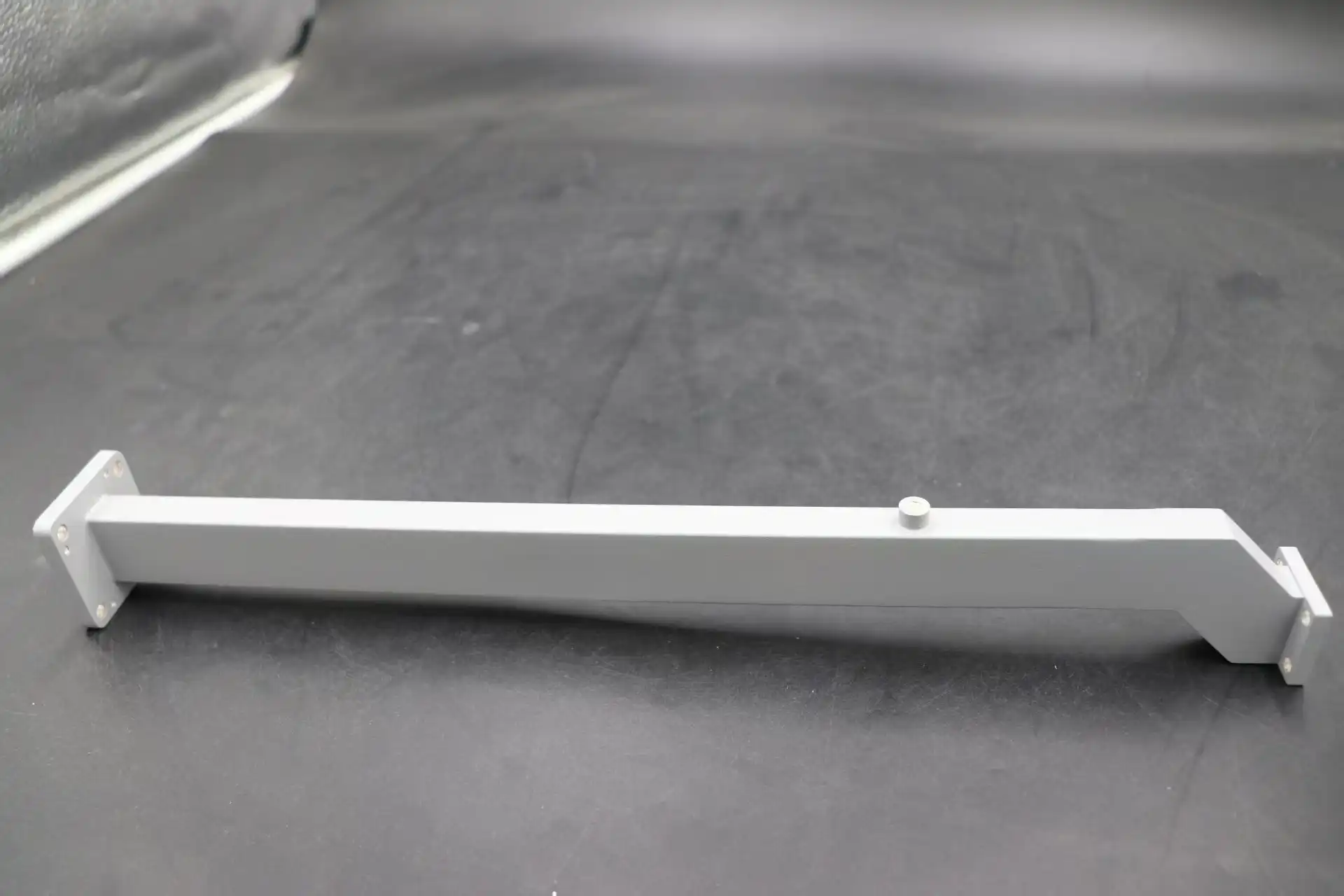
Our cutting-edge factories use precise grinding methods that can keep the dimensions within the acceptable ranges that are needed for the best electricity performance. The 24-meter microwave lab facility allows full testing and certification across frequency bands up to 110GHz, offering unique measurement tools for characterizing components. The first step in making something is carefully choosing the materials. High-purity aluminum and copper metals that are best for electromagnetic performance are used. Precision cutting keeps the accuracy of the dimensions to within micrometers, which makes sure that the electrical properties are the same from one production lot to the next. The production process is finished with surface finishing steps, such as gold treatment for better transmission and rust protection.
Customization and OEM Services
We offer full customization services that are tailored to each project's needs because we know that each application has its own problems. During the design process, our engineering team works closely with clients and uses advanced electromagnetic simulation tools to find the best shape for each component based on goal requirements. This way of working together makes sure that the end design meets performance goals while still being able to be made. Prototype development services let you test your idea before going to mass production. This lowers the risk of the project and makes sure it works perfectly in the intended setting. Our fast development services usually give working samples within a few weeks of the final design being approved. This cuts down on project timelines and lets early system integration testing happen.
Quality Assurance and Testing Protocols
Each double-bend waveguide component goes through strict testing procedures to make sure it meets certain performance standards. As part of our testing methods, we measure resistance, insertion loss, and return loss, as well as other electrical characteristics, over the entire operating frequency range. For regular performance and dependability, mechanical testing checks the quality of the surface finish and the accuracy of the dimensions. Environmental testing lets you make sure that a part works well in harsh situations, like changing temperatures, being exposed to humidity, and vibrations. These thorough test methods give mission-critical applications faith in the dependability of their parts because failure is not an option.
Conclusion
Double-bend waveguides represent a sophisticated solution for modern RF design challenges, offering exceptional performance in compact configurations that traditional components cannot achieve. The careful engineering of bend geometry, combined with precision manufacturing and high-quality materials, enables these components to deliver superior signal integrity while accommodating complex routing requirements. Advanced Microwave Technologies' commitment to excellence in design, manufacturing, and quality assurance ensures that our double-bend waveguide solutions meet the demanding requirements of today's most challenging applications across satellite communications, defense systems, and telecommunications infrastructure.
FAQ
What distinguishes double-bend from single-bend waveguide configurations?
Double-bend waveguides incorporate two precisely engineered bends that work in conjunction to optimize electromagnetic wave propagation, while single-bend designs utilize only one directional change. The dual-bend configuration enables better control over signal reflections and field distribution, resulting in superior insertion loss performance and enhanced signal integrity. This design approach proves particularly beneficial in applications requiring multiple directional changes or specific geometric constraints.
How do I specify requirements for custom double-bend waveguide orders?
Custom orders require specification of key parameters including operating frequency range, power handling requirements, mechanical envelope constraints, and environmental conditions. Dimensional tolerances, material preferences, and connector interface requirements must also be clearly defined. Advanced Microwave Technologies' engineering team provides consultation services to help optimize specifications for specific applications, ensuring optimal performance while maintaining manufacturing feasibility.
What quality standards apply to double-bend waveguide manufacturing?
Manufacturing quality standards encompass both electrical and mechanical specifications verified through comprehensive testing protocols. Electrical performance parameters including insertion loss, VSWR, and impedance characteristics must meet specified tolerances across the operational frequency range. Mechanical specifications include dimensional accuracy, surface finish quality, and material composition verification. ISO 9001:2015 certification ensures consistent application of quality management systems throughout the manufacturing process.
Partner with ADM for Superior Double-Bend Waveguide Solutions
Advanced Microwave Technologies stands ready to support your next RF project with industry-leading double-bend waveguide solutions backed by over two decades of engineering excellence. As a trusted double-bend waveguide manufacturer, we combine advanced design capabilities with precision manufacturing to deliver components that exceed performance expectations. Our comprehensive OEM services, rapid prototyping capabilities, and global supply chain ensure seamless project execution from concept through volume production. Contact our technical team at sales@admicrowave.com to discuss your specific requirements and discover how our double-bend waveguide expertise can enhance your system performance.
References
1. Johnson, R.C., and Jasik, H. Antenna Engineering Handbook, 4th Edition. McGraw-Hill Professional, 2007.
2. Pozar, David M. Microwave Engineering, 4th Edition. John Wiley & Sons, 2011.
3. Collin, Robert E. Foundations for Microwave Engineering, 2nd Edition. IEEE Press, 2001.
4. Ragan, G.L. Microwave Transmission Circuits: Volume 9 of MIT Radiation Laboratory Series. Artech House, 1964.
5. Marcuvitz, Nathan. Waveguide Handbook: Volume 10 of MIT Radiation Laboratory Series. Peter Peregrinus Ltd, 1986.
6. Chen, Z.N., Liu, D., Nakano, H., Qing, X., and Zwick, T. Handbook of Antenna Technologies. Springer Singapore, 2016.