




Custom Straight Waveguide Section Solutions for Projects
Custom straight waveguide sections provide a rugged, low-loss connection for your RF channel, built to the precise length, flange, and material your system requires. You do not have to stack adapters and short spacers; you order one controlled item to your design. In this post, I’ll discuss how a straight waveguide section works, what parameters matter, how to choose one, how to customize it, and how to compare vendors. I also discuss how ADM supports research, military, OEM, and satellite teams with prototypes and production orders.
Straight Waveguide Section Basics for Project Teams
What Is a Straight Waveguide Section?
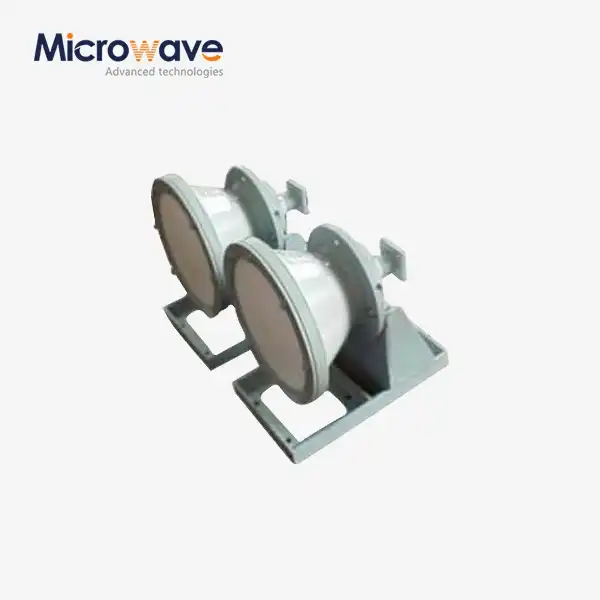
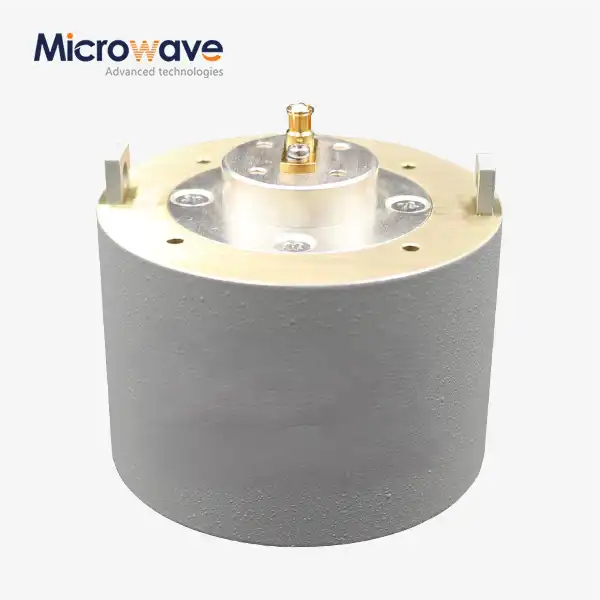
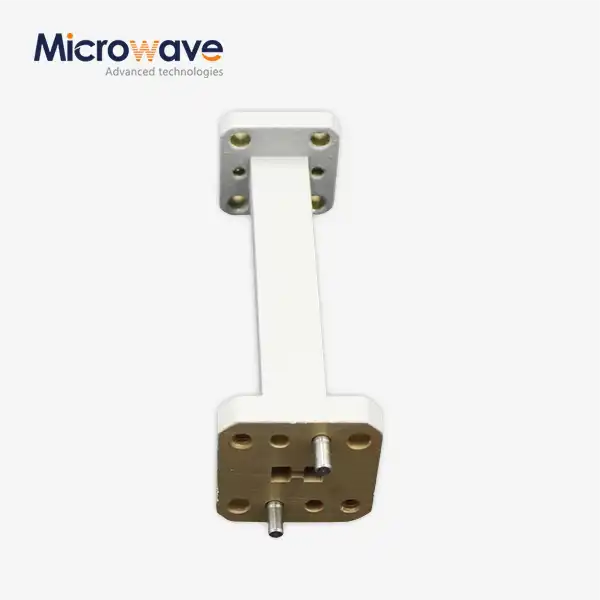
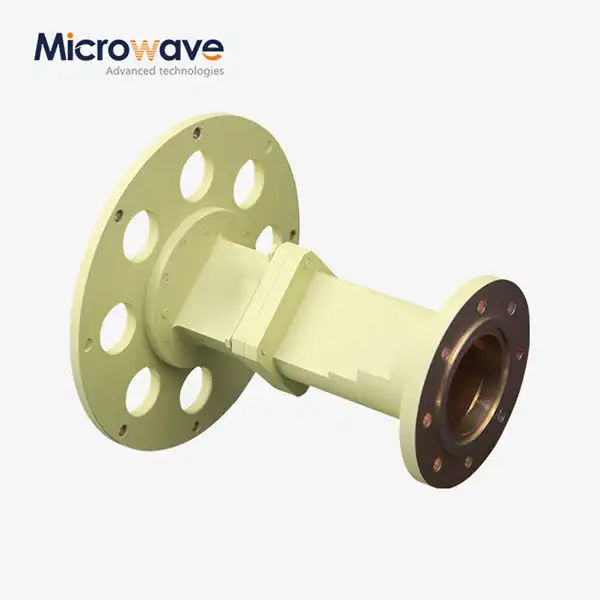
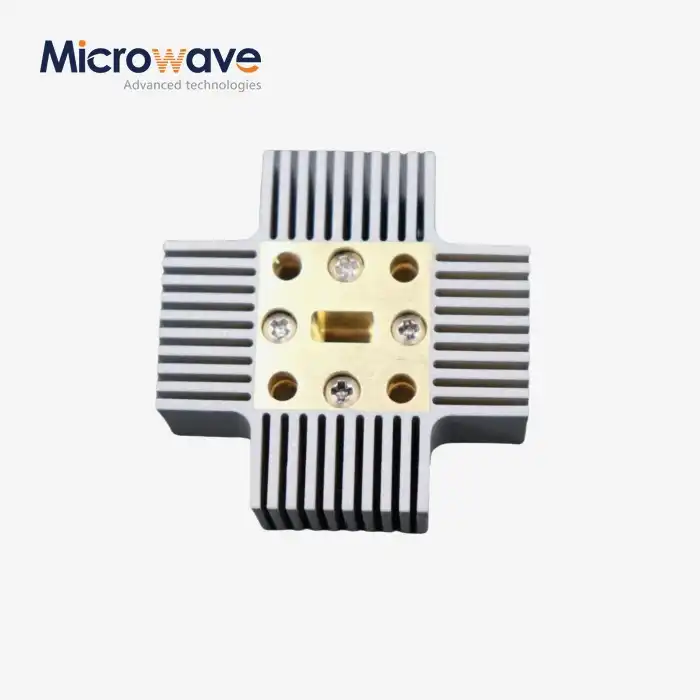
A straight waveguide section is a hollow metal tube with a rectangular cross-section. It is used to carry microwaves from antennas to filters, couplers, transitions, and other RF components. There is no central conductor as a coax cable has. Waves propagate by bouncing off the inner walls; thus, the TE10 mode transports most signals in a rectangular path. The internal width determines the cut-off frequency. The TE10 cutoff for WR-90 is around 6.56 GHz, and the spectrum to be utilized is 8.2 to 12.4 GHz. Parts typically have a conductive body, an internal channel, input and output flanges, and a finish that ensures safety. It features steady alignment, predictable impedance, minimal loss, and robust mechanical support compared to bends or flexible guides.
Key Specifications to Review
First check the limits for electricity, then look at the mechanics. Waveguide designation, frequency range, operating mode, power capacity, insertion loss, VSWR, and return loss are some electrical items. Some mechanical items are overall length, dimensional tolerance, straightness, flange alignment, mounting hole position, and internal width and height. The EIA's WR numbers range from about WR-28 to WR-2300. WR-90 is 0.900 inches by 0.400 inches on the inside, and WR-75 is 0.750 inches by 0.375 inches on the inside, so they can't be switched out. Most of the time, VSWR for a straight run is less than 1.10:1, but I always ask for the test frequencies that are higher than that. Check the material of the conductor, the finish on the surface, and the protection of the environment. Integration risk is lower with a controlled drawing that uses verified data, and repeat orders are possible.
Where Straight Waveguide Sections Are Used
When stable transmission and a good fit are important, straight waveguide sections show up. They connect transmitters, antenna feeds, and RF front ends in radar and defense electronics. To keep the voltage from dropping, high-power radar lines may use nitrogen under pressure or dry air. A lot of power amplifiers and big antennas are used by satellite ground stations to connect them. Ku-band and Ka-band signals need low loss over long vertical runs. They are used in calibration fixtures, network analyzer setups, and component test systems in labs. Rigid guides are also used in microwave heating equipment for industry, aerospace platforms, and linear accelerators. Some accelerator systems may need copper that doesn't contain oxygen when it's in high vacuum. When the microwave frequency is higher, waveguides don't lose as much dielectric as coaxial lines do.


Choosing and Customizing the Right Straight Waveguide Section
How to Choose the Right Part
I believe you should choose based on system necessity, not simply frequency. Check the power level, operating band, waveguide name, and whether the signal is continuous or pulsed. Then think about temperature range, pressure, service life, installation environment, and documentation that has to be done. Things matter, too. Aluminum 6061-T6 is inexpensive and light; thus, it may be utilized for hardware in aircraft and spacecraft. The most conductive copper is the oxygen-free kind and is best used in labs and with plenty of electricity. Plating the interior of the channel with silver or gold helps reduce the surface resistance. A stiff straight segment is appropriate when alignment and repeatable RF performance are more critical than flexibility. Finally, choose a square or circular form for the construction depending on how the modes function, the polarization, the power, and the layout. Most systems employ a rectangular guide, while a circular guide is suitable for dual polarization and rotating joints.
Custom Solutions for Project Integration
Some typical parts won’t fit parts that are the wrong length, have odd flange configurations, or have to be fitted in a tiny spot. You may eliminate adapters and additional joints with a tailored straight waveguide segment. It reduces mismatch loss and accelerates assembly. Options include standard or bespoke diameters, CPR or UG flanges, mixed flange pairs, non-standard bolt patterns, brackets, inspection ports, pressure sealing, surface treatment and traceability markings. In an ideal world, the engineers are supposed to study the specifications, have the drawings approved, examine a prototype, receive client approval, and then produce batches. Each phase discovers faults in the interface while they are still inexpensive and simple to correct. Do not bend or cut the stiff guide on the work site. If you bend anything, the inner geometry changes, the cutoff frequency shifts, and the loss goes higher. A shorter length must be machined and re-flanged carefully to maintain the flange flat.
Manufacturing Quality and Performance Verification
Performance depends on how well the parts are made. Insertion loss, VSWR, and service life are all affected by things like flange flatness, joint quality, alignment, and plating uniformity. There are five checks that make up a good inspection plan. A sweep with a vector network analyzer checks the return loss and insertion loss across the band. Sharp spikes show that there are problems inside the network. A coordinate measuring machine checks that the wide and narrow wall measurements are correct. So that RF doesn't leak out, flange planarity is usually kept close to 0.001 inch, or 0.02 mm. Ten to fifteen PSI leak tests may be done on outdoor units. A finish check on the inside, like 63 microinches RMS, keeps attenuation and hot spots to a minimum. I also want records of the calibrations, the ability to track the materials, inspection of the first product, and packaging that keeps moisture and damage to the flange faces at bay.
Supplier Evaluation and Procurement Planning
Evaluating a Manufacturer or Supplier
A trusted provider is well experienced in waveguide engineering, regulated machining, RF testing, stable material procurement, and export. Check the WR-series coverage, feasibility of creating bespoke designs, manufacturing capacity, quality methods, ability to communicate technically, export paperwork, and post-sale assistance. Direct manufacturers are often more capable of assisting with bespoke lengths, prototypes, repeat orders, and OEM projects than general markets. But distributors may aid with stock products that are typical. When comparing bids, be sure the model, frequency range, length, flange, material, finish, RF data, quantity, tooling, lead time, packing, shipping conditions, and guarantee are all the same. Probably suppliers that have consistent paperwork have greater experience. Before you start pricing comparisons, make sure each quotation contains all the test results and missing flange information.
Cost, Lead Time, and Procurement Planning
The unit pricing of a straight waveguide section depends on the waveguide length, material, plating type, machining complexity, testing procedures, order quantity, packaging requirements, and certification demands. A low price can cost you more in the long run if it means adapters, extra work, a bad fit, or late installation. Standard WR-90 or WR-75 items should be segregated from special length parts, high power designs and unusual flange assemblies — they all move in a distinct route. When you plan your lead time, you need to factor in things like engineering review, making a prototype, testing it, getting approval, production, and shipping it overseas. Long programs’ supplies remain constant with approved-vendor qualification, forecast-based orders, safety stock, and repeat-order restrictions. I also recommend that US folks look into shipping terms and customs paperwork ahead of time so parts don't have to sit at the border.
Common Purchasing Mistakes and How to Avoid Them
A lot of problems start when someone buys something and just looks at the frequency range. Although a part is in the correct band, it could have the wrong finish, flange, bolt pattern, power rating, or VSWR. Know the CPR or UG configuration, orientation of flanges, need for gaskets, inner dimensions, and mounting interfaces before ordering. Ask RF claims to list test frequencies, methods, fixtures, acceptance limits, and to be able to track each batch. VSWR above 1.10:1 causes signal dents or bad flanging and reflected power stresses transmitters that are easily damaged. For high power, outdoor and aerospace uses, heat, arcing, corona, pressure, moisture, corrosion and thermal cycling have to be reexamined. Finally, OK a controlled drawing before starting the work.
A Simple Selection Method for Global B2B Buyers
Global buyers can speed up their decision-making by grouping their needs into six areas: RF performance, mechanical fit, environment, compliance, commercial goals and delivery schedule. First, make sure the frequency and power handling are compatible. Then you should look at VSWR, insertion loss, accuracy of measurement, reliability, lead time, and total cost. You can rate each supplier on a matrix that includes technical skills, customization ability, capacity, quality assurance, certifications, communication, price, delivery performance, and support. If needed, prior to placing large orders, validate samples with RF testing, a mechanical fit check, a first-article inspection, and an environmental evaluation. The ideal long-term partner assists with prototypes, manufacturing that can be repeated, documentation, and growth for OEMs.

How ADM Supports Straight Waveguide Section Projects
Engineering and Measurement Capability
Since it began in the 2000s, ADM has been making microwave products for more than 20 years. Waveguide assemblies, coaxial and cable assemblies, microwave antennas, feeds, and servos, as well as antenna measurement systems and microwave measurement equipment, are some of the things we sell. Our labs have measuring tools that go up to 110 GHz, which means that our engineers can look at how RF works across a lot of different bands. We also have a microwave darkroom that is 24 m long and has an antenna plane near-field and far-field measuring recombination chamber that works from 0.5 GHz to 110 GHz. That helps when an antenna is fed by a waveguide run, and the whole chain needs to be checked. Our goods are used in defense, space, satellite communications, navigation, shipboard systems, weather monitoring, unmanned aerial vehicles (UAVs), and finding your way.
OEM Services from Prototype to Production
Small R&D-driven companies as well as large multinationals can use ADM's OEM services. When it comes to custom projects, these are the main services that matter:.
- Prototyping: We provide quick-turnaround prototypes for testing and evaluation before full-scale production. You can check flange fit, length, and RF behavior on a real part, then approve the drawing or request changes before committing to a larger batch order.
- Technical support: Our engineers give in-depth assistance, including installation guidance and troubleshooting support. They can review your drawing, discuss flange and material choices, and help diagnose fit or performance questions after delivery.
- Quick turnaround: Efficient manufacturing and delivery processes, backed by a complete supply chain system and rich production experience, help move parts from approved drawing to export shipment on schedule.
In custom straight waveguide section projects, these services cut down on wait times and interface mistakes.
Quality Certifications and Global Supply
When a part goes into radar, satellite, or space hardware, quality systems are important. ADM is certified in ISO 9001:2015 for quality management and ISO 14001:2015 for environmental management. They are also certified in ISO 45001:2018 for health and safety at work. Our products follow RoHS rules. A full supply chain system, a professional technical R&D team, strict quality control, fast delivery, a price advantage, and strong after-sales support are some of our strengths. Production, research and development, and global export are some of our main services. This means that US buyers can work with the same team from reviewing the design to shipping the goods. Send us the standards you need along with your inquiry, and we'll let you know what kind of paperwork we can give you for your program.
Conclusion
There is a simple part in a microwave system called a straight waveguide section that's very important. What makes it fit the project well is its length, flange, material, and finish, as well as the range of frequencies it can handle. A good choice starts with the whole system's needs, like power, environment, and documentation, not just frequency. Custom designs can get rid of adapters and joints, and inspection steps like network analyzer sweeps, dimensional checks, flange flatness measurement, and leak tests make sure the performance is good. Comparing suppliers works best when quotes are consistent, drawings are clear, and records can be tracked. The risk of rework and delay should be added to the total cost. All of these points work together to cut down on mistakes during integration and make production more reliable for defense, satellite, lab, and OEM programs.
FAQ
Q1: Should I choose copper or aluminum for a straight waveguide section?
For the best conductivity and least amount of loss, choose copper that doesn't contain oxygen. This is best for lab and high-power work. For cheaper hardware that needs to be light for space or the air, choose aluminum. Silver plating can make aluminum conduct electricity again.
Q2: Can I cut or bend a rigid waveguide on site?
I tell you not to do it. When you bend something, the inner geometry changes, the cutoff frequency moves, and the loss goes up. When the length changes, the flange needs to be re-flanged and machined carefully to keep it flat.
Q3: Why are some straight waveguide sections pressurized?
The dielectric strength inside the guide is raised by dry air or nitrogen. This lowers the risk of arcing at high power. Pressurization also keeps out water, which can damage metal.
Q4: Which flange types are common?
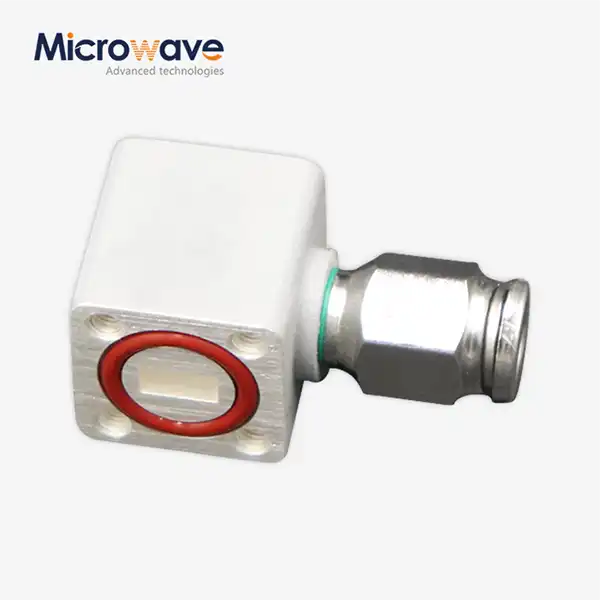
Flat flanges, choke flanges that stop RF leakage, and CPR cover or gasket flanges for pressurized systems are some of the most common types. Connect pairs that are compatible, like CPRG to CPRF, so they can make good contact and line up.
Request a Custom Straight Waveguide Section Quote from ADM
If you need a company that can make a straight waveguide section, ADM is ready to look at your drawing. For custom projects, our team provides prototyping, technical support, quick turnaround, and exporting around the world. If you email craig@admicrowave.com with your frequency band, length, flange type, material, and quantity, we will get back to you with a clear plan.
References
1. Pozar, D. M. Microwave Engineering, 4th Edition, Wiley, 2011.
2. Collin, R. E. Foundations for Microwave Engineering, 2nd Edition, Wiley-IEEE Press, 2001.
3. Marcuvitz, N. Waveguide Handbook, McGraw-Hill, 1951.
4. Skolnik, M. I. Radar Handbook, 3rd Edition, McGraw-Hill, 2008.
5. Maral, G. and Bousquet, M. Satellite Communications Systems, 5th Edition, Wiley, 2009.
6. IEC 60153-2: Hollow Metallic Waveguides, Part 2: Relevant Specifications for Ordinary Rectangular Waveguides, International Electrotechnical Commission, 2016.

_1733809032116.webp)