




Coaxial Rotary Joint vs Waveguide Rotary Joint: Key Differences
When selecting RF transmission components for rotating applications, the choice between a coaxial rotary joint and a waveguide rotary joint fundamentally depends on your system's frequency requirements, power handling needs, and operational environment. Coaxial rotary joints excel in broadband applications up to 50 GHz with compact form factors, while waveguide rotary joints dominate high-power, ultra-high-frequency scenarios above 40 GHz where minimal insertion loss is critical. Understanding these distinctions helps procurement engineers specify the optimal rotary coupling device for radar systems, satellite ground stations, and rotating antenna platforms.
Understanding Rotary Joint Technology in RF Systems
Rotating joints serve as critical interconnects in systems where continuous RF signal transmission must occur between stationary and rotating structures. Defense radar arrays, satellite communication terminals, and electronic warfare platforms all rely on these specialized components to maintain signal integrity during mechanical rotation.
The two primary architectures—coaxial and waveguide—represent fundamentally different approaches to electromagnetic energy transfer. Each design philosophy addresses specific engineering challenges inherent in rotating RF interfaces.
Coaxial configurations employ center conductors surrounded by dielectric insulators and outer conductors, maintaining characteristic impedance through precision mechanical bearing assemblies. This design naturally accommodates broadband operation across multiple frequency bands.
Waveguide implementations utilize hollow metallic tubes with carefully controlled cross-sectional dimensions, relying on electromagnetic mode propagation rather than conductor-based transmission. The rotating interface requires exacting alignment to prevent mode conversion and maintain low VSWR.
Procurement teams evaluating these technologies must balance electrical performance parameters against mechanical reliability requirements. Mission-critical applications demand documented testing protocols and traceable quality management systems.
Three Core Architectural Differences Between Coaxial and Waveguide Rotary Joints
Frequency Range and Bandwidth Characteristics
Coaxial rotary joints typically operate from DC through Ka-band (up to 40-50 GHz), offering multi-octave bandwidth in single assemblies. Test data from ADM's measurement facilities demonstrate insertion loss below 0.5 dB across 2-18 GHz in well-engineered coaxial designs. This broadband capability simplifies system architecture when multiple frequency bands require simultaneous transmission.
Waveguide rotary joints dominate applications above 40 GHz, extending into W-band (75-110 GHz) and beyond. The waveguide approach provides superior performance at millimeter-wave frequencies where coaxial losses become prohibitive. Measured insertion loss in X-band waveguide rotary joints reaches 0.15 dB or less—significantly outperforming coaxial equivalents at comparable frequencies.
If your system requires simultaneous transmission across multiple bands below 40 GHz, coaxial rotary joints offer superior flexibility. For single-band millimeter-wave applications demanding maximum efficiency, waveguide rotary joints deliver optimal performance.
Power Handling Capacity
Power handling represents a critical selection criterion for high-energy radar and jamming systems. Waveguide rotary joints excel in high-power scenarios, with peak power ratings exceeding 100 kW in pulsed applications and average power capabilities reaching several kilowatts. The absence of center conductors eliminates breakdown mechanisms that limit coaxial designs.
Coaxial rotary joints handle moderate power levels effectively—typically 100-500 watts average power depending on frequency and connector type. Advanced dielectric materials and optimized contact designs extend these limits, yet fundamental geometry constrains maximum ratings.
Testing at ADM's ISO 9001:2015-certified laboratories validates power handling specifications under realistic thermal and mechanical stress conditions. Environmental qualification ensures reliable operation across temperature extremes encountered in aerospace and maritime deployments.
If your application involves transmitter powers exceeding 1 kW or peak powers above 10 kW, waveguide rotary joints provide necessary margins. For receiver systems and moderate-power transmitters, coaxial designs offer cost-effective solutions.
Physical Size and Integration Complexity
Coaxial rotary joints maintain compact footprints advantageous in space-constrained installations. A multi-channel coaxial rotary joint assembly supporting four independent RF paths may occupy less volume than a single waveguide rotary joint. This density enables complex multi-function antenna systems on unmanned aerial vehicles and compact ground terminals.
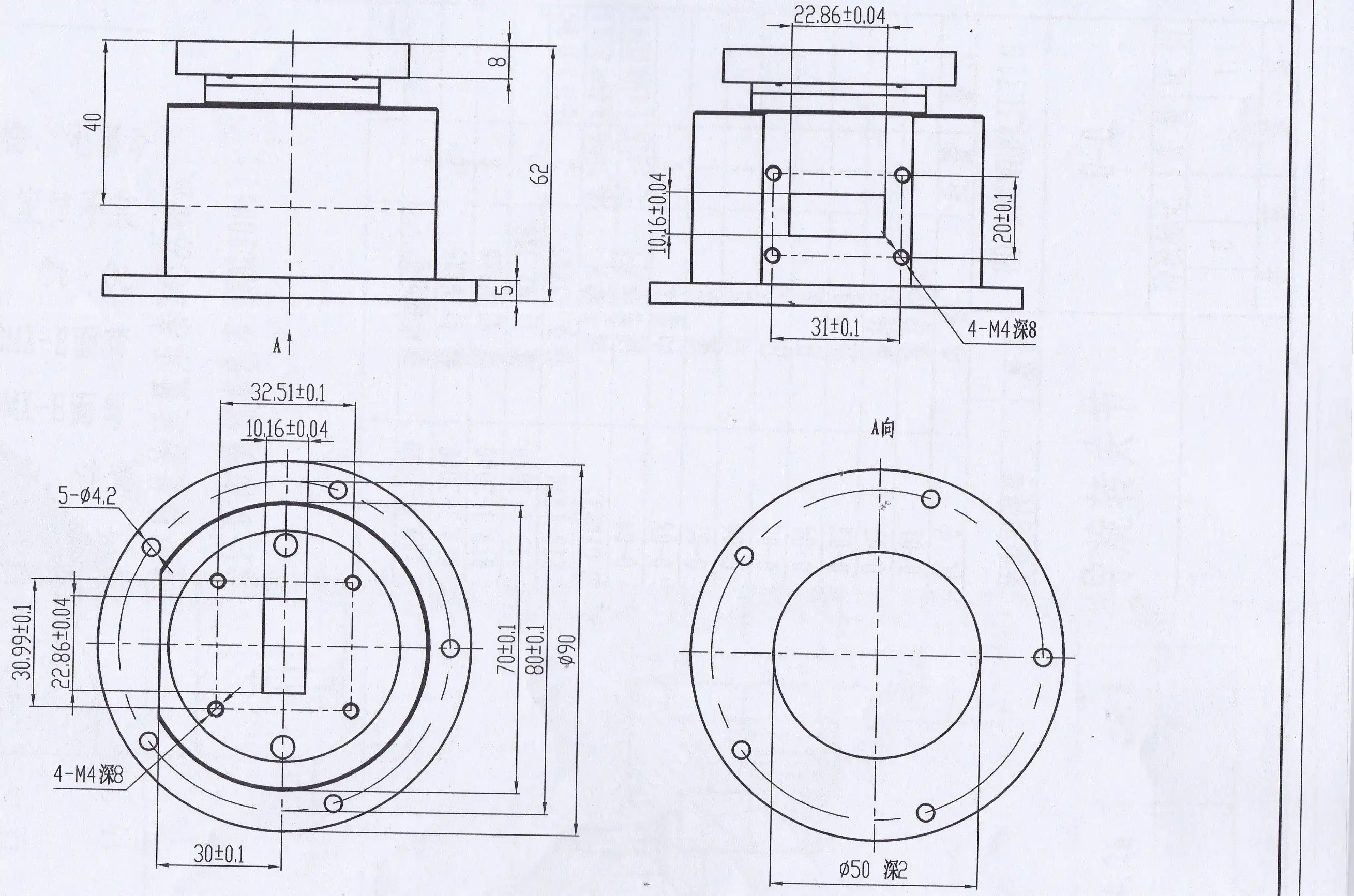
Waveguide components demand larger envelopes dictated by cutoff frequency requirements. The WR-90 waveguide (X-band) measures 0.9 x 0.4 inches internally, establishing minimum rotary joint dimensions. Higher frequencies permit size reduction, yet waveguide assemblies consistently require more space than coaxial alternatives at equivalent frequencies.
Mechanical integration differs substantially between technologies. Coaxial designs readily accommodate flexible cable assemblies on rotating sides, simplifying system routing. Waveguide implementations typically require rigid plumbing or specialized flexible waveguide sections, increasing installation complexity.
If platform size or weight budgets impose strict constraints, coaxial rotary joints maximize functional density. Where performance outweighs packaging considerations, waveguide designs deliver superior electrical characteristics.
Electrical Performance Comparison: Real-World Test Data
Advanced Microwave Technologies Co., Ltd. maintains comprehensive test capabilities enabling detailed performance characterization. Our 24M microwave darkroom and precision network analyzers measuring through 110 GHz provide validated performance data that procurement engineers require for specification compliance verification.
Insertion Loss Comparison:
- Coaxial rotary joint (2-18 GHz): 0.4-0.7 dB typical
- Coaxial rotary joint (26.5-40 GHz): 1.2-1.8 dB typical
- Waveguide rotary joint (8.2-12.4 GHz, WR-90): 0.12-0.20 dB typical
- Waveguide rotary joint (33-50 GHz, WR-28): 0.25-0.40 dB typical
VSWR Performance:
- Coaxial designs: 1.25:1 to 1.50:1 across operational bands
- Waveguide designs: 1.15:1 to 1.25:1 with precision alignment
Rotational Stability:
- Both technologies demonstrate amplitude variation below ±0.3 dB through 360-degree rotation when properly manufactured. Phase variation remains under ±5 degrees in quality implementations, critical for phased array and interferometric applications.
- These measurements reflect performance achievable with proper design margins and quality manufacturing processes. RoHS-compliant materials and controlled manufacturing environments ensure consistent results across production quantities.
Application-Specific Selection Guidelines for Procurement Engineers
Radar System Considerations
Ground-based air surveillance radars operating in S-band and C-band typically specify coaxial rotary joints for their multi-octave bandwidth and moderate power requirements. A typical installation might require 2-6 independent channels for sum, difference, and auxiliary paths—easily accommodated in compact coaxial assemblies.
Fire control radars operating at X-band with high peak powers gravitate toward waveguide rotary joints. The superior power handling and minimal insertion loss preserve radar range performance. Defense contractors specify waveguide solutions for ship-borne and ground-based tracking radars where maximum effective radiated power determines mission success.
If your radar specification emphasizes frequency agility across multiple bands, coaxial rotary joints simplify architecture. For maximum range in single-band high-power radars, waveguide rotary joints optimize link budgets.
Satellite Communication Ground Stations
Commercial and military satellite terminals employ rotary joints to maintain signal paths while tracking satellites across the sky. Ku-band and Ka-band uplink/downlink systems face different optimization criteria than radar applications.
Ku-band terminals (12-18 GHz) successfully deploy coaxial rotary joints in many installations, particularly where multiple polarizations and auxiliary channels require simultaneous rotation. The broadband nature accommodates both transmit and receive bands in single assemblies.
Ka-band terminals (26.5-40 GHz) increasingly adopt waveguide rotary joints and coaxial rotary joint solutions as frequencies rise and atmospheric losses demand maximum system efficiency. The lower insertion loss directly translates to improved G/T (gain-to-noise-temperature ratio) and higher data throughput.
If your ground station operates below 20 GHz with multiple signal paths, coaxial rotary joints offer integration advantages. For Ka-band and higher frequencies where every 0.5 dB matters, waveguide rotary joints preserve link margins.
Electronic Warfare and Countermeasure Systems
Electronic attack platforms require wideband RF transmission to rotating direction-finding antennas and jamming arrays. The instantaneous bandwidth requirements often exceed what waveguide technology can provide in single assemblies.
Coaxial rotary joints supporting 2-18 GHz in single units enable broadband intercept receivers and responsive jamming systems. Multi-channel assemblies carrying eight or more independent paths allow sophisticated array feeding networks.
High-power jamming applications at specific frequencies may warrant waveguide rotary joints where power handling becomes limiting. Hybrid system architectures sometimes employ both technologies—waveguide for high-power narrowband paths and coaxial for wideband auxiliary channels.
If your EW system requires multi-octave instantaneous bandwidth, coaxial rotary joints provide necessary coverage. For focused high-power jamming at specific threat frequencies, waveguide solutions maximize radiated power.
Reliability and Maintenance Considerations in Mission-Critical Applications
Procurement specifications for defense and aerospace applications emphasize MTBF (mean time between failures) and operational life cycles. Both rotary joint technologies achieve high reliability when properly engineered, yet failure modes and maintenance requirements differ.
Coaxial Rotary Joint Reliability Factors:
- Bearing wear affects center conductor contact resistance.
- Contact materials (gold, silver alloys) resist oxidation and maintain conductivity
- Bearing preload adjustment extends operational life
- Typical service intervals: 50-100 million rotations depending on speed and environment
- Field-replaceable contact assemblies minimize downtime.
Waveguide Rotary Joint Reliability Factors:
- Choke designs eliminate sliding contacts in RF paths.
- Bearing quality determines mechanical stability and VSWR consistency.
- Precision alignment maintains low insertion loss throughout service life.
- Typical service intervals: 100+ million rotations with minimal performance degradation
- Sealed designs protect internal surfaces in harsh environments.
ADM's manufacturing processes incorporate precision bearing selection, controlled torque assembly procedures, and 100% performance testing. Environmental stress screening identifies infant mortality failures before delivery, ensuring fielded systems meet reliability predictions.
Procurement teams should request documented test data, including
- Rotational life testing results with performance measurements
- Temperature cycling data across operational extremes
- Vibration and shock qualification to relevant military standards
- Salt fog exposure for maritime applications
- Detailed inspection procedures and acceptance criteria
Why ADM's Coaxial Rotary Joints Excel in Demanding Applications?
Advanced Microwave Technologies Co., Ltd. brings over two decades of specialized experience to coaxial rotary joint design and manufacturing. Our engineering team understands the nuanced requirements that distinguish successful mission-critical components from commodity products.
Comprehensive Design Capabilities:
- Custom frequency band optimization for specific applications
- Multi-channel configurations supporting up to 12 independent RF paths
- Integrated slip ring assemblies for DC power and control signals
- Hybrid designs combining coaxial RF with fiber optic data channels
- Thermal management features for high-duty-cycle operations
Advanced Manufacturing Infrastructure:
- Precision CNC machining centers maintaining micron-level tolerances
- Clean room assembly environments preventing contamination
- Automated contact pressure calibration, ensuring consistent performance
- In-process testing at every manufacturing stage
- Full traceability from raw materials through final acceptance
Rigorous Testing and Validation:
- Network analyzer measurements from 0.5 to 110 GHz
- High-power testing validating peak and average power ratings
- Environmental chambers simulating operational extremes
- Rotational life testing under loaded conditions
- Customer-witnessed acceptance testing available
Quality Management Systems:
- ISO 9001:2015 certification ensuring process consistency
- ISO 14001:2015 demonstrating environmental responsibility
- ISO 45001:2018 protecting workforce safety
- RoHS compliance for global market access
- Comprehensive documentation packages supporting customer qualification
Responsive Engineering Support:
- Application engineering assistance during specification development
- Prototyping services for evaluation before production commitment
- Customization capabilities addressing unique system requirements
- Technical documentation including test data and CAD models
- Global logistics support ensuring on-time delivery
If your procurement timeline demands rapid prototype delivery or your application requires non-standard specifications, ADM's experienced engineering team collaborates directly with your technical staff to develop optimal solutions.
Cost-Effectiveness Analysis: Total Ownership Considerations
Initial procurement cost represents only one element in total cost of ownership calculations. Lifecycle expenses, including maintenance, spares provisioning, and system downtime, often exceed original equipment costs in long-duration programs.
Coaxial Rotary Joint Lifecycle Economics:
- Lower initial unit costs make coaxial designs attractive for budget-constrained programs. The compact packaging reduces associated mechanical hardware expenses. However, higher insertion loss may necessitate additional amplification, increasing system-level power consumption and cooling requirements.
- Maintenance intervals and contact replacement costs accumulate over extended deployments. Multi-channel assemblies serving complex systems may require complete replacement rather than field repair, impacting spares requirements.
Waveguide Rotary Joint Lifecycle Economics:
- Higher initial costs reflect precision manufacturing requirements and larger mechanical envelopes. The superior electrical efficiency reduces amplifier requirements and power consumption—significant factors in space-based and remote installations where power budgets constrain system capabilities.
- Extended maintenance intervals and robust operational life reduce through-life costs. The absence of sliding contacts in RF paths eliminates a primary wear mechanism, extending service before performance degradation.
- If program budgets emphasize low non-recurring costs and moderate production quantities, coaxial rotary joints offer favorable economics. For high-volume programs or extended operational lifetimes, waveguide designs may provide lower total ownership costs.
Conclusion
Selecting between coaxial and waveguide rotary joints requires careful analysis of frequency requirements, power levels, physical constraints, and lifecycle costs. Coaxial implementations excel in broadband applications below 40 GHz, where compact packaging and multi-channel operation provide system-level advantages. Waveguide designs dominate high-frequency, high-power scenarios where minimal insertion loss directly impacts mission performance. Procurement engineers benefit from partnering with experienced manufacturers offering comprehensive design capabilities, rigorous testing, and documented quality systems supporting long-term program success.
Partner with a Trusted Coaxial Rotary Joint Manufacturer for Your Critical Programs
Advanced Microwave Technologies Co., Ltd. delivers precision-engineered RF rotary joints to defense contractors, satellite system integrators, and research institutions worldwide. As an established coaxial rotary joint supplier with ISO-certified quality systems and proven manufacturing capabilities, we support your mission-critical programs from initial concept through full-rate production.
Advanced Microwave Technologies Co., Ltd. brings over two decades of specialized experience to coaxial rotary joint design and manufacturing. Our engineering team understands the nuanced requirements that distinguish successful mission-critical components from commodity products.
Contact craig@admicrowave.com to discuss your rotary joint requirements with our applications engineering team. We'll provide detailed technical proposals including performance predictions, mechanical interface drawings, and competitive pricing for both prototype and production quantities.
References
1. Microwave Engineering Handbook Volume 3: Passive Microwave Components and Antennas, published by Academic Press Technical Publications, 2019.
2. Rotary Joint Design Principles for Radar and Communication Systems, IEEE Antennas and Propagation Society Technical Monograph Series, 2020.
3. High-Frequency Transmission Line Components: Engineering and Applications, McGraw-Hill Professional Engineering Series, 2018.
4. Military Standard MIL-STD-1478: Rotary Joints, Radio Frequency, Coaxial and Waveguide, General Specification For, U.S. Department of Defense, 2017.
5. Waveguide and Coaxial Component Performance Comparison in Satellite Ground Systems, International Telecommunication Union Technical Report, 2021.
6. Reliability Analysis of RF Rotary Coupling Devices in Aerospace Applications, Society of Automotive Engineers Aerospace Standards Division, 2019.