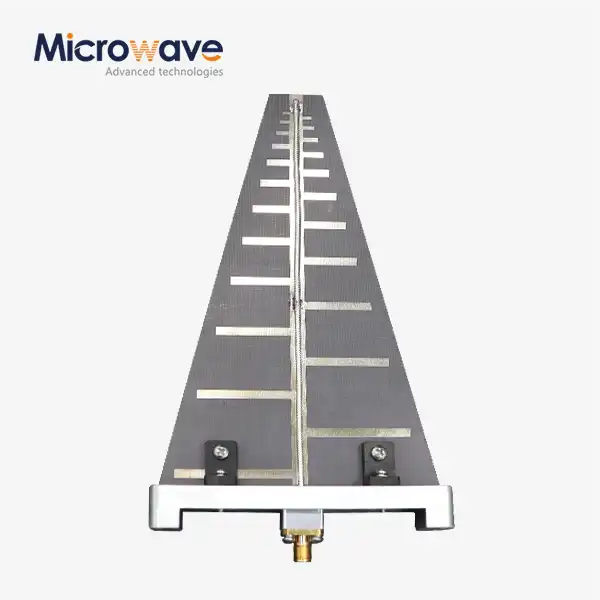





Broadband Pyramid Antenna Solutions for Modern Applications
Broadband pyramid antenna solutions represent a critical advancement in modern RF and microwave communication systems, offering exceptional wideband performance through their distinctive geometric structure. These antennas leverage a tapered pyramidal configuration to achieve superior impedance matching across extended frequency ranges, making them indispensable for applications spanning 5G telecommunications, aerospace radar systems, and satellite ground stations. Their ability to maintain consistent radiation patterns while minimising signal reflection has positioned them as preferred components in mission-critical deployments.
Understanding Pyramid Antennas – Principles and Performance
The great performance of pyramid antennas comes from their unique geometric structure, which is very different from regular horn or patch antenna designs. We at Advanced Microwave Technologies Co., Ltd. have spent more than 20 years making these parts better so that they meet the high standards of North American defence companies and telecommunications system designers.
How Do Pyramid Antennas Work?
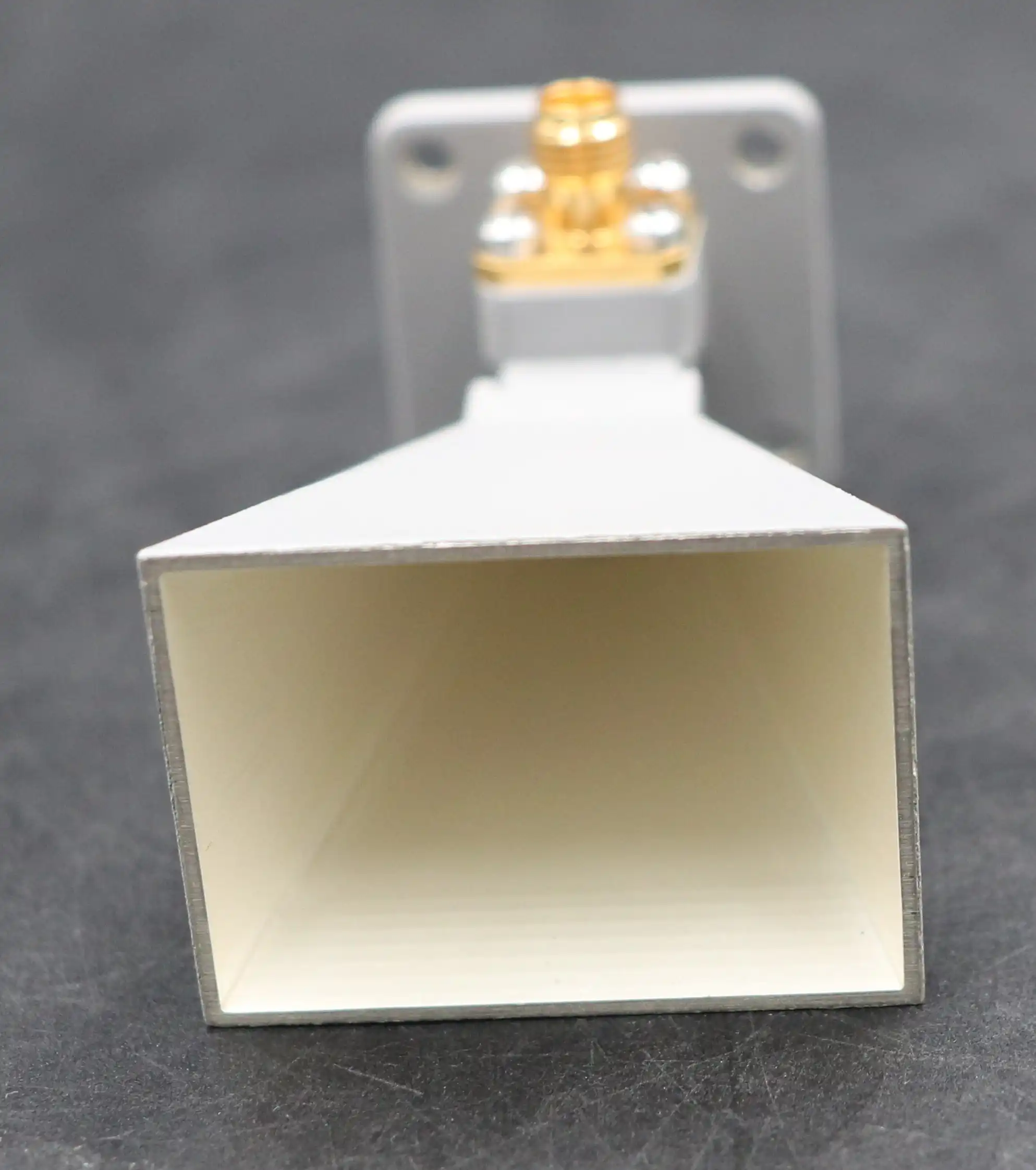
The pyramidal shape makes a slow change in impedance between empty space and the transmission line. This makes signal bounce much less likely over a wide range of frequencies. This narrowing effect makes it possible for electromagnetic waves to travel quickly while keeping their polarisation. The pyramid antenna design gets broadband performance within small dimensions, in contrast to patch antennas that usually cover narrow bandwidths or horn antennas that need large physical footprints. The shape naturally directs electromagnetic energy from the feed point through surfaces that get wider and wider. This makes controlled wave propagation that improves the ability to both send and receive signals.
Key Performance Metrics
When evaluating these parts for purchase, there are a few performance factors that need to be taken into account. Gain levels are usually between 8 and 15 dBi, depending on the size and frequency band of the signal. This gives long-distance communication links enough directionality. Values of Voltage Standing Wave Ratio (VSWR) less than 2:1 across operational bandwidths show good impedance matching, which means that very little power is lost during system integration. The radiation pattern has stable beamwidth properties across frequency ranges from ultra-high frequency (UHF) to millimetre wave bands, including new 5G spectrum allocations between 24 and 40 GHz. Our testing labs can measure up to 110 GHz, and our 24-metre microwave darkroom does a lot of thorough validation to make sure these specs are correct.
Advantages Over Alternative Designs
When selecting system parts, procurement engineers often compare pyramid antennas to well-known options. Broadband capability goes beyond regular microstrip patch arrays by supporting octave or multi-octave bandwidths without the need for multiple elements. Pyramidal antennas are 30–40% lighter and take up 30–40% less space than horn antennas that do the same job. This is important for applications that need to be airborne or have limited space. The structure naturally offers great cross-polarisation discrimination—more than 25 dB in properly designed implementations—which is very important for radar systems that need polarisation diversity and satellite communication terminals that need to handle orthogonal channels at the same time.
Key Applications and Benefits of Pyramid Antenna Solutions in Modern Industries
As modern infrastructure grows, it needs antenna systems that can work with more than one transmission protocol and frequency band on a single piece of hardware. Pyramid antennas meet these needs by having performance features that can be changed to fit different operating situations.
5G Network Infrastructure
When putting in place fifth-generation wireless networks, telecom service providers have to meet demands for speed and coverage levels that have never been seen before. Pyramid antennas are used in base station setups because they can handle multiple frequency bands within a single radome enclosure. This lowers the cost of getting the antenna on site and the amount of visual impact it has. In a recent project we helped with, a major U.S. carrier used pyramid antenna arrays to provide mid-band 5G coverage across industrial parks. This was 40% faster than standard multi-antenna setups for installation. The wideband reaction can handle both current FR1 allocations and future FR2 millimetre-wave growth without the need for new gear. This protects investments in infrastructure against changes in technology.
Aerospace and Defence Applications
Defence companies order pyramid antennas for radar systems in the air, bases for electronic warfare, and communication lines for unmanned aerial vehicles. The lightweight cuts down on payload penalties while still meeting the military's requirements for rugged dependability. Our manufacturing processes are ISO 9001:2015 certified, which means that the quality is the same from one production run to the next. We also keep full records of all production steps to meet the needs of the defence supply chain. The stable gain characteristics and low sidelobe levels are especially helpful for radar applications because they make it easier to find targets while lowering the number of false alarms in crowded electromagnetic environments that are crowded.
Satellite Ground Terminals
Ground station operators require antenna systems that can keep track of satellites over large orbital arcs and keep the link stable as the satellites' elevation changes. Pyramid antennas set up in arrays can control the gain and beamwidth needed for messaging via geostationary and low-Earth orbit satellites. A university study centre that we worked with added our custom X-band pyramid antenna arrays to their satellite tracking system. Over the course of a year, they were able to measure that the connection was available 99.7% of the time. Broadband performance lets telemetry, tracking, and order functions work with the same hardware, which makes ground segment design easier.
Industrial IoT and Sensing Networks
As part of Industry 4.0 efforts, factories use large networks of wireless sensors that need to be able to connect reliably in RF settings that can be difficult to navigate. Pyramid antennas that are used as access point antennas provide regular coverage patterns that go through metal buildings and machines without leaving dead spots. The radiation traits stay the same even when the temperature changes and the mounting surface isn't smooth. This makes the site study and installation troubleshooting easier.
These use cases show real practical benefits, such as lower total cost of ownership thanks to multi-band capability, higher system stability thanks to tried-and-true design principles, and architecture that can adapt to changing communication standards in the future.
How to Choose the Right Pyramid Antenna for Your Procurement Needs?
To choose the best pyramid antenna parts, you need to carefully compare the technical specs to the needs of the application and the budget you have. Based on hundreds of successful customer deployments in the defence, industrial, and telecommunications sectors, we've come up with a structured approach.
Critical Selection Criteria
The main standard is frequency coverage, and the operating bandwidth is based on both the centre frequency and fractional bandwidth needs. Pyramidal geometries are especially useful for applications that need 2:1 bandwidth ratios or higher. In order to figure out the link budget, gain requirements must be weighed against the size limitations of the aperture. Larger apertures provide higher directivity but come with higher weight and wind loading. The conditions of environmental exposure determine the mechanical design parameters, such as the radome materials, the sealing ratings for connectors, and the requirements for structural reinforcement. Our engineering team helps procurement managers turn system-level needs into detailed component specs that make sure the right product is chosen the first time.
Standard Versus Custom Solutions
Off-the-shelf pyramid antenna types offer affordable options for standard frequency ranges and performance levels, and their shorter lead times help projects get done quickly. When an OEM needs to meet specific needs, like non-standard frequency allocations, unique mounting configurations, or integration with their own RF front-end architectures, they can make custom designs for them. At Advanced Microwave Technologies Co., Ltd., our dedicated research and development (R&D) team works with customers from the first idea to making sure the product is ready for production. They do this by using rapid prototyping to make evaluation units in 3–4 weeks. This method works especially well for study groups and original equipment makers (OEMs) that are making next-generation communication systems that need antenna parts that are specially made to meet certain electromagnetic performance goals.
Volume Procurement Considerations
Buying in bulk can save you a lot of money and make sure that production programmes don't run out of supplies. When you commit to a large order, you can improve the manufacturing process and specialised tools, which lowers the cost per unit by 20 to 35 per cent compared to small orders. Our purchasing experts make deals that balance inventory risk against price optimisation, with flexible schedules to account for changing production needs. For defence contractors in charge of programmes that last more than one year, we set up long-term supply agreements with locked prices and guaranteed allocation. This keeps the supply chain from breaking down.
Installation, Simulation, and Optimisation of Pyramid Antennas
The performance of a pyramid antenna is directly affected by how it is deployed and integrated into a system. The quality of the installation often determines whether theoretical standards can be put into practice.
Installation Best Practices
Preparing the mounting surface is the first step to getting the best performance. Pay close attention to ground plane continuity and connection contact integrity. When metallic objects are close to pyramid antennas, they can change the intended radiation pattern. This is why minimum clearing distances are usually set at 0.5 to 1.0 wavelengths at the lowest operating frequency. To keep connections from dropping out and to keep precision RF interfaces from getting damaged, connector torque specifications must be followed to the letter. Our technical paperwork includes detailed installation instructions based on a lot of field experience. These include instructions for sealing the environment for outdoor operations and suggestions for routeing cables to reduce passive intermodulation.
Simulation and Modelling Tools
Before physical installation, electromagnetic modelling makes sure it will work in the mounting area. Some software programmes, like CST Microwave Studio and ANSYS HFSS, can model the whole antenna system, including the feed structures, mounting brackets, and equipment that is close by. This lets you guess the radiation patterns and impedance characteristics. We use our in-house computing power and twenty years of modelling experience to provide simulated support services for difficult integration situations. This upfront investment finds possible problems during the planning phase, when fixes are much cheaper than doing them in the field.

Performance Optimisation Techniques
After installation, our advanced antenna measurement systems check the specifications and look for ways to make things better. You can improve impedance matching by choosing the right connectors and changing the length of the transmission line. This will lower the VSWR across the operating band. To get the best radiation pattern, you may need to make small changes to the mounting angle or add materials that absorb radiation to stop unwanted reflections. For clients who don't have their own test facilities, we offer full antenna characterisation services in our 24-metre microwave darkroom. We provide detailed performance records with readings of gain, pattern, polarisation, and impedance that can be traced back to national standards.
These organised methods for setting up and improving radio systems make sure that the money spent is well spent because they work reliably and according to the requirements.
Procurement Insights: Buying, Branding, and Supplier Selection
To get around in the market for industrial pyramid antennas, you need to know what suppliers can do, how to qualify them, and the total cost of ownership, which includes more than just the purchase price.
Supplier Evaluation Criteria
Quality badges are objective proof of controlled manufacturing processes and consistent products. If a company has ISO 9001 certification, it means that they use systematic quality management techniques in the planning, production, and delivery processes. RoHS compliance shows a dedication to environmental standards that are being asked for more and more by government and business users. In addition to certifications, a supplier's technical skills show how well they can meet specific needs and work with engineers. Our labs have measurement systems that can reach 110 GHz, which allows Advanced Microwave Technologies Co., Ltd to check performance across the whole spectrum used by modern communication systems, including new millimetre-wave uses.
Service and Support Capabilities
The level of technical support is what sets true engineering partners apart from commodity suppliers. Having access to experienced RF engineers during the specification development process keeps mistakes from happening that cost a lot of money and speeds up the project timeline. Rapid development lets you test designs before committing to production, which lowers the risk of the program. Our expert support team answers questions within 24 hours and helps with application advice, connection suggestions, and troubleshooting throughout the duration of a product. Warranty programmes and service after the sale show that the seller trusts the stability of the product and protects the customer's investment.
Global Sourcing Considerations
Buying things from other countries might save you money, but it makes the supply chain more complicated, so it needs to be carefully managed. Changes in lead times, shipping logistics, and customs procedures require planning buffers that cancel out some of the price advantages. At Advanced Microwave Technologies Co., Ltd., we've made global delivery easier by working with established logistics partners and providing full support for export documentation. Our efficient production methods allow us to deliver standard goods in 3–4 weeks and custom designs in 6–8 weeks. For urgent needs, we also offer expedited choices. This responsiveness, along with low prices backed by manufacturing that is fully merged, gives North American procurement organisations a lot of value.
Conclusion
Broadband pyramid antenna solutions have been shown to improve the performance of current communication systems, such as 5G infrastructure, aerospace platforms, satellite stations, and industrial networks. Their special geometric shape makes it possible for them to match impedance over a wide range and keep their radiation properties stable in small, light packages. To do buying right, you need to carefully look at technical requirements, the supplier's skills, and the total cost of ownership. With over 20 years of experience in our field, Advanced Microwave Technologies Co., Ltd is the company you can trust for mission-critical antenna components. We have ISO certifications, advanced test capabilities, and quick engineering help to back this up.
FAQ
1. What frequency ranges do pyramid antennas typically cover?
Pyramid antennas can work with frequencies ranging from 300 MHz for ultra-high frequencies (UHF) to more than 40 GHz for millimetre waves. The exact bandwidth depends on the size and shape of the device, and many designs can reach octave or multi-octave performance. Our custom design services can handle unique frequency assignments, such as those for new 5G bands and satellite communication frequencies.
2. How do pyramid antennas compare to horn antennas for radar applications?
Both types of antennas send out directional waves that can be used by radar systems. However, pyramid antennas are usually smaller and lighter, which are important for platforms in the air and on the move. In some cases, horn antennas may have a slightly higher gain, while pyramid shapes work best for broadband uses that need to cover more than one octave. The best choice is based on the unique needs of the application.
3. Can pyramid antennas operate in harsh environmental conditions?
When pyramid antennas are built correctly, they can handle harsh conditions like temperature changes, high or low humidity, salt spray, and shaking. Military-grade implementations meet MIL-STD weather standards by being built to be tough and having protective coats. Our engineering team chooses the right materials and sealing methods based on how they will be used, which guarantees their long-term dependability.
Partner with ADM for Your Pyramid Antenna Requirements
Advanced Microwave Technologies Co., Ltd. can help you buy broadband antennas by custom-engineering pyramid antenna solutions and supporting them with ISO 9001 quality systems and a wide range of technical skills. Our experienced engineering team works with research centres, defence companies, and telecommunications integrators all over North America to make precise parts that meet strict performance requirements. Our fast prototyping services and efficient production give you great value whether you need normal catalogue items or OEM designs that are made just for you. Email our technical sales team at craig@admicrowave.com to talk about your specific needs. We are a trusted maker of pyramid antennas that has customers all over the world and support staff in your area. We have the knowledge and dependability that your mission-critical apps need.
References
1. Balanis, Constantine A. Antenna Theory: Analysis and Design, 4th Edition. John Wiley & Sons, 2016.
2. Stutzman, Warren L. and Gary A. Thiele. Antenna Theory and Design, 3rd Edition. John Wiley & Sons, 2012.
3. IEEE Antennas and Propagation Society. "Standard Definitions of Terms for Antennas." IEEE Std 145-2013, Institute of Electrical and Electronics Engineers, 2014.
4. Milligan, Thomas A. Modern Antenna Design, 2nd Edition. John Wiley & Sons, 2005.
5. Volakis, John L., editor. Antenna Engineering Handbook, 4th Edition. McGraw-Hill Education, 2007.
6. Hansen, Robert C. Phased Array Antennas, 2nd Edition. John Wiley & Sons, 2009.