




Why Choose a Wideband Double-ridged Horn Antenna in EMC Labs?
When electromagnetic compatibility testing laboratories face mounting pressure to validate devices across expanding frequency ranges while managing tight budgets and strict compliance deadlines, switching between multiple narrowband antennas becomes a costly bottleneck that delays product launches and increases testing expenses. The Wideband Double-ridged Horn Antenna eliminates this critical pain point by delivering continuous frequency coverage from 0.2 GHz to 40 GHz in a single, calibrated system, enabling EMC engineers to complete full compliance testing without equipment changeovers, reducing measurement time by up to 60 percent while maintaining the precision required for CISPR 16, FCC Part 15, and MIL-STD-461 standards.
Understanding Wideband Double-ridged Horn Antenna Technology for EMC Applications
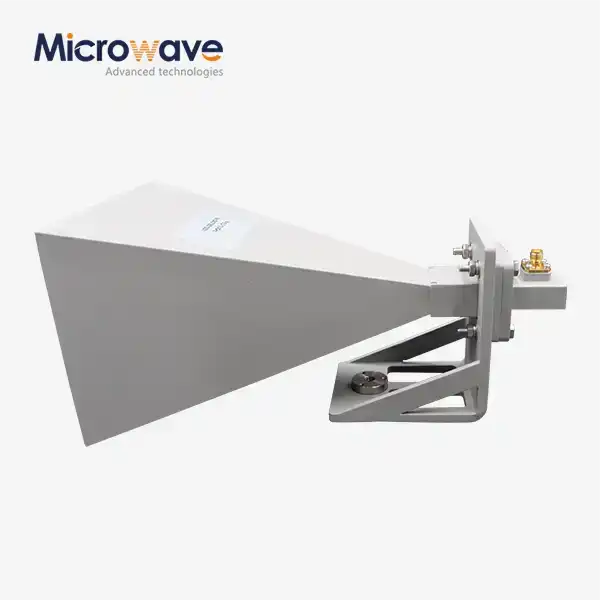
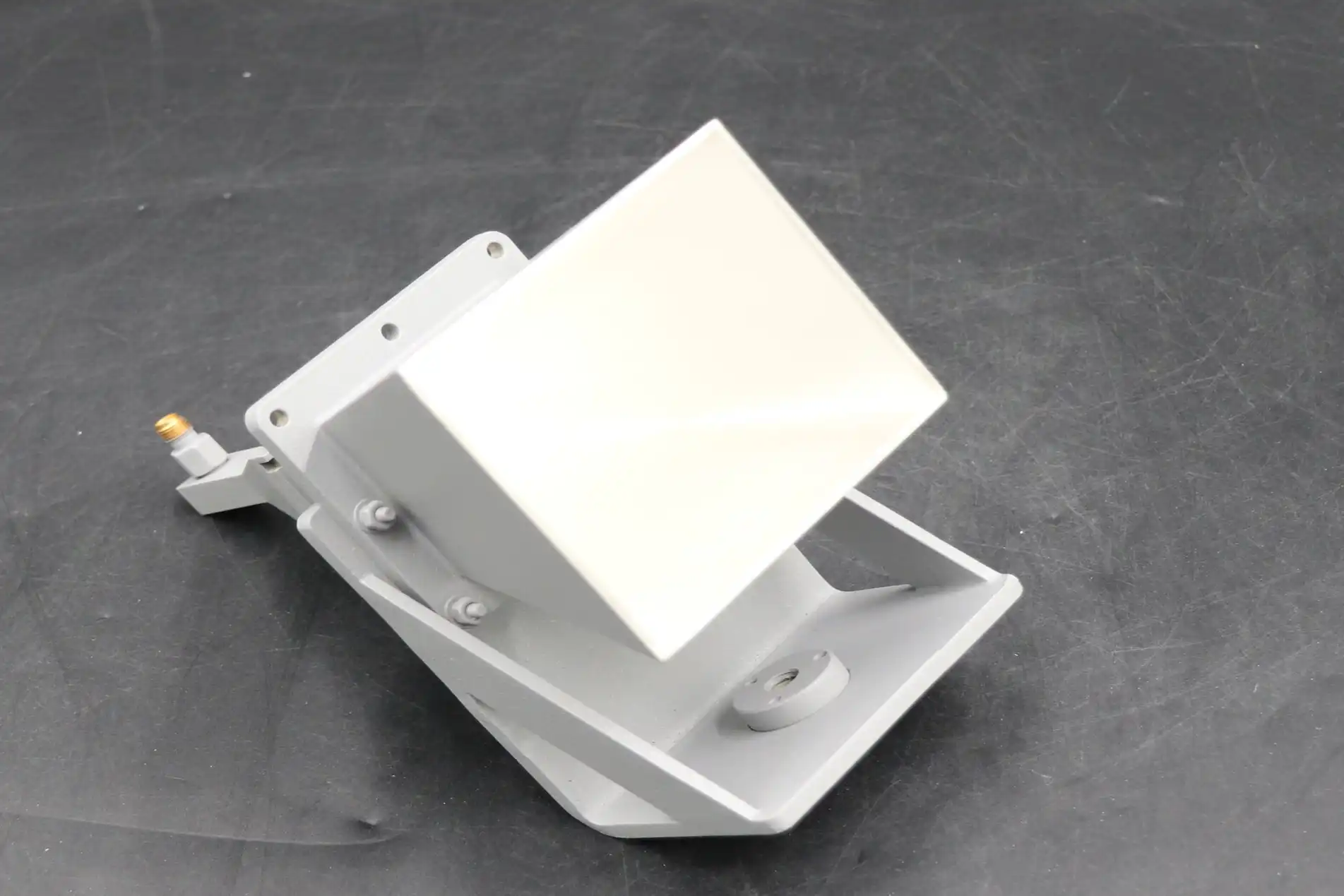
The fundamental architecture of the Wideband Double-ridged Horn Antenna addresses the core limitations that have constrained traditional horn antenna designs for decades. Unlike conventional smooth-wall pyramidal horns that struggle to maintain consistent impedance matching across wide frequency ranges, the double-ridged design incorporates two parallel metal ridges along the inner waveguide walls that progressively reduce the cutoff frequency of the dominant mode while simultaneously improving impedance transformation from the feed point to free space. This innovative geometry enables bandwidth ratios exceeding ten to one, which translates directly to EMC laboratories being able to conduct radiated emissions testing from low-frequency conducted emissions bands through millimeter-wave frequencies without recalibration or antenna substitution. The electromagnetic principles underlying this performance advantage stem from the ridge structure's ability to modify the electric field distribution within the waveguide throat. As electromagnetic energy propagates from the coaxial or waveguide feed into the ridged section, the electric field concentrates between the ridge tips rather than distributing uniformly across the waveguide walls as occurs in standard rectangular waveguides. This field concentration effectively lowers the cutoff frequency, permitting single-mode operation across an extraordinarily broad frequency spectrum that conventional designs cannot achieve. For EMC testing facilities, this means a single Wideband Double-ridged Horn Antenna can replace three or four narrowband antennas that would otherwise be required to cover frequency ranges mandated by international electromagnetic compatibility standards.
Technical Performance Characteristics That Matter in EMC Laboratories
The voltage standing wave ratio performance of professional-grade Wideband Double-ridged Horn Antenna systems directly impacts measurement accuracy and equipment protection in electromagnetic compatibility testing environments. Advanced designs from manufacturers like Advanced Microwave Technologies Co., Ltd achieve VSWR values below 2.0 across the entire operational bandwidth, ensuring that reflected power remains minimal even when transmitting high-field-strength signals during immunity testing. This low VSWR characteristic protects expensive RF amplifiers and signal generators from damage caused by reflected energy while simultaneously improving the signal-to-noise ratio in radiated emissions measurements where detecting low-level spurious emissions requires maximum receiver sensitivity. Gain stability represents another critical performance parameter that distinguishes superior Wideband Double-ridged Horn Antenna designs from mediocre alternatives. In electromagnetic compatibility testing, antenna gain variations introduce systematic measurement errors that can cause compliant products to fail certification or allow non-compliant devices to pass undetected. High-quality double-ridged horn antennas maintain gain variations within plus-or-minus one decibel across their entire frequency range, providing the measurement repeatability that regulatory test laboratories and certification bodies demand. The consistent radiation patterns produced by properly designed ridge profiles ensure that far-field measurement conditions remain valid throughout the frequency spectrum, eliminating the pattern distortions and side-lobe anomalies that plague conventional wideband horn designs at their upper frequency limits.
Critical Advantages of Wideband Double-ridged Horn Antennas for EMC Test Facilities
Electromagnetic compatibility laboratories operating under ISO 17025 accreditation face relentless pressure to reduce test cycle times while maintaining measurement uncertainty budgets that satisfy regulatory requirements. The operational efficiency gains achieved by implementing Wideband Double-ridged Horn Antenna systems extend far beyond the obvious time savings from eliminating antenna changeovers. When conducting radiated emissions scans according to CISPR standards, test engineers traditionally must interrupt measurements at frequency band boundaries to physically replace antennas, recalibrate the measurement system with new antenna factors, and verify proper positioning and alignment before resuming testing. Each transition consumes fifteen to thirty minutes of billable laboratory time, and the mechanical handling introduces opportunities for positioning errors that compromise measurement repeatability.
Comprehensive Frequency Coverage Eliminates Testing Gaps
The continuous frequency coverage provided by Wideband Double-ridged Horn Antenna technology fundamentally transforms how EMC laboratories approach compliance testing strategies. Traditional narrowband antenna sets inevitably create small frequency gaps at band transition points where neither antenna provides optimal performance, potentially allowing non-compliant emissions to escape detection. Modern electronic devices increasingly exhibit complex spectral signatures with emissions spread across multiple frequency bands simultaneously, particularly in products incorporating software-defined radios, spread-spectrum communication protocols, and high-speed digital interfaces that generate harmonics extending well into microwave frequencies. A single wideband antenna system eliminates coverage gaps while providing the broadband impulse response necessary to accurately characterize transient emissions from switching power supplies and digital circuits. For defense contractors conducting MIL-STD-461 testing on military electronic systems, the ability to perform radiated emissions measurements from 2 MHz through 18 GHz without interruption represents a substantial competitive advantage in meeting tight program schedules. The Wideband Double-ridged Horn Antenna handles the upper frequency requirements from 1 GHz upward, complementing broadband biconical and log-periodic dipole arrays that cover lower frequencies, enabling complete radiated emissions characterization in a single continuous measurement session. This seamless frequency coverage proves particularly valuable when testing complex integrated systems where identifying coupling paths and emission sources requires correlation analysis across multiple frequency decades.
Superior Pattern Stability and Measurement Accuracy
The radiation pattern characteristics of Wideband Double-ridged Horn Antenna systems directly influence measurement uncertainty and confidence in electromagnetic compatibility test results. Inferior horn antenna designs exhibit pattern deterioration at their upper frequency limits, manifesting as increased side-lobe levels and beam squinting that violate the far-field measurement assumptions underlying standard EMC test methodologies. Advanced Microwave Technologies Co., Ltd addresses these pattern stability challenges through precision ridge profiling and optimized horn flare angles that maintain single-lobe radiation patterns with low cross-polarization components across the entire operational bandwidth. This pattern fidelity ensures that device-under-test emissions measured at the specified test distance accurately represent the maximum radiated field strength regardless of measurement frequency.
Selecting the Right Wideband Double-ridged Horn Antenna for Your EMC Laboratory
Electromagnetic compatibility test facilities must carefully evaluate several critical specifications when selecting Wideband Double-ridged Horn Antenna systems to ensure compatibility with existing test equipment and methodology requirements. The frequency range represents the most obvious selection criterion, but laboratories should verify that the antenna's specified bandwidth encompasses all frequency bands required by applicable standards with adequate margin beyond band edges to maintain specified performance. For facilities performing testing to multiple international standards, choosing antennas with frequency coverage from 700 MHz through 18 GHz or 40 GHz ensures capability to address current regulatory requirements while providing headroom for future standard revisions that may extend measurement frequencies upward as wireless technologies migrate toward millimeter-wave bands. Power handling capability becomes critically important when conducting electromagnetic immunity testing where laboratories must generate field strengths ranging from ten to two hundred volts per meter at the device under test location. Professional-grade Wideband Double-ridged Horn Antenna systems from manufacturers like Advanced Microwave Technologies Co., Ltd specify maximum continuous wave and peak power ratings that enable generation of required field strengths using readily available RF amplifiers in standard semi-anechoic chamber geometries. The antenna's power rating must account not only for the transmitter output but also for the standing wave reflections that occur even with excellent impedance matching, ensuring adequate safety margin to prevent antenna damage during high-field immunity testing.
Physical Construction and Durability Considerations
The mechanical construction quality of Wideband Double-ridged Horn Antenna systems significantly impacts long-term measurement repeatability and cost of ownership for electromagnetic compatibility laboratories. Precision-machined aluminum housings with protective anodized finishes provide excellent electromagnetic shielding while resisting corrosion in the humidity-controlled environments typical of professional test chambers. The ridge elements themselves require exceptional dimensional accuracy and surface finish quality to achieve specified electrical performance, demanding computer numerical control machining capabilities and rigorous quality control procedures throughout manufacturing. Advanced Microwave Technologies Co., Ltd leverages over twenty years of microwave manufacturing expertise to produce antenna systems with the mechanical precision and structural integrity that commercial test laboratories and defense contractors require for mission-critical electromagnetic compatibility testing programs.
Integration of Wideband Double-ridged Horn Antennas into Modern EMC Test Systems
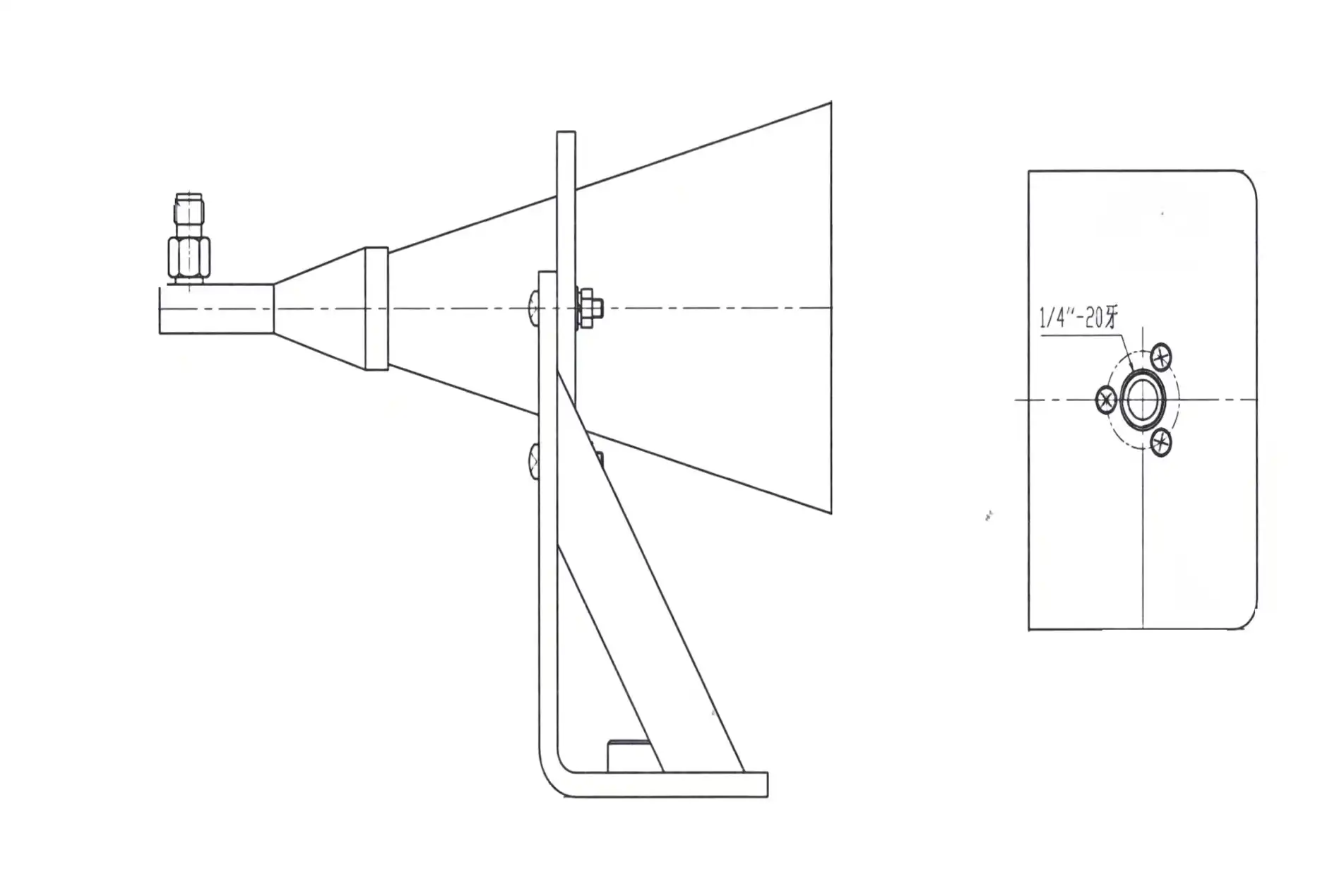
Contemporary electromagnetic compatibility test facilities increasingly employ automated measurement systems that control spectrum analyzers, receivers, signal generators, turntables, and antenna positioners through software interfaces executing standardized test procedures. The successful integration of Wideband Double-ridged Horn Antenna systems into these automated test environments requires careful attention to mounting hardware, cable routing, and calibration data management. Professional antennas from manufacturers like Advanced Microwave Technologies Co., Ltd ship with comprehensive antenna factor tables and gain data across their operational frequency range, enabling direct import into test automation software for automated correction of measurement results. The mechanical interface typically consists of standard threaded mounting provisions compatible with existing antenna positioner systems, facilitating straightforward equipment upgrades without requiring chamber modifications or custom mounting fixtures.
Calibration and Traceability Requirements for Regulatory Testing
Electromagnetic compatibility testing performed to support regulatory compliance declarations requires demonstrable traceability to national measurement standards through an unbroken chain of calibrations documented with defined uncertainty budgets. The antenna factor calibrations supplied with Wideband Double-ridged Horn Antenna systems must reference measurements performed on accredited antenna measurement ranges using internationally recognized calibration procedures that establish traceability to fundamental electromagnetic units. Advanced Microwave Technologies Co., Ltd operates ISO-accredited calibration facilities equipped with advanced antenna measurement chambers spanning frequencies from 500 MHz to 110 GHz, providing customers with calibration certificates that satisfy the traceability requirements imposed by regulatory authorities and certification bodies worldwide. Laboratories must maintain these calibration records and schedule periodic recalibration at intervals specified by their quality management systems, typically annually or biennially depending on utilization levels and measurement uncertainty requirements.
Conclusion
Selecting a Wideband Double-ridged Horn Antenna for EMC laboratory applications delivers transformative improvements in testing efficiency, measurement accuracy, and operational flexibility that directly impact competitive positioning and profitability.
Cooperate with Advanced Microwave Technologies Co., Ltd.
Advanced Microwave Technologies Co., Ltd stands ready to support your electromagnetic compatibility testing requirements with over twenty years of proven expertise in precision microwave antenna manufacturing. As a leading China Wideband Double-ridged Horn Antenna manufacturer, China Wideband Double-ridged Horn Antenna supplier, and China Wideband Double-ridged Horn Antenna factory, we deliver High Quality Wideband Double-ridged Horn Antenna systems with competitive Wideband Double-ridged Horn Antenna price structures and China Wideband Double-ridged Horn Antenna wholesale options. Our ISO 9001:2015 certified production facilities, state-of-the-art 24-meter microwave darkroom, and comprehensive OEM services ensure that every Wideband Double-ridged Horn Antenna for sale meets your exact specifications. Contact our technical team today at craig@admicrowave.com to discuss your custom antenna requirements and discover how our fast delivery, strict quality control, and strong after-sales support can accelerate your EMC testing programs.
References
1. Jacobs, D. C., & Joubert, J. Wideband 0.5–50 GHz double-ridged guide horn antenna using coaxial-to-ridge waveguide launcher. IET Microwaves, Antennas & Propagation, 2024.
2. Burns, P., Leuchtmann, P., & Vahldieck, R. Analysis of Radiation Pattern Degradation in Double-Ridged Horn Antennas. IEEE Transactions on Electromagnetic Compatibility.
3. Rashed-Mohassel, J. A. Design of a new broadband EMC double ridged guide horn antenna. First European Conference on Antennas and Propagation, 2006.
4. Kerr, J. L. Short axial length broad-band horns. IEEE Transactions on Antennas and Propagation, 1973.
5. International Electrotechnical Commission. CISPR 16-1-4: Specification for radio disturbance and immunity measuring apparatus and methods - Part 1-4: Radio disturbance and immunity measuring apparatus - Antennas and test sites for radiated disturbance measurements.