




Why are high-power waveguide isolators critical in High-Power RF?
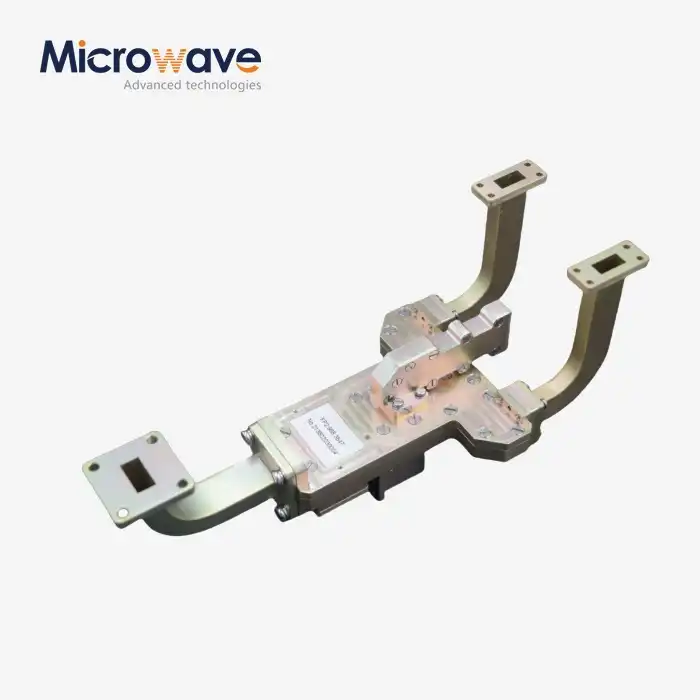
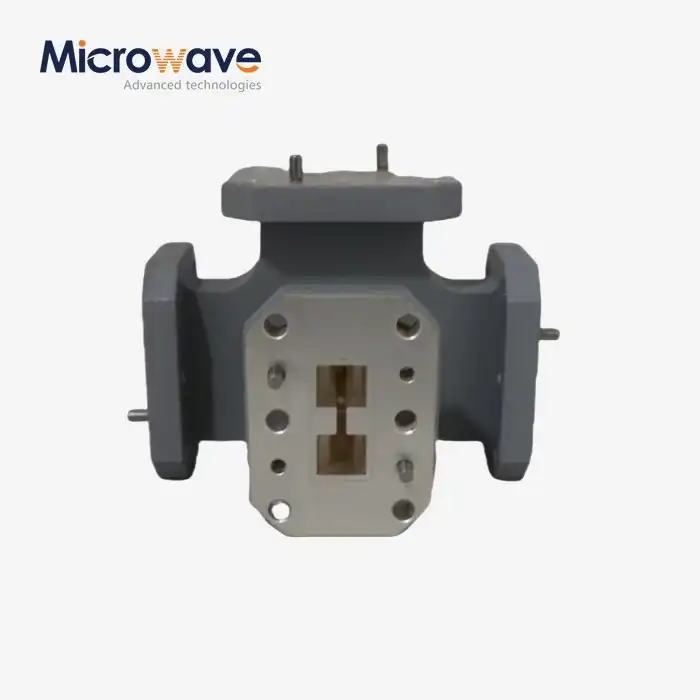
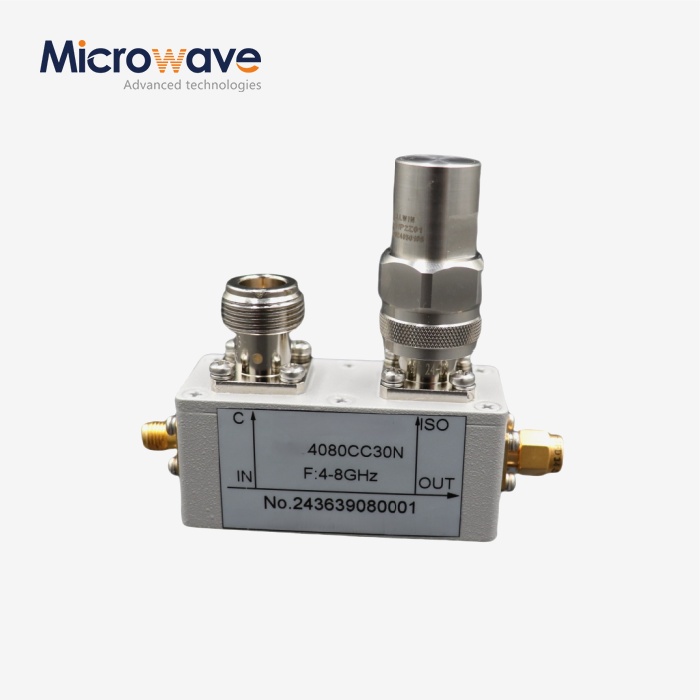
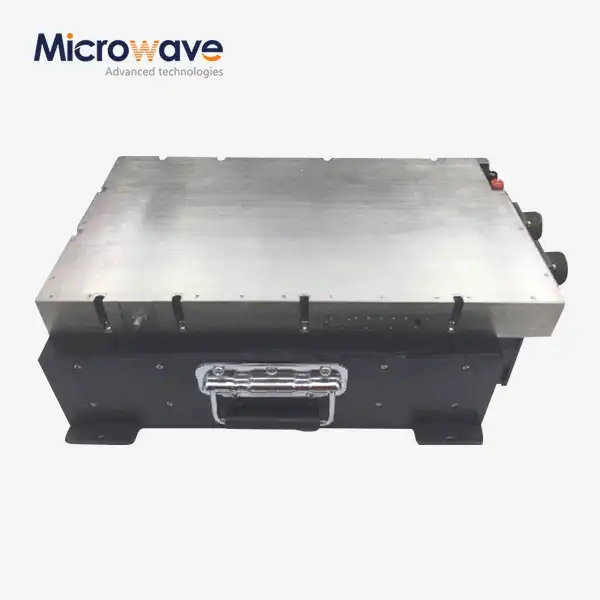
High-power waveguide isolators are necessary safety barriers in modern RF systems. They stop catastrophic equipment failure by collecting reflected energy that would have hurt sensitive emitters otherwise. These non-reciprocal devices, which are made up of carefully designed ferrite cores and permanent magnets inside waveguide housings, make sure that signals only flow in one direction and turn reverse power into heat that can be controlled. In mission-critical settings like radar sites, satellite ground stations, and defence communication networks, their ability to keep signals intact at kilowatt to megawatt power levels is a direct factor in determining system efficiency, operational safety, and the long-term dependability of the equipment.
Understanding High-Power Waveguide Isolators
The waveguide isolator is an inactive but complex part that is at the heart of current RF equipment. This device, unlike its coaxial peers, deals with problems that only happen in high-power settings, where even small reflections can cause failures that spread.
What Makes a Waveguide Isolator "High-Power"?
The difference is based on how well it can handle heat. Standard isolators can handle watts, while high-power versions can handle kilowatts or more. Permanent magnetic fields push ferrite materials in a way that makes non-reciprocal transfer possible. However, the reverse power that is received makes a lot of heat. For passive air cooling, devices that deal with small reflections use finned heat sinks. For active liquid cooling loops that circulate water or glycol mixes, multi-kilowatt systems are needed. It's very important to keep ferrite temperatures below the Curie point, which is where magnetic qualities start to lose their strength. When procurement teams look at specs, they need to pay close attention to both the reverse power levels and the insertion loss numbers. This is because the heat dissipation capacity has a direct effect on the safety gaps of the system.
Structural Design and Frequency Coverage
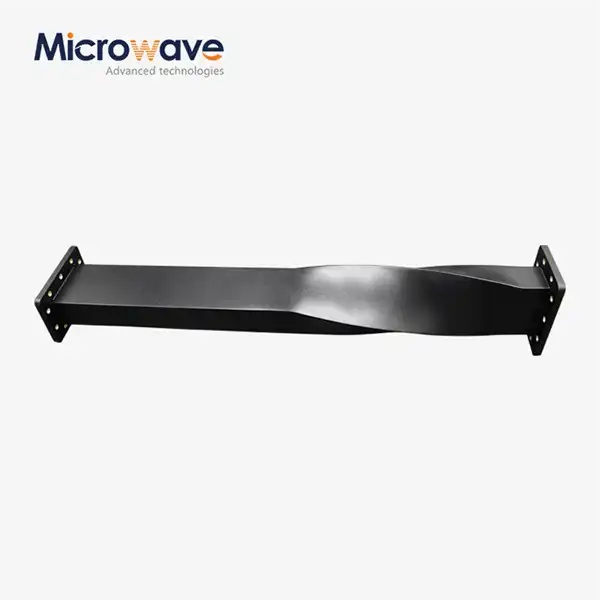
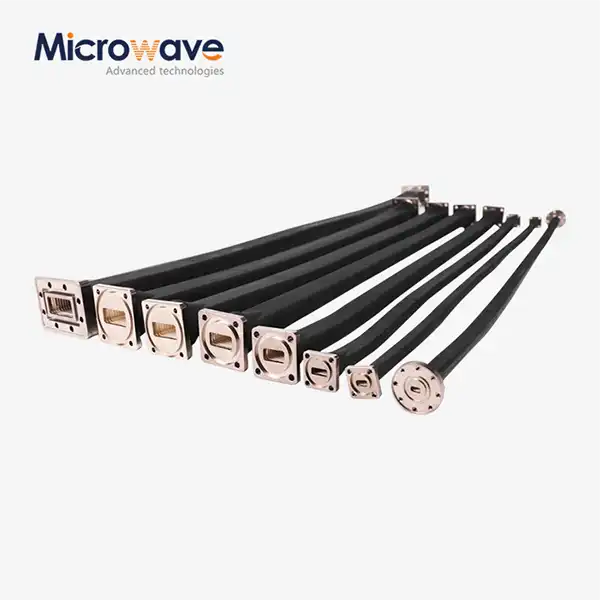
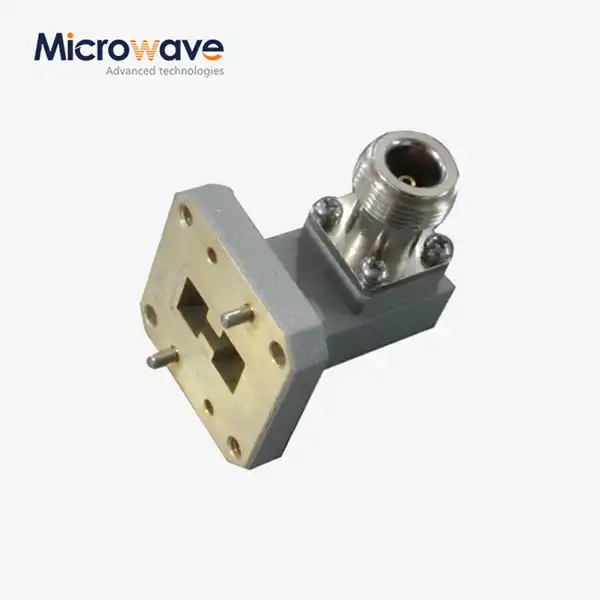
Because they are made of waveguides, they can handle more power than coaxial lines. With rectangular or circle cross-sections, there are no middle wires, so there are fewer dielectric losses and risks of voltage breakdown. We can make things in the L-band to the Ka-band (1-40 GHz), and we can also make unique designs that go up to 110 GHz for certain uses. The actual dimensions get bigger as the frequency goes up. Lower bands need bigger waveguides, which makes integration harder on platforms with limited room, like aeroplanes or small ground stations. The choice of material must strike a balance between electrical performance and mechanical sturdiness. Commercial systems are mostly made of aluminium, while military requirements often call for corrosion-resistant metals for use in harsh environments like the ocean or the desert.
Critical Performance Parameters
How well forward transmission works is shown by insertion loss. It's generally between 0.1 and 0.5 dB in good isolators. If you put 10 kW of power into a device and lose 0.2 dB, that's about 450 watts of heat inside the device. This is a lot of heat, so you need good thermal engineering. Isolation is used to measure reverse signal reduction. For gadgets that are meant to protect people, 20 to 30 dB is normal. VSWR, which stands for Voltage Standing Wave Ratio, tells you how well the resistance fits. If the value is less than 1.2:1, the part won't communicate with other parts of the system very much. Temperature factors show how stable behavior is over a wide range of temperatures. This is very important for systems that need to work in hot and cold places, like radar sites in the Arctic or satellite stations on the equator.
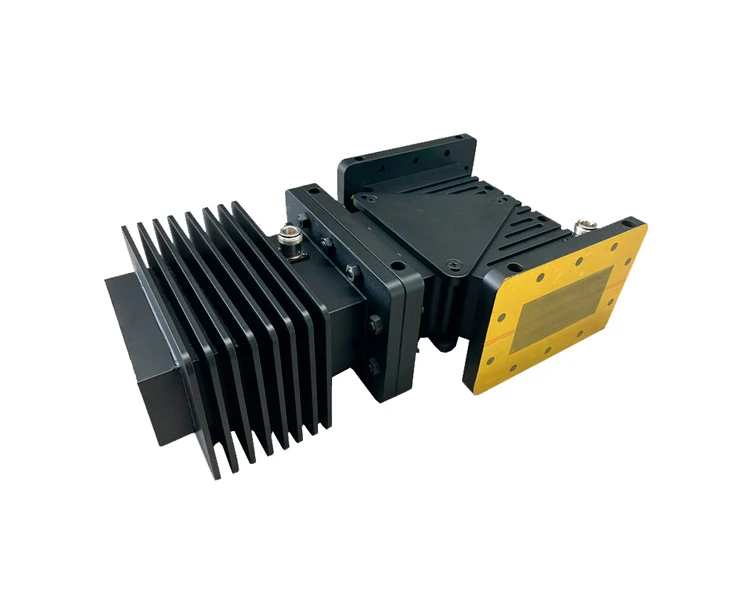
Why Are High-Power Waveguide Isolators Essential in RF Systems?
The question isn't whether to include isolators or not, but how to explain why they aren't. When high-power RF systems don't have enough defense, physics takes a cruel turn for the worse.
Protecting Transmitter Infrastructure
In defense-grade specs, magnetrons, klystrons, traveling wave tubes, and high-power waveguide isolators often cost more than $50,000 per unit, which is a lot of money. These vacuum tube amplifiers are very sensitive to power that is reflected because of antenna mismatches, radome icing, or conditions in the atmosphere that affect the ducts. Without separation, reflected energy makes standing waves that raise peak voltages above the limits of shielding. This can cause arcing, cathode poisoning, or catastrophic failure. Even though solid-state power amps are more durable, they still have shorter life spans and less efficiency when they work with loads that aren't matched. The isolator acts as a financial cushion, soaking up short-term reflections that would otherwise force parts to be replaced too soon.
Maintaining Signal Integrity in Mission-Critical Applications
Radar systems that can find planes from 200 miles away can't handle phase shift or amplitude ripple. When signals are reflected and then sent again, they cause frequency pulling, which means that the oscillator's output value changes from what it was supposed to be, which messes up target tracking methods. Ground stations for satellites that manage multi-gigabit data links need perfect spectral purity to keep in touch with spaceships going 17,000 miles per hour without any problems. When telecommunication backup networks go through distant areas, they need to send power consistently, even when the weather changes and antenna resistance changes. Isolators keep basic performance the same even if downstream load changes. This lets buying teams confidently describe system capabilities instead of worrying about the worst-case reflected situations.
Operational Cost Reduction Through Prevention
When business telecom networks go down without warning, it costs a lot of money every minute in lost income and service level agreement fines. Military radar breakdowns during important actions have effects that go beyond money. The small cost of the isolator up front—usually 3–8% of the overall value of the transmitter—brings about uneven benefits by avoiding failures that would have cost 10–100 times as much in emergency fixes, faster shipping, and lost work time. Maintenance planning changes reactive crisis management to planned checks. This way, logistics teams can make the best use of their extra parts inventory and expert placement without having to scramble for 24-hour vendor support.
How to Choose the Best High-Power Waveguide Isolator for Your Needs?
Specification sheets present quantitative data, but practical selection demands contextual understanding of operational realities and supply chain dynamics.
Matching Power Handling to Application Requirements
Peak power ratings differ fundamentally from average power specifications. Pulsed radar systems may transmit 100 kW peaks at 10% duty cycles, averaging 10 kW—but the isolator must survive both thermal load and instantaneous voltage stress. Continuous-wave satellite uplinks at 5 kW present different design challenges, prioritising sustained heat dissipation over transient voltage withstand. Procurement professionals should request both CW (continuous wave) and peak power ratings, along with duty cycle derating curves. For custom applications, sharing detailed operational profiles—pulse width, repetition rate, and environmental temperatures—enables manufacturers to engineer solutions matching real-world conditions rather than generic catalog specifications.
Frequency Band Optimization
Broadband isolators covering full waveguide bands (e.g., X-band 8-12 GHz) offer installation flexibility but sacrifice peak performance compared to narrowband designs optimized for specific frequencies. A satellite ground station operating exclusively at 11.7 GHz benefits from a narrowband isolator exhibiting 0.15 dB insertion loss versus 0.35 dB for broadband equivalents—translating to 150W reduced thermal load at 5 kW transmit power. System integrators balancing multi-mission flexibility against efficiency should evaluate whether frequency-agile operation justifies the performance penalty, particularly in thermally constrained installations where every watt of dissipation impacts cooling system sizing.
Environmental Durability and Compliance
Military and aerospace applications impose qualification requirements beyond commercial standards. MIL-STD-810 testing validates performance through shock, vibration, humidity, salt fog, and temperature cycling, simulating decades of field exposure. Space-based systems demand vacuum compatibility, addressing outgassing and multipactor breakdown risks absent in terrestrial environments. Procurement specifications should explicitly reference applicable standards: DO-160 for avionic systems, MIL-STD-461 for electromagnetic compatibility, or RTCA guidelines for UAV platforms. ISO 9001 certification provides baseline quality assurance, while AS9100 aerospace extensions indicate suppliers' familiarity with industry-specific documentation and traceability requirements essential for defense contractors.
Optimizing Usage and Maintenance of High-Power Waveguide Isolators
Installation quality and lifecycle management of high-power waveguide isolators separate theoretical performance from realized field reliability. Engineering teams must translate datasheet specifications into operational procedures.
Installation Best Practices
Waveguide flange connections demand torque specifications, preventing both under-tightening (causing leakage and arcing) and over-tightening (warping flanges and degrading electrical contact). Alignment tolerances measured in thousandths of inches affect insertion loss and VSWR—precision shims or adjustable mounting brackets prove worthwhile investments. Environmental sealing protects against moisture infiltration in outdoor installations, where humidity condensing inside waveguides creates corrosion and dielectric breakdown paths. Cooling system integration requires attention to flow rates, fluid temperatures, and pressure drop calculations, ensuring adequate thermal transfer without cavitation or pump overload.
Preventive Maintenance Protocols
Quarterly inspections should verify cooling system function, checking for blockages, leaks, or degraded fluid chemistry. Infrared thermal imaging detects hotspots indicating partial failures before complete breakdown occurs. Network analysers measure insertion loss and isolation degradation over time, establishing trending data that predicts remaining service life. Manufacturers often provide calibration services, restoring devices to original specifications and extending operational lifespans beyond initial projections. Documentation practices linking serial numbers to installation dates, environmental exposure histories, and maintenance actions create institutional knowledge preventing premature replacements while catching aging components before field failures.
Troubleshooting Common Issues
Isolation degradation typically stems from demagnetisation of permanent magnets due to excessive temperatures or mechanical shock. Replacing magnetic assemblies restores performance at 30-50% of new unit costs. Increased insertion loss may indicate ferrite aging or contamination within the waveguide—sometimes resolved through precision cleaning procedures, other times requiring complete rebuilds. Arcing damage from peak power excursions manifests as pitting on interior surfaces, necessitating metallurgical inspection and possible waveguide section replacement. Understanding failure modes helps procurement teams negotiate repair-versus-replace decisions, balancing immediate costs against long-term reliability.

Procurement Guide for High-Power Waveguide Isolators
Navigating supplier ecosystems and market dynamics transforms technical requirements into delivered hardware meeting schedule and budget constraints.
Established distributors offer convenience and short lead times for catalog products, ideal for rapid prototyping or emergency replacements. Direct OEM engagement suits high-volume production or specialised requirements—manufacturers like ADM provide engineering support translating application needs into custom specifications. Lead times vary from 6-8 weeks for standard configurations to 16-20 weeks for complex custom designs involving new tooling or exotic materials. Procurement strategies should balance inventory holding costs against expedite premiums, particularly for systems where isolator failure halts entire installations.
Pricing exhibits volume sensitivity: quantities above 10 units often unlock 15-25% discounts, while 100+ piece commitments justify dedicated production runs with optimised unit economics. Annual blanket orders with scheduled releases provide budget predictability while securing supplier capacity during peak demand periods. Technical consultation during the quotation phase prevents costly re-designs—experienced suppliers identify potential integration challenges or suggest alternative approaches, reducing system-level costs even if component prices increase slightly.
Building relationships with responsive suppliers creates competitive advantages beyond price and high-power waveguide isolators. Rapid-turnaround prototype services compress development cycles, getting products to market months earlier. Technical support troubleshooting field issues prevents expensive trial-and-error experimentation. Suppliers maintaining robust quality systems and traceability documentation streamline customer audits and regulatory compliance efforts, particularly valuable for defense contractors navigating ITAR restrictions or aerospace firms managing AS9100 supply chain requirements.
Conclusion
High-power waveguide isolators represent essential rather than optional components in RF systems where reliability, performance, and operational continuity carry serious consequences. Their ability to protect expensive transmitters, maintain signal fidelity, and reduce lifecycle costs justifies careful selection, proper installation, and proactive maintenance. Procurement professionals equipped with technical knowledge of power handling, frequency optimization, and environmental requirements can navigate supplier markets effectively, balancing immediate budget pressures against long-term value creation. The modest investment in quality isolation technology prevents catastrophic failures while enabling system performance specifications that would otherwise remain theoretical rather than operational.
FAQ
1. What differentiates isolators from circulators in practical applications?
Circulators feature three ports, routing signals sequentially between connections. Isolators terminate the third port with matched high-power loads absorbing reflected energy as heat. This structural difference makes isolators specialized protection devices rather than signal routing components. Procurement teams occasionally source circulators and add terminations, but integrated isolator designs optimize thermal paths and mechanical packaging for superior reliability.
2. How do cooling requirements scale with power levels?
Low-power units under 500W reverse handling use finned heat sinks relying on natural or forced air convection. Multi-kilowatt systems require liquid cooling—typically water or glycol mixtures circulating through integrated passages. Coolant flow rates, inlet temperatures, and pressure drops must align with system-level thermal management architectures. Manufacturers provide thermal interface specifications enabling mechanical engineers to integrate isolators into broader cooling infrastructures.
3. Can isolators operate in vacuum environments for space applications?
Standard commercial isolators fail in vacuum due to multipactor breakdown and outgassing contamination. Space-qualified variants use specialized dielectric materials, venting designs preventing gas pockets, and surface treatments suppressing secondary electron emission. These modifications carry cost premiums but prove essential for satellite payloads or vacuum chamber test equipment. Procurement specifications must explicitly call out vacuum compatibility rather than assuming terrestrial designs adapt easily.
Partner With ADM for Reliable High-Power Waveguide Isolator Solutions
Advanced Microwave Technologies Co., Ltd brings over two decades of microwave engineering expertise to your most demanding RF protection challenges. Our high power waveguide isolators, manufactured under ISO 9001:2015 quality systems and tested in our 110 GHz-capable laboratories, deliver the thermal management, frequency precision, and mechanical durability essential for defense radar, satellite ground stations, and telecommunications infrastructure. Whether you require catalog solutions with rapid delivery or custom-engineered isolators tailored to unique specifications, our technical team collaborates closely throughout the procurement process—from initial requirement analysis through prototype validation and volume production. As an experienced high power waveguide isolators manufacturer, we maintain global supply chain capabilities ensuring on-time delivery with full traceability documentation meeting aerospace and defence standards. Contact craig@admicrowave.com today to discuss your specific application requirements, request engineering consultation, or obtain detailed quotations backed by responsive technical support that transforms specifications into operational hardware.
References
1. Helszajn, J. (2018). Ferrite Phase Shifters and Control Devices. IET Electromagnetic Waves Series, Volume 63.
2. Rizzi, P.A. (2016). Microwave Engineering: Passive Circuits. Prentice Hall Signal Processing Series.
3. Baden Fuller, A.J. (2017). Ferrites at Microwave Frequencies. Dover Publications on Engineering.
4. Collin, R.E. (2015). Foundations for Microwave Engineering, 2nd Edition. IEEE Press Series on Electromagnetic Wave Theory.
5. Matthaei, G.L., Young, L., Jones, E.M.T. (2019). Microwave Filters, Impedance-Matching Networks, and Coupling Structures. Artech House Microwave Library.
6. Montgomery, C.G., Dicke, R.H., Purcell, E.M. (2020). Principles of Microwave Circuits. MIT Radiation Laboratory Series, Volume 8.