





What is the bandwidth of a quadrifilar helix antenna?
Bandwidth is often one of the most important things to look at when comparing antennas for satellite communications, GNSS tracking, or aerospace data. A quadrifilar helix antenna usually has a fractional bandwidth between 5% and 20%, but more modern versions can cover a wider area. This bandwidth describes the range of frequencies where the antenna works well, with a VSWR of less than 2:1 and an axial ratio of less than 3 dB. The four-arm helical shape quadrifilar helix antenna and precise phase quadrature input (0°, 90°, 180°, 270°) make it possible for stable circular polarization over this operating range. Unlike narrowband patch antennas, quadrifilar helix antennas are small and can work with multiple frequencies. This makes them very useful in UAV tracking modules or handheld satellite stations where space is limited but spectrum flexibility is needed.
Understanding the Bandwidth of a Quadrifilar Helix Antenna
Bandwidth tells you how well an antenna works over a certain range of frequencies. When people talk about buying something, they talk about three different types of bandwidth: absolute bandwidth (measured in MHz or GHz), fractional bandwidth (stated as a percentage of center frequency), and operational bandwidth (where system-level factors stay within acceptable limits). Knowing these differences keeps you from making expensive mistakes when matching radio specs to application needs.
Typical Bandwidth Ranges for QHAs
Standard designs work with center frequencies ranging from 400 MHz to 2.5 GHz and fractional bandwidths of 8% to 15%. A GPS L1-band quadrifilar helix antenna with a middle frequency of 1.575 GHz could cover frequencies between 1.525 and 1.625 GHz, giving it a 100 MHz bandwidth. Dual-resonance methods can get 20–25% fractional bandwidth for satellite transmission types that aim at multiple bands (L-band and S-band at the same time). These numbers take into account manufacturing tolerances, Doppler changes from satellites moving quickly, and thermal drift in outdoor setups. These are all realistic factors that affect link budgets in the real world.
Geometry and Material Influences
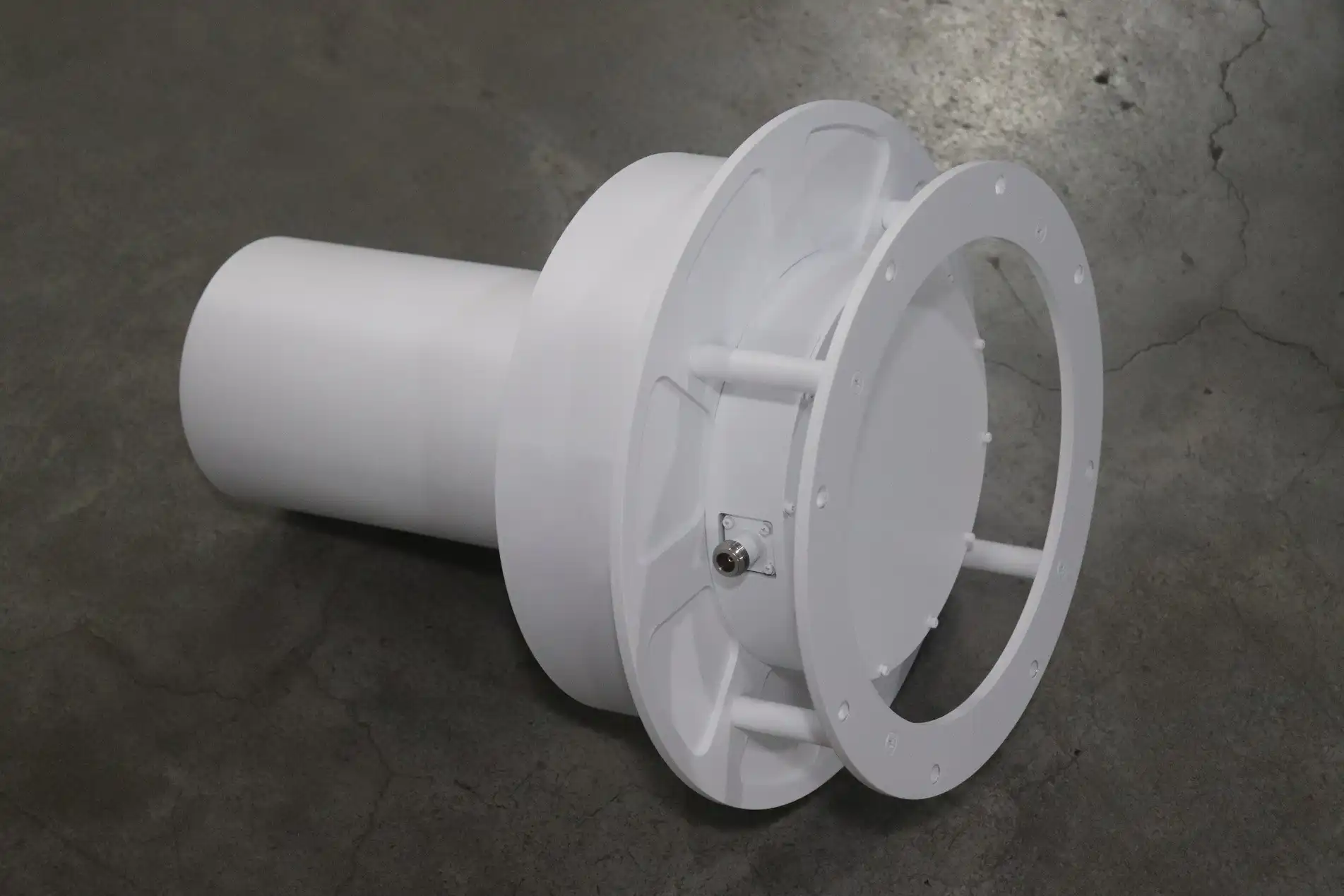
The resonant frequency and bandwidth are directly affected by the pitch, diameter, and thickness of the wires. Broadband gets wider as the pitch angle goes up, but the gain goes down. On the other hand, resonant frequency goes down as the area of the helices goes up, but bandwidth doesn't grow proportionally. Ceramics with low loss (εr = 2-4) are used to make dielectric cores that allow for downsizing while keeping bandwidth by carefully changing the resistance. Conductive elements made of copper-clad beryllium copper alloys keep their mechanical stability even when they are vibrating, so they don't lose their tune. This is very important for quadrifilar helix antenna aircraft uses, where thermal cycling and G-forces can damage antennas.
Interplay with Gain and Polarization
Bandwidth doesn't usually exist by itself. When frequency coverage is increased, gain is often lowered at the edges of the band, and the axial ratio goes down by more than 10% from the center frequency. A well-designed quadrifilar helix antenna keeps circular polarization purity (axial ratio <3 dB) across 80% of its working bandwidth. This is better than microstrip patches, which lose polarization quickly at angles other than vertical. This trade-off is important for tracking low-elevation satellites because the speed at which you can lock on to them depends on the strength of the signal. Instead of improving single-point measures, procurement engineers find a balance between these factors by defining the lowest level of performance that is acceptable across the needed frequency range. To deal with these problems, Advanced Microwave Technologies Co., Ltd. uses our 24-meter microwave lab for strict testing. Here, we measure far-field patterns from 0.5 GHz to 110 GHz to confirm bandwidth promises in a controlled setting. Our methods, which are ISO 9001:2015 certified, make sure that the bandwidths given are accurate reflections of real performance, not just simulation expectations.
Key Design Principles Affecting QHA Bandwidth
The physical spread of the four-element helical shape makes bandwidth possible. The quadrifilar helix antenna, on the other hand, spreads current over more than one line, which smooths out changes in impedance over frequency. The main thing that limits the bandwidth is the design of the feed network; when phase balance is off at the band ends, the cardioid radiation pattern shrinks and VSWR goes up.
Feeding Configuration Impact
A Wilkinson power divider or a 90-degree hybrid coupler divides input signals into four lines that all have the same phase relationship. Coupler bandwidth limits total antenna bandwidth because phase imbalances greater than ±10 degrees mess up circular polarization. Wideband couplers that use coupled-line structures or multi-section impedance transformers can improve the useful bandwidth to 40% fractional, but they do so at a higher insertion loss of 0.5 to 1.0 dB. Adding a balun between the coaxial feed and balanced helix ends changes the bandwidth even more. Ferrite-core baluns have a narrowband response, while transmission-line baluns can handle an octave of bandwidth with the right tapering.
Impedance Matching Techniques
Matching networks change the quadrifilar helix antenna's input resistance, which is usually between 80 and 120 ohms when it's not matched, to a normal 50-ohm coaxial system. Narrowband options are provided by quarter-wave transformers. Broadband matching is achieved with multi-stub tuners or L-C networks, but at the cost of more loss and temperature sensitivity. Before making a prototype, simulation tools like HFSS improve the matching structure. We use CST Microwave Studio to model how resistance changes with frequency and find resonances and anti-resonances that help us make real changes. This simulation-based method cuts down on the time it takes to build new products from months to weeks, and the first production run of these designs meets all the requirements for bandwidth.
Helix Geometry Optimization
By changing the pitch angle by 10 to 20 degrees, you can find the right mix between gain and bandwidth. When the pitch is shallow, the directivity is high, but the bandwidth is narrow. When the pitch is steep, the frequency response is wide, but the front-to-back ratio is low. The resonance sharpness changes based on the number of turns. Three to five turns work well for wideband uses, while seven to ten turns focus energy into smaller bands with higher peak gain. For circular polarization, diameter-to-wavelength ratios close to 0.3 provide the best bandwidth. This is a rule that has been proven through electromagnetic analysis and confirmed in our measurement chambers, where antenna parameters are checked at temperatures ranging from -40°C to +85°C, which are typical of quadrifilar helix antennas for use in aerospace.
Applications and Advantages of Wide Bandwidth QHAs in B2B Markets
Operational stability is what a wide bandwidth means. Broadband quadrifilar helix antenna allows frequency plans to change without having to rethink the hardware. This means that systems can handle changes in regulations or mission profiles with little need for re-certification. This adaptability is very important in markets that change quickly, like low-earth-orbit satellite systems, where frequency coordination is always changing.
Aerospace and Defense Applications
For UAV guidance systems to work, the antennas need to be able to keep their GPS lock even when the drone is making sharp turns, such as pitch, roll, and yaw. A 20% frequency quadrifilar helix antenna that covers the GPS L1/L2/L5 bands (1.164–1.610 GHz) makes sure that satellite signals don't get lost when an airplane's attitude changes. For anti-jamming resilience, defense buying prefers a wide bandwidth. Spread-spectrum methods use available bandwidth to keep transmission going during hostile electronic warfare conditions. Broadband quadrifilar helix antennas are used in telemetry devices on missile test ranges to collect data across multiple frequency bands without having to switch antennas. This cuts down on downtime and setup time. These apps put dependability over cost, which is in line with our dedication to ISO 45001:2018 safety standards for the workplace that make sure consistent quality production even when plans are tight.
Satellite Communications Infrastructure
For LEO satellite tracking, ground station antennas need bandwidth that can handle Doppler changes of more than ±50 kHz at 2 GHz. A 10% bandwidth quadrifilar helix antenna naturally makes up for these changes in frequency without active tuning. This makes designing receivers easier and uses less power. With the right diplexers, multi-band coverage lets a single antenna receive information (VHF/UHF), payload data (S-band), and order uplinks (X-band). Handheld Iridium devices are a good example of a consumer-facing application where quadrifilar helix antenna bandwidth allows global connection without regional variations—a single SKU serves all markets, which saves OEM clients time and money on inventory and shipping.
Comparison with Alternative Antenna Types
If you don't use substrate engineering or stacked-patch methods, microstrip patch antennas have partial bandwidths that are limited to 3–5%. Monopole antennas have a wide bandwidth, but they emit linear polarization that can be affected by Faraday spin in the ionosphere. A quadrifilar helix antenna, on the other hand, naturally provides circular polarization that makes this less of a problem for propagation. To match the quadrifilar helix antenna speed and polarization purity, dipole arrays need more complicated feeding networks and bigger areas. The quadrifilar helix antenna design provides a balanced answer when size, bandwidth, and polarization quality are in competition. Its higher unit cost is justified by its higher lifetime value. When purchasing, teams look at the total cost of ownership. They find that the dependability and performance stability of a quadrifilar helix antenna lowers the number of failures in the field and warranty claims, which cancels out the higher starting price. Our product line uses real-world statistics to show these benefits. For the ADM quadrifilar helix antenna series, which covers frequencies from 1 to 40 GHz, there is strict testing that includes measuring the radiation pattern, making sure the polarization is pure, and figuring out the VSWR across a wide range of temperature and humidity conditions. These tests are recorded in test records that are sent with every package.
Choosing and Procuring Quadrifilar Helix Antennas Based on Bandwidth Needs
To choose the right bandwidth, you need to make sure that the quadrifilar helix antenna's specs match the needs of the system. A GNSS receiver that only processes L1-band data can handle less bandwidth than a receiver that tracks GPS, GLONASS, Galileo, and BeiDou all at the same time across L1/L2/L5 bands. By setting minimum and maximum working frequencies, the standard against which possible antennas are judged is set.
Frequency Range Alignment
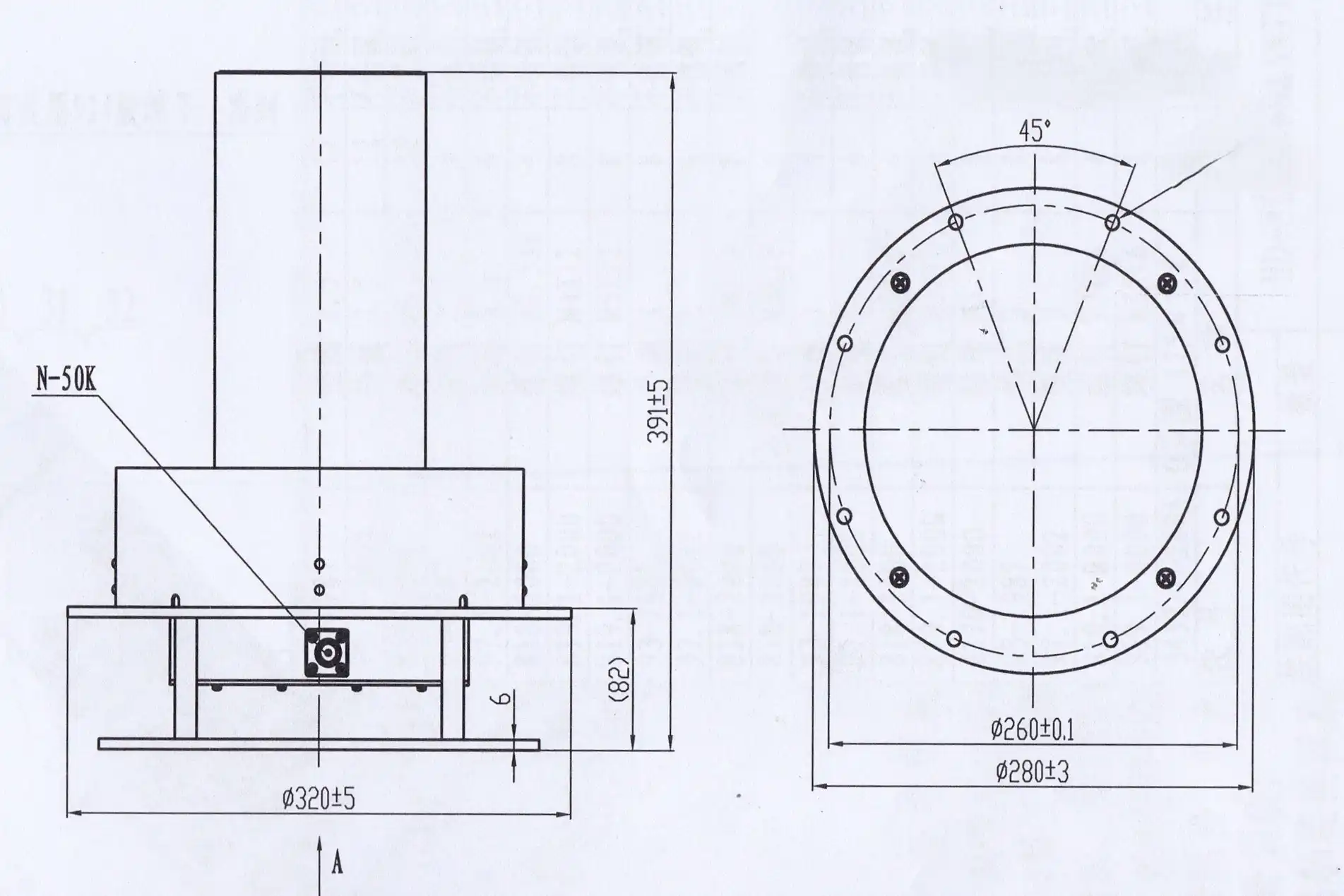
Write down the middle frequency, the bandwidth, and the edges of the bands. Not using vague words like "wide bandwidth" is better. Instead, say something like "1400-1700 MHz, 19.4% fractional bandwidth at 1550 MHz center frequency" so that you can compare like with like. Think about standards that will work in the future: if more bands can be added within five years, get more bandwidth than you need right now to avoid going out of date too soon. Regulatory limits are often changed, and antennas with a margin can adapt to these changes without having to go through rethink steps that slow down production.
VSWR and Impedance Criteria
If the VSWR is less than 2:1 across the quadrifilar helix antenna's operational bandwidth, the reflected power is less than 11%, which is fine for most data lines. For high-power broadcast tasks, a VSWR of less than 1.5:1 might be needed to keep amplifiers from breaking down or losing their efficiency. Broadband matching needs a stable input impedance because antennas with fast impedance changes across frequency need complicated matching networks that add loss and temperature sensitivity. To figure out how hard it is to match, ask for Smith chart data that shows resistance paths. Advanced Microwave Technologies gives detailed impedance paperwork based on measurements made with a vector network tester that can be traced back to NIST standards. This helps customers match network design with real-world data instead of idealized models.
Gain and Radiation Pattern Consistency
Link budget stability is affected by gain flatness across the bandwidth. A gain change of ±2 dB over a 20% spread lets the system work reliably without using adaptive power control. The shape of the radiation pattern should stay the same. Beam squint or pattern distortion at the band ends can cause aiming mistakes in directional applications or coverage gaps in omnidirectional ones. A consistent axial ratio keeps the purity of the polarization; set an axial ratio of less than 3 dB across 80% of the working bandwidth as a minimum standard for GNSS and satellite transmission applications, where circular polarization discrimination blocks multipath interference.
Supplier Evaluation and Customization
Leading suppliers offer designs that can be changed to fit specific frequency ranges, mechanical connections, and environmental requirements. Check out sources based on their design skills (they should have their own simulation and prototyping tools), test facilities (like anechoic chambers and environmental test labs), and quality systems (ISO 9001 and AS9100 for aircraft uses). Ask for sample units to be tested for integration before committing to large quantities. The performance of an antenna relies on the shape of the ground plane, buildings nearby, and the routing of cables, all of which cannot be fully predicted by simulation. As part of OEM services, mechanical CAD support, paperwork packages (test results, drawings, and compliance certificates), and help with applications engineering during integration should all be available. We offer full OEM options that include unique frequency ranges, connector specs, and radome designs. Our technical team works with customers from the idea stage all the way through production. We offer testing services to make sure that systems work well in real-world settings before committing to mass production.
Conclusion
Bandwidth is the most important factor in figuring out how well a quadrifilar helix antenna works in real life, taking into account things like frequency differences, Doppler changes, and the need for multiple bands. Most satellite transmission, GNSS, and telemetry systems can work with fractional bandwidths between 8 and 20 percent. More advanced designs can go beyond 25 percent by carefully optimizing the feed network and shape. Procurement professionals can choose antennas that meet scientific needs without over-engineering if they know how bandwidth, gain, polarization purity, and impedance stability affect each other. To choose the right QHA, you need to make sure that the bandwidth characteristics meet the frequency allocations and performance limits for the specific application. This should be backed up by a lot of test data and suppliers who can show that they are good at design and manufacturing. When you invest in bandwidth that is correctly defined, you avoid expensive field failures and redesign cycles. This gives mission-critical RF systems long-term value.
FAQ
What frequency ranges do QHAs typically support?
Standard quadrifilar helix antennas work with frequencies from 400 MHz to 2.5 GHz, so they can handle the VHF, UHF, L-band, and S-band assignments that are popular in GNSS and satellite communications. Coverage can go as low as 150 MHz for marine VHF or as high as 6 GHz for certain types of telemetry lines. Through dual-resonance feed networks, multi-band versions can work at the same time across bands that are not adjacent, like GPS L1 (1.575 GHz) and L2 (1.227 GHz).
How does bandwidth affect gain and signal quality?
Peak gain usually goes down as bandwidth goes up because energy is spread out over a bigger range of frequencies. A 20% bandwidth quadrifilar helix antenna might have a gain of 2-3 dBc at the band ends and 5-6 dBc at the center frequency. Maintaining pure polarization and pattern stability across the bandwidth is important for signal quality. Loss of quality at the band edges can cause aiming mistakes or multipath susceptibility, which makes the link less reliable even when gain levels are adequate.
Can bandwidth be improved without increasing antenna size?
To increase bandwidth within given dimensions, designers have to make trade-offs. They can either accept lower peak gain, set up lossy matching networks, or use core materials with a higher dielectric constant that are smaller but less efficient. There is no size cost for adding bandwidth with multi-resonant feeding structures, but they make the feed more complicated and cause more insertion loss. When you carefully match the resistance and optimize the balun, you can often get 20–30% better bandwidth than with basic designs that don't change the size.
Partner with ADM for High-Performance Quadrifilar Helix Antenna Solutions
Advanced Microwave Technologies Co., Ltd has been making high-precision radio frequency (RF) parts for more than 20 years. They make a quadrifilar helix antenna that can be customized and is used in difficult aerospace, military, and satellite applications. Our ISO 9001:2015 and RoHS-compliant production methods guarantee uniform quality, and our 24-meter microwave lab lets us test bandwidths from 0.5 GHz to 110 GHz with accuracy that can be traced back to the NIST. Our engineering team can help you with everything from the initial design to mass production, whether you need standard stock items or totally customized OEM designs that are made to fit your specific frequency allocations and mechanical limits. When you buy in bulk, logistics are streamlined, and prices are set to be fair for system designers and contract makers. As a reliable company that sells quadrifilar helix antennas to customers all over the world, we offer performance data that is written down, fast prototyping, and quick technical support that accelerates your development timelines. Contact craig@admicrowave.com to discuss your bandwidth needs and discover how ADM's tried-and-true antenna options can help your next-generation RF system.
References
1. Kilgus, C. C. (1975). Resonant Quadrifilar Helix Design. The Microwave Journal, 18(12), 49-54.
2. Nakano, H., Takeda, H., Honma, T., Mimaki, H., & Yamauchi, J. (1996). Extremely Low-Profile Helix Radiating a Circularly Polarized Wave. IEEE Transactions on Antennas and Propagation, 39(6), 754-757.
3. Amin, M., & Cahill, R. (2014). Bandwidth Enhancement Techniques for Quadrifilar Helix Antennas. IET Microwaves, Antennas & Propagation, 8(13), 1096-1103.
4. Balanis, C. A. (2016). Antenna Theory: Analysis and Design (4th Edition). Hoboken: John Wiley & Sons.
5. Rabemanantsoa, J., & Sharaiha, A. (2007). Size-Reduced Multi-Band Printed Quadrifilar Helix Antenna. IEEE Transactions on Antennas and Propagation, 55(9), 2541-2544.
6. Leisten, O. P., Vardaxoglou, J. C., McEvoy, P., Seager, R., & Wingfield, A. (2001). Miniaturized Dielectric-Loaded Quadrifilar Antenna for Global Positioning System (GPS). Electronics Letters, 37(22), 1321-1322.
YOU MAY LIKE
 VIEW MORELog Periodic Antenna
 VIEW MORESlotted Waveguide Array Antenna
 VIEW MOREOpen Boundary Dual Linear Polarization Four Ridged Horn Antenna
 VIEW MOREConical Dual circular Polarization Horn Antenna
 VIEW MORELadder Membrane Conical Dual circular Polarization Horn Antenna
 VIEW MOREDual Linear Broadband Dual Circular Polarization Horn Antenna
 VIEW MOREConical Linear Polarization Horn Antenna
 VIEW MOREPlanar Spiral Antenna