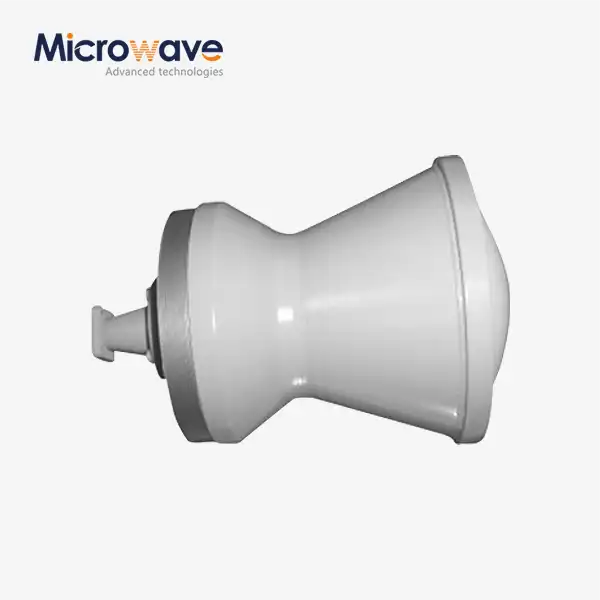





VNA Reference Plane Alignment for Directional Coupler Calibration
Directional coupler calibration checks and fixes the performance of a directional coupler, which is an inactive RF part that picks up signal power moving in one direction along a transmission line. The three most important parameters are coupling factor (the ratio of sampled power to input power), insertion loss (the signal's attenuation along the main line), and directivity (the ability to tell the difference between waves that are moving forward and waves that are reflecting). People trust these devices for VSWR tracking and ALC loops in radar and satellite systems because they have high directivity, usually above 40 dB for waveguide types.
VNA Calibration Methods and Reference Plane Selection
Why the VNA Reference Plane Matters
The electrical line that a Vector Network Analyzer (VNA) uses to start measuring is called the reference plane. If this plane is in the wrong place physically, like in the middle of the cable instead of at the coupler port, each S-parameter reading has a phase shift equal to the electrical length of the difference. In real life, a 1 mm shift at 10 GHz causes a phase error of about 12°, which is enough to make directivity readings useless.
Manual vs. Automated Calibration
An engineer has to physically connect each SOLT (Short-Open-Load-Thru) or TRL (Thru-Reflect-Line) standard one at a time and then move the reference plane by using port extension or time-domain gating for manual calibration. Electronic calibration units (e-cal) that switch standards internally under VNA control are used for automated calibration. Automated methods are better for high-volume production environments because they cut setup time by about 60% and keep connectors from wearing out.
In-House vs. Outsourced Calibration
Companies that calibrate a lot, like defense OEMs and satellite ground station builders, usually make the money to buy a full VNA and calibration kit. A lot of the time, accredited third-party labs are cheaper for smaller R&D labs or contract makers who only need them sometimes. This is especially true when ISO 17025-traceable records are needed for audit compliance.
Step-by-Step Directional Coupler Calibration Procedure Including VNA Reference Plane Alignment
From the first link to the last data export, a structured calibration process keeps measurements accurate. Before you start measuring, make sure the temperature in the workspace stays stable between 20°C and 25°C. This is because a 5°C change can cause the cable phase to shift by several degrees at millimeter-wave frequencies.
Equipment Selection and Setup
Choose a VNA whose frequency range covers the coupler's full operating band with at least 10 dB of headroom. It should be used with a directional coupler calibration kit that is made for the type of connector (SMA, N-Type, or waveguide flange), and all the adapters should be torqued to the correct level set by the connector manufacturer (5–8 in-lb for SMA).
VNA Calibration and Reference Plane Alignment
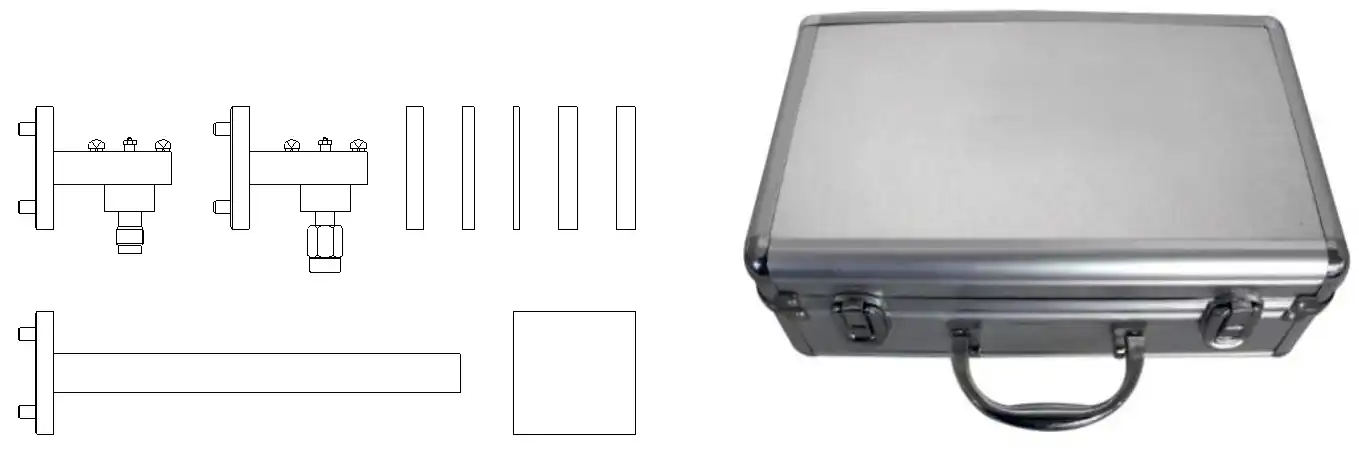
At the ends of the cables that will connect to the coupler ports, do a full two-port SOLT or TRL calibration. This changes the reference plane for electricity to the coupler's hardware ports. A TRL calibration with a waveguide Thru and a precision shim is more accurate than SOLT for waveguide couplers like broadwall or crossguide types. This is because it takes into account how the waveguide behaves as it moves across the band.
Measurement Workflow and Troubleshooting
Find the coupling factor from S31 and use S21 to find the insertion loss. Then, use S11 and S22 to find the port match. Most of the time, a loose flange connection or a small air gap at the waveguide interface is to blame for phase wobble in the coupling response. Three rounds of connecting and disconnecting should show S-parameter changes below 0.05 dB and 0.5° to confirm that the setup is stable.
Comparing Calibration Approaches and Equipment for Optimal Procurement Decisions
It is just as important to pick the right testing method as it is to pick the right connection. There are different types of operations that can be done with manual and automated methods, and the same is true for different kinds of calibration tools.
Here is a direct look at how the two main approaches compare:
- Manual SOLT/TRL calibration suits low-volume, high-precision scenarios. It gives engineers full visibility into each calibration step, which is valuable during prototype validation. The drawback is time: a full two-port SOLT at 26.5 GHz can take 20–30 minutes per setup.
- Electronic calibration (e-cal) modules from Keysight or Rohde & Schwarz reduce that time to under five minutes. These modules store characterization data internally and self-correct for temperature drift, making them well-suited to production-floor environments where throughput matters.
These trade-offs have a direct effect on the budgets and plans for buying. A Keysight PNA-X can work from DC to 110 GHz and has time-domain gating built in for reference plane changing. This makes it a great choice for testing broadband satellite parts. The low trace noise floor of Rohde & Schwarz ZNA series instruments is well known, and this is helpful when measuring directivity above 50 dB. Anritsu VectorStar works with frequencies up to 145 GHz, which means it can be used for millimeter-wave waveguide assemblies. They each solve a different measurement problem, so the right tool for the job relies on the coupler being tested's frequency range and directivity requirements.
Best Practices and Standards for Maintaining High Calibration Accuracy
Without planned maintenance, the accuracy of calibration decreases over time. The following steps make sure that data can be tracked and defended.
Applicable Standards
The standard for certified third-party services is ISO 17025, which also sets the standards for how well directional coupler calibration labs can do their jobs. MIL-STD-1309 spells out the rules for calibrating defense equipment, like the radio frequency parts used in radar and guidance systems. IEEE Std 1785 talks about waveguide sizes and tolerances that have a direct effect on the repeatability of the reference plane.
Documentation and Traceability
The VNA serial number, the calibration kit certificate number, the weather conditions, the uncertainty budget, and the raw S-parameter data files should all be written down in a report that is made after every calibration event. This chain of paperwork helps with ISO 9001 audits and meets the standards for defense purchase traceability.
Routine VNA Reference Plane Maintenance
Before each calibration session, look at the connector interfaces with a loupe. Insertion loss readings can be off by 0.2 to 0.5 dB for every nick on a center pin. Most connector manufacturers say that SMA connectors should be replaced after about 500 mating cycles. To keep the calibration standards from rusting, keep the calibration kits in their original boxes and keep the temperature under control.
Procurement Insights: How to Choose and Schedule the Right Calibration Service
The real question that procurement teams have to answer is when it makes more sense to buy testing capabilities in-house rather than hiring someone else to do it.
Cost Models and Pricing Structures
Third-party calibration labs usually offer pricing by the unit ($150 to $400 per coupler based on frequency range and number of ports), annual contract rates for customers who buy a lot, and faster service premiums. Costs that are paid for by the company itself include buying a VNA ($30,000 to $250,000, depending on frequency), recertifying the calibration kit every year, and training time for engineers.
Evaluating Calibration Providers
Look for companies that are ISO 17025 certified, that are close by so that sending sensitive waveguide parts is less risky, and that have experience with the coupler type you need, such as broadwall, crossguide, or coaxial. Before making a decision, ask for an example calibration report. The uncertainty budget part will show you how well the lab can actually measure.
When to Invest in In-House Capability
If your team calibrates more than fifty couplers a year or works on secret defense projects where parts can't leave a safe building, having an in-house VNA will pay for itself in two to three years. ADM's waveguide assemblies and coaxial components come with full test data made in our own lab, which has measurement tools up to 110 GHz. This gives procurement teams a baseline that can be checked before any more calibration is done.
Conclusion
Making sure the VNA reference plane is lined up correctly is not just a practice; it is necessary for all proper directional coupler measurements. Directional coupler calibration is important for protecting system performance and avoiding expensive field breakdowns, whether you work in R&D, military radar, or satellite uplink infrastructure. It's important to match technical needs with operational realities when picking the right calibration method, instrument, and service provider. Precision waveguide and coaxial couplers from ADM come with full factory test paperwork, which gives engineers a solid place to start with any tuning process.
FAQ
How often should a directional coupler be recalibrated?
Most defense and satellite procurement standards recommend annual recalibration for components in active systems and recalibration after any physical repair or connector replacement. High-cycle environments — such as test benches — may require recalibration every six months.
What is the difference between SOLT and TRL reference plane alignment?
SOLT places the reference plane at the calibration standard location and is connector-type specific. TRL uses transmission line standards native to the waveguide or coaxial medium, making it more accurate for dispersive waveguide systems where SOLT standards introduce impedance discontinuities.
Is in-house calibration more accurate than outsourced?
Not necessarily. Accuracy depends on equipment quality, engineer training, and environmental controls — not location. An ISO 17025-accredited external lab often delivers lower measurement uncertainty than an informal in-house setup.
Can ADM's components be calibrated using standard VNA kits?
Yes. ADM's waveguide assemblies use standard flange interfaces (UG-cover, CPR series) and coaxial assemblies use SMA or N-Type connectors, all compatible with commercially available calibration kits from Keysight, Rohde & Schwarz, and Anritsu.
Partner with ADM for Precision Directional Coupler Calibration Solutions
Advanced Microwave Technologies Co., Ltd. (ADM) has been making things for more than 20 years, and each waveguide assembly, coaxial assembly, and RF component it ships is the result of that experience. Our goods come with test results from a lab that has been calibrated to 110 GHz and approved by the factory. This gives your calibration process a solid base that can be tracked. We are a reliable source for directional coupler calibration for defense, satellite, and industrial customers in the US and around the world. We offer OEM customization, fast prototyping, and strict ISO 9001 quality control. To get a quote right away, email our engineering team at craig@admicrowave.com.
References
1. Pozar, D. M. Microwave Engineering, 4th ed. — Wiley, 2011.
2. Keysight Technologies. Applying Error Correction to Network Analyzer Measurements — Application Note 1287-3, 2014.
3. IEEE Standard 1785.1. IEEE Standard for Rectangular Metallic Waveguides and Their Interfaces for Frequencies of 110 GHz and Above — IEEE, 2012.
4. National Institute of Standards and Technology (NIST). Microwave Network Analyzer Calibration Methods — NIST Technical Note 1449, 2004.
5. Rohde & Schwarz. VNA Calibration Methods and Uncertainty Analysis — Application Note RAC0607-0019, 2017.
6. MIL-STD-1309D. Definitions of Terms for Test, Measurement, and Diagnostic Equipment — U.S. Department of Defense, 1992.