





Microwave Parabolic Antenna for Long Range Links
Microwave parabolic antennas are the industry standard for point-to-point communication systems because they allow for stable, high-capacity wireless links over long distances. The shape of a parabolic reflector is used by these carefully designed antennas to focus electromagnetic energy into narrow, highly directed beams. This lets data be sent over tens of kilometers with little signal loss. The parabolic shape focuses microwave signals at a central point, where a feed antenna changes them into guided waves. These systems are essential for backhauling phone calls, satellite ground stations, defense networks, and connecting factories where fiber infrastructure isn't possible or is too expensive.
Understanding Microwave Parabolic Antennas
The underlying physics and material science of microwave parabolic antennas are what make them so elegant in design. A parabola is rotated around its axis to make a curvy surface, which is what the core is made of. Parallel radio waves coming in are reflected toward a single focused point by this shape. The feed antenna picks up and focuses the signal at this point. During transmission, on the other hand, the feed antenna at the focal point sends out energy that the reflector turns into a collimated beam that travels outward with great focus.
Core Components and Design Architecture
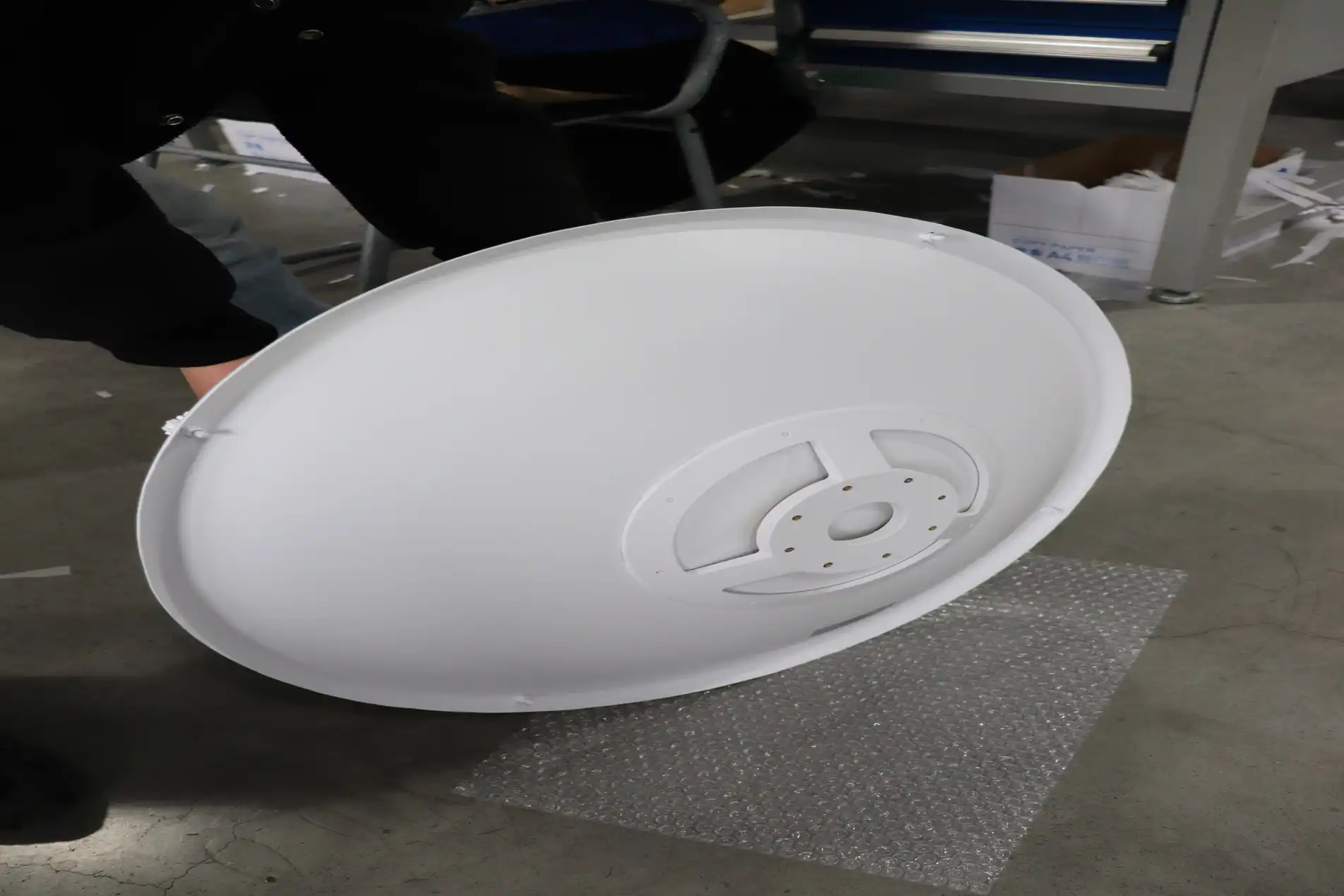
The structure's main component, the parabolic reflector, is usually made of corrosion- and heat-resistant aerospace metal or composite materials. Surface accuracy is critical at higher frequencies; changes larger than a tiny percentage of the working range decrease antenna performance and cause phase distortions. Modern manufacturing allows thousandths-of-an-inch surface margins. These devices can operate in millimeter-wave frequencies exceeding 70 GHz.
Feed antenna design depends on use. Helix and dipole arrays provide circular polarisation for satellite transmission, whereas horn feeds offer high bandwidth and pattern symmetry. Support keeps the feed aligned with the focus point and prevents obstacles. Many professional systems employ radomes, RF-transparent covers that keep antennas dry in bad weather and have less than 0.5 dB insertion loss.
Key Technical Parameters
The most essential efficiency measure is antenna gain, which compares the antenna to an isotropic reflector. Parabolic antennas have gains from 25 dBi for one-meter dishes at 6 GHz to over 50 dBi for larger apertures at Ka-band frequencies. The connection between gain, dish diameter, and working frequency is G = η(πD/λ)², where η is aperture efficiency, D is diameter, and λ is wavelength.
Gain inversely affects beamwidth. Higher-gain antennas emit narrower beams that must be aligned after installation. A conventional 1.2-meter 18 GHz dish has a 3 dB beamwidth close to two degrees. The fastening hardware must be adjustable by a few degrees. This narrow focus directs broadcast power to the intended listener and reduces nearby link disturbance. In multi-device environments, this eliminates frequency congestion.
Material Selection and Environmental Resilience
Aluminium alloys are employed in most businesses since they are lightweight and robust. In coastal and industrial areas, surface treatments prevent rust for decades. CFRP remains flat as metal plates expand and compress because it retains its form at high and low temperatures. In desert sites where metal antennas required to be adjusted every season, CFRP antennas maintained link performance even when temperatures varied by more than 80°C.
Comparing Microwave Parabolic Antennas with Other Antenna Types
When looking at long-range wifi options, procurement teams often get confused by the different terms used. Understanding the differences between structures and performances makes it easier to choose the right microwave parabolic antennas and avoids costly mistakes in matching their capabilities to the needs of an application.
Parabolic Reflector versus Horn Antenna
Horn antennas use curved waveguide structures to send out electromagnetic energy. They are easy to use and have great bandwidth properties. Their gain usually peaks between 20 and 25 dBi, which means they're good for short to medium-length links less than five kilometers. Because of the shape of their reflectors, parabolic systems get an extra 10–15 dB of gain, which lets them connect to devices more than 50 kilometers away when transmission conditions are good. The trade-off is size and mounting difficulty; to get the same gain, horn antennas with unrealistic opening sizes are needed.
Flat Panel versus Parabolic Dish Configurations
Flat panel antennas have printed circuit arrays hidden behind protected cases. This makes them look better and makes putting them on building surfaces easier. Their electric beamforming features let you change the position from a distance, which cuts down on the cost of installation work. Panel antennas, on the other hand, lose gain efficiency when compared to parabolic mirrors with the same surface area. A 0.6-meter square panel gives off 23–28 dBi across normal microwave bands, while a 0.6-meter parabolic dish gives off 32–35 dBi at the same frequencies. This difference in gain of 6 to 8 dB has a direct effect on the link budget margin, which in turn changes the maximum range and fade resistance.
Clarifying Dish Antenna Terminology
People in the business world sometimes use the terms "dish antenna" and "parabolic antenna" to refer to the same thing, even though "dish antenna" properly refers to any curved reflector shape. Some cheap household "dish" antennas use circular or quasi-parabolic shapes that don't work as well because they aren't mathematically accurate enough to keep the parabolic curve needed for best focusing. To make sure that the systems that are bought are truly precision-engineered, the specs for them should clearly state the limits for paraboloid shape and surface accuracy.
Procurement Considerations for Microwave Parabolic Antennas
To get something bought, you have to balance technical requirements with price limits, the dependability of the supply chain, and the long-term support infrastructure. Systematic evaluation systems that rank important factors and find acceptable trade-offs are helpful for purchasing managers.
Vetting Supplier Certifications and Compliance
A company that has ISO 9001:2015 approval shows that it is dedicated to quality management systems that include design review, output control, and methods for ongoing growth. This is especially important for unique setups where link stability is directly affected by RF performance and limits for size. RoHS compliance makes sure that goods meet the environmental standards needed for tools used in controlled markets, and ISO 14001:2015 approval shows that environmental responsibility is taken into account at every stage of production.
We keep our ISO 9001:2015, ISO 14001:2015, and ISO 45001:2018 certifications up to date. This lets buying teams know that our goods go through strict quality control that is backed up by independent tests. Our labs have measuring tools that can go up to 110 GHz, so we can check the performance of the products here before they are shipped, which lowers the risks of field installation.
Technical Specifications Impact on Pricing
The antenna cost is primarily affected by its opening size, frequency range, and level of accuracy needed. Standard stock items with modest gain specs that work with popular frequency bands (6, 11, 18, and 23 GHz) have the best unit prices because of economies of scale in production. Engineering costs go up when you need custom frequency bands, very low sidelobe performance, or specialized polarization setups. This is represented in higher unit prices.
Dual-polarized versions with orthomode transducers cost more, but they can practically double link capacity through the same physical opening. Cross-polarization interference reduction (XPIC) technology is supported by this design. This allows full-duplex transmission with spectral efficiency that is not possible with single-polarized systems. When spectrum licensing fees or tower lease costs make up most of the total cost of purchase, the 20–30% price hike makes economic sense.
Customization Options and Lead Times
Standard product options usually ship within two to four weeks, which is enough time to meet the high demand for projects that expand networks. Depending on how complicated they are, customized solutions like non-standard frequencies, special mounting tools, or integrated radome kits can make lead times six to ten weeks longer. Getting in touch with makers early on in the planning stages of a project lowers the risk of delays and lets other tasks, like getting the site ready and getting governmental approvals, happen at the same time as the antenna manufacturing.
Our development services make it possible to get unique designs made quickly. Within three weeks of finalizing the specifications, we can send working models for field testing. This speeds up the proof process so that buying teams can check the performance of large-scale operations before committing to production numbers.
Real-World Applications and Industry Uses
Microwave parabolic antennas are the backbone of infrastructure in many high-reliability areas where the ability to communicate continuously affects both operating success and safety.
Telecommunications Backhaul Networks
There are thousands of point-to-point microwave lines that mobile network providers use to connect cell towers to the core network equipment. These links handle data from multiple subscribers, which need peak speeds of several gigabits per second to hundreds of megabits per second. Parabolic antennas that work in approved frequency bands between 6 and 42 GHz provide the gain and interference avoidance that are needed to keep service quality high as cell sites get closer together.
During a capacity upgrade program, one regional carrier we worked with replaced old 0.6-meter antennas with high-performance 1.2-meter units. This added 8 dB of fade cushion and cut weather-related outages by 73%. The bigger link fund allowed modulation improvements from 128QAM to 512QAM, which tripled the speed without spending more money on frequency.
Defense and Communications in Space
For military use, antennas need to be ruggedized so that they can keep working even when they are hit by objects or vibrate in harsh environments. Parabolic antennas that can be quickly set up are used by tactical communication systems to connect to networks that are not in line of sight in forward operation areas. Precision surface accuracy and low sidelobe traits keep signals from being intercepted and keep electromagnetic signatures to a minimum.
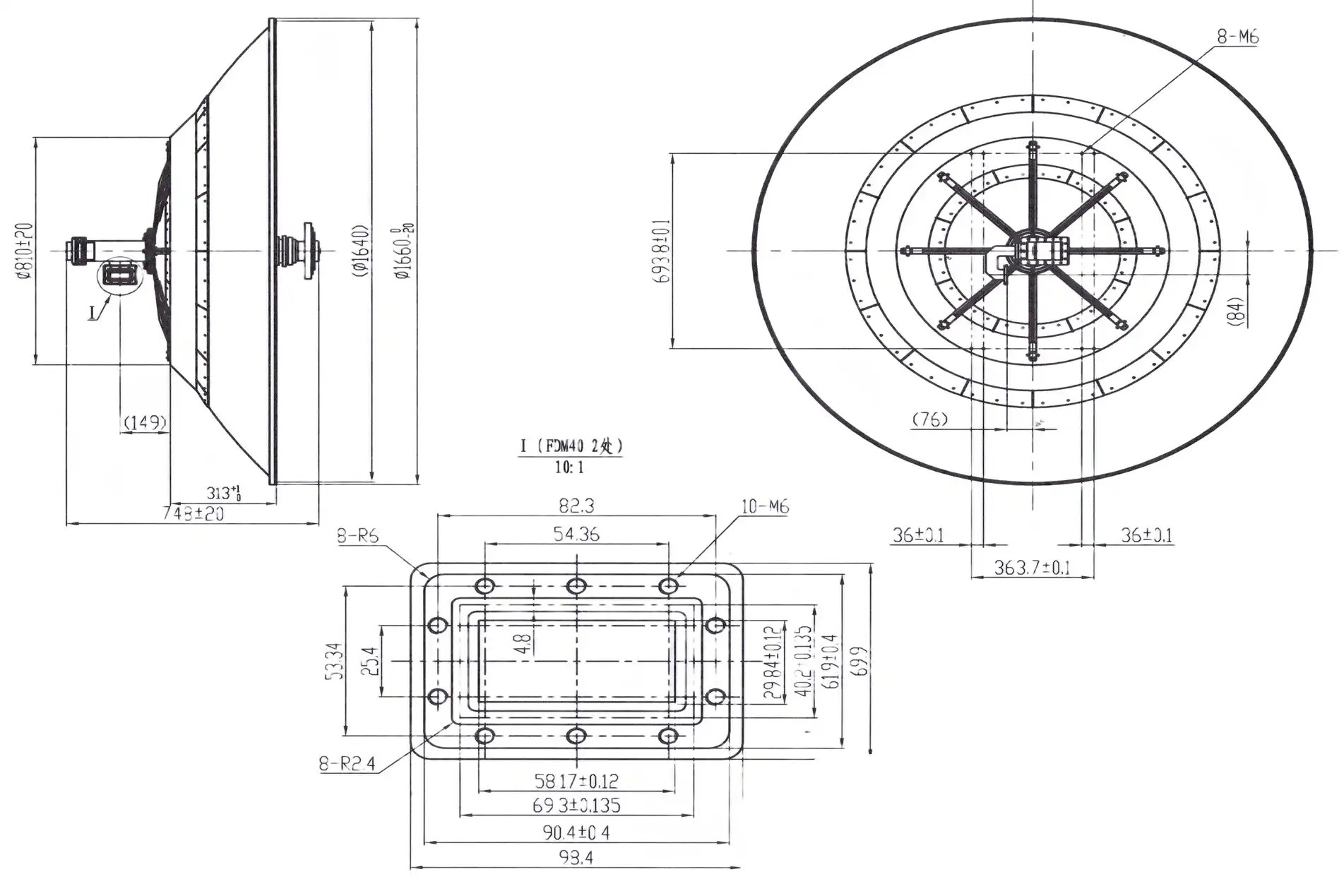
Large-aperture parabolic antennas with widths up to several meters are used by satellite ground stations for communication and observation tasks. In order for these systems to follow low-Earth-orbit satellites across the sky, they need precise positioning systems that are built into the antenna pedestals. Surface accuracy limits less than 0.5 mm RMS allow operation at Ka-band frequencies, where high antenna efficiency is needed to meet link costs despite air loss.
Industrial and Research Applications
Radio astronomy and weather science research institutions employ parabolic antennas to detect signals and monitor the environment. Mining, energy, and transportation companies are increasingly employing private wireless networks with licensed microwave bands to communicate successfully without commercial carrier infrastructure. These networks employ parabolic antennas to connect remote facilities that fibre can't reach due to topography or route issues.
E-band frequencies (71–76, 81–86 GHz) enabling gigabit lines in new 5G transport networks. For high-frequency systems, parabolic antennas need accurate surfaces and millimetre wave-friendly feed designs. Our E-band antennas include enhanced composite reflectors that retain their form, so they function regardless of temperature.
How to Choose the Right Microwave Parabolic Antenna: A Decision Support Guide
A systematic antenna selection approach combines technical needs with realistic placement limitations. This makes sure that the systems picked work reliably for their entire working life.
Assessing Link Distance and Frequency Compatibility Check
Link budget estimates help choose an antenna by taking into account things like broadcast power, receiver sensitivity, free-space path loss, and air absorption. To make up for the path loss that rises by 6 dB every time the distance doubles, longer links need antenna gain that is higher. When choosing a frequency, you have to weigh the available bandwidth, the effects of the environment, and the size of the antenna. Lower frequencies (6–11 GHz) can get through better weather, but they need bigger antennas to get the same gain. Higher frequencies (23–42 GHz) allow for smaller sites, but they need more fade margin to deal with rain weakening the signal.
Evaluating Gain Requirements and Beamwidth
Antenna gain must provide enough link buffer for the desired availability percentage, which is usually between 99.9% and 99.999%, based on how important the application is. Each extra 9 in availability needs an extra 10 dB of fade cushion, which has a direct effect on the antenna gain specs. Installation layout limits beamwidth; places with many links close together need antennas with a narrow beamwidth and a good front-to-back ratio to keep neighboring lines from interfering with each other.
Site Environmental Factors
Wind load estimates figure out the bare minimum of fixing structures that are needed. This is especially important for large-aperture antennas in hurricane-prone areas or on tall towers. Radomes on antennas cut the wind surface area by 40–50% compared to antennas with just reflectors, which lowers the cost of strengthening the structure. Corrosive settings near the coast or industrial sites need better surface treatments or composite materials that can handle chemical and salt fog.
Extreme temperatures can change the size of an antenna and affect how well its feed components work. In places where the temperature changes more than 30°C every day, CFRP mirrors help keep the surface accurate, which stops beam pointing mistakes that hurt link performance. Feed systems with temperature-compensated parts make sure that the impedance matching is always the same across all working temperatures.
Partnering with Established Manufacturers
Supplier selection includes professional assistance, warranty coverage, and future part availability. Decade-old manufacturers are reliable and have expertise in solving field issues. Comprehensive warranty agreements that cover material faults and RF performance reduce risk, especially when buying in bulk.
After 20 years of creating microwave parabolic antennas, we know how they may be utilised in defence, industry, and the internet. Our engineering staff helps with link planning, installation, and repair to ensure deployments run well even in tough site circumstances. Our vast supply of spare parts allows us to ship replacement parts fast and reduce network downtime.
Conclusion
Microwave parabolic antennas are still the best choice for long-distance wireless links that need high gain, a small beamwidth, and high dependability. Their conical shape focuses electromagnetic energy more efficiently than any other design, which lets people talk over long distances where other radio technologies fail. To be successful at procurement, you need to look at technical specs in the context of the application needs, the surroundings, and the total cost of ownership. Team up with experienced makers that offer a full support infrastructure to make sure that systems keep working well for many years, protecting infrastructure investments while meeting changing demand for capacity.
FAQ
Q1: What frequency ranges do microwave parabolic antennas typically cover?
Professional microwave parabolic antennas can work in frequency ranges from 2 GHz to 86 GHz, but they are mostly used in approved bands at 6, 11, 18, 23, and 38 GHz for business purposes. The frequency matching relies on the design of the feed antenna and the accuracy of the reflection surface. Millimeter-wave devices above 60 GHz need very precise manufacturing with errors of less than one millimeter. Lower frequencies can handle more surface flaws. Custom designs can meet specific frequency needs that aren't covered by standard market bands.
Q2: How does antenna gain influence long-distance communication quality?
The highest link distance and fade gap are directly related to the antenna strength. Each 3 dB gain increase doubles the broadcast distance while keeping the same level of performance, or it gives you more protection against signal loss caused by bad weather. Higher-gain antennas focus energy into smaller bands, which improves the signal-to-noise ratio at the receiver and lowers crosstalk from channels next to it. This is very important for keeping high-order modulation schemes that offer the highest output capacity in good shape.
Q3: Can microwave parabolic antennas be customized for specific applications?
You can change things like the frequency optimization, the orientation setup, the design of the mounting interface, and the environmental protection features. Cross-polarization methods can double the capacity of dual-polarized versions, and special radome materials can handle situations with high temperatures or corrosion. By changing the feed antenna, circular polarization can be used for satellite communication or ultra-wideband operation that covers a lot of frequency bands. Lead times for unique setups are usually between six and ten weeks, but can be longer based on how complicated they are.
Partner with ADM for Your Microwave Parabolic Antenna Supplier Needs
Advanced Microwave Technologies Co., Ltd. (ADM) has been making high-quality microwave parabolic antennas for over 20 years and offers full technical support. These antennas are designed for mission-critical long-range lines. Our production sites and labs are ISO 9001:2015 approved and can measure up to 110 GHz. This makes sure that every antenna meets strict performance standards before it is shipped. Our technical team is here to help you with everything from planning the first link to installation and beyond, whether your project needs standard stock goods or fully personalized solutions. Get in touch with our engineering team at craig@admicrowave.com to talk about your unique needs and find out how our microwave parabolic antenna options can give your network infrastructure the stability, speed, and support it needs.
References
1. Balanis, Constantine A. (2016). Antenna Theory: Analysis and Design, 4th Edition. Wiley-Interscience, Hoboken, New Jersey.
2. Rappaport, Theodore S. (2015). Microwave and Millimeter Wave Wireless Communications. IEEE Press, Piscataway, New Jersey.
3. ETSI EN 302 217 (2019). Fixed Radio Systems; Characteristics and Requirements for Point-to-Point Equipment and Antennas. European Telecommunications Standards Institute, Sophia Antipolis, France.
4. Freeman, Roger L. (2007). Radio System Design for Telecommunications, 3rd Edition. John Wiley & Sons, New York.
5. Stutzman, Warren L. and Thiele, Gary A. (2012). Antenna Theory and Design, 3rd Edition. John Wiley & Sons, Hoboken, New Jersey.
6. ITU-R Recommendation P.530-17 (2017). Propagation Data and Prediction Methods Required for the Design of Terrestrial Line-of-Sight Systems. International Telecommunication Union, Geneva, Switzerland.
YOU MAY LIKE
 VIEW MORELog Periodic Antenna
 VIEW MORESlotted Waveguide Array Antenna
 VIEW MOREOpen Boundary Dual Linear Polarization Four Ridged Horn Antenna
 VIEW MOREConical Dual circular Polarization Horn Antenna
 VIEW MORELadder Membrane Conical Dual circular Polarization Horn Antenna
 VIEW MOREDual Linear Broadband Dual Circular Polarization Horn Antenna
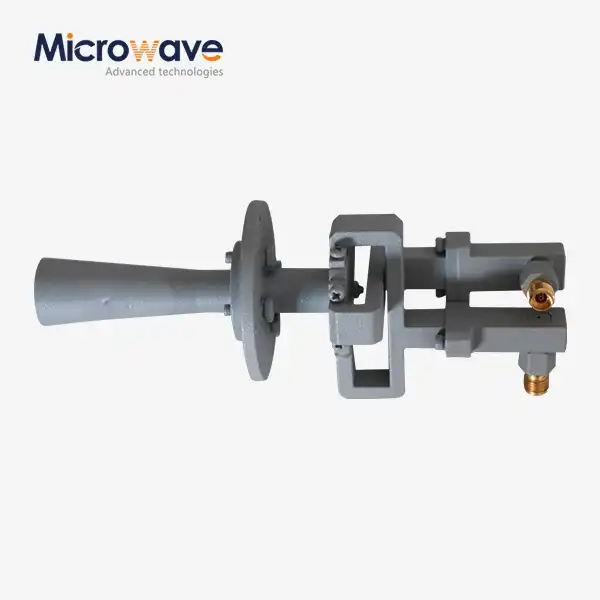 VIEW MOREConical Linear Polarization Horn Antenna
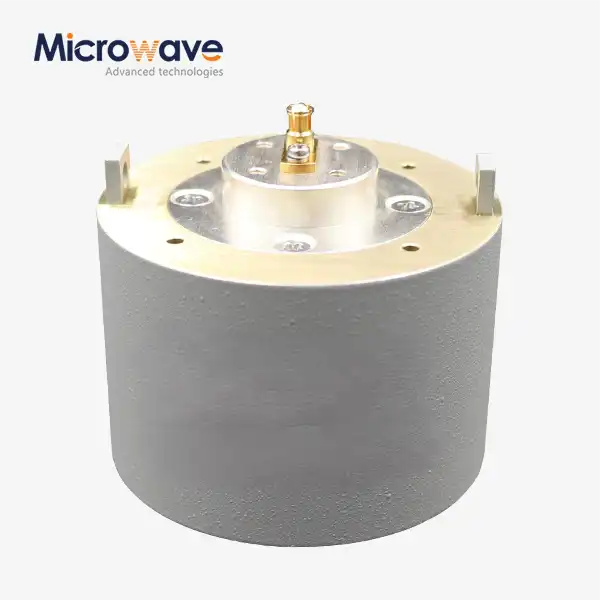 VIEW MOREPlanar Spiral Antenna
