




How to Select a High Power Waveguide Circulator for Radar Systems?
To pick the right high power waveguide circulator for radar systems, you need to know how radars work. Some of these are the frequency range, waveguide size, duty cycle, peak and average power, and load mismatch. Once you have that, you can match the inputs to the VSWR, phase stability, insertion loss, and cooling method of the circulator. Use the same requirement sheet to compare suppliers and make sure that each rating is based on the same tests. Lastly, look over the units that made the short list before you buy a lot of them. The reason I use this order is that a circulator protects both the sender and the receiver. The radar will not work right if I make a mistake. The steps in this guide are written in simple language.
Start With the Operating Principle and Your Radar Requirements
How a High Power Waveguide Circulator Works
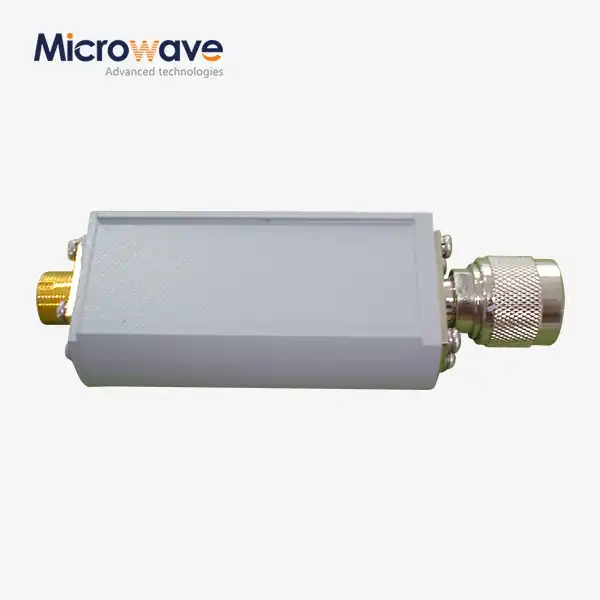
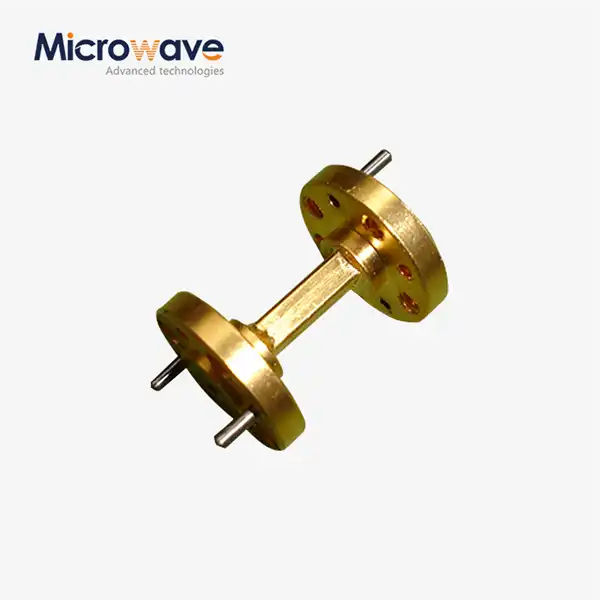
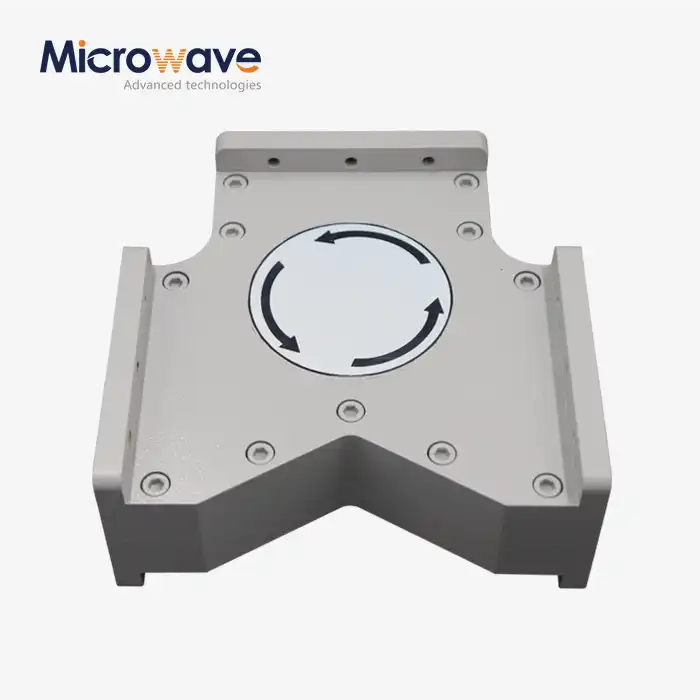
If you want to use another microwave, you can't use a high power waveguide circulator because it is passive. It sends radio waves from Port 1 to Port 2, then from Port 2 to Port 3, and finally from Port 3 to Port 1. Ferrites, a magnetic bias, and the shape of the waveguide allow this one-way flow to happen. Port 1 on a radar is usually connected to the transmitter, Port 2 to the antenna, and Port 3 to the path for the receiver. When the antennas aren't lined up right, this layout keeps the energy that is reflected from getting to the transmitter. It's important to carefully line up waveguide versions, make sure their impedances match, set their magnetic bias, and keep an eye on their temperatures. Waveguide versions can handle more power than coaxial or surface-mount versions.
Document the Radar Operating Environment
I write down everything I know about how models work before I compare them. The list includes the maximum and minimum sizes, as well as the peak and average powers, pulse width, repetition rate, duty cycle, load mismatch, frequency range, waveguide standard, and flange style. The S band goes from 2.6 GHz to 3.95 GHz, and the X band goes from 8.2 GHz to 12.4 GHz. Include the temperature, vibration, humidity, altitude, the amount of corrosion it will be exposed to, and any rules that must be followed. All suppliers can bid on the same job with a full sheet. You can see right away if you need to lower the price or make changes. It will be hard to compare quotes if you don't do this.
Read Power Ratings Correctly
It's simple to mess up the power sizes on a datasheet for a high power waveguide circulator. This number tells you how much voltage the thing can handle before it starts to arc. Its average power tells you how much heat it can get rid of. Duty cycle connects the two. A radar with a 1 MW peak power, a 1 μs pulse, and a 1 kHz repetition rate has an average power of 1 kW and a duty cycle of 0.001. If the part is only meant to handle short pulses, it might not be able to keep up the same level of power all the time. When dry air, nitrogen, or SF6 are pushed into the housing, the breakdown threshold goes up. That is why I want to know if the pressure at the peak is taken into account.
Evaluate Core Performance Specifications and Compare Options
Insertion Loss, Isolation, and VSWR
Because of these three numbers, it is safer and works better. In the ferrite junction, insertion loss turns into heat. This is why very low values are usually sought after by high-power waveguide units, often less than 0.15 dB. That number tells us that 3.4% of the power is being lost. On a 100 kW signal, that's about 3.4 kW of heat that needs to be removed. When there is loss, less power is sent out, and more noise is picked up by the receiver. As long as isolation is above 20 dB, not too much energy can leak in the wrong direction. Only 1% of reverse power gets through at 20 dB. VSWR talks about the game. So the circulator needs to be able to handle more than just a perfect load. A 2:1 VSWR shows about 11% of the power that comes in.
Phase, Group Delay, and Test Conditions
If you don't know how the test will be done, you can't use datasheet numbers. I don't just look at the center frequency; I look at all the values in the whole frequency range. The most important things in a phased-array radar when many channels need to act the same are phase balance, group delay, and amplitude stability. It's important for both small and large orders that each unit is made the same way. Ask for the test temperature, power level, performance curves, and qualification data that go with them. The way ferrite works changes with temperature, so a curve for room temperature may not show how well it works at the very top of your range. While MIL-STD-202 tells everyone how to test electronic parts in different settings, it also acts as a guide.
Circulator vs. Isolator, Waveguide vs. Coaxial
Because it has a circulator that moves signals between three ports, one antenna can be used for both the send and receive paths. An isolator sends power forward and takes in reverse energy in a terminated port. This might be enough to just protect the transmitter. Waveguide designs can usually handle more power and lose less than coaxial designs. Cola-shaped parts might be smaller and able to work with a wider range of frequencies, but they always have less power. When you compare ratings, don't mix up ratings for pulsed and continuous waves. A fair table displays the frequency, insertion loss, isolation, VSWR, peak power, average power, cooling, flange interface, and the method used to check each number.
Use a Structured Process and Match the Circulator to Your Radar Type
A Five-Step Selection Process
A simple order works best for me. First, make a list of all the RF, mechanical, environmental, commercial, and delivery needs you want to meet. Second, put the requirements in order of how dangerous they are to the system: isolation for receiver safety, thermal performance for continuous-wave operation, or phase stability for phased arrays. Third, put suppliers in order of how well they can make things, test materials, documents, and provide engineering support. Fourth, send all the suppliers the same data and compare the assumptions, which ones are left out, the ratings, and the test conditions. Fifth, before you place a large order, make sure that the units you've chosen work with real power, waveform, mismatch, temperature, and cooling. The technical risk is lower in this order because each step takes away a possible thing that could go wrong later.
Pulsed, Continuous-Wave, and Solid-State Radar
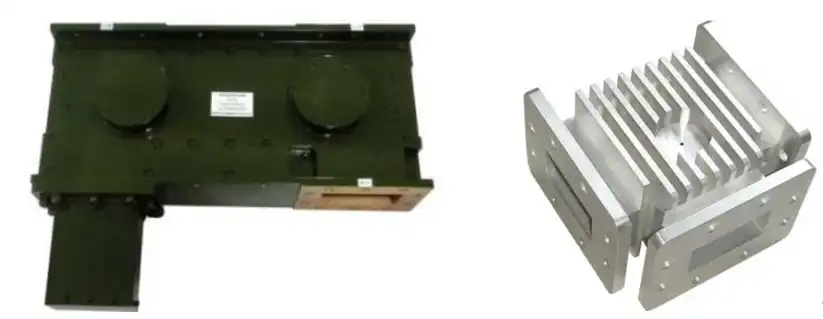
For a high power waveguide circulator, the most important rating changes based on the radar type. It is based on peak power, pulse width, repetition rate, breakdown resistance, and the energy that is reflected back from the antenna. A lot of weather radars use this type of radar. When it comes to solid-state and continuous-wave radar, it's more about long-term stability, average power, and thermal resistance. Thanks to liquid cooling channels or forced-air fins, the junction temperature stays below the point where the ferrite properties change, and the device detunes. High-Curie-temperature ferrite makes the margin bigger. I check to see if a pulsed design breaks down before I look at it. The first thing I look at is a design that goes on and on.
Phased-Array, Defense, and Accelerator Uses
All channels in a phased-array system must have the same phase, amplitude, and group delay. This is why it's so important to match units to units. It is important that environmental qualification is part of the specification for defense and field-deployed platforms because they may be exposed to shock, vibration, changing temperatures, humidity, and corrosion. Matter accelerators often get their power from klystrons. The circulator protects the klystron from cavity reflections and keeps the phase stable in areas with no radiation or a lot of radiation. For these uses, you may need waveguide interfaces that are specially designed for them, a lot of power, and cooling that is built in. ADM works with people who need to buy things for space travel, defense, research, and satellite communication. Most of the time, a custom flange or cooling layout is needed for these kinds of projects instead of a kit part.
Avoid Common Mistakes, Evaluate Suppliers, and Choose the Program Type
Common Selection Mistakes to Avoid
Most problems happen because people don't read the directions carefully, not because parts are broken. There are limits on average heating and duty cycle that you can't see if you only look at peak power. If two datasheets have different frequency, temperature, or power conditions, it doesn't make sense to compare the insertion loss from them. Mismatching the loads can put a lot more stress on the device than when the loads are matched, so it's important to think about this. On top of that, it's risky to switch straight to a catalog model. At first, look at the flange, the orientation of the ports, the mounting, the magnetic bias, and the full-band results. The reason for this is that most high-power units are already tuned when they leave the factory, and adding extra stubs can make them arc.
What to Check in a Manufacturer or Supplier
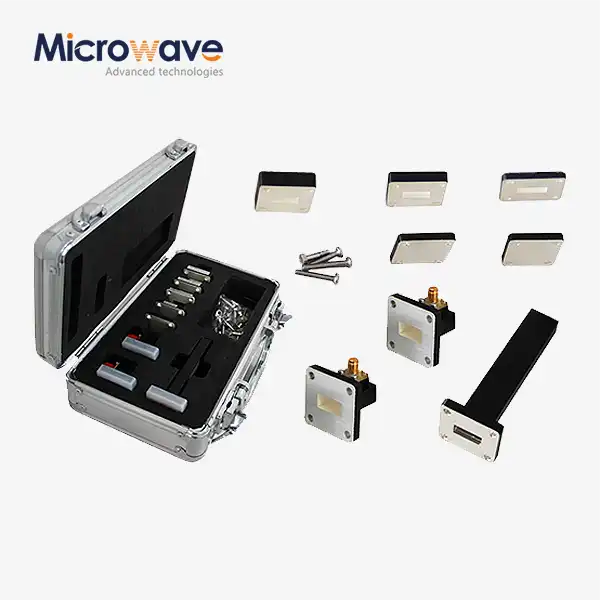
A good supplier knows both how to do business and how to solve problems. Make sure they have experience with ferrite materials, magnet design, waveguide machining, internal tuning, high-power testing, and thermal engineering. Ask for RF test reports, material and compliance papers, records of how the goods were made, and clear criteria for inspection. The same tests are done on production units as they are on qualification samples. What tests are those tests? We have microwave measurement tools that can go up to 110 GHz in our labs. This is the kind of test tool I suggest buyers look for. The products made by ADM are ISO 9001 certified and RoHS compliant. You should also check the lead time, warranty, customer service, and how quickly the team answers technical questions.
Standard, Custom, or OEM Programs
As long as your needs are met in terms of frequency, power, waveguide interface, cooling, and environment, this is usually the fastest and least expensive choice. If you need custom development for frequency bands that aren't used very often, more power, unique flanges, built-in cooling, lower insertion loss, higher isolation, or qualification for harsh environments, that makes sense. When you use OEM and private-label programs, you have more say over the designs, documents, branding, privacy, and structural changes. Early planning is key: look over the design, get the prototype, test for RF and environmental factors, get approval, start production, and keep an eye on things for repeat orders. With ADM's OEM services, quick prototyping, and technical support, buyers can use just one team to make a sample and then make a lot of them.
Run the Final Checks Before You Buy
Final Selection Checklist
Before I give the go-ahead on a high power waveguide circulator, I check one more time in three places. I use this as a list.
- RF performance: Confirm that frequency range, insertion loss, isolation, VSWR, phase behavior, peak power, average power, and mismatch ratings meet the radar design across the full operating band, and that each value comes with its test conditions, curves, and qualification data. A single reading at center frequency is not enough proof.
- Mechanical and environmental fit: Check waveguide size, flange type, port direction, mounting method, cooling connections, weight, temperature range, vibration, humidity, altitude, and any compliance documents your program requires. A part that matches the RF targets but not the mounting or coolant layout will force a late redesign and delay the schedule.
- Supplier capability: Review quotation scope, test plans, lead time, sample availability, customization options, warranty terms, and supply continuity. Ask for drawings, RF test reports, and traceability records, then confirm that the supplier can repeat the same performance on later orders, not just on the first prototype. Repeatability protects your production schedule.
By checking these three things, redesigns don't happen when it's too late.
Validate Units Before Volume Buying
A claim in a datasheet becomes proof when it is validated. To make sure the units on the short list work with the real transmitter or a close match, you should test them with the real pulse width, repetition rate, and duty cycle. To see how the device responds to reflected power, add a load that isn't matched. With the planned flow of cool air, run the test at both the hot and cold ends of the temperature range. Write down the insertion loss, isolation, and VSWR before and after the run. Also, keep an eye out for drift. What if the results change after a thermal soak? That means the design margin might not be big enough for your needs. Get the supplier on board with the test plan right away so that everyone agrees on what needs to be done to pass.
Prepare a Complete Quotation Request
The right circulator can be suggested by the manufacturer after a full inquiry. This is better than giving a generic catalog quote. Give details about the frequency range, waveguide and flange, peak and average power, pulse parameters, duty cycle, insertion loss and isolation targets, VSWR or mismatch conditions, cooling method, environmental needs, quantity, and delivery date. When you're done, you should ask for a model or custom proposal, a datasheet with test conditions, performance curves, mechanical drawings, prototype options, a price, an MOQ, and a lead time. This makes it easier to compare proposals when it's sent at the start.
Conclusion
It's important to make sure that the tested performance of a high power waveguide circulator for radar matches how it works in real life. The radar data is the first thing that needs to be done. This includes the range of frequencies, the size of the waveguide, the peak and average power, the duty cycle, the mismatch, and the cooling. A certain way needs to be used to test insertion loss, isolation, VSWR, and phase behavior across the whole band. You can pick between circulator and isolator ratings, waveguide and coaxial ratings, and pulsed or continuous-wave ratings based on the type of radar. When people make common mistakes, like relying only on peak power or ignoring mismatch, the risk goes up. One way to cut down on redesign is to have a structured process, check up on the supplier, do validation testing, and make a full wish list. The best choice is not the cheapest item in the catalog, but the one that works well with the radar.
FAQ
Q1: What is the difference between a circulator and an isolator?
Because it has a circulator that moves power between three ports, one antenna can handle both the send and receive paths. When a circuit is loaded, an isolator moves power forward and takes in energy in the opposite direction. This might be enough to keep a transmitter safe.
Q2: How should I read power ratings?
Normal power is about how much heat there is, while peak power is about how much voltage drops. So I look at both scores and ask what the test conditions were for each one. To find the average power, multiply the peak power by the duty cycle.
Q3: Why check insertion loss and isolation across the full band?
Anything that works changes based on how often it happens. Things might hit their targets at the center frequency, but they might miss them at the edges of the band. This could make things hotter or let transmitters leak.
Q4: Can a standard model replace my current part?
No, not until you check the flange, the way the ports are mounted, how well they are cooled, and the full-band data. If any of these things are different, it might be safer to get a custom design.
Request a High Power Waveguide Circulator Quote From ADM
We will look over your radar specs with you when you send them to ADM. ADM has been a supplier of high power waveguide circulators and a manufacturer of microwaves for more than 20 years. They offer OEM services, prototyping, technical support, and quick turnaround. They also have ISO 9001 certification and follow RoHS rules. To get help with your frequency, power, flange, and cooling needs, email craig@admicrowave.com.
References
1. Microwave Engineering (David M. Pozar, Wiley), 2011
2. Radar Handbook, Third Edition (Merrill I. Skolnik, McGraw-Hill), 2008
3. Principles of Modern Radar: Basic Principles (Mark A. Richards, James A. Scheer, William A. Holm, SciTech Publishing), 2010
4. Operation of the Ferrite Junction Circulator (C. E. Fay and R. L. Comstock), IEEE Transactions on Microwave Theory and Techniques, 1965
5. Microwave Ferrites and Ferrimagnetics (Benjamin Lax and Kenneth J. Button, McGraw-Hill), 1962
6. MIL-STD-202H, Test Method Standard: Electronic and Electrical Component Parts (U.S. Department of Defense), 2015