





Custom Quadrifilar Helix Antennas for Specialized Systems
For some systems, custom quadrifilar helix antennas (QHAs) make circular polarization and wide hemispherical coverage possible in a small package. To match a certain size, frequency, and mounting space, engineers change the shape of the helix, the feed network, the radome, and the connector. It's important to do this for defense platforms, GNSS, telemetry, and satellite links, since a difference in polarization can weaken the link when the satellite is low in the sky. I'm going to talk about how these antennas work, what goes into their design, how testing proves their performance, and what buyers should have ready before they send an RFQ to a company like ADM.
Why Specialized Systems Use Custom Quadrifilar Helix Antennas
When a Catalog Antenna Falls Short
For a normal installation, it is normal for a catalog antenna is typically used. Custom systems rarely match that norm. There are limits on the amount of metal, cables, weight, and height that can be on a shipboard mast, a radiosonde housing, a UAV airframe, or a CubeSat panel. The tuned frequency and the shape of the radiation are changed by these details. Going over the same work over and over because a standard part needs to be changed or lab data doesn't match up with field results is often more expensive than making a new design from scratch. Procurement teams should think about making a custom QHA when the frequency isn't standard, the volume is fixed, the environment is harsh, or the receiver needs a certain axial ratio and gain at low elevation.
Circular Polarization and Low-Elevation Coverage
At 1575.42 MHz, there is L1, and at 1227.60 MHz, there is L2. They are circularly polarized on the right-hand side. When a circularly polarized signal hits a linearly polarized antenna, the antenna loses about 3 dB, even if it is perfectly aligned. A lot more signal is lost when the antenna's rotation sense is switched. Also, satellites are often close to the horizon, where a narrow-beam antenna won't pick up much signal. It is possible to get a wide cardioid pattern with quadrifilar helix antennas. These antennas keep useful gain near the horizon and avoid a null at zenith, so a satellite passing above you won't lose signal. Platforms that tilt, bank, or tumble work best for this. Both hand-held satellite phones and CubeSat telemetry links need this property to work well.
Platform-Matched Performance
The antenna is handled by custom engineering as if it were a fixed part of the platform, not a separate part. We check that the helix fits the receiver, the case, the mounting structure, the radome, and the cable path. This keeps the results from the lab and the field close to each other. If you carefully change the feed phase and helix length, you can raise the axial ratio and keep the polarization the same across the angle range you need. When you make your own design, you can pick the frequency, size, interfaces, and seals as well. In the right tests, these choices can cut down on integration delays, redesign costs, and problems in the field before mass production starts. These platform limits are taken into account by ADM when they make antennas, and our engineers look over customer drawings before we release a design.
How a Quadrifilar Helix Antenna Works
Four Helices and Phase Control
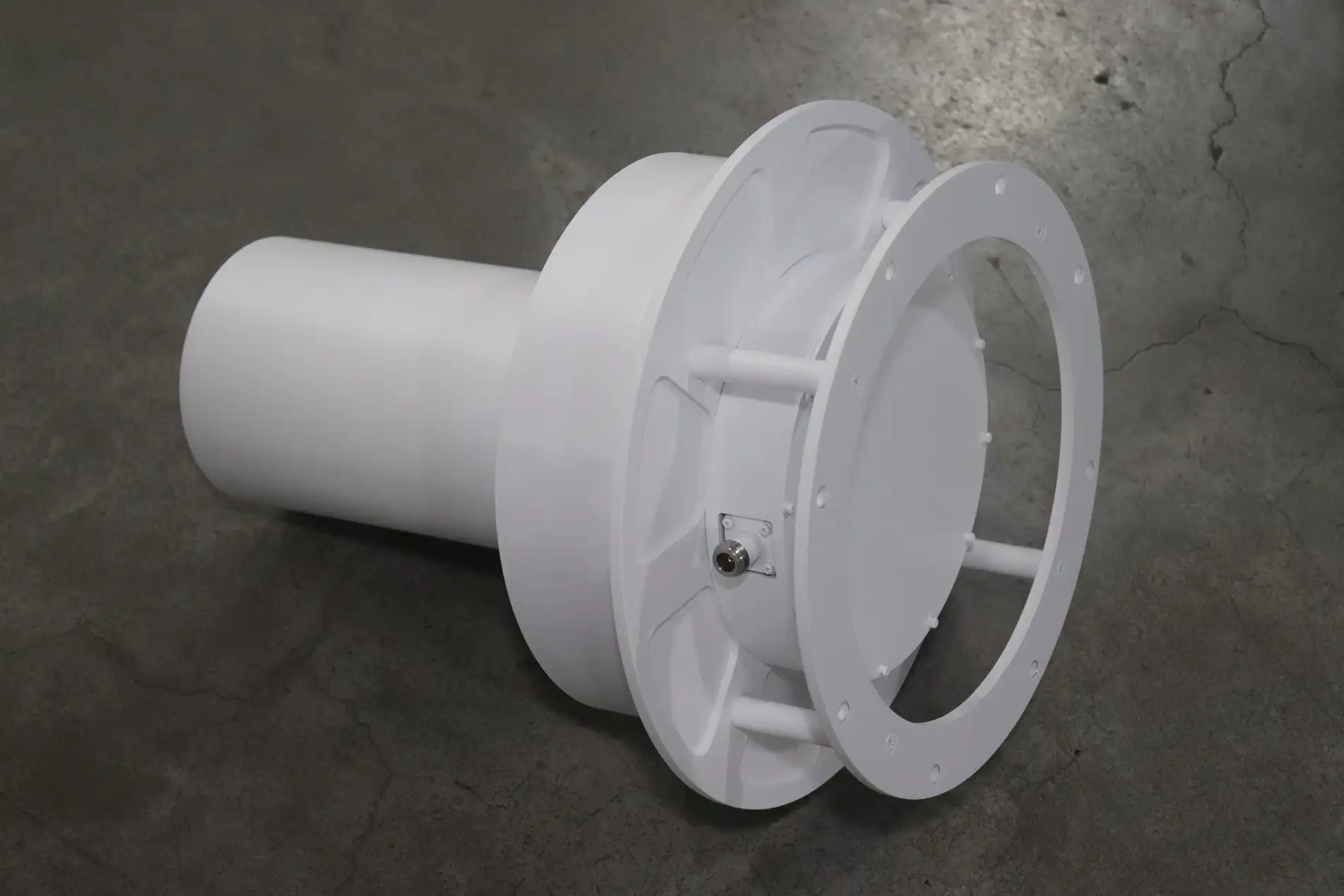
A quadrifilar helix antenna has four wires that are wound around a central axis like a spiral. They get sine waves with phases of 0°, 90°, 180°, and 270° from a feed network. This quadrature relationship creates radiation that is polarized in a circle and has a heart-shaped pattern. If the winding sense and phase order are right, the antenna sends either RHCP or LHCP. With small changes in phase or amplitude, an ellipse can be made out of a circle, and the axial ratio will go up. You should be careful with the feed because of this. The radius, pitch, and length of the helix determine the tuned frequency and beam shape. The internal balun, also called the phasing network, controls the purity of the field. People at Adams's company wrote an important IEEE paper about the design in 1974. It is still used as a standard.
Gain, Axial Ratio, and Radiation Pattern
This number tells you how circular the polarization is. A value of 0 dB means it's perfect, and 3 dB is usually thought to be the highest level of circular polarization that is still good. A well-made QHA can keep its axial ratio below 3 dB over a beamwidth of up to 120° or 140°. Compared to a dish or an axial-mode helix, the gain stays low because the design is meant to cover rather than focus. When you look at the antenna, don't just look at its headline gain figure. You should also look at nearby metal, batteries, cables, and radomes, which change the pattern. A conductive object within one wavelength can change the pattern and throw off the antenna's tuning, so make sure you test it in the real housing.
Comparison with Patch, Turnstile, and Conventional Helix Antennas
Not just gain should be used to choose, but also what the system needs. A patch antenna is flat and small, but it can only work in one direction and needs a ground plane to work. A turnstile or crossed-dipole design might work with some telemetry layouts. It's important to point a normal axial-mode helix in the right direction so that it has more directional gain for a focused link. Because they have a wide hemispherical coverage, stable circular polarization, and don't need a very large ground plane, quadrifilar helix antennas are suitable for cylindrical housings and tumbling platforms. On the other hand, the peak gain is less, and the feed network is more complicated. A patch might still win if the installation is fixed and faces up, and the height is limited. A QHA, on the other hand, does often.
Key Design Parameters, Simulation, and Verification
Electrical and Mechanical Parameters
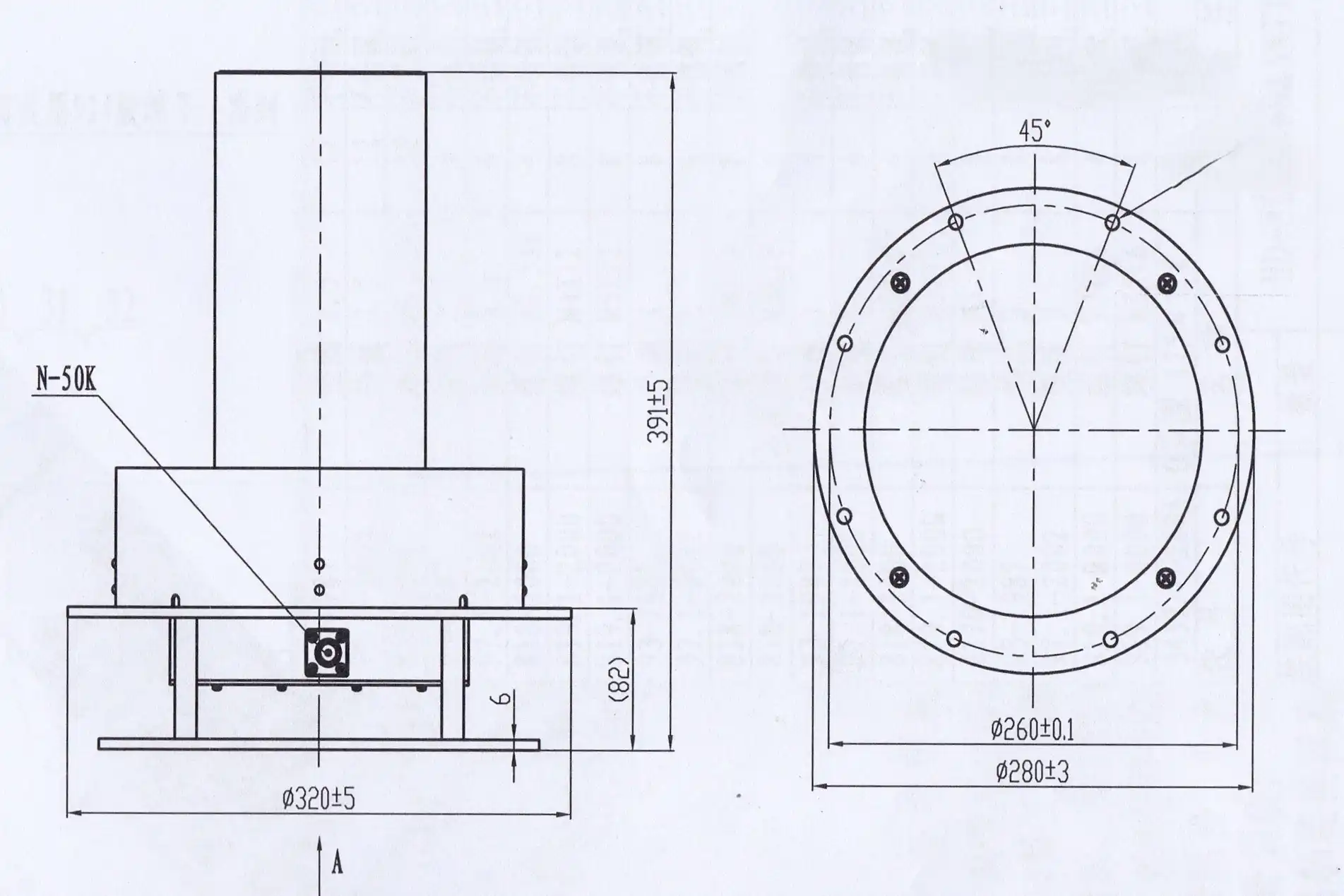
As well as the size and weight, it tells you the frequency range, VSWR, gain, axial ratio, coverage angle, and polarization sense. The pitch, number of turns, and overall height are all set by the wavelength. Pitch is set by the wavelength. Losses and the frequency that is tuned depend on the support material and the diameter of the conductor. It is important that the input stays at 50 ohms and that the phase and amplitude of the feed network stay equal. Most people want their VSWR to be less than 1.5:1 at the center frequency. Things like temperature, vibration, moisture, and the tolerances used in manufacturing can also change the results. Connectors, cables, radomes, and mounting hardware can all do the same thing. When you change one of these parameters, it usually changes another one as well.
Simulation and Prototyping
For quadrifilar helix antennas, a lot of different programs, like CST and HFSS, let engineers simulate electromagnetic fields and check things like S-parameters, gain, patterns, axial ratio, and current distribution before they even make the hardware. One thing that simulations can't do is show all of an assembly's effects. We model the whole assembly and then make prototypes of the feed network, support, radome, cables, and mounting hardware. You can find design flaws, differences in the assembly, and mistakes in the test setup early on, when it's still cheap to make changes, by comparing measured and simulated results. People who buy from ADM can check a sample for fit and signal performance before committing to full-scale production because ADM does quick prototyping in-house. This way, your team can also test how the connectors are positioned and how the cables are run on the real platform.
Performance Testing in the Darkroom
In order to be sure, the VSWR on a network analyzer, the gain and pattern in a chamber, the axial ratio, and a signal check with a receiver or satellite should all be done. Labs at ADM use microwave measurement tools that can handle up to 110 GHz, and our 24 m Microwave Darkroom can test things between 0.5 GHz and 110 GHz. When we switch between near-field and far-field data in the Antenna Plane Near and Far Field Measuring Recombination Chamber, our team can read the radiation pattern, gain, and impedance. The vibration methods in MIL-STD-810 can be used for tests that need to be done in different settings. Both sides should agree on the test plan from the start. When people buy plots, they should not only ask for simulated plots but also measured data.
ADM Product Features and OEM Customization
Product Features and Specifications
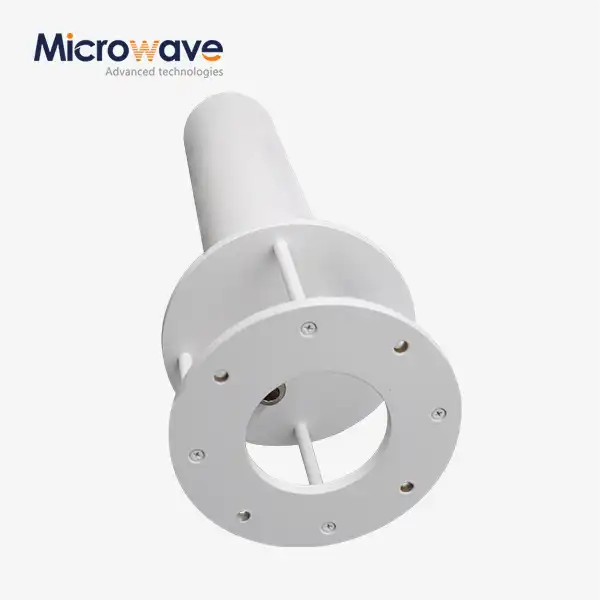
For satellite phones, radar, and navigation systems, the ADM Quadrifilar Helix Antenna is small, light, and works well in all directions. The frequency range is from 1 GHz to 40 GHz, and the circular polarization is on the right. This thing was made to work in tough conditions in defense, space, and satellite systems. It can be put on the ground or connected to other radar or satellite systems. It gains a lot of power and loses almost none. The things that ADM makes are approved by ISO 9001 and RoHS. Request the variant's datasheet if you want to know the exact gain, axial ratio, and VSWR values for a certain band. This is because performance changes based on the frequency and configuration chosen.
Applications Across Industries
The antenna can be used by many kinds of people. Teams that work with satellites use it to send and receive signals with low-orbit satellites reliably. Space and defense programs use it in radar and navigation systems that need to stay connected even when they are far away or in dangerous places. It's used by phone companies in mobile networks and base stations to send and receive data quickly and in any direction. Wi-Fi network builders choose it when they need a lot of coverage and a high gain. ADM can be used for more things in aviation and aerospace, as well as on ships for finding your way, keeping an eye on the weather, and security check systems. As the platform turns, a wide-pattern antenna can sometimes keep the link up, but not always. This is not always possible with a flat directional antenna.
OEM Services for Specialized Programs
ADM helps OEM programs that need to fit just right. These are the main services:.
- Custom frequency ranges: We adjust the operating frequency to match your system anywhere in the 1–40 GHz range. Send the center frequency, required band, and polarization sense, and our engineers will review feasibility early, including whether a dual-band design fits your feed and size limits before any tooling starts.
- Material and size customization: Choose from a variety of materials and sizes to fit the housing, weight target, and mounting interface of your project. Material choice affects weight, durability, and tuned frequency, so we review drawings together with the electrical targets before we settle on final dimensions and confirm the result with a prototype.
- Prototyping, testing, and technical support: Our in-house prototyping and rigorous testing confirm that the antenna meets your specification, while engineers support you from design consultation through installation guidance and troubleshooting. Quick-turnaround prototypes let you test fit and signal performance before full-scale production, so design risk shows up early, when changes cost little.
These services cut down on the chance of having to redesign and speed up the time it takes to go from specification to tested sample.
Supplier Selection, Buying Guide, and Common Pitfalls
How to Choose a Quadrifilar Helix Antenna Supplier
For quadrifilar helix antennas, check how much they know about engineering and how well they can make things. It is important to find out how much experience the supplier has designing GNSS, satellite, telemetry, RF, and microwave antennas. You should ask for test reports, mechanical drawings, CAD files, and datasheets that show the axial ratio and the pattern of the radiation. Next, check out the help for prototypes, the amount of work that can be done, quality control, finding parts, export logistics, lead time, tooling, warranty terms, and service after the sale. ADM does both production and research and development. They have a supply chain that is set up to ship goods all over the world. They have been making microwave products for over 20 years. They also follow ISO 9001 and RoHS rules. These points are written proof that the procurement team can use to compare bids from different businesses.
Preparing a Structured RFQ
A full RFQ makes it easier to compare quotes from different suppliers and makes sure that the quotes are correct. In this list, you should include things like coverage, size, weight, connectors, cables, mounting, environmental conditions, and the rules that need to be followed. Give information about the application, a yearly outlook, the number of prototypes, where they will be sent, and a schedule. Keep requests for standard, semi-custom, and fully custom items separate because they all come with different risks, take longer to develop, and cost more. Don't just look at the price per unit; you should also think about how much it will cost to test, certify, ship, pay U.S. import duties, keep inventory, and make any changes that are needed. Our engineers look for risks early on by drawing or taking pictures of the installation before they give you a quote. It helps us plan pilot and mass production when we have a forecast.
Common Design and Procurement Pitfalls
You might miss a lot of antenna problems if you only look at nominal gain. You don't need to look at the coverage angle, impedance, or receiver noise to know what it is. Metal, batteries, cables, and enclosures close by can change how well something works, so test prototypes where they will actually be used. An imbalance in the feed network's phase or amplitude can make circular polarization worse if the assembly tolerances are not met. Simulations aren't enough to be sure of how an installation will work. On the supply side, make sure there are clear rules for quality control, change control, part availability, delivery expectations, and letting people know when a product is no longer being made. If you plan for long-term supplies, your program won't have to go through late-stage requalification every time a part changes. If there is a small change in the cable, radome material, or connector, the axial ratio may change. Make sure that every approved part is written down.
Conclusion
Custom quadrifilar helix antennas are small, have circular polarization, and cover a large hemispherical area. They work well with some systems. In other words, links stay stable when platforms are moving and when the height of the platform is low. As for how well they work, that depends on the antenna's case, radome, cables, and any metal that is nearby, as well as its four-helix shape and how well it fits with those things. The design comes from simulations, but the VSWR, gain, pattern, and axial ratio of the prototype show that it works. There is more space covered by a QHA antenna than by a patch, turnstile, or regular helix antenna. However, the feed is more complicated, and the peak gain is lower. It's better for buyers to have a full specification, a structured RFQ, a clear idea of the total cost, and a supplier who has shown they are good at engineering and testing. If you judge performance based on installed value instead of headline gain, you can avoid the most common mistakes made in design and procurement.
FAQ
Q1: How do quadrifilar helix antennas differ from ceramic patch antennas?
They can only work in one direction and need a ground plane. QHAs cover more area at low angles and have a wider beamwidth. Also, they don't need a ground plane as much, which makes them better for drones and devices that tumble.
Q2: Why does axial ratio matter on a datasheet?
The axial ratio shows how pure the circular polarization is. Nearly 0 dB is the best value. When the value is high, the antenna behaves more like a linear one. This means that it loses signal when it tries to talk to circularly polarized satellites.
Q3: Can a QHA cover more than one GNSS band?
Yes, with more engineering. It is possible for designs with more than one filament or that are stacked to tune to bands like L1 and L2, but the feed network is more complicated and costs more than in a single-band design.
Q4: What information do you need for a quotation?
The frequency, polarization, performance goals, dimensions, connector type, environment, quantity, and schedule should all be sent to craig@admicrowave.com by email. Our engineers can help you get back to you faster if you send them drawings or pictures of the installation.
Request Custom Quadrifilar Helix Antennas from ADM
Quadrifilar helix antennas are sold by the company ADM. A professional research and development team, fast delivery, a price advantage, strict quality control, and great customer service after the sale are just a few of the things that make them stand out. Send your project to craig@admicrowave.com along with your frequency, polarization, size, and quantity needs, and we'll look it over.
References
1. Antenna Theory: Analysis and Design, 2016
2. IEEE Transactions on Antennas and Propagation, "The Quadrifilar Helix Antenna," 1974
3. Understanding GPS/GNSS: Principles and Applications, 2017
4. Microwave Engineering, 2011
5. IEEE Standard for Definitions of Terms for Antennas, 2014
6. MIL-STD-810H, Environmental Engineering Considerations and Laboratory Tests, 2019
YOU MAY LIKE
 VIEW MORECoaxial Power Detector
 VIEW MOREWaveguide Miter Bend
 VIEW MOREElliptical WG
 VIEW MOREDouble Ridged WG To Coaxial Adapter
 VIEW MOREHigh Power Coaxial Switch
 VIEW MORECoaxial Directional Coupler
 VIEW MOREOpen Boundary Dual Linear Polarization Four Ridged Horn Antenna
 VIEW MOREQuadrifilar Helix Antenna