





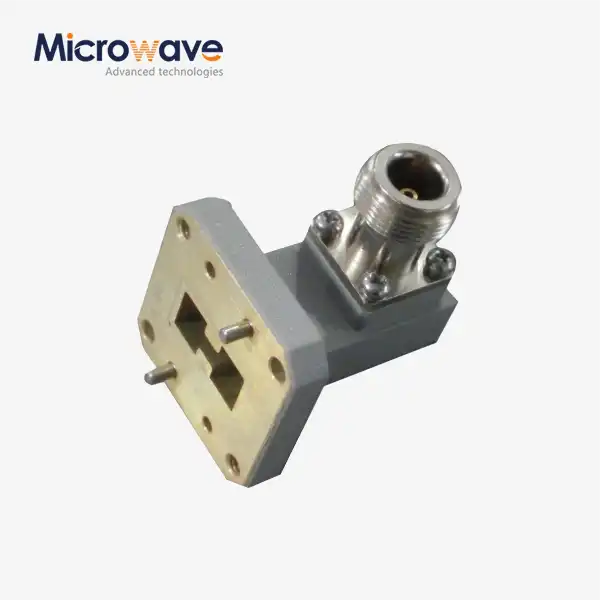
Double Ridged WG To Coaxial Adapter
Double Ridged WG To Coaxial Adapter for Broadband RF Systems
Advanced Microwave Technologies' (ADM) Double Ridged WG To Coaxial Adapter is a converter of electromagnetic energy between a double-ridged waveguide and a coaxial line. Works with SMA, N-Type or TNC connectors . The internal ridged geometry decreases the cut-off frequency compared to a regular rectangular waveguide. This allows a single passive component to have a multi-octave bandwidth from 2 GHz to 18 GHz. ADM has an R&D lab and a 24 m Microwave Darkroom where VNA measurements can be performed from 0.5 GHz to 110 GHz.
What Is a Double Ridged WG To Coaxial Adapter?
Standard rectangular waveguides work well in a small range of frequencies. When a device needs to cover more than one frequency range at the same time, like from 2 GHz to 18 GHz, a single narrowband adapter is not enough. Because the WRD series has ridged internal geometry, the cut-off frequency is lowered. This means that one adapter can cover a range that would normally need several separate parts.
The device changes the mode from TE10 waveguide to TEM coaxial. In real life, keeping that mode conversion clean across a range of octaves requires careful machining of the ridge profile and careful impedance matching at each frequency step. This makes a part that reduces signal loss and reflection as much as possible across the whole operating band.
Key Technical Specifications
Parameter | Specification |
Frequency Range | 2–18 GHz (WRD-180), 6.5–18 GHz (WRD-650), 7.5–18 GHz (WRD-750) |
VSWR | < 1.5:1 (tuned units typically < 1.30:1) |
Insertion Loss | < 0.5 dB across full bandwidth |
Coaxial Interface | SMA, N-Type, TNC |
Waveguide Flange Standard | MIL-DTL-3922 |
Coaxial Interface Standard | MIL-C-39012 |
Body Material | Aluminum 6061 or Copper |
Surface Finish | Chromate conversion coating, Silver plating, or Gold plating |
Power Handling | Limited by coaxial connector (SMA: ~100 W at high frequency) |
Materials and Construction
The body of the adapter is made from either Copper or Aluminium 6061. Aluminium 6061 has a lower unit weight, which is useful for installations that need to be airborne or have limited room. Copper is a better conductor of electricity in places where signal requirements are higher.
Finishing the surface keeps the skin-depth conductivity and protects against corrosion. You can choose between chromate conversion treatment, silver plating, and gold plating. XRF analysis checks the thickness of the plating, and salt-spray testing according to MIL-STD-202 proves that the metal is resistant to corrosion.
You can choose between Cover and Grooved styles for the flange. The grooved flange has a space for an O-ring or gasket to fit inside and seal against the weather. The flange of the cap is flat. The type of flange should fit the type of interface it is mated with to make sure proper electrical contact and, if needed, sealing against the environment.
Application Scenarios
The Double Ridged WG To Coaxial Adapter is used in places that need both wide range and long-lasting durability.
Electronic Warfare and Jamming Systems
These adapters link wide-band emitters to waveguide antenna arrays in ships and planes. Multiple threat frequency bands can be covered by a single adapter, so you don't have to change hardware between operating conditions.
Anechoic Chamber Testing for EMC/EMI
Signal generators use 50-ohm coaxial lines to connect to broadband double-ridged horn antennas. This adapter lets test engineers do that. Between test segments, the full frequency sweep can be done without changing the interface hardware. This cuts down on setup time and the chance of connection errors.
Networks for SATCOM and Radar Feed
Most of the time, these adapters connect flexible coaxial cables from signal processors to rigid waveguide structures like antenna lines or high-power amplifiers. The construction can handle environments with a lot of vibration.
Quality Control Process
Before being sent out, each adapter is checked separately in the steps below.
VNA Full-Band Sweep: A Vector Network Analyser is used to measure VSWR and insertion loss across the whole working band. The sweep also looks for resonance spikes in the frequency range of operation.
CMM Mechanical Metrology: Coordinate Measuring Machine verification confirms flange flatness and ridge gap tolerance. Misalignment of the ridge shape on a micron level can lead to problems with mode conversion or arcing at high power levels.
Pin Depth and Concentricity Check: The coaxial center conductor pin depth is checked to make sure it doesn't get damaged when it connects to system connections.
Verification of Plating and Corrosion: XRF analysis shows the thickness of the plating. Corrosion resistance for use at sea and in the air has been proven by salt-spray testing according to MIL-STD-202.
If asked, full-band VNA test results can be sent with the shipment.
Customization Options
ADM offers the following configurable options for customers with specific system requirements:
· Coaxial connector type: SMA, N-Type, or TNC
· Body material: Aluminum 6061 or Copper
· Surface finish: Chromate conversion coating, Silver plating, or Gold plating
· Flange type: Cover or Grooved
Off-the-shelf units should not be used in Thermal Vacuum (TVAC) environments. For configurations to be TVAC-compatible, the connections must have vents to keep air from getting trapped, and the materials and finishes must not release a lot of gas. There are no standard paints or polymeric potting solutions that can be used in TVAC builds. Before you place an order, talk to the engineering team about what you need for your TVAC.
Compliance and Standards
ADM makes Double Ridged WG To Coaxial Adapters that meet the standards of MIL-DTL-3922 for waveguide flange sizes and MIL-C-39012 for coaxial interfaces. These standards define both the mechanical dimensions and the electrical contact specifications. They give a clear starting point for integrating systems and making them interchangeable.
ADM has sold radio frequency (RF) parts to companies that use them in satellite communication, aircraft, electronic warfare, and precise measurement. There are branches of the company in Xi'an, Chengdu, Beijing, Tianjin, and Shijiazhuang. Each one has a microwave darkroom that is 24 m long and can handle full-band VNA from 0.5 GHz to 110 GHz.
FAQ
Q: What determines how much power this adapter can handle?
A: The coaxial connector interface is what limits it. When it comes to high frequencies, a SMA connector can only handle about 100 W. It is possible for the waveguide body to handle more power than the coaxial link can.
Q: Can I use a regular square waveguide plate with this adapter?
A: No, WRD-series double ridged waveguides are not the same as WR-series rectangular waveguides in terms of their physical dimensions and flange bolt patterns. Without a special transition component, they can't be switched out mechanically or electrically.
Q: Why can VSWR be higher in double ridged adapters than in narrowband waveguide adapters?
A: It's harder to get consistent impedance matching across a wide frequency range, like 2–18 GHz, than it is to match a narrow frequency range. It is best for the ridge step shape to keep VSWR below a certain level over the whole bandwidth, with tuned units usually falling below 1.30:1.
Q: What is the difference between a Cover flange and a Grooved flange?
A: A grooved flange has a hole in it that can fit an O-ring or gasket, making a weather or pressure seal. The cover lip is flat. To make sure proper sealing and electrical contact, the type of flange should match the type of component it fits.
Q: Can these adapters be used in places with thermal vacuum?
A: You shouldn't use standard models with a TVAC. For builds to be TVAC-compatible, they need connections with vents and materials that don't give off too much gas. In hoover service, you can't use standard polymeric coatings or potting solutions.
Q: How can I check the electrical performance before putting the whole system together?
A: Ask for a full-band VNA test report that shows VSWR and insertion loss for the whole frequency range. This measurement is done by ADM on every unit, and reports can be sent with the shipment if asked for.
Contact Us
Have a specific frequency range or TVAC requirement for Double Ridged WG To Coaxial Adapter? Contact our engineering team at craig@admicrowave.com to discuss the right configuration for your application.
YOU MAY LIKE
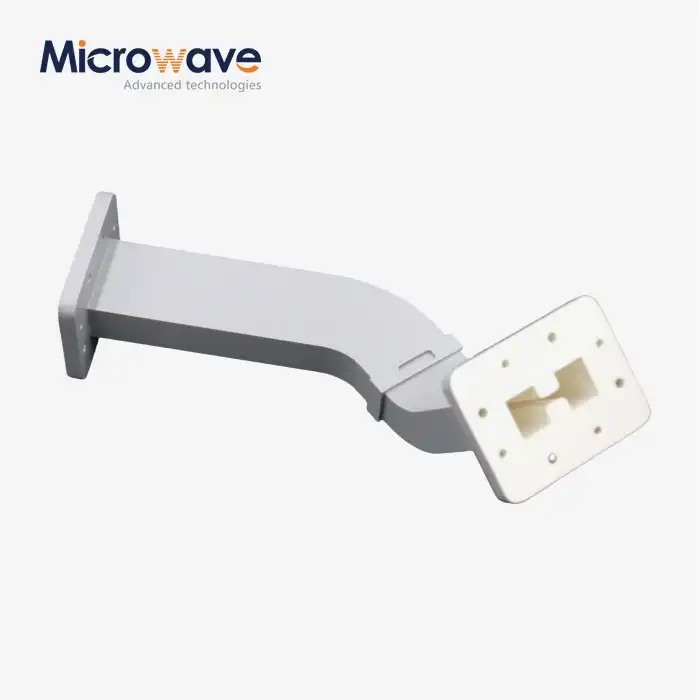 VIEW MOREDouble Ridge Waveguide Bend
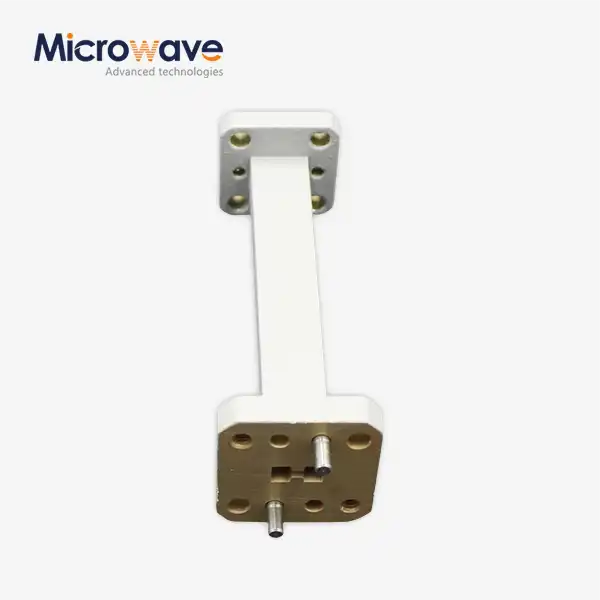 VIEW MOREDouble Ridge Waveguide Transition
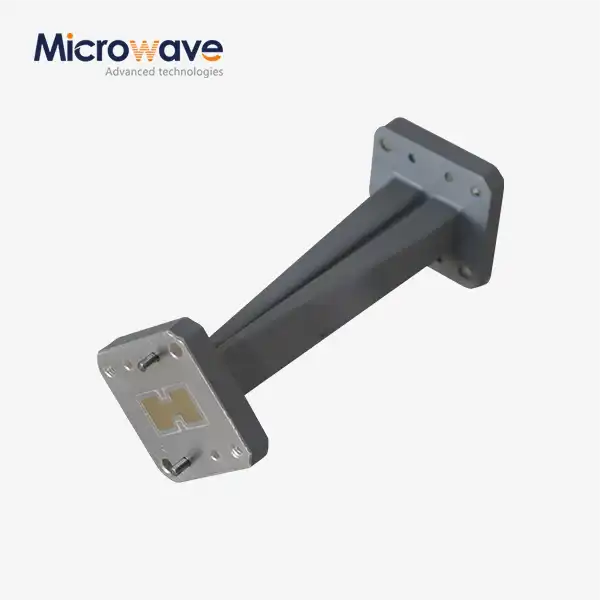 VIEW MOREDouble Ridge Twist Waveguide
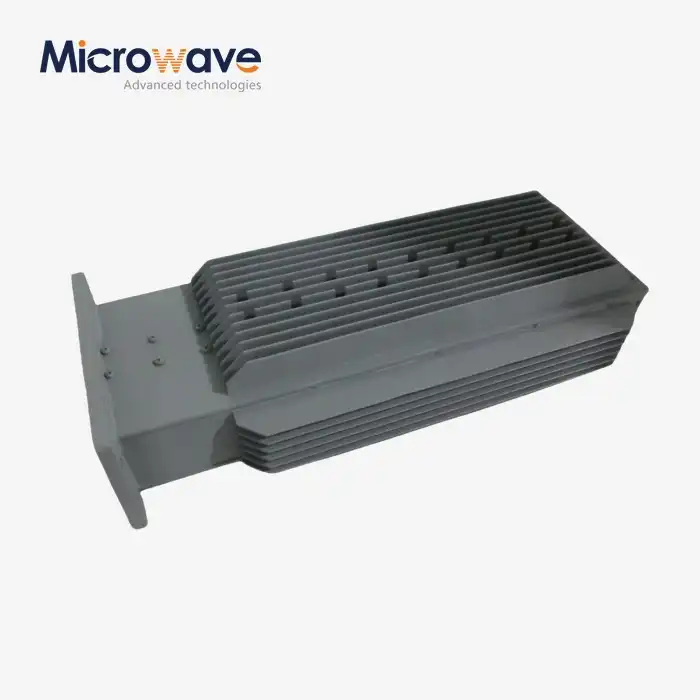 VIEW MOREDouble Ridge Waveguide Load
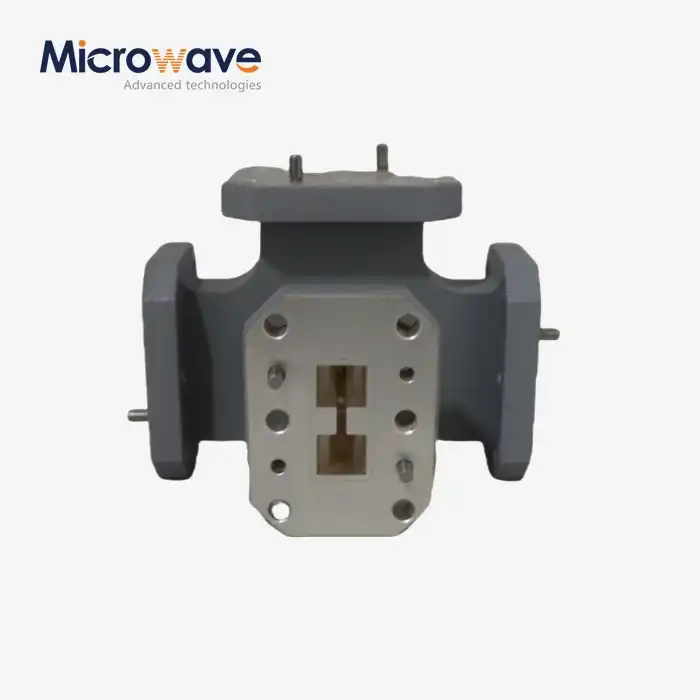 VIEW MOREDouble-Ridged Waveguide Magic Tee
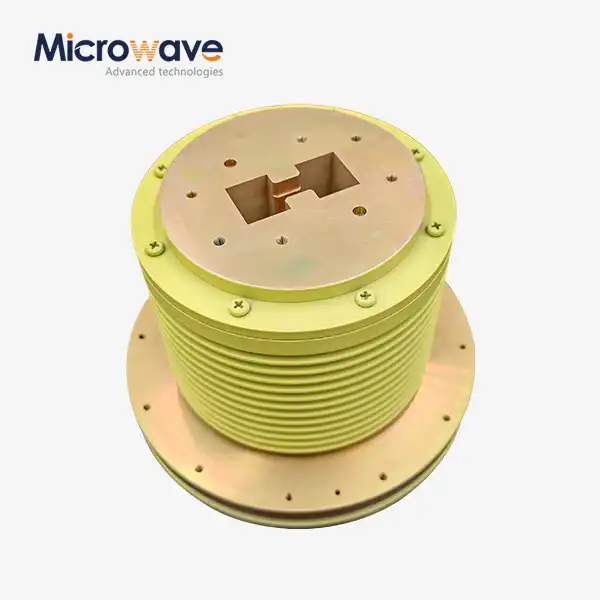 VIEW MOREDouble Ridge Waveguide Rotary Joint
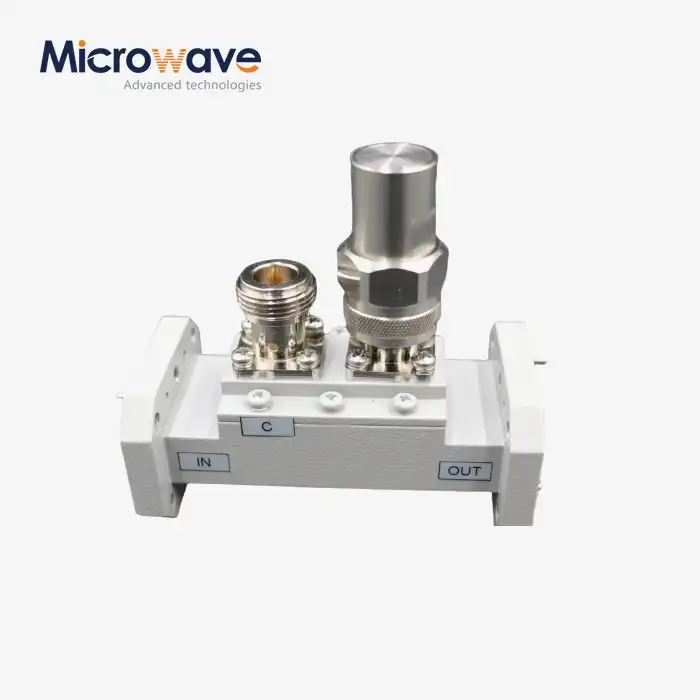 VIEW MOREDouble-Ridged Waveguide Loop Coupler
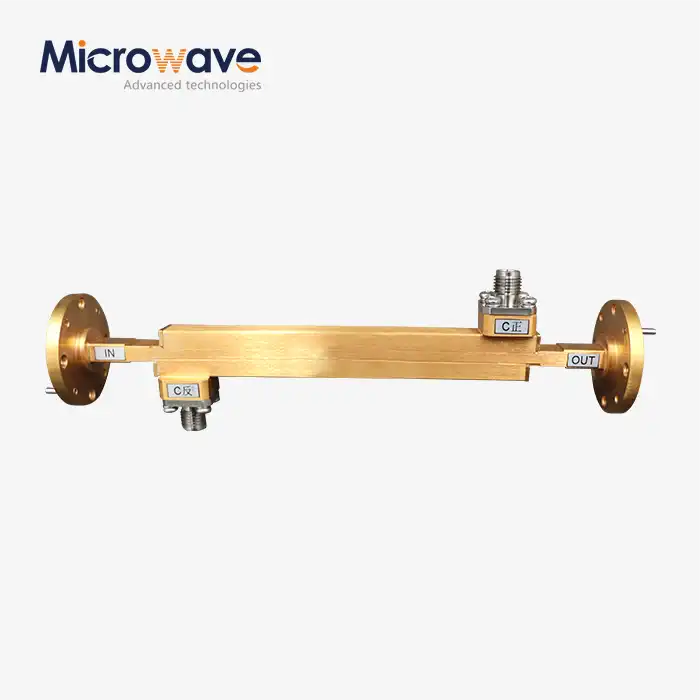 VIEW MOREDouble-Ridged Waveguide Broadwall Directional Coupler