





Broadband Coaxial Circulator: Working Principle and RF Applications Guide
Engineers often find that a precisely engineered Broadband Coaxial Circulator part that bends electromagnetic waves at sharp angles without affecting the integrity of the signal is the best way to deal with limited space in high-frequency radio frequency (RF) systems. A Broadband Coaxial Circulator does this by having a reflective plane at the corner, usually at a 45-degree angle. This gets rid of the bulk of typical curved bends while keeping low insertion loss and high return loss. This new geometry is now needed everywhere, especially in defense, telecommunications, and aerospace, where every millimeter counts, and dependability can't be compromised.
Understanding Broadband Coaxial Circulators
Core Structure and Working Principle
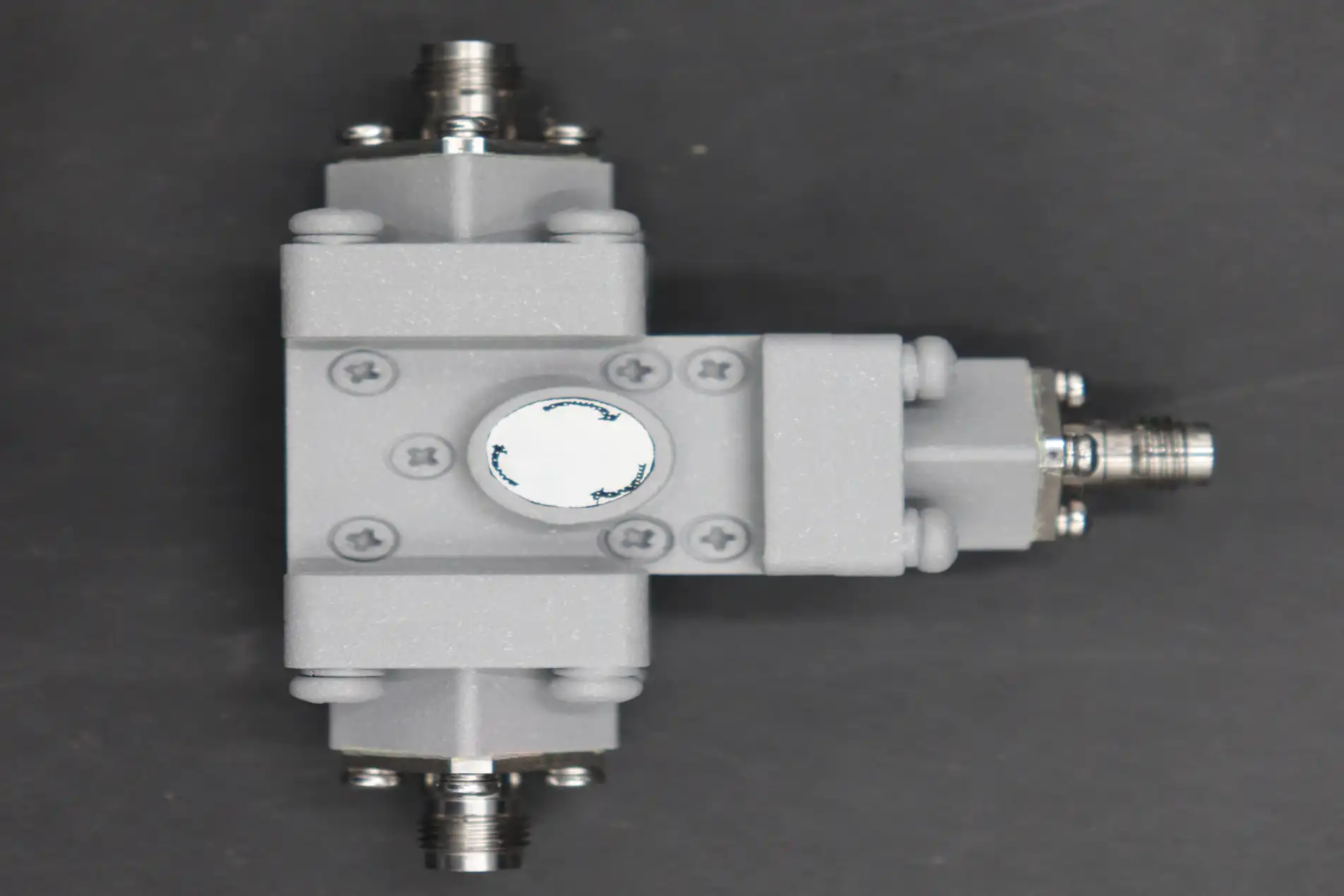
Managing electromagnetic field discontinuities is at the heart of components that are made to change direction. These angular parts use a planar reflector to efficiently redirect wave propagation within small assemblies, unlike sweeping radius bends that need a lot of room. The structure is mitered, and the reflective plane and walls work together in very precise geometric ways. The field distribution changes direction perpendicular to its original path when electromagnetic energy hits the 45-degree cut at the corner. Impedance matching techniques are used in this mechanism to make up for the reactive elements that the sharp discontinuity introduces. Engineers get the best performance by figuring out the exact miter angles and adding compensation structures, such as inductive posts or capacitive steps, that balance out standing wave ratios.
Key Technical Specifications
Modern Broadband Coaxial Circulator units exhibit remarkable performance metrics that directly impact system reliability:
- Frequency Coverage: Our devices span 0.3GHz to 110GHz, accommodating legacy systems operating at lower frequencies through emerging millimeter-wave applications for 5G and beyond.
- Insertion Loss: Maintaining ≤0.1 dB through precision machining and oxygen-free copper construction ensures minimal signal degradation during transmission.
- Isolation: With return loss performance of ≥25 dB, signal reflections are effectively kept to a minimum, protecting sensitive components from interference.
- Power Handling: Incorporating copper heat sinks and ceramic thermal interfaces, these devices are designed to run continuously at kilowatt power levels for radar and industrial applications.
- VSWR: Using 5-axis CNC machining with tolerances of ±0.01mm ensures excellent impedance matching, reducing reflections that could distort signal integrity.
Differentiating Factors from Standard Circulators
The way these parts fit into systems is based on two main orientations. Along the thin wall, E-plane configurations bend, which changes the direction of the electric field. H-plane variants bend along the wide wall, which changes how the magnetic field is spread. Power handling, bandwidth response, and impedance matching complexity are all different for each orientation. In general, H-plane designs are better at handling power because voltage gradients are spread out more evenly across the wide wall geometry. This setup works well for high-power radar transmitters that need to send kilowatt-level signals without Broadband Coaxial Circulator breaking, whereas E-plane arrangements are popular in satellite communication payloads where every cubic centimeter counts.
Applications and Advantages in RF Systems
Real-World Use Cases
Fire-control radar systems carried by air have a lot of power packed into very small spaces in the nose cones and wing pods of aircraft. With our small angular Broadband Coaxial Circulator parts, radar designers can send strong radio frequency signals between transmitter modules and phased array antennas without having to use bulky curved bends. Another difficult application is satellite communication transponders, where space and weight affect every design choice. As 5G millimeter-wave networks are put into use, there is a greater than ever need for precise components that can work at frequencies above 24GHz. To set up a base station, you need small assemblies that carry signals between active antenna arrays and transceiver modules inside weatherproof cases. Low insertion loss keeps the signal strength, which directly increases the network's capacity and coverage radius.
Comparative Advantages
When designing RF systems, procurement engineers often look at more than one way to route waves. Knowing about comparative advantages can help you get the most out of your budget and improve performance. The gradual radius geometry used in curved bends keeps the impedance continuity naturally, but usually needs a turning radius that is several times the width of the waveguide, which takes up valuable space in equipment racks. Angular miter designs take up 30% to 50% less space than curved versions. Because it is compact, engineers can run signal paths through small spaces that curved bends can't reach. While flexible assemblies let you choose how to route signals through sections that can move, they have higher insertion losses and can't handle as much power compared to precision-machined rigid parts that are reliable and always work the same way.
Choosing the Right Broadband Coaxial Circulator
Essential Procurement Criteria
Selecting an appropriate Broadband Coaxial Circulator requires matching device specifications to system requirements while evaluating technical conditions. First, decide on the operating frequency range based on what the system needs. Power handling needs directly affect the choice of material and the design of the heat exchanger; you must list the maximum and average power levels, as well as the duty cycle characteristics. Acceptable signal attenuation through the component is set by the insertion loss specifications, with normal values between 0.05dB and 0.15dB. When it comes to physical integration, mechanical specifications cover things like mounting options, flange types, and dimensional envelopes. Environmental specifications include the temperature range, resistance to humidity, tolerance for vibration, and any special needs like vacuum compatibility for space applications.
Supplier Selection Considerations
Beyond component specifications, supplier attributes significantly impact procurement success. Reputable manufacturers show quality by getting certifications like ISO 9001:2015 and ISO 14001:2015. Trustworthy partners don't just sell parts; they also offer full support, such as electromagnetic simulation, prototype development, and technical advice. Customizing bend angles, sizes, and flange configurations lets system designers get the best integration possible instead of having to settle for standard catalog items. The ability to make things has a direct effect on consistency; modern CNC machining centers used by suppliers allow for the tight tolerances needed for high-frequency performance. In-house test labs with vector network analyzers and environmental chambers make it possible to do a full validation before shipping, ensuring parts meet strict industry requirements for defense and aerospace.
Practical Guide to Procurement and Deployment
Sourcing and Logistics
Global procurement of a Broadband Coaxial Circulator requires attention to costs and business terms. Pricing is based on how much the materials cost, how hard they are to make, and how many are ordered. Copper construction, plating with precious metals, and custom mechanical configurations raise the cost per unit, while aluminum standard catalog items are more cost-effective. Volume pricing helps production programs cut costs in a meaningful way, and long-term supply agreements can lock in good prices. Lead times change depending on how busy the factory is and how complicated the order is; items from a standard catalog may ship within four to eight weeks, but custom configurations need time to be made and tested. Accurate documentation, including technical drawings and material certifications, is critical for tracking in defense and aerospace applications.
Installation Best Practices
The best relationships for buying things go beyond just buying parts; they become strategic partnerships that help with installation and integration. Technical support, such as installation instructions and troubleshooting advice, is very valuable throughout the lifecycle of a product. As systems change, engineering teams should be available to help with problems in the field and make sure they work at their best. Quality problems and late deliveries can ruin projects, so it is important to set up clear lines of communication so that problems can be solved quickly. During order fulfillment, customer service teams stay in touch regularly to provide proactive updates and immediately escalate any potential issues. Proper thermal management must also be confirmed during installation, especially for high-power versions that use copper heat sinks to stabilize performance.
Future Technology Trends
The evolution toward higher frequencies and wider bandwidths drives ongoing innovation. Projects that aim for continuous improvement are good for both suppliers and customers. You can make proactive product development that anticipates future needs possible by sharing performance feedback, application insights, and new requirements. Customer feedback directly affects research and development priorities, ensuring that product roadmaps match what the market needs. Emerging materials with improved temperature stability and miniaturization techniques enable integration into more densely packed phased array elements. As communication systems move toward millimeter-wave expansion, the need for precise redirection of signals in compact footprints will continue to drive the technical evolution of these components.
Technical Deep Dive: Design Principles and Datasheets
Ferrite Material Science
Choosing the right materials is very important for overall performance. Oxygen-free copper is a great conductor because it lowers conductor losses to almost nothing. For aerospace uses, aluminum alloys are lighter than other materials while still having good electrical properties. High-conductivity materials are often used in these parts, and you can choose to have them plated in silver or gold to improve their surface conductivity and corrosion resistance. This makes sure that they work the same way across the whole band. The reflective plane and wall interaction must be precisely managed to ensure the field distribution changes direction correctly without introducing reactive elements that could degrade the standing wave ratio.
Coaxial Architecture Advantages
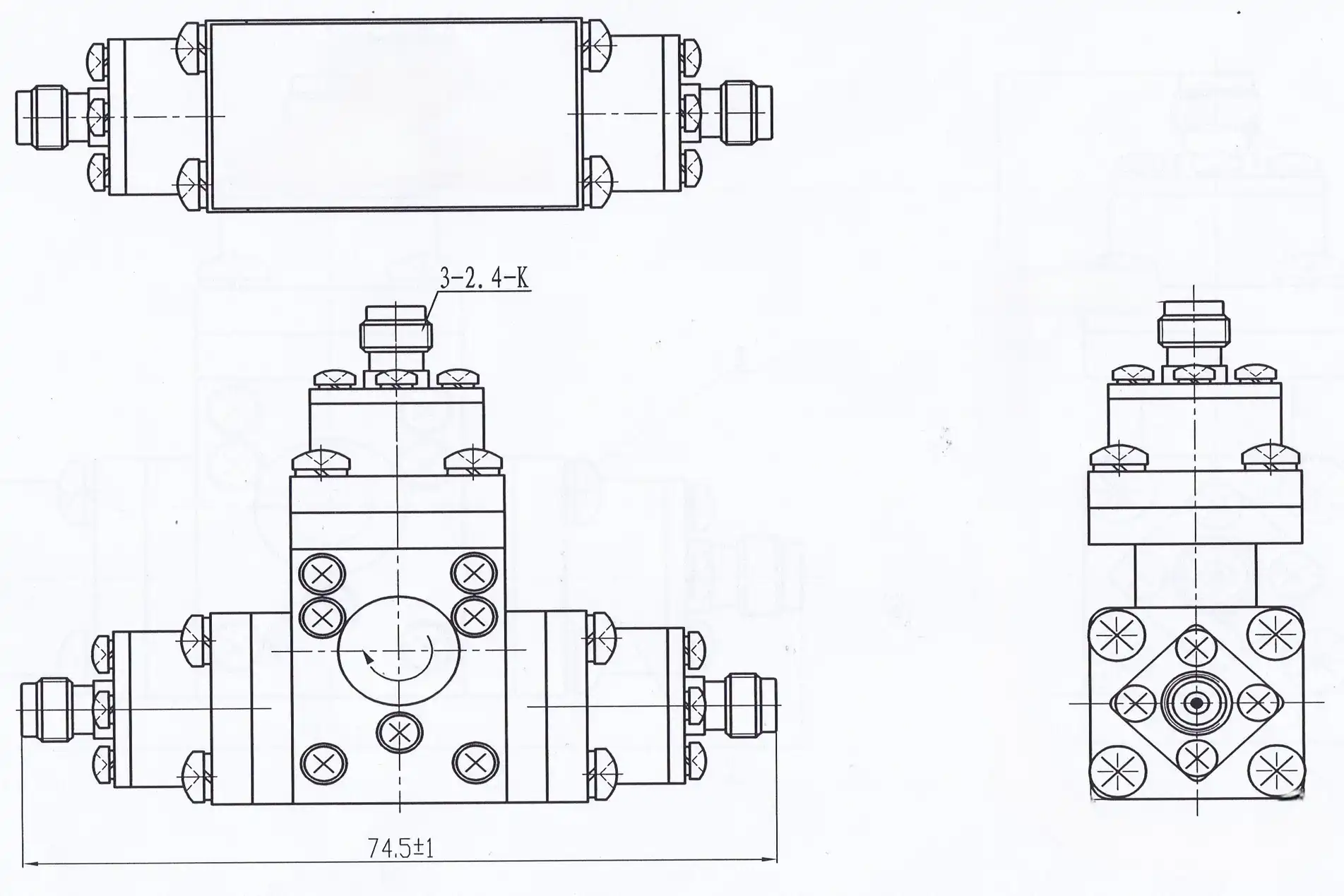
The architectural structure provides several design benefits of the Broadband Coaxial Circulator. With 5-axis CNC machining, mitered surfaces can be made with a tolerance of ±0.01mm. This makes sure that the field is spread out evenly and reflections are kept to a minimum. Precision machining ensures dimensional tolerances, maintaining the proper impedance, critical for minimizing reflections at port interfaces. Mission-critical installations need these precision-machined rigid parts because they are reliable and always work the same way. The compact design allows engineers to run signal paths through small spaces that curved bends can't reach, which is vital for modern high-density systems where space is at a premium.
Interpreting Performance Data
Datasheet specifications for a Broadband Coaxial Circulator require careful interpretation. Insertion loss curves should show minimal ripple across the stated frequency range, typically staying below 0.1dB. Performance changes slightly depending on the frequency and accuracy of manufacturing. Isolation, often represented through return loss requirements, tells us how well the part matches the system impedance; values between 20dB and 25dB mean great performance. Power handling needs directly affect the design of the heat exchanger; listing the maximum and average power levels, as well as the duty cycle characteristics, is essential. Measured S-parameter data for the frequency band you need should be requested to make sure the performance fits your system's budget.
Conclusion
In telecommunications, aerospace, defense, and industrial microwave systems, Broadband Coaxial Circulator parts that efficiently redirect signals through small angular geometries have become essential building blocks. The engineering ideas behind these parts balance electromagnetic theory with the limitations of how they can be made. This makes solutions that take up little space while still providing great electrical performance possible. Comparing different approaches shows clear benefits in certain application situations, allowing smart choice-making that improves system architecture. Real-world deployments show real benefits, such as smaller equipment, higher reliability, and better operational efficiency. Clear technical communication, partnerships with qualified suppliers, and paying attention to both performance requirements and commercial factors that support project success and long-term value realization are all important for specification and procurement processes to go well.
FAQ
1. What frequency ranges do broadband coaxial circulators typically cover?
Modern devices cover a wide spectrum from 0.3GHz to 110GHz. Designs are often optimized for specific segments, such as frequencies above 24GHz for 5G millimeter-wave networks or 2-18 GHz for electronic warfare.
2. How do broadband coaxial circulators differ from waveguide versions?
Mitered designs take up 30% to 50% less space than curved waveguide versions. While curved designs naturally offer great broadband performance, their large size makes them impractical in modern high-density systems where space is at a premium.
3. What determines power handling capacity?
Power handling is determined by the material and construction, such as oxygen-free copper and heat sinks. H-plane designs are generally better at handling kilowatt-level power because voltage gradients are spread out more evenly across the wide wall.
4. Can these devices function as isolators?
Yes, these three-port components can be configured to protect sources from reflections. By precision-machining the mitered surfaces, signal paths are redirected with high return loss, effectively isolating sensitive transmitter modules from reflected power.
Partner with ADM for Your Broadband Coaxial Circulator Requirements
Advanced Microwave Technologies Co., Ltd (ADM) stands ready to support your RF system integration with precision-engineered components backed by ISO 9001:2015 quality assurance and over 20 years of microwave expertise. Every precise Broadband Coaxial Circulator that we send you is made with our engineering team working alongside procurement experts and system designers to create custom solutions that meet your unique technical needs. From the first electromagnetic simulation to the validation of prototypes and full production, we maintain high-quality standards that are backed up by thorough testing in our state-of-the-art 24m Microwave Darkroom facility. Whether you require standard catalog parts or fully customized assemblies with specific bend angles and flange configurations, our OEM capabilities and global logistics support ensure reliable supply partnerships that keep your projects on schedule. Contact craig@admicrowave.com today to discuss your procurement needs and discover how our commitment to quality, customization, and technical excellence can enhance your RF system performance.
References
1. Pozar, D. M. (2011). Microwave Engineering (4th ed.). John Wiley & Sons.
2. Linkhart, D. K. (1989). Microwave Circulator Design. Artech House.
3. Helszajn, J. (2008). The Stripline Circulator: Theory and Practice. Wiley-IEEE Press.
4. Baden Fuller, A. J. (1987). Ferrites at Microwave Frequencies. Peter Peregrinus Ltd.
5. Fay, C. E., & Comstock, R. L. (1965). Operation of the Ferrite Junction Circulator. IEEE Transactions on Microwave Theory and Techniques, 13(1), 15-27.
6. Schloemann, E. F. (2000). Advances in Ferrite Microwave Materials and Devices. Journal of Magnetism and Magnetic Materials, 209(1-3), 15-20.
YOU MAY LIKE
 VIEW MORELog Periodic Antenna
 VIEW MORESlotted Waveguide Array Antenna
 VIEW MOREOpen Boundary Dual Linear Polarization Four Ridged Horn Antenna
 VIEW MOREConical Circular Polarization Horn Antenna
 VIEW MOREConical Dual circular Polarization Horn Antenna
 VIEW MORELadder Membrane Square Dual Circular Polarization Horn Antenna
 VIEW MOREQuadrifilar Helix Antenna
 VIEW MORECassegrain Antenna