




Why Are High Power Waveguide Isolators Critical in RF?
In radio frequency (RF) systems, high power waveguide isolators are very important because they stop mirrored signals from going backwards and damaging expensive transmitters, amplifiers, and klystrons. These non-reciprocal devices allow signals to flow in only one direction while absorbing reverse power. This is very important in places like radar installations, satellite ground stations, and high-power communication networks, where even small reflections can cause equipment failure, signal degradation, and expensive downtime. In mission-critical RF infrastructure, a high power waveguide isolator can mean the difference between safe operation and catastrophic component loss because it keeps the system stable under extreme power conditions, often handling kilowatts of power all the time.
Understanding High Power Waveguide Isolators in RF Systems
What Makes Waveguide Isolators Unique
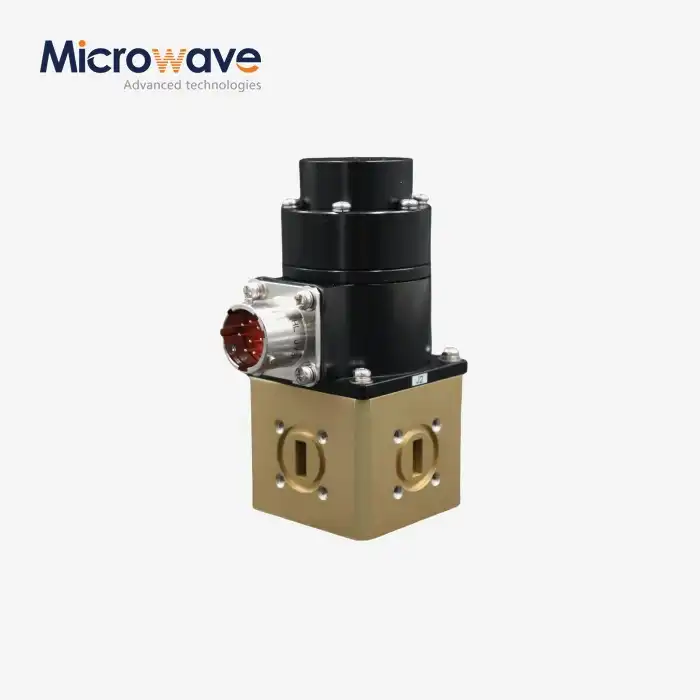
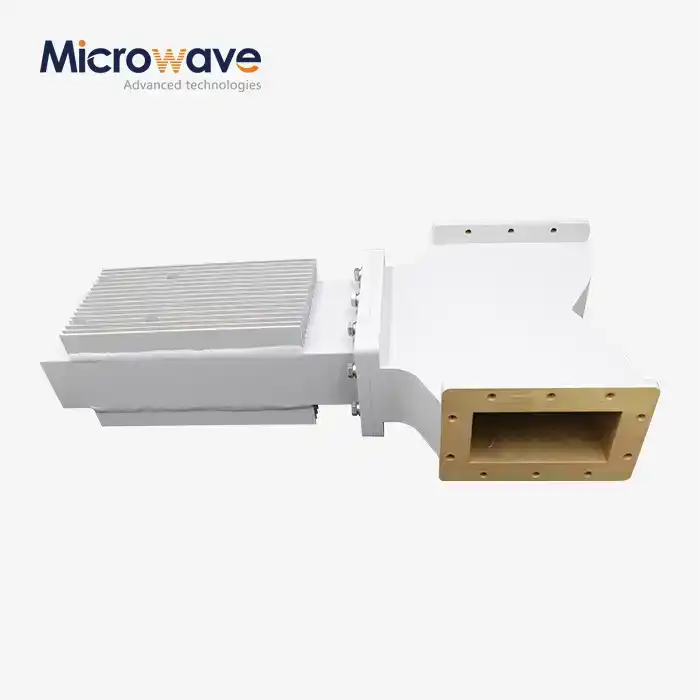
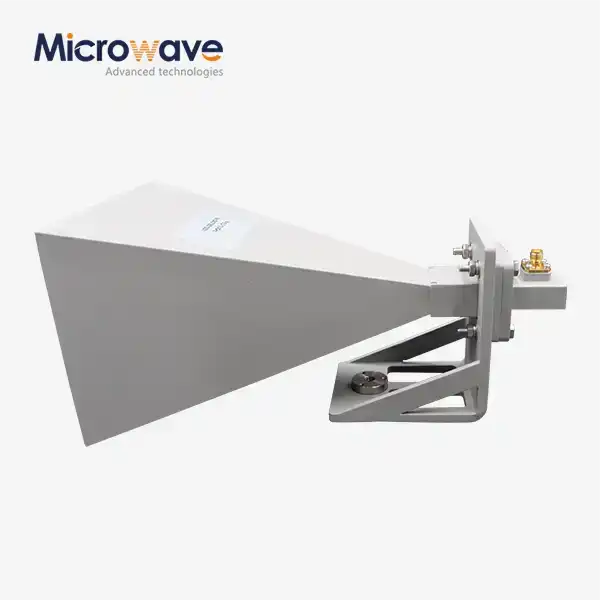
When working with high-frequency electromagnetic energy, RF devices need to be very precise. high power waveguide isolators are designed to deal with these problems by only letting signals run in one direction and stopping them from going the other way. Unlike coaxial designs, which have trouble with high power levels, waveguide designs work great in situations that need to handle more power with less insertion loss. Permanent magnets push ferrite materials inside the waveguide structure, which is what the core mechanism depends on. Differential phase changes are made for the forward and backward signals. This stops unwanted echoes before they reach sensitive source equipment.
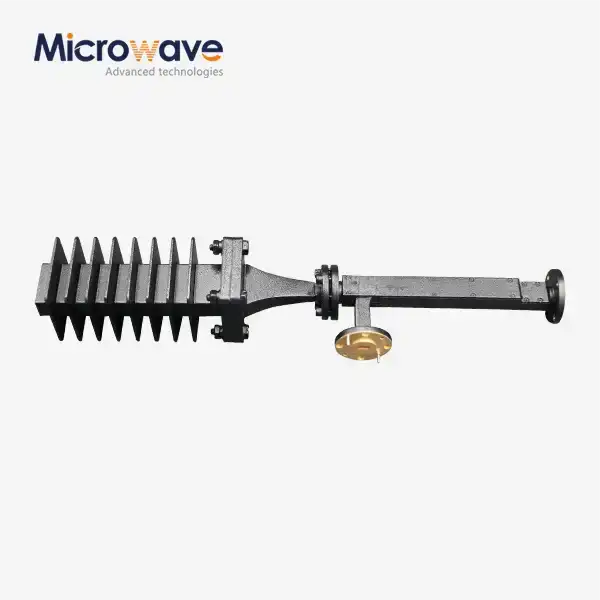
When you look at how to handle heat, you can tell the difference between low-power cable isolators and waveguide models. Coaxial isolators usually get rid of absorbed energy through limited surface contact. High power waveguide isolators, on the other hand, spread the thermal load over a larger metal frame, usually made of copper or aluminum, which lets natural airflow or active cooling work together. Because of this design benefit, it can keep working at power levels above 1000 watts, which is a level where many other options fail.
Key Technical Specifications That Matter
When shopping for isolators, there are a number of factors that directly affect how well they work and how long they last. The device's isolation level, which is usually given in decibels, shows how well it stops backward signals. Standard isolators in the industry offer 20 dB of isolation, which means that only 1% of the power that is returned goes back to the source. Insertion loss, or signal reduction in the forward direction, should be kept as low as possible; standards around 0.3 dB make sure that energy is transferred efficiently without much loss.
Bandwidth decides how flexible operations can be across frequency bands. With a bandwidth of 800 MHz, the gadget can work well across various radar or transmission channels without having to retune. The operating temperature range is also important for field operation. Devices with ratings from -40°C to +70°C can handle difficult situations in military, aircraft, and outdoor sites. Choosing the right material—aluminum for light uses and copper for best heat conductivity—also helps make solutions fit the needs of each location.
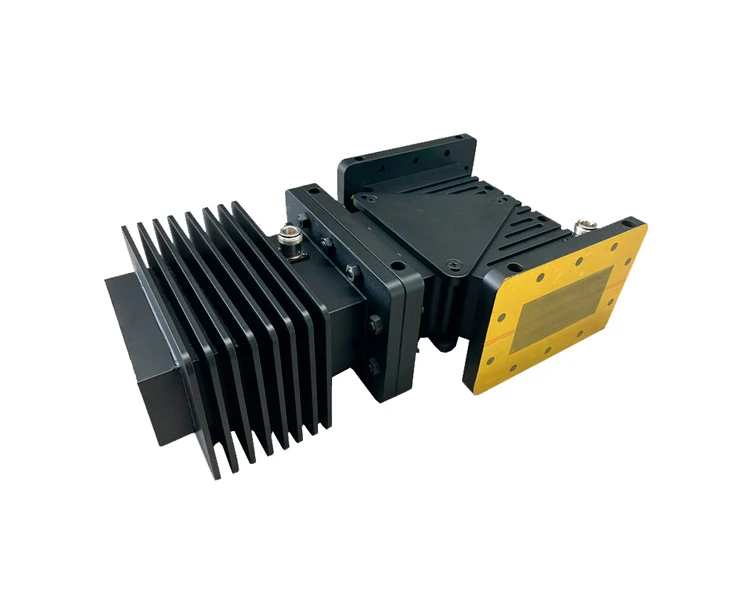
Why High Power Waveguide Isolators Are Essential: Problems They Solve
Protecting Against Destructive Reflections
RF communication systems are always at risk of impedance mismatches, which can happen when wires are broken, antennas freeze up, or loads change while the system is running. When this happens, some of the power that is being sent back to the source is reflected. Without separation, this reverse energy causes jumps in the voltage standing wave ratio (VSWR) that put too much stress on the output stages of the amplifier. Solid-state power amplifiers lose power right away, while vacuum tube devices like traveling wave tubes can have terrible arcing happen.
These gadgets do the following main things to keep you safe:
Source Equipment Preservation: Reflected energy absorption keeps amps from overheating, which means they can work for years instead of months in continuous-duty situations.
Signal Integrity Maintenance: Isolators get rid of standing waves to make sure that the output power and spectral clarity are always the same, which is important for telecom regulations.
System Stability Enhancement: Keeping feedback loops from forming ensures straight operation even when loads change, which is important for radar systems that need to accurately tell the difference between targets.
Maintenance Cost Reduction: Getting rid of early component failures lowers the number of unplanned repair visits and the labor costs that come with them.
These protection features directly translate into dependability in operation. When bad weather hits a satellite earth station, the antenna detunes, but the transmitter keeps going because the high power waveguide isolator captures short-term echoes. Even though antennas move quickly and cause short-term changes in resistance, military radar sites are still able to accurately track targets.
Real-World Performance in Demanding Environments
In the field, deployments show benefits that go beyond theoretical safety. When they work along the coast, weather tracking radar devices have to deal with regular changes in temperature and humidity. Over five-year service intervals, installations with properly defined waveguide isolators report 40% fewer amplifier replacements than installations that aren't secured. The isolators can handle 1000 watts of forward power and can withstand extreme weather conditions. This means they can keep working during important storm tracking tasks.
Another example of proof is the use of microwaves for cooking in industry. When goods move through treatment zones in factories that use 915 MHz systems for material handling, the loads are very different from one another. Systems that use isolators and good thermal management keep the power flowing steadily, which lowers the chance of product flaws caused by uneven heating. The 0.3 dB insertion loss standard guarantees energy economy, which means lower costs of doing business in industrial settings with a lot of job cycles.
Comparing High Power Waveguide Isolators to Alternative Solutions
Waveguide Versus Coaxial Isolators
When making a purchase decision, people often have to pick between waveguide and coaxial isolation methods. Coaxial isolators come in small sizes and are easy to add to existing wire systems, which makes them a good choice for installations with limited room. But it's clear that they can't handle more power than 100 watts of constant running. Because the shape is helical, the received energy is concentrated in a small ferrite volume. This means that even at low power levels, active cooling is needed. This makes the system more complicated and adds more places where it could go wrong.
High-power waveguide isolators use their bigger cross-sectional areas to automatically spread out heat loads. The Al/Cu building materials are great at getting rid of heat, so many projects can be cooled without any extra work. When comparing technologies, physical size issues change. For example, waveguide devices take up more rack space but don't need any cooling equipment. Different designs also work with different frequencies. Waveguides work best at certain bands that are limited by their physical size, while coaxial solutions can tune over a wider range of frequencies at lower power levels.
Isolators Versus Circulators in System Design
Another non-reciprocal choice is a circulator, which has three ports and sends mirrored power to a matching load instead of being consumed internally. This change in architecture affects how heat is managed and where components are placed. Circulators need high-power terminations on the outside, which increases their physical size and creates failure points in case the cooling breaks at the terminations. Isolators absorb energy on the inside, which makes system planning easier and lowers connection losses.
Isolators are better for faraway sites because they are easier to maintain. For circulator designs with external loads, the cooling systems and closure integrity need to be checked on a regular basis. Self-contained isolator designs cut down on maintenance touchpoints, which is especially helpful for satellite ground stations, remote platforms, or sites on top of mountains that are hard to get to. In the end, the design of the system determines which technology to use. Circulators work best for multi-port tasks like transmit-receive switching, while isolators work best for linear amplification chains that need simple safety.
Procuring High Power Waveguide Isolators: A Strategic Guide
Selecting Qualified Suppliers and Verifying Credentials
Qualifying suppliers is the first step to successful buying. Manufacturers with ISO 9001:2015 certification use structured quality management to make sure that production standards are the same no matter how many orders they get. RoHS compliance proof proves that global operations are environmentally friendly and follow the rules. By asking for test results that cover insertion loss, separation, and power handling, you can compare the written specs to the actual performance of the high power waveguide isolator.
The thoroughness of the datasheet is used as a first screening tool. The full set of paperwork includes S-parameter data for certain frequency ranges, thermal derating charts that show how much power is handled versus the outdoor temperature, and mechanical models with flange specs. Giving these details up front shows that the supplier is honest and knows what they're doing when it comes to building. On the other hand, unclear specs or missing temperature data make people worry about how mature the product is and how reliable it will be in the field.
Navigating Customization and Lead Time Considerations
Standard catalog isolators can be used for a lot of different tasks, but mission-critical systems often need custom solutions. Some of the customization choices are frequency band optimization for certain radar or communication channels, custom flange connections that match existing waveguide infrastructure, and environmental protection for use in harsh conditions like high temperatures or high vibrations. Including sources early on in the system design process allows for joint engineering, where the features of the isolator work well with the qualities of the amplifier and the needs of the antenna.
Managing lead time is important for planning projects. Standard setups from well-known sources usually ship in two to four weeks. Custom designs, on the other hand, take six to twelve weeks, based on how complicated they are. Strategic buying means keeping in touch with several qualified suppliers while matching lower costs with making sure the supply chain is resilient. Understanding customs rules, import taxes, and shipping methods is an important part of global operations because they keep delivery times from getting in the way of system activation plans.
Advanced Microwave Technologies has waveguide isolators for a range of frequency bands. When designing them, they make sure that dependability, cost-effectiveness, and quality of production come first. We have devices in our portfolio that can be used in feeder systems, test and measurement setups, and a wide range of high-power situations. With an average isolation of 20 dB, an insertion loss of 0.3 dB, a frequency of 800 MHz, and a maximum forward power handling of 1000 watts, our isolators meet strict requirements while keeping prices low and delivery times short.
Long-Term Value and Future Trends of High Power Waveguide Isolators in RF
Reducing Total Cost of Ownership Through Reliability
The cost of a component at the start is only a small part of its total cost over its lifetime. In business telecommunications, where service delays lead to fines and customer loss, system downtime costs go up by a huge amount. Defense sites have to meet operational preparation standards, and if technology isn't available, it can make the task less effective. When high power waveguide isolators are properly defined, they stop amplifier failures that lead to fix cycles that last several days. This keeps the system available and prevents income loss or operational breaks.

Increasing the time between maintenance tasks has clear cash benefits. Quality isolators protect systems so they work 30 to 50 percent longer between planned maintenance visits. This lowers the cost of labor and the need for extra parts inventory. Because well-designed ferrite systems have clear decline curves, condition-based maintenance methods can be used to replace parts before they break instead of waiting for them to break down without warning. This preventative method makes the best use of resources and cuts down on unexpected transportation costs.
Emerging Innovations Shaping Next-Generation Designs
Improvements in materials science mean that future versions of isolators will work better. Curie points are pushed above 250°C by high-temperature ferrite compositions. This lets them work in very hot places like rocket vehicle transmission systems or concentrated solar power sites. Additive manufacturing methods make it possible to make parts with complex internal shapes that help heat escape while lowering weight. This is important for flying and space uses, where every gram affects the design of the system.
Integration trends point to gadgets that can do more than one thing, like isolating and screening or tracking. Embedded directional couplers allow measuring forward and reflected power in real time without the need for extra parts. This helps predictive maintenance programs. Digital settings change the magnetic biasing on the fly, which improves isolation over wider bandwidths or makes up for drift caused by temperature. These smart isolators are in line with the trend in RF systems toward software-defined designs and running themselves.
Telecommunications infrastructure expansion, particularly 5G densification and satellite constellation deployment, drives sustained demand for high-reliability passive components. Defense modernization programs worldwide prioritize electronic warfare capabilities requiring robust signal chain protection. These market forces ensure continued investment in isolator technology refinement, benefiting procurement professionals through improved performance options and competitive pricing driven by manufacturing scale.
Conclusion
High power waveguide isolators are still very important in high-power RF systems because they keep valuable equipment safe from the damage that signal echoes can cause. Because they can handle a lot of power, have low insertion loss, and are passively reliable, they can't be replaced in science, defense, aircraft, and telecommunications uses. By knowing about important specs like separation levels, bandwidth, heat management, and environmental ratings, you can make smart buying choices that balance short-term costs with long-term practical value. As radio frequency (RF) systems get better at handling higher frequencies and power levels, isolator technology also gets better, thanks to new materials and smarter integration. Strategic buying from qualified makers gives companies access to tried-and-true solutions and full expert support, setting them up for long-term success in mission-critical applications.
FAQ
Q1: What distinguishes waveguide isolators from circulators in practical applications?
High power waveguide isolators work as two-port devices that absorb power internally, which makes installation easier and cuts down on the need for extra parts. Circulators have three ports that send mirrored energy to external terminations. This gives you more options for transmit-receive switches, but it needs more cooling equipment. Isolators work best in linear amplification chains, while circulators work best for signal routing with multiple paths.
Q2: How do operating temperature ranges affect isolator performance and reliability?
Extreme temperatures change the magnetic properties of ferrite and put stress on the materials used in houses. Devices designed for -40°C to +70°C keep the required levels of separation and insertion loss in environments that are common in outdoor settings, aircraft platforms, and military deployments. When temperatures go above certain limits, performance goes down, and magnetism may become permanently lost. This is why careful thermal design is needed in high-ambient-temperature situations.
Q3: What customization options matter most for specialized RF system integration?
Frequency band tuning makes sure that working channels work at their best, and customizing the flange interface lets you connect directly to existing waveguide infrastructure without using adapters. Power handling changes allow for higher transfer levels, and external protection solves problems like humidity, shaking, or radiation exposure that may come up during installation. Customization works best when engineers work together with providers during the planning step.
Partner With ADM for High Power Waveguide Isolator Solutions
Every high power waveguide isolator that Advanced Microwave Technologies Co., Ltd. sends out is made with over 20 years of experience in the field. Our manufacturing facilities are ISO 9001:2008 approved, and we can test them up to 110 GHz to make sure that every part meets strict performance standards before it is shipped. Our expert team can help you with everything from reviewing your specifications to making sure the solution works after installation, whether you need catalog devices for quick rollout or custom-engineered solutions for specific uses. As a reliable high-power waveguide isolator provider, we keep our prices low by managing our supply chain more efficiently. We also keep your projects on schedule by sending orders quickly. Get in touch with craig@admicrowave.com to talk to our engineering team about your needs and find out how our waveguide isolator range can improve the performance and stability of your RF system.
References
1. Baden Fuller, A. J. Ferrites at Microwave Frequencies. London: Peter Peregrinus Ltd., 1987.
2. Helszajn, Joseph. Nonreciprocal Microwave Junctions and Circulators. New York: John Wiley & Sons, 1975.
3. Linkhart, Douglas K. Microwave Circulator Design. Second Edition. Norwood: Artech House, 2014.
4. Pozar, David M. Microwave Engineering. Fourth Edition. Hoboken: John Wiley & Sons, 2011.
5. Ishii, Thomas Koryu. Handbook of Microwave Technology: Components and Devices. San Diego: Academic Press, 1995.
6. Montgomery, Carol Gray, Robert Henry Dicke, and Edward Mills Purcell. Principles of Microwave Circuits. London: Peter Peregrinus Ltd., 1987.