





BLOG
February 24, 2025
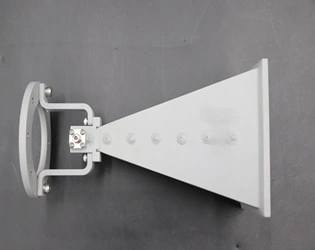
The customization capabilities of Wideband Double-ridged Horn Antennas represent a significant advancement in microwave technology, offering unprecedented flexibility for diverse applications. These sophisticated antenna systems can be tailored to meet specific requirements across various sectors, from electromagnetic compatibility testing to advanced telecommunications. Advanced Microwave Technologies Co., Ltd (ADM), with its two decades of expertise, has pioneered innovative approaches to antenna customization, enabling precise modifications in frequency range, gain characteristics, and physical dimensions to align with unique application demands. This adaptability ensures optimal performance across different scenarios while maintaining the fundamental advantages of wide bandwidth and high directivity that characterize double-ridged horn designs.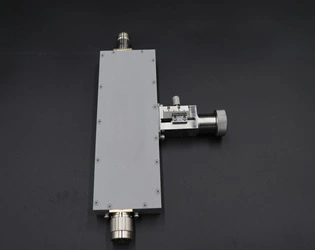
What are the main working principles of Coaxial Variable Attenuators?
February 24, 2025
Coaxial Variable Attenuators are sophisticated microwave components designed to precisely control signal amplitude in RF and microwave systems. These devices operate on the principle of controlled signal reduction through various mechanisms, including resistive cards, rotary vanes, or PIN diodes. The fundamental working principle involves creating a controlled impedance mismatch or introducing lossy materials in the signal path to achieve desired attenuation levels. Understanding these principles is crucial for engineers and technicians working in satellite communications, defense systems, and aerospace applications where precise signal control is paramount.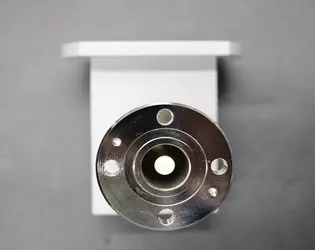
How to Ensure the Long-Term Stable Operation of High Power Waveguide to Coaxial Adapter?
February 24, 2025
Ensuring the long-term stable operation of High Power Waveguide to Coaxial Adapters is crucial for maintaining reliable signal transmission in high-frequency applications. These specialized components serve as critical interfaces between waveguide systems and coaxial cables, particularly in environments where power handling capacity is paramount. This comprehensive guide explores essential strategies for maximizing the operational lifespan and performance stability of these adapters, covering proper installation techniques, maintenance protocols, and environmental considerations that contribute to sustained functionality.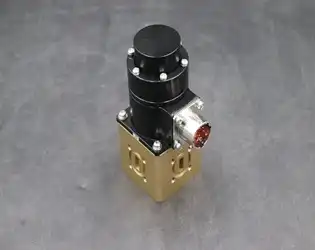
What is the typical insertion loss and isolation for Waveguide Electromechanical Switch?
February 21, 2025
When discussing the performance characteristics of Waveguide Electromechanical Switches, two critical parameters stand out: insertion loss and isolation. Typically, high-quality Waveguide Electromechanical Switches exhibit insertion loss values ranging from 0.2 to 0.5 dB across their operational frequency bands, while isolation values commonly exceed 60 dB, with premium models achieving up to 80 dB or higher. These specifications are crucial for maintaining signal integrity in demanding applications such as radar systems, satellite communications, and military installations where precise signal routing and minimal interference are essential for optimal system performance.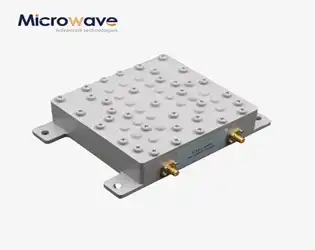
How Coupling Coefficients Tune Coaxial Bandpass Filter Response
September 15, 2026
When selecting RF components for mission-critical applications, understanding how coupling coefficients control filter behavior becomes paramount. Coaxial bandpass filters rely on electromagnetic interactions between internal resonators, quantified as coupling coefficients, to define their frequency response characteristics. These coefficients directly determine passband width, insertion loss profiles, and stopband rejection performance. By adjusting physical spacing, capacitive loading, or inductive coupling structures within the coaxial housing, engineers manipulate these coefficients to achieve desired filter responses—from ultra-narrow channel selection in satellite ground stations to broader passbands in telecom base stations. This fundamental relationship between coupling strength and filter performance enables precise customization, making coaxial designs indispensable for aerospace radar systems, defense communications, and wireless infrastructure demanding both reliability and tailored spectral control.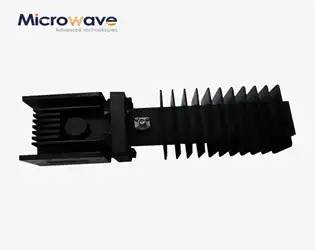
How Much Power Can a High Power Waveguide Isolator Really Handle?
September 15, 2026
If you've ever asked this question mid-project, you're not alone. A high power waveguide isolator is a passive, non-reciprocal two-port device that transmits forward RF energy with minimal loss while absorbing reflected energy traveling in the reverse direction. Designed to protect transmitters, amplifiers, and signal sources from destructive VSWR spikes and impedance mismatches, these components routinely handle power levels from hundreds of watts to multiple kilowatts — depending on frequency band, thermal design, and ferrite material quality. Understanding the real power ceiling matters enormously in mission-critical systems.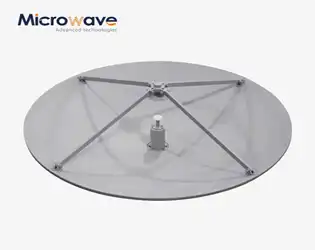
Cassegrain Antenna vs Prime Focus: Which Design Wins at High Frequency?
September 15, 2026
When engineers ask which antenna configuration delivers superior performance at high frequencies, the cassegrain antenna consistently emerges as the dominant choice for demanding applications. Its dual-reflector architecture — a primary parabolic dish paired with a hyperbolic sub-reflector — positions the feed horn behind the main reflector, eliminating long waveguide runs and preserving signal integrity. Prime Focus antennas, while mechanically simpler, place the feed at the focal point, introducing feed blockage and elevated noise temperature. At Ku-band, Ka-band, and above, these differences become operationally decisive.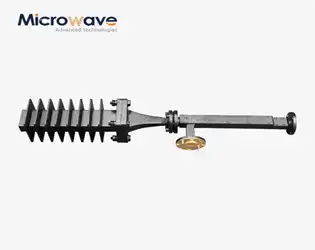
Fixed or Variable? Choosing Waveguide Attenuators for Test Benches
September 11, 2026
When building or upgrading an RF test bench, one question surfaces almost immediately: should you use fixed or variable waveguide attenuators? The answer shapes your signal control strategy, measurement repeatability, and long-term procurement costs. Waveguide attenuators reduce signal power within a hollow metallic transmission line, maintaining system integrity across microwave frequency bands. Unlike coaxial attenuators, they handle higher power levels with lower insertion loss — a decisive advantage in X-band and Ku-band environments. This guide walks through everything you need to make a confident, technically sound decision.