





BLOG
Microwave Horn Antenna Applications Across Industries
September 8, 2026
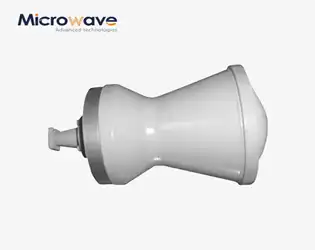
Microwave horn antennas equipped with dielectric lens technology have become indispensable components across mission-critical sectors, from defense and aerospace to telecommunications and industrial automation. The horn lens antenna integrates a precision-engineered lens at the aperture of a standard horn antenna, transforming spherical wavefronts into planar ones. This innovation delivers high gain, enhanced directivity, and compact design—addressing the core challenges procurement engineers face when selecting microwave components for demanding applications where reliability and performance cannot be compromised.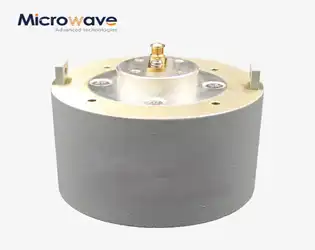
How Does a Planar Spiral Antenna Achieve Wideband Performance?
September 8, 2026
A planar spiral antenna achieves wideband performance through its frequency-independent geometry. Whether Archimedean or equiangular in form, the spiral structure radiates from an "active region" whose physical location shifts along the arms as frequency changes. This means the antenna maintains consistent impedance, gain, and radiation characteristics across an extremely wide bandwidth — often spanning ratios of 10:1 or greater. The inherent circular polarization, self-complementary layout, and flat dielectric substrate combine to deliver stable, multi-octave RF performance that resonant antenna types simply cannot replicate.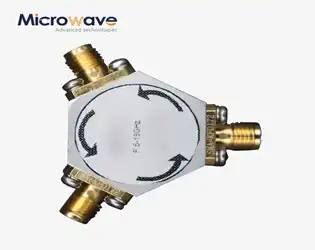
Avoiding Thermal Drift in Broadband Coaxial Circulator Designs
September 8, 2026
Thermal drift is one of the most persistent performance challenges in RF and microwave system design. When temperature fluctuates — whether from ambient shifts, self-heating, or extreme operating environments — a broadband coaxial circulator can experience measurable degradation in insertion loss, isolation, and port-matching stability. For engineers specifying components in radar, satellite, or 5G infrastructure, these shifts are not trivial. This article walks through the root causes of thermal drift, proven design strategies to suppress it, and what procurement managers should demand when sourcing circulators for thermally demanding deployments.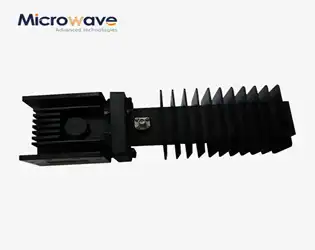
High Power Waveguide Isolators Selection Guide for Engineers
September 4, 2026
Selecting the right high power waveguide isolators requires understanding how these passive, non-reciprocal devices protect sensitive RF sources from damaging reflected energy. These components transmit signals in one direction while absorbing reverse power, preventing equipment failures in radar, satellite, and industrial heating systems. Engineers must balance insertion loss, isolation performance, thermal management, and power handling capacity against application requirements and budget constraints to ensure reliable, long-term operation in mission-critical environments.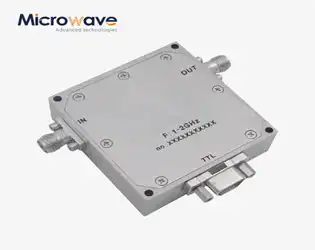
Thermal Budget Constraints in 5G Antenna with Phase Shifter Arrays
September 4, 2026
Thermal budget constraints in a 5g antenna with phase shifter represent one of the most pressing technical challenges facing network infrastructure today. The thermal budget defines the maximum heat that antenna systems can safely dissipate while maintaining performance integrity. As millimeter-wave frequencies and massive MIMO configurations push power densities to unprecedented levels, effective thermal management separates reliable deployments from system failures. Phase shifters, the beam-steering backbone of advanced arrays, contribute significantly to thermal loads—particularly active variants that consume considerably more power than passive alternatives. Understanding these thermal limitations is essential for procurement teams selecting solutions that won't compromise network uptime or degrade signal quality under real-world operating conditions.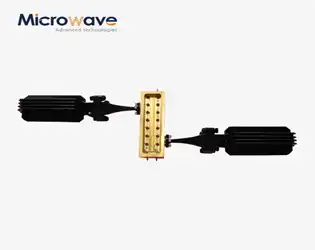
Waveguide Fixed Attenuator Performance and Design Factors
September 4, 2026
Waveguide fixed attenuators represent a specialized class of precision components engineered to control signal amplitude in high-frequency microwave systems. Unlike their coaxial or Microwave Fixed Attenuator counterparts that rely on connectorized interfaces, waveguide attenuators operate within hollow metallic structures, making them particularly effective for applications demanding ultra-low insertion loss and exceptional power handling above 18 GHz. These passive devices dissipate excess RF energy as heat through carefully calibrated resistive elements, maintaining signal integrity while preventing receiver saturation or component damage. We've observed that procurement teams often underestimate the critical role these components play in preserving system linearity, especially in defense radar chains and satellite ground stations where even fractional decibel variations can compromise mission success. Understanding how design architecture, materials science, and thermal engineering converge in waveguide attenuators equips buyers to make decisions that directly impact long-term reliability and measurement accuracy.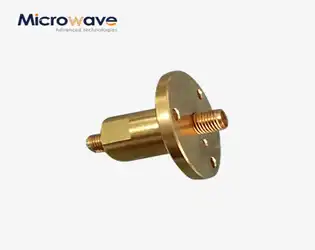
Why Is a Coaxial Rotary Joint Essential for Rotating Platforms?
September 3, 2026
A coaxial rotary joint stands as the critical interface between stationary and rotating systems, enabling uninterrupted RF and microwave signal transmission without cable wrapping or signal degradation. These precision electromechanical components maintain characteristic impedance—typically 50Ω or 75Ω—across broad frequency spectra, from DC to 110 GHz, while supporting continuous 360-degree rotation. In defense radar arrays, satellite tracking antennas, and telecommunications infrastructure, they eliminate the mechanical limitation of static cabling, preserving signal integrity with minimal insertion loss and low VSWR even under constant motion.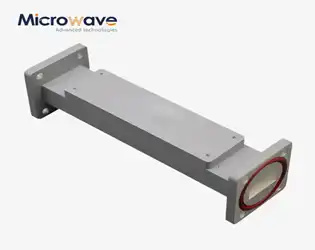
Custom WG Bandpass Filter Solutions for Advanced Projects
September 3, 2026
When mission-critical RF systems demand uncompromising performance, custom WG Bandpass Filter solutions emerge as the cornerstone of signal integrity. These precision-engineered waveguide components offer superior frequency selectivity, minimal insertion loss, and exceptional power handling capabilities that standard filtering technologies simply cannot match. For defense contractors, satellite integrators, and telecommunications system builders, understanding how to specify, procure, and deploy customized waveguide bandpass filters can mean the difference between system success and costly redesigns.