





Choosing a High Power Waveguide Isolator for Radar and SATCOM Uplinks
Selecting the right high power waveguide isolator for radar and SATCOM uplinks is one of the most consequential decisions an RF system engineer or procurement professional will make. These passive, non-reciprocal devices sit between your power amplifier and antenna, absorbing reverse-traveling reflections before they reach—and potentially destroy—your transmitter chain. Whether you are specifying components for a defense radar platform or a commercial satellite earth station, understanding the key parameters, design trade-offs, and sourcing strategies covered in this guide will help your team make a confident, well-informed choice.
Understanding High Power Waveguide Isolators
How They Work at the Component Level
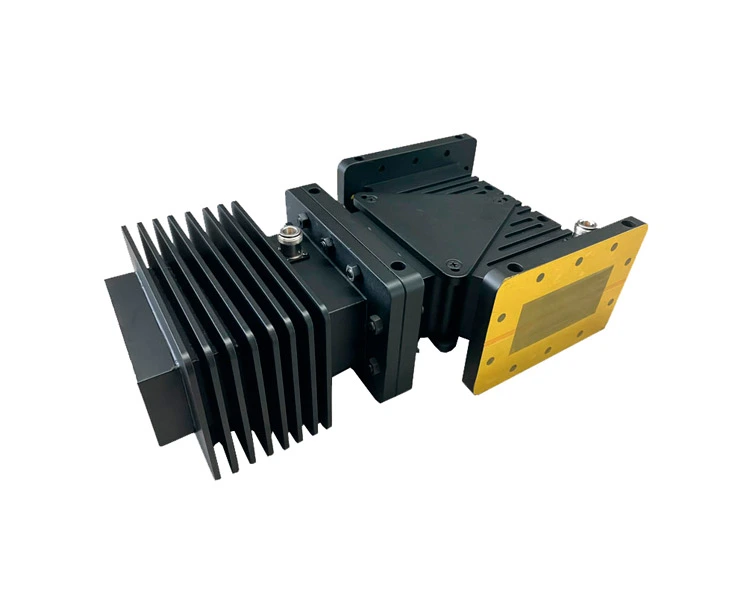
Inside a waveguide body that has been carefully machined is a ferrite element that forms the core of a high-power waveguide isolator. A permanent magnet pushes the ferrite in a certain direction, which makes non-reciprocal propagation possible: forward signals go through with little loss, but energy traveling in the opposite direction is sucked in by a resistive load built into the structure. At ADM, the isolator line-up has bodies made of aluminum and copper. These materials are good at conducting heat and keeping the structure rigid, which is useful for a wide range of applications, from radar shields on the ground to packages in the air.
Key Technical Parameters You Must Evaluate
Before committing to a specification, your tech team should compare each possible gadget to these numbers:
- Isolation: ADM's waveguide isolators usually offer 20 dB of isolation, which means they cut reflected power by a factor of 100. This is enough to keep SSPAs and TWTs safe in common radar and feeder system uses.
- Insertion Loss: The normal value for insertion loss is 0.3 dB, which keeps self-heating under control. At a forward power level of 1,000 W, this equals about 69 W of heat loss, which your thermal design needs to account for.
- Forward Power Handling: This can handle up to 1,000 W of power, which is enough for most ground-based SATCOM transmission and radar emitter needs.
- Bandwidth: An 800 MHz working bandwidth gives system designers a lot of flexibility in how frequencies are used within the waveguide band.
- Operating Temperature: A temperature range of -40 °C to +70 °C works well for most outdoor and military-grade environments.
These factors are not vague; they directly affect whether your transmitter can handle a mismatched load event or a quick VSWR spike in the antenna.
Applications and Benefits of High Power Waveguide Isolators in Radar and SATCOM
Where These Devices Earn Their Keep
When there are impedance mismatches in radar transmitter chains, they can be caused by radome icing, beam-scanning issues, or waveguide flange leaks. These can send waves in the opposite direction, which can frequency-pull a magnetron or put too much heat on a solid-state amplifier. Adding a well-matched high power waveguide isolator to the chain gets rid of this risk without lowering the quality of the signal being sent.
SATCOM uplink ports have a different problem that is just as bad. When there is a lot of traffic, like during burst transmissions, the amplifier output impedance can change, especially when it is hot. These short-lived echoes are absorbed by an isolator at the HPA output. This protects the amplifier and keeps the uplink carrier clean and phase-stable.
Here are the core operational benefits that make these components indispensable in mission-critical RF infrastructure:
- Transmitter protection: Absorbing reverse power stops voltage standing wave ratio spikes from reaching sensitive amplifier stages. This makes it possible for expensive power sources to last longer between failures.
- Signal integrity: The isolator keeps the carrier-to-noise ratio fixed over the link budget by stopping re-reflected energy from entering the transmission line again.
- Reduced maintenance burden: Parts that require less regular maintenance are very helpful for systems that work in harsh or remote places, like offshore platforms and radar sites on top of mountains.
- Lifecycle cost reduction: It's simple engineering economics to protect a $50,000 SSPA with an isolator that's priced competitively.
These benefits directly meet the strict requirements for uptime and dependability set by procurement teams at defense companies and satellite providers.
Comparing High Power Waveguide Isolators: Making the Right Choice
Isolators vs. Circulators: Understanding the Functional Distinction
A circulator is a three-port device that moves electricity from one port to the next in a certain order. High-power waveguide isolators work like circulators, but their third port has an internal matching load that stops it from working. This difference is important in high-power situations, where the load inside the isolator needs to be able to handle the full reflected power without breaking down due to heat. The Al/Cu construction of ADM's products helps heat spread, which makes their products stable in situations with extended reverse power, which is common in pulsed radar duty cycles.
Insertion Loss as a System-Level Safety Factor
Engineers don't always take insertion loss seriously as a measure of pure speed. When the forward power is 1,000 W and the loss is 0.3 dB, about 69 W is lost as heat inside the device. This heat load builds up in a continuous-wave SATCOM connection that works around the clock. The aluminum-copper housing from ADM immediately handles this issue by providing the thermal mass and conductivity needed to keep the ferrite temperature well below the Curie point, which is the point above which isolation performance starts to fail. Your team should avoid taking a procurement risk by choosing a device with a lower stated insertion loss from a seller who can't back it up with data from a vector network analyzer.
Procurement Insights: How to Source High Power Waveguide Isolators Effectively
What to Demand From Your Supplier
There's more to finding high power waveguide isolators for defense or satellite programs than just looking at prices in catalogs. For these kinds of uses, the buying process usually includes:
- Full description of the S-parameters (S21, S12, and S11) over the whole temperature range
- Stress tests for the environment according to MIL-STD-810 or a similar standard
- If the waveguide system uses nitrogen or SF6 to stop arcing, it needs pressurization or hermetic sealing permits.
- RoHS compliance paperwork and being able to track an ISO certification
ADM has ISO 9001:2015, ISO 14001:2015, and ISO 45001:2018 certifications, and all of their products are RoHS compliant. This is the level of compliance that most defense and commercial satellite procurement officers look for before adding a supplier to a list of vendors.
ADM also offers OEM customization for frequency band, flange type, power rating, and form factor. This customization feature cuts down on the number of design iterations needed by teams putting these parts into space-limited systems in the air or on ships. Get in touch to talk about your unique needs and ask for a custom quote.

Design Principles and Performance Optimization
Thermal Management and Material Selection
There is a set Curie temperature for the ferrite part inside a high-power waveguide isolator. When the limit is reached, the material stops being magnetic, and the isolation breaks down. ADM chose to use copper and aluminum in the housing on purpose for thermal engineering reasons: copper quickly moves heat away from the ferrite junction, and aluminum lowers the weight of the whole assembly, which is important for radar systems on airplanes and UAVs.
For applications where reverse power exceeds several hundred watts continuously, passive air cooling through finned housings is still the norm. The working temperature range for ADM is –40 °C to +70 °C, and it has been tested across the full rated power envelope, giving thermal designers a reliable starting point for figuring out how to build heat sinks.
Testing and Quality Assurance
The labs at ADM have microwave measurement tools that are tuned up to 110 GHz. This lets them accurately describe the VNA of every output unit. Before being shipped, full power aging tests put each device through its full rated forward power to make sure it is thermally balanced. OEM users and defense developers rely on the reliability guarantees that are based on this type of testing.
Conclusion
It's not as easy as checking off a list to find the right high power waveguide isolator. For this, you need to carefully look at things like isolation depth, insertion loss, power handling, heat management, and the supplier's ability to provide documents. ADM's waveguide isolators can handle up to 1,000 W of forward power, 20 dB of typical isolation, and 0.3 dB of typical insertion loss. They can work in temperatures ranging from –40 °C to +70 °C and meet the core needs of radar and SATCOM uplink applications with precision-engineered, ISO-certified hardware that comes from more than 20 years of manufacturing experience.
FAQ
What isolation level is adequate for radar transmitter protection?
ADM's standard line has an isolation level of 20 dB, which cuts reflected power by a factor of 100. This is good enough for most CW and burst radar uses. For uses with very sensitive source impedance, multi-junction designs can provide higher isolation of up to 40–60 dB.
How does insertion loss affect system performance?
Every 0.1 dB of insertion loss turns into heat inside the device and lowers the amount of power that can be sent. A 0.3 dB loss adds about 69 W of heat energy to 1,000 W. It is very important to choose a gadget whose insertion loss numbers have been checked and not just promoted.
Can ADM supply custom isolators for non-standard frequency bands?
Yes, ADM's OEM services include frequency ranges, flange configurations, and materials that can be changed to fit your needs. You can get a prototype turnaround to test before committing to full-scale production.
What waveguide bands does ADM's isolator line cover?
ADM makes waveguide isolators for a number of different common bands. For a personalized suggestion, email the tech team at craig@admicrowave.com with your exact frequency and power needs.
Are these isolators suitable for outdoor SATCOM terminals?
ADM isolators are great for outdoor ground stations because they can work in temperatures from -40 °C to +70 °C and are made of Al/Cu. Talk to ADM's tech team about better thermal control options for deployments in the tropics or deserts where temperatures are high.
Request a Quote from ADM — Your Trusted High Power Waveguide Isolator Manufacturer
ADM offers carefully designed high power waveguide isolators that are backed by ISO certification, RoHS compliance, and more than 20 years of experience making RF products. Our engineering team is ready to help you whether you need standard stock units or a fully designed OEM solution for a tough radar or SATCOM job. Visit craig@admicrowave.com to see our full line of products and get a quote right away.
References
1. Pozar, D. M. — Microwave Engineering, 4th Edition. Wiley, 2011.
2. Montgomery, C. G., Dicke, R. H., & Purcell, E. M. — Principles of Microwave Circuits. MIT Radiation Laboratory Series, McGraw-Hill, 1948.
3. Helszajn, J. — Ferrite Phase Shifters and Control Devices. McGraw-Hill, 1989.
4. EEE Transactions on Microwave Theory and Techniques — "Thermal Analysis of High-Power Ferrite Isolators for Radar Applications." IEEE, 2018.
5. MIL-STD-810H — Environmental Engineering Considerations and Laboratory Tests. U.S. Department of Defense, 2019.
6. International Electrotechnical Commission — IEC 62037-1: Passive Intermodulation — Part 1: Terms, Definitions and Physical Mechanisms. IEC, 2012.