





What Are Twistable Waveguides and How Do They Work?
Twistable waveguides are microwave transmission system components that transport RF energy and allow controlled rotation along their length. They align interfaces at various angles, correct tiny misalignments, and, in the case of twist-section designs, rotate the polarization at a given angle, e.g., 90°. The energy goes down a metal tube that is just the right size inside. This helps keep the signal in and the loss minimal. I’ll describe how these components function, how they are different from rigid and flexible waveguides, and what U.S. customers should make sure of when they place an order.
Twistable Waveguide Basics: Definition, Structure, and Purpose
What a Twistable Waveguide Is
A twistable waveguide is a kind of RF or microwave transmission system that may be twisted around its long axis and still provide a continuous channel for the flow of energy. To maintain a stiff waveguide in form, both flanges must be exactly lined up. An object that can be twisted allows for some movement in that relationship. The twist may be given by a flexible element which can rotate in a specified range, or by a fixed section which is twisted and changes the direction of the field. Both varieties remain with the waves inside, since they are constructed of metal. Hence, they are suitable for radar, satellite, and test systems. The people who want to purchase from me always have to tell me precisely what behavior they desire: movement, alignment, or change in polarization.
Why Engineers Use Twistable Waveguides
Real-world systems are seldom exact matches. A transmitter is angled differently from the feed horn, and an antenna feed shifts after repair. The radar pedestal is shaking. This is where twistable waveguides are useful since they can accommodate rotational interfaces, limited installation space, and tiny variations in alignment. They also relieve tension on flanges, which prevents joints from splitting or leaking over time. One may tolerate tolerance mistakes that rigid pipes can not. For example, a brief piece of a satellite ground station can be twisted between a feed and an amplifier. Selecting the right part right away saves time and removes the need for rework in the field.
Main Structural Parts and Materials
Not many assemblies are different from one another. They all have a transmission section, end flanges, conductive sealing layers, strain relief, a protective jacket, and environmental seals. Under a neoprene or silicone jacket, flexible types often have a metal strip that is wound around itself and interlocks with itself. The metal strip is usually copper or brass. The metals used to make fixed twist sections are aluminum or copper, and ADM's Waveguide Twist comes in both of these. Plating quality, flange finish, and accuracy of dimensions all have a direct effect on insertion loss and service life. Also, before you approve a design, I think you should ask each supplier for RoHS paperwork.
How Twistable Waveguides Work
How the Wave Travels Through the Guide
Microwaves travel through a rectangular waveguide, which is an electromagnetic field with metal walls around it. The TE10 mode is what most systems use. The lower frequency limit is set by the wide wall dimension. The speed of light divided by two times that dimension is equal to the cutoff. That's about 6.56 GHz for WR-90, which has a wall that's 22.86 mm wide. The normal operating range is 8.2 to 12.4 GHz. If you compare this to open lines, radiation loss is very low because the field stays inside the metal. If you twist a part, it needs to keep this internal geometry, or the field will reflect and waste power.
How a Twist Rotates Polarization
The electric field in a TE10 wave points along the narrow width of the guide. The field moves with the section as it slowly spins around its axis. A 90° twist turns a wave that is polarized vertically into a wave that is polarized horizontally. This means that two parts with different flange orientations can connect without bending. Low reflections are kept by a gradual twist over a number of guide wavelengths. The Waveguide Twist from ADM can rotate 90° or 180° through a gradient structure on the inner wall. This keeps the wall from wearing down from mechanical contact.

Limits That Protect RF Performance
Every waveguide that can be bent has limits. Some of the most important ones are installation torque, movement cycles, twist angle, twist direction, twist length, bending radius, and twist angle. It's possible for insertion loss, return loss, VSWR, mode conversion, or leakage to get worse if you push past them. When the minimum bend radius is exceeded for flexible types, the internal convolutions are damaged, and impedance mismatches happen. Power is also important. Because the rough surface adds resistive loss, engineers often lower the power of flexible twistable waveguides to about 75–80% of the power of a rigid guide with the same average power. I tell buyers to ask suppliers for test data that covers the whole range of frequencies and movements.
Twistable vs. Flexible and Rigid Waveguides
Twistable vs. Flexible Waveguides
People use these words to talk about different parts a lot of the time. This type of waveguide is made up of a corrugated tube that can bend but not twist around its axis without breaking. A bendable and twistable waveguide has a wound strip that interlocks and can be bent and rotated along its length. A flexible guide lets you choose more routes, while a twistable design focuses on precise rotation and flange alignment. A general flexible part might not be able to give you the repeatable, limited angular movement that you need for your application. Connect the word on the drawing to the movement that your system really needs.
Twistable vs. Rigid Waveguides
Most of the time, a rigid waveguide has the lowest loss, the most stable dimensions, and the ability to handle the most power. The installation is more difficult because both ends have to line up perfectly, and any misalignment puts stress on the flanges. Because of their internal surface, twistable waveguides add some loss per unit length. Because of this, I recommend keeping them as short as possible, just long enough to bridge a gap or absorb vibration. A common layout has a rigid guide for the long path and a short section that can be bent at any point where the path is out of place or moving. That layout keeps system gain safe and solves the fit issue at the same time.
Comparing the Three Types Side by Side
When you compare options, you should look at things like insertion loss, VSWR, twisting ability, bending radius, power capacity, resistance to environmental factors, expected service life, and the ability to make changes. VSWR below 1.10 to 1.15 across the whole band is what most flexible twistable specifications say. Rigid guide wins when it comes to power and loss. The route that is most flexible wins. When controlled movement or alignment compensation are most important, a design that can be twisted wins. Write down these priorities before you ask for quotes. They will help you choose the right type of quote and make sure that comparisons between suppliers are fair.
ADM Waveguide Twist: Specifications, Features, and Applications
Product Overview and Specifications
The Waveguide Twist from ADM is a very accurate passive part for microwave and millimeter-wave systems. It can change the polarization by 90° or 180°, works with frequencies from 2.2 GHz to 110 GHz, and can handle continuous-wave power from 1 kW to 50 kW. It works from -40°C to +85°C, has standard rectangular waveguide interfaces, and is made of aluminum or copper. It has a loss of 0.1 dB. Five-axis CNC machining shapes the inner wall's gradient, which keeps the accuracy of rotation and the finish of the surface. The product has been approved by RoHS and has been through military-grade environmental tests. It is said to last more than 100,000 hours.
Technical Features Behind the Performance
The results are caused by a number of design choices. The gradient structure that doesn't have any mechanical contact keeps it from wearing down. A two-layer waveguide wall cuts down on both external EMI and signal leakage inside the device. High-power models have heat-dissipating fins or liquid cooling channels to keep the temperature in check, and materials that can handle high temperatures keep performance steady when they're under a lot of stress. Wideband coverage cuts down on equipment swaps in multi-band systems, and the small, light body fits into waveguide runs that are already full. RoHS compliance is helped by welding that doesn't use lead and materials that are safe for the environment. These parts deal with interference, heat, and loss all in one.
Applications and OEM Options
Our Waveguide Twist is used in a large number of areas. It is part of the antenna feed network in phased array radar and assists with polarization diversity and beam management. In satcom, it alters the polarization of ground stations and payloads to fit the requirements of the antenna. It changes the polarization direction in microwave test benches to provide more accurate testing. This is utilized to modify field polarization in MRI and microwave treatment devices and for efficient energy transfer in industrial heating systems. For OEM projects, we alter the frequency range, power, and rotation angle, build non-standard connectors, provide titanium alloy or ceramic coating improvements, laser-engrave client logos, assist with simulations, and demonstrate how to install the device.
Selecting, Buying, and Installing Twistable Waveguides
How to Choose the Right Part
When evaluating twistable waveguides, it is not only the frequency, but the overall operational environment that has to be evaluated first. Check operating mode, power level, duty cycle, VSWR target, waveguide identification, and power level. Then specify twist angle, bending radius, usage (static or moving), cycle life, vibration & shock. Drawings or 3D models may be utilized to compare length, bolt pattern, orientation, and flange standard. Add environmental conditions like temperature, humidity, salt spray, or vacuum. Make sure your priorities align with your employment. When the buying manager looks at cost, lead time, and paperwork, the engineers look at RF and mechanical data. OEMs think about customization and long-term supply.
Pricing, Customization, and Lead Time
Price varies with quantity, frequency band, waveguide size, length, twist angle, flange arrangement, material, plating, sealing, and testing. Standard parts are faster to ship and easy to replace, but bespoke assemblies work better for OEM interfaces and motion profiles. I propose a method that involves manufacturing samples, examining the initial product, running a pilot, and then placing further orders. ADM allows you to create rapid prototypes for testing before moving into full-scale manufacturing. A proper request for price should contain RF specs, drawings, the quantity required, the destination, compliance requirements, and delivery timeframes. Export documents, packing, Incoterms, and after-sales technical assistance should also be discussed with buyers from outside the country.
Installation and Performance Problems
Most failures are the result of circumstances outside of those anticipated. Twisting, bending, torqueing, or moving repeatedly may cause permanent deformation, fatigue, increased loss, or misaligned flanges. The flange is out of alignment, the bolts are not uniformly tightened, or the gaskets are incorrect. All of this results in reduced mechanical life and RF continuity. The VNA sweep of VSWR and insertion loss should be part of the quality assessment for the flexible type. This is because VSWR spikes typically indicate that the core has distorted or that the flange is not soldered properly. The seal is tested under pressure (typically between 10 and 15 PSI) to make sure it will hold up outdoors. Test samples for dimensions, RF, mobility, and environmental elements to make sure they're okay before bulking.
Conclusion
Twistable waveguides transfer microwave radiation along a regulated metal route while permitting rotation, alignment adjustment, or polarization modification. Their effectiveness relies on the mode of operation, frequency, internal construction, and how effectively they are maintained within the bounds of twist angle, bend radius, torque, and cycles. Different varieties, such as hard, flexible, and twistable, are better suited to different jobs. Rigid guides provide the least number of losses and the greatest power; flexible guides give you the ability to pick how you want to route the wires, and twistable designs give you control over the rotation. ADM's Waveguide Twist can switch polarization 90° or 180° from 2.2 GHz to 110 GHz with less than 0.1 dB insertion loss. Good selection requires you to specify frequency, power, movement, flange, environment- all of those things at the same time. Then you have to sample them and test them before you make them in quantity.
FAQ
Q1: Are twistable waveguides the same as flexible waveguides?
Not at all. Waveguides that are only flexible can bend, but not twist around their axis without breaking. Controlled axial rotation and, more often than not, bending are possible with twistable designs. Pick based on how your system needs to move.
Q2: What information should I send for a quotation?
Send the frequency range, waveguide name, length, twist angle, flange type, power level, working environment, quantity, and location where the goods need to be delivered. Drawings or 3D models make the technical review go faster and require less back-and-forth.
Q3: Can twistable waveguides handle high power?
Of course, within reason. Flexible types need to be lowered by about 75 to 80% of what a rigid type would need. ADM's Waveguide Twist can handle continuous-wave power from 1 kW to 50 kW, and high-power models come with cooling fins or liquid cooling channels.
Q4: Does ADM offer OEM customization?
Yes. We change the frequency band, power, and polarization angle. We also create non-standard interfaces, offer upgrades like titanium alloy or ceramic coating, and laser-engrave labels with your own logo.
Contact ADM for Twistable Waveguides Quotes
Are you looking for a company that can supply twistable waveguides for U.S. defense, satellite, or OEM projects? ADM has both production and research and development (R&D) merged, strict quality control, fast delivery, a price advantage, and strong support after the sale. If you email craig@admicrowave.com with your frequency, power, rotation angle, and drawings, our engineers will help you choose a standard or custom Waveguide Twist.
References
1. Microwave Engineering, 4th Edition (Wiley), 2011
2. Foundations for Microwave Engineering, 2nd Edition (Wiley-IEEE Press), 2001
3. Introduction to Radar Systems, 3rd Edition (McGraw-Hill), 2001
4. IEC 60153-2: Hollow Metallic Waveguides, Part 2: Relevant Specifications for Ordinary Rectangular Waveguides, 2016
5. MIL-STD-810H: Environmental Engineering Considerations and Laboratory Tests, 2019
6. IEEE Std 521: Standard Letter Designations for Radar-Frequency Bands, 2019
YOU MAY LIKE
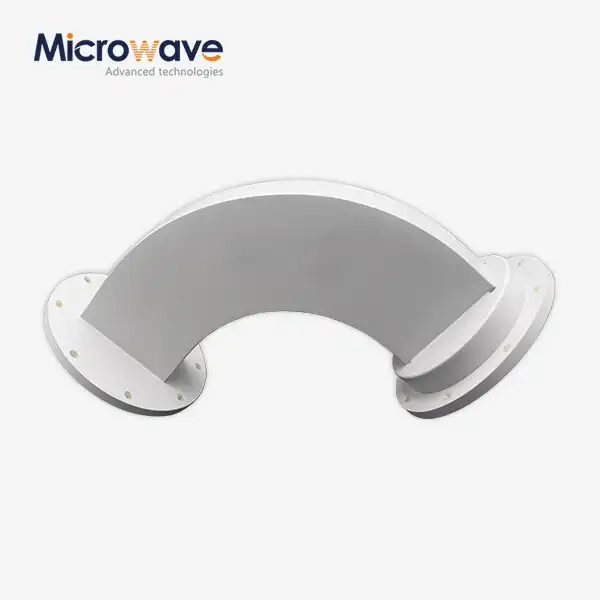 VIEW MOREWaveguide H Bend
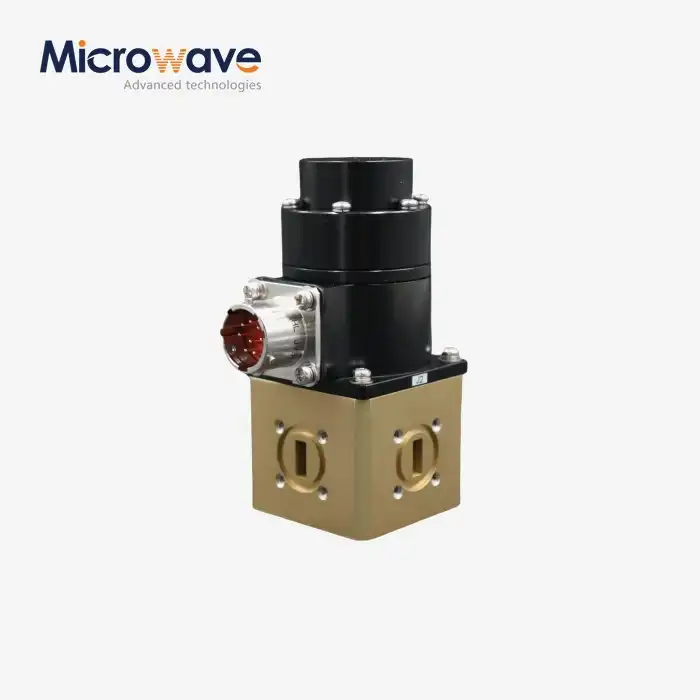 VIEW MOREWaveguide Electric Switch
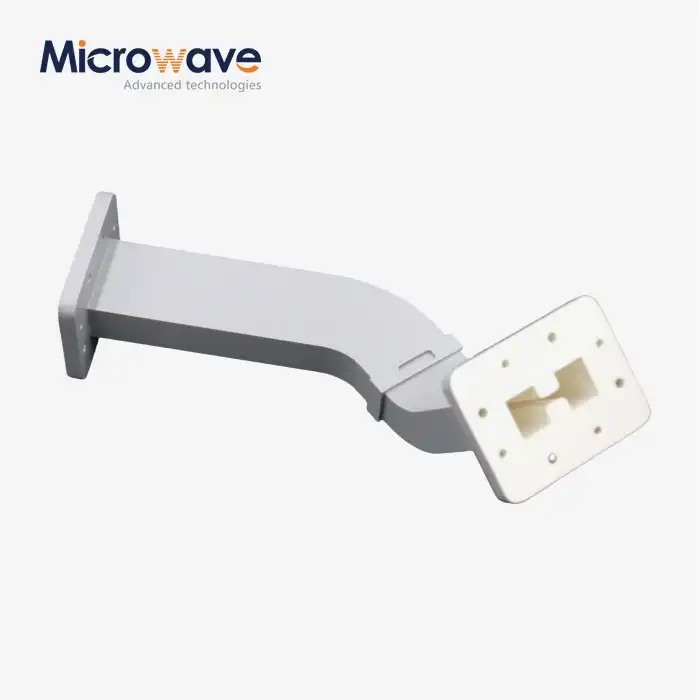 VIEW MOREDouble Ridge Waveguide Bend
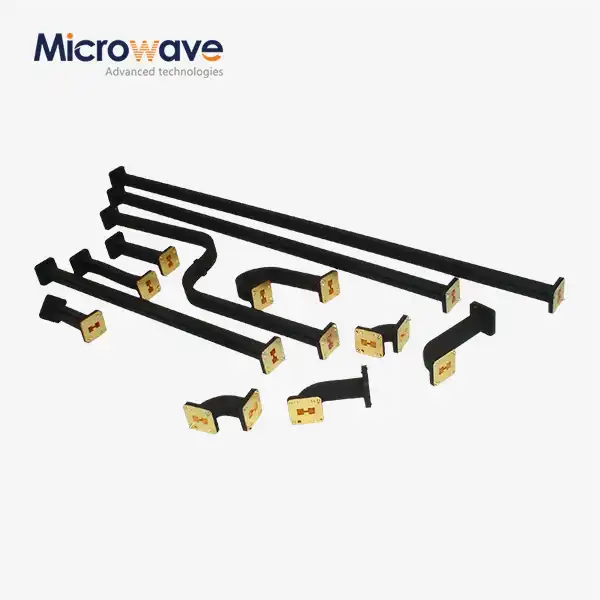 VIEW MOREDouble Ridged Flexible Waveguide
 VIEW MORESingle Channel Coaxial Rotary Joint
 VIEW MOREHigh Power Coaxial Switch
 VIEW MORECoaxial Bandpass Filter
 VIEW MORELadder Membrane Square Dual Circular Polarization Horn Antenna