





BLOG
Top 5 Waveguide Isolator Features Buyers Must Know
August 26, 2025
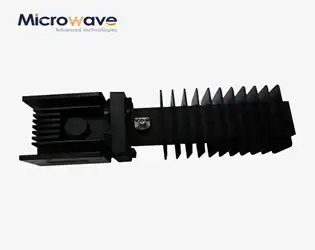
When selecting waveguide isolators for critical microwave applications, understanding the essential features that determine performance and reliability becomes paramount. These sophisticated devices serve as unidirectional signal gatekeepers in modern microwave systems, protecting sensitive equipment while ensuring optimal signal transmission. The waveguide isolator market has experienced significant growth, driven by increasing demand across telecommunications, aerospace, defense, and satellite communication sectors. As applications become more demanding with the advancement of 5G infrastructure and millimeter-wave technologies, choosing the right waveguide isolator with appropriate specifications becomes crucial for system success. This comprehensive guide examines the five most critical features that procurement professionals and engineers must evaluate when selecting waveguide isolators for their specific applications.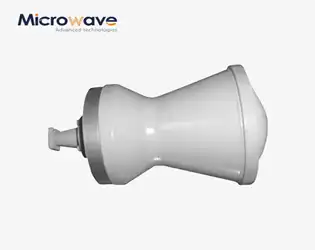
Unlock High-Gain Power with Point Focusing Horn Lens Antenna
August 26, 2025
In the rapidly evolving landscape of microwave technology, the Point Focusing Horn Lens Antenna stands as a revolutionary solution that transforms how engineers approach high-frequency communication challenges. This sophisticated antenna system combines the precision of conical horn design with the optical properties of convex lens technology, creating a unique capability to concentrate electromagnetic energy into highly focused beams. The Point Focusing Horn Lens Antenna represents a paradigm shift in antenna engineering, offering unprecedented levels of beam control and signal concentration that traditional antenna designs simply cannot match. By leveraging advanced materials science and precision manufacturing techniques, this antenna solution delivers exceptional performance across a wide frequency spectrum, making it indispensable for applications ranging from satellite communications to advanced radar systems where pinpoint accuracy and minimal signal loss are critical requirements.
How the Planar Spiral Antenna Supports Multi-Frequency Operations?
August 25, 2025
In today's rapidly evolving communication landscape, the demand for versatile antenna solutions that can operate across multiple frequency bands has never been greater. The Planar Spiral Antenna emerges as a revolutionary technology that addresses this critical need through its unique geometric design and inherent broadband characteristics. This ultra-wideband circularly polarized antenna represents a significant advancement in microwave technology, offering unparalleled flexibility for applications ranging from satellite communications to electronic reconnaissance systems. Understanding how the Planar Spiral Antenna achieves its remarkable multi-frequency capabilities is essential for engineers and system designers seeking optimal performance across diverse operational requirements.
Top 5 Benefits of Using Waveguide Harmonic Filter in RF Systems
August 25, 2025
In today's increasingly complex RF landscape, maintaining signal integrity while managing unwanted harmonics has become a critical challenge for engineers across telecommunications, aerospace, defense, and satellite communication industries. Waveguide Harmonic Filter technology represents a sophisticated solution that addresses these fundamental challenges by providing precise harmonic suppression, enhanced system performance, and reliable signal transmission. These advanced components have revolutionized how modern RF systems handle frequency management, offering unprecedented control over signal quality and system efficiency. Understanding the key benefits of implementing Waveguide Harmonic Filter solutions is essential for engineers and system designers who demand optimal performance from their microwave systems, particularly in applications where signal purity and system reliability are non-negotiable requirements.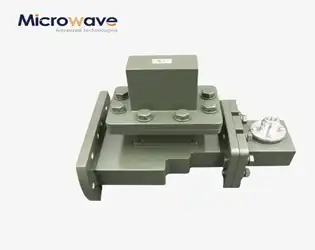
3 Key Advantages of E-Plane Tee over H-Plane Tee
August 25, 2025
In the complex world of microwave engineering, choosing the right waveguide component can make the difference between optimal performance and system inefficiency. Among the critical components in microwave systems, the E-Plane Tee stands out as a superior choice over its H-Plane counterpart in numerous applications. This specialized waveguide junction, where the auxiliary arm connects to the broad wall of the main waveguide, offers distinct advantages that have made it the preferred solution for engineers working in telecommunications, aerospace, defense, and satellite communications. Understanding these advantages is crucial for system designers who demand precision, reliability, and efficiency in their high-frequency applications. The three key advantages we'll explore demonstrate why the E-Plane Tee has become an indispensable component in modern microwave systems, delivering exceptional performance characteristics that surpass traditional H-Plane configurations.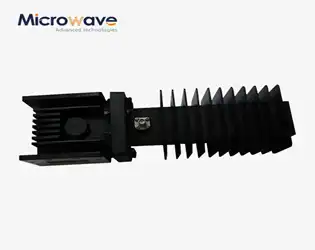
Waveguide Isolator vs. Coaxial Isolator: Which Is Better for High Frequency?
August 22, 2025
When selecting isolation components for high-frequency microwave applications, engineers face a critical decision between waveguide and coaxial isolator technologies. The choice significantly impacts system performance, power handling capabilities, and overall operational efficiency. Waveguide Isolator technology emerges as the superior choice for high-frequency applications, particularly above 18 GHz, offering exceptional power handling, minimal insertion loss, and superior thermal management compared to coaxial alternatives. This comprehensive analysis examines the fundamental differences, performance characteristics, and application-specific advantages that make waveguide isolators the preferred solution for demanding microwave systems in satellite communications, aerospace, and defense applications where reliability and precision are paramount.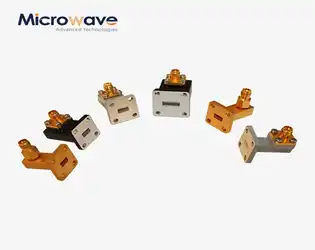
Top 4 Features of a High-Performance Right Angle Waveguide To Coaxial Adapter
August 22, 2025
In the rapidly evolving landscape of microwave technology, the Right Angle Waveguide To Coaxial Adapter stands as a critical component that bridges the gap between waveguide and coaxial transmission systems. These specialized adapters serve as essential transition elements in high-frequency applications, enabling seamless signal transfer while maintaining optimal performance characteristics. Modern microwave systems demand precision-engineered solutions that can handle complex signal routing requirements, particularly in space-constrained environments where traditional straight-line connections are impractical. The right angle configuration offers unique advantages for system designers who need to navigate around obstacles, reduce system footprint, and optimize signal paths. Understanding the key features that define a high-performance Right Angle Waveguide To Coaxial Adapter is crucial for engineers and procurement professionals seeking reliable solutions for satellite communications, aerospace applications, defense systems, and advanced telecommunications infrastructure.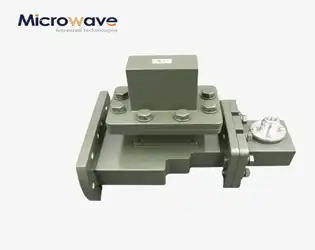
Top 4 Industries Powered by the E-Plane Tee
August 22, 2025
In the realm of microwave technology, few components demonstrate as much versatility and critical importance as the E-Plane Tee. This sophisticated waveguide junction serves as a cornerstone across multiple industries, facilitating power splitting and combining operations that are essential for high-frequency signal transmission. The E-Plane Tee represents a pinnacle of engineering excellence, where the auxiliary arm junction is strategically manufactured on the broad wall of the main waveguide, creating optimal signal flow characteristics. As industries increasingly rely on advanced microwave systems for communication, navigation, and defense applications, understanding which sectors benefit most from E-Plane Tee technology becomes paramount for professionals and decision-makers seeking reliable microwave solutions.