





BLOG
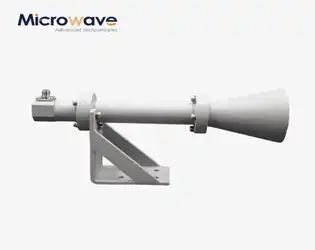
OEM Services Available: Customize Your Dual Linear Broadband CP Horn Antenna
October 20, 2025
Are you struggling to find the perfect antenna solution that meets your specific technical requirements for satellite communications, radar systems, or defense applications? Many engineers face the frustrating challenge of selecting off-the-shelf antennas that fall short of their project specifications, resulting in compromised performance and costly system failures. The Dual Linear Broadband Dual Circular Polarization Horn Antenna emerges as a revolutionary solution that addresses these critical pain points. This comprehensive guide explores how Advanced Microwave Technologies Co., Ltd.'s OEM services provide customizable solutions to transform your communication systems with precision-engineered antennas tailored to your exact specifications.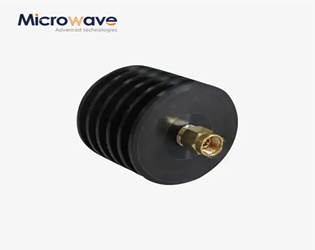
How does a fixed attenuator work?
October 20, 2025
Signal distortion in RF systems can destroy critical data transmission, compromise radar accuracy, and lead to costly equipment failures in aerospace and defense applications. When engineers face impedance mismatches, excessive signal power, or measurement inaccuracies, they need reliable solutions that deliver consistent performance. A Coaxial Fixed Attenuator provides the answer by reducing signal power levels with precision while maintaining signal integrity across wide frequency ranges. Understanding how fixed attenuators work is essential for anyone dealing with RF circuit design, telecommunications infrastructure, or microwave measurement systems where controlled signal management determines system success or failure.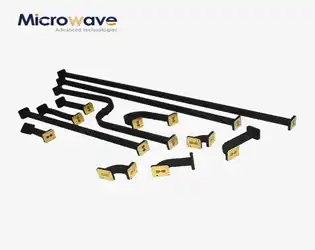
Beyond Basic Waveguides: The Strategic Benefits of Double Ridged Flexible Design
October 20, 2025
When engineers face the challenge of routing high-frequency signals through complex geometries while maintaining signal integrity, traditional waveguides often fall short. The limitations become painfully apparent when dealing with tight spaces, vibrations, and demanding performance requirements across broad frequency ranges. This is where the revolutionary Double Ridged Flexible Waveguide technology emerges as a game-changing solution, offering unprecedented flexibility without compromising electrical performance, making it the ideal choice for modern microwave applications requiring both mechanical adaptability and superior signal transmission characteristics.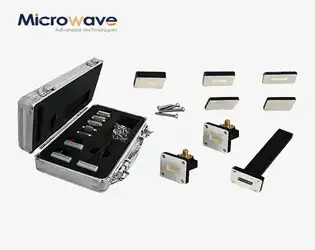
Waveguide Calibration Kits: A Guide to TRL, SOLT, and SSLT Methods
October 17, 2025
In the complex world of microwave engineering, measurement accuracy often determines the success or failure of critical systems. Engineers working with high-frequency applications frequently encounter frustrating measurement errors that compromise system performance, leading to costly redesigns and project delays. The solution lies in understanding and implementing proper calibration techniques using Waveguide Calibration Kits. These precision instruments provide the foundation for accurate vector network analyzer (VNA) measurements, ensuring that your waveguide systems perform reliably across demanding applications in telecommunications, aerospace, defense, and research environments.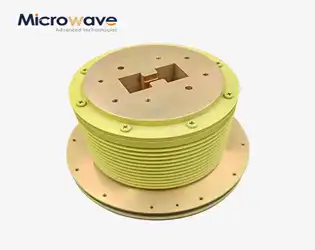
3 Ways Our Double Ridge Waveguide Rotary Joint Simplifies Multi-Band System Design
October 17, 2025
Multi-band system designers face mounting challenges when attempting to integrate rotating components across diverse frequency ranges. Traditional waveguide solutions often fall short, creating signal degradation, compatibility issues, and complex integration requirements that compromise system performance. The Double Ridge Waveguide Rotary Joint emerges as a revolutionary solution, addressing these critical pain points by providing seamless multi-band operation, exceptional signal integrity, and simplified system architecture. This advanced electromechanical component transforms how engineers approach complex communication, radar, and satellite systems, delivering unprecedented versatility and reliability in demanding applications where precise signal transmission across multiple frequency bands is paramount.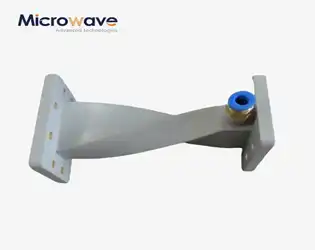
3 Key Advantages of Using Inflatable Twist Waveguides for Aerospace Applications
October 17, 2025
When aerospace engineers face the challenge of implementing reliable signal transmission systems in space-constrained environments while maintaining optimal performance, traditional rigid waveguides often fall short. The inflatable twist waveguide emerges as a revolutionary solution that addresses these critical pain points, offering three transformative advantages that are reshaping how aerospace applications handle electromagnetic wave transmission. This comprehensive analysis explores how inflatable twist waveguide technology provides unparalleled flexibility, significant weight reduction, and enhanced reliability for modern aerospace systems.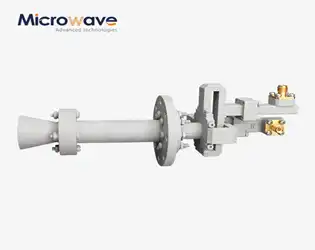
Conical Dual Circular Polarization Horn Antenna for High Precision Testing
October 16, 2025
In the rapidly evolving landscape of microwave technology and satellite communications, precision testing equipment has become the cornerstone of reliable signal transmission and reception. Among the most critical components in this domain stands the Conical Dual Circular Polarization Horn Antenna, a sophisticated solution that addresses the complex demands of modern high-frequency applications. This advanced antenna design represents a significant leap forward in dual polarization technology, combining the benefits of conical horn geometry with circular polarization capabilities to deliver unparalleled performance in testing environments. The unique architecture of the Conical Dual Circular Polarization Horn Antenna enables engineers and researchers to conduct precise measurements across wide frequency ranges while maintaining exceptional signal integrity and minimal interference.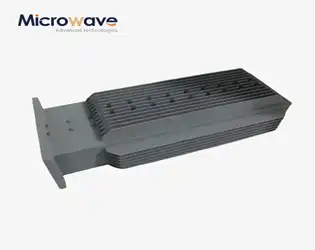
Top 5 Benefits of Integrating a Double Ridge Waveguide Load in Your Test Lab
October 16, 2025
Struggling with inaccurate measurements, signal reflections, and frequent equipment calibration issues in your microwave test lab? These challenges cost valuable time and compromise test reliability. The Double Ridge Waveguide Load emerges as the solution engineers worldwide trust for precision testing across 2.6-110 GHz frequencies, delivering exceptional performance with VSWR ≤ 1.25 and superior power dissipation capabilities that transform laboratory efficiency and measurement accuracy.