





BLOG
Why Choose 90° Polarized Rotary Joint for Satellite Communications?
June 12, 2025
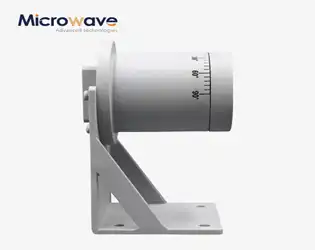
In the rapidly evolving landscape of satellite communications, the demand for reliable, high-performance microwave components has never been greater. Among the critical elements that ensure seamless signal transmission between stationary and rotating systems, the 90° Polarized Rotary Joint stands out as an indispensable component. This specialized electromechanical device addresses the fundamental challenge of maintaining signal integrity while enabling mechanical rotation, making it essential for applications ranging from satellite ground stations to aerospace radar systems. The unique 90-degree polarization capability ensures minimal signal distortion and maintains optimal performance across wide frequency ranges, directly addressing the stringent requirements of modern satellite communication infrastructure.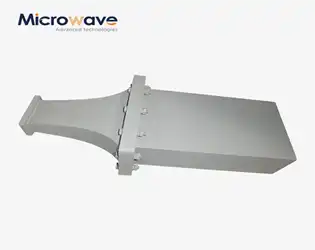
How Does Double Ridge Waveguide Termination Ensure Low VSWR?
June 11, 2025
Double Ridge Waveguide Termination represents a critical advancement in microwave engineering, specifically designed to achieve exceptionally low Voltage Standing Wave Ratio (VSWR) through its innovative dual-ridge configuration. This sophisticated component minimizes signal reflection by creating impedance matching conditions that gradually transition electromagnetic energy from the waveguide to an absorptive load. The double ridge design fundamentally alters the electromagnetic field distribution within the waveguide, enabling broader bandwidth operation while maintaining superior return loss characteristics. By incorporating precision-engineered geometry and high-quality absorptive materials, Double Ridge Waveguide Termination effectively dissipates transmitted energy as heat rather than reflecting it back to the source, thereby ensuring optimal system performance across extended frequency ranges from DC to 110 GHz.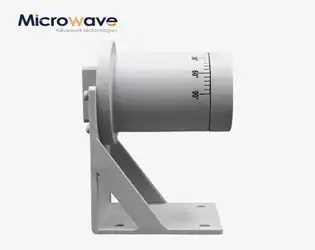
Which Industries Benefit Most from 90° Polarized Rotary Joint?
June 11, 2025
The 90° Polarized Rotary Joint represents a critical technological advancement in microwave engineering, serving as an essential component for transferring high-frequency signals between stationary and rotating systems while maintaining precise polarization control. This specialized electromechanical device has revolutionized multiple industries by enabling seamless signal transmission in applications where traditional static connections would fail. Advanced Microwave Technologies Co., Ltd manufactures these sophisticated components with rigorous electrical and mechanical design standards, ensuring optimal RF performance in the most demanding environments. The question of which industries benefit most from this technology reveals the extensive reach and critical importance of these components across diverse sectors including aerospace, telecommunications, defense, and satellite communications.
What Sets Our Waveguide Twist Apart in Thermal Stability?
June 11, 2025
In the demanding world of microwave engineering, thermal stability stands as a critical performance indicator that separates exceptional components from ordinary ones. Advanced Microwave Technologies Co., Ltd has revolutionized the industry with our superior WG Twist solutions that maintain exceptional performance across extreme temperature variations. Our waveguide twist components demonstrate unparalleled thermal resilience, ensuring consistent signal integrity from -55°C to +125°C operating ranges while maintaining precise twist angles and minimal signal degradation. Through advanced materials engineering and precision manufacturing techniques developed over two decades of microwave expertise, our WG Twist products deliver the thermal stability that mission-critical applications demand, making them the preferred choice for aerospace, defense, and satellite communication systems worldwide.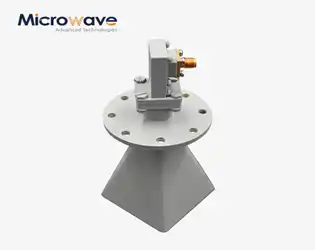
June 11, 2025
In today's demanding communication landscape, where reliability and precision are paramount, the Low Side Lobe Diagonal Linear Polarization Horn Antenna stands as a revolutionary solution for critical applications. This advanced antenna technology addresses the fundamental challenges faced by modern communication systems operating in harsh environments, from satellite communications to aerospace defense systems. The unique design philosophy behind this antenna ensures minimal interference, maximum signal integrity, and consistent performance even under the most challenging operational conditions. As industries continue to push the boundaries of what's possible in microwave technology, understanding how these sophisticated antennas maintain stable performance becomes crucial for engineers, system designers, and technology decision-makers seeking optimal solutions for their complex communication requirements.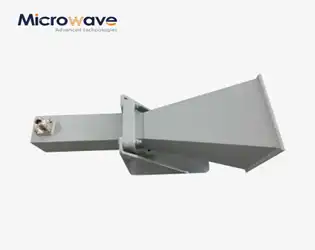
Can Ladder Membrane Square Dual Circular Polarization Horn Antenna Withstand Extreme Weather?
June 11, 2025
Weather resilience stands as a critical factor when selecting antenna systems for mission-critical applications. The Ladder Membrane Square Dual Circular Polarization Horn Antenna emerges as a robust solution specifically engineered to withstand extreme environmental conditions while maintaining optimal performance. This advanced antenna technology combines innovative ladder membrane design with dual circular polarization capabilities, creating a system that excels in harsh weather scenarios where conventional antennas often fail. From arctic research stations to desert military installations, this antenna demonstrates exceptional durability across temperature extremes, moisture variations, and challenging atmospheric conditions that would compromise lesser systems.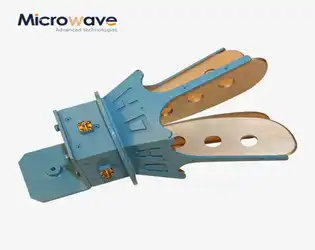
How Does Open Boundary Dual Linear Polarization Four Ridged Horn Antenna Enhance Beamforming?
June 11, 2025
In the rapidly evolving landscape of microwave and millimeter-wave communications, the quest for superior beamforming capabilities has led to groundbreaking innovations in antenna design. The Open Boundary Dual Linear Polarization Four Ridged Horn Antenna represents a pinnacle of engineering excellence, revolutionizing how signals are transmitted and received across diverse applications. This advanced antenna technology enhances beamforming through its unique open boundary design, which expands the working bandwidth toward the lower frequency spectrum while maintaining exceptional performance characteristics. By eliminating traditional boundary constraints, this antenna achieves superior phase center stability and reduced sensitivity to frequency variations, making it an indispensable component for modern communication systems, satellite networks, and radar installations where precision beamforming is paramount.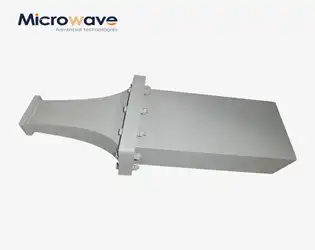
Can Double Ridge Waveguide Termination Withstand Extreme Environments?
June 10, 2025
In the demanding world of microwave technology, where systems operate under harsh conditions ranging from arctic temperatures to space radiation, the reliability of components becomes paramount. Double Ridge Waveguide Termination stands as a critical component that must maintain exceptional performance across extreme environmental conditions. These specialized terminations are engineered to handle wide frequency ranges while providing superior signal integrity, making them indispensable in aerospace, defense, satellite communications, and radar applications. The question of environmental resilience is not merely theoretical—it directly impacts mission success, system reliability, and operational safety in critical applications where failure is not an option.