





BLOG

Crossguide Directional Coupler vs. Coaxial Coupler: Which Is Better?
July 25, 2025
In the rapidly evolving world of microwave and RF technology, engineers frequently face the critical decision between crossguide directional couplers and coaxial couplers. This choice significantly impacts system performance, space utilization, and overall efficiency. The Crossguide Directional Coupler represents a superior solution for applications requiring compact design and reliable performance, particularly in environments where space constraints are paramount and directivity requirements are balanced with practical considerations. Advanced Microwave Technologies Co., Ltd. has pioneered innovative crossguide solutions that address these challenges while maintaining exceptional signal integrity and coupling precision across diverse frequency ranges.
2025 Trend: Coaxial Bandpass Filter Demand Is Surging Globally
July 25, 2025
The global microwave technology landscape is experiencing an unprecedented transformation as we enter 2025, with coaxial bandpass filters emerging as one of the most critical components driving this evolution. Industry analysts predict that the demand for coaxial bandpass filters will surge dramatically, fueled by the rapid deployment of 5G networks, expanding satellite communication infrastructure, and the growing need for precision signal filtering in aerospace and defense applications. This remarkable growth trajectory reflects the fundamental shift toward higher-frequency communications and the increasing complexity of modern electronic systems that require superior interference rejection capabilities.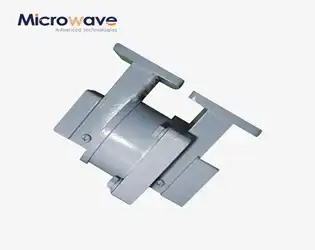
Engineer's Pick: Waveguide Single Channel Rotary Joint for 40GHz+ Systems
July 25, 2025
In the rapidly evolving landscape of high-frequency microwave technology, the Waveguide Single Channel Rotary Joint has emerged as a critical component for systems operating at 40GHz and beyond. This sophisticated electromechanical device serves as the backbone for seamless RF signal transmission between rotating and stationary components in mission-critical applications. As modern communication systems, radar installations, and satellite networks demand higher frequencies and superior performance, the Waveguide Single Channel Rotary Joint provides the essential bridge that maintains signal integrity while enabling mechanical rotation. Advanced Microwave Technologies Co., Ltd has engineered these precision components to meet the stringent requirements of next-generation systems, delivering exceptional performance characteristics that include ultra-low insertion loss, superior VSWR ratings, and robust construction capable of withstanding extreme operational environments across aerospace, defense, and telecommunications sectors.
Double-Ridged Waveguide Magic Tee: Precision Engineering for Critical RF Needs
July 25, 2025
In the rapidly evolving landscape of microwave technology, the Double-Ridged Waveguide Magic Tee stands as a cornerstone component that addresses the most demanding RF applications across satellite communications, defense systems, and aerospace industries. This sophisticated microwave device represents the pinnacle of precision engineering, combining advanced waveguide design with exceptional power handling capabilities to deliver unparalleled performance in signal distribution and combining operations. Advanced Microwave Technologies Co., Ltd. has perfected this critical component through over two decades of specialized experience, offering solutions that meet the stringent requirements of modern RF systems while ensuring optimal signal integrity and minimal insertion loss across an extensive frequency range from 2 GHz to 110 GHz.
Precision Meets Power: Double Ridged Waveguide Calibration Kits Under 1% Tolerance
July 25, 2025
In the demanding world of microwave engineering, where signal integrity can determine the success or failure of critical systems, precision calibration stands as the cornerstone of reliable measurements. Modern applications spanning from 5G telecommunications to aerospace defense systems require exceptional accuracy that traditional calibration methods simply cannot deliver. Double Ridged Waveguide Calibration Kits represent the pinnacle of measurement precision, offering unprecedented accuracy with tolerances maintained consistently under 1%. These sophisticated calibration solutions bridge the gap between theoretical performance and practical implementation, ensuring that complex microwave systems operate within their designed parameters. The evolution of Double Ridged Waveguide Calibration Kits has transformed how engineers approach high-frequency measurements, providing the foundation for accurate vector network analyzer (VNA) calibration across extended frequency ranges while maintaining the stringent accuracy requirements essential for modern microwave applications.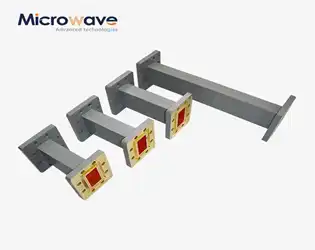
Rectangular Straight Waveguide: Designed for Stability and Low Loss
July 25, 2025
In the demanding world of microwave technology, where precision and reliability are paramount, the Rectangular Straight Waveguide stands as a cornerstone solution for high-frequency electromagnetic wave transmission. These meticulously engineered components represent the pinnacle of waveguide technology, delivering exceptional stability and remarkably low loss characteristics that are essential for critical applications across satellite communications, radar systems, and aerospace industries. Unlike traditional transmission lines that suffer from significant signal degradation over extended distances, rectangular straight waveguides maintain signal integrity through their unique geometric design and superior material construction. The inherent properties of these waveguides, including their ability to confine electromagnetic energy within a precisely defined rectangular cross-section, make them indispensable for applications requiring both high power handling capabilities and minimal signal attenuation.
Coaxial Bandpass Filter: Compact Design, Powerful Filtering
July 24, 2025
In today's rapidly evolving technological landscape, the demand for precise signal filtering solutions has never been greater. The Coaxial Bandpass Filter represents a critical component in modern microwave systems, offering exceptional performance through its compact design and powerful filtering capabilities. These sophisticated devices serve as the backbone of numerous applications, from satellite communications to defense systems, where signal integrity and frequency selectivity are paramount. Advanced Microwave Technologies Co., Ltd has perfected the art of manufacturing these essential components, combining over two decades of engineering expertise with cutting-edge technology to deliver solutions that meet the most demanding specifications. Our Coaxial Bandpass Filter systems are engineered to provide superior performance while maintaining the compact footprint essential for today's space-constrained applications.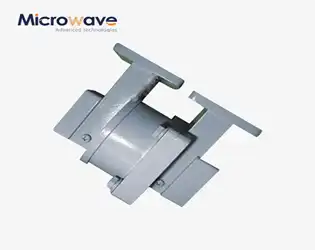
Waveguide Single Channel Rotary Joint Applications You Should Know in Aerospace
July 24, 2025
The aerospace industry demands precision, reliability, and cutting-edge technology in every component used within its complex systems. Among the critical components that enable seamless communication and radar functionality in aerospace applications, the Waveguide Single Channel Rotary Joint stands as an indispensable element that bridges rotating and stationary microwave transmission systems. These sophisticated electromechanical devices facilitate continuous RF signal transmission between rotating antenna systems and fixed electronic equipment, ensuring uninterrupted communication in satellites, aircraft radar systems, and space exploration missions. Understanding the diverse applications of Waveguide Single Channel Rotary Joint technology in aerospace environments is crucial for engineers, procurement specialists, and industry professionals who require reliable microwave solutions capable of withstanding extreme operational conditions while maintaining exceptional signal integrity.